Artwork
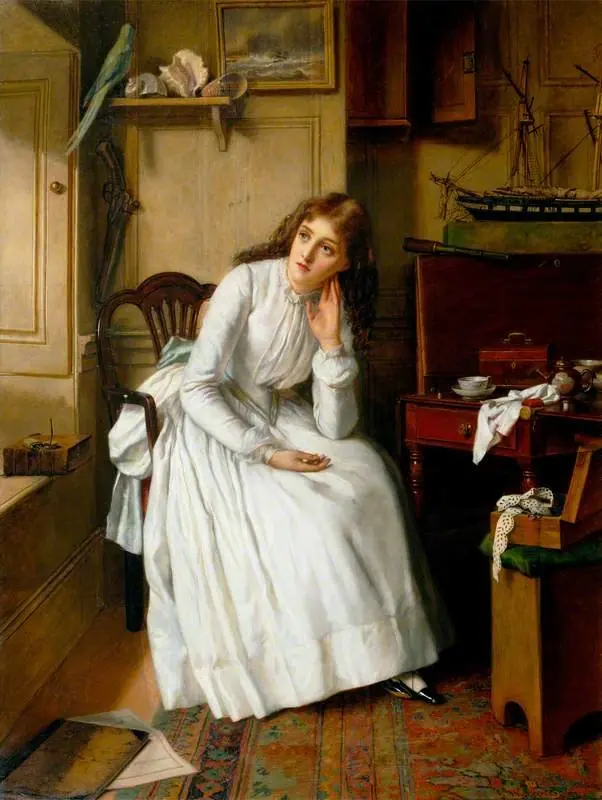
Florence Dombey in Captain Cuttle's Parlour
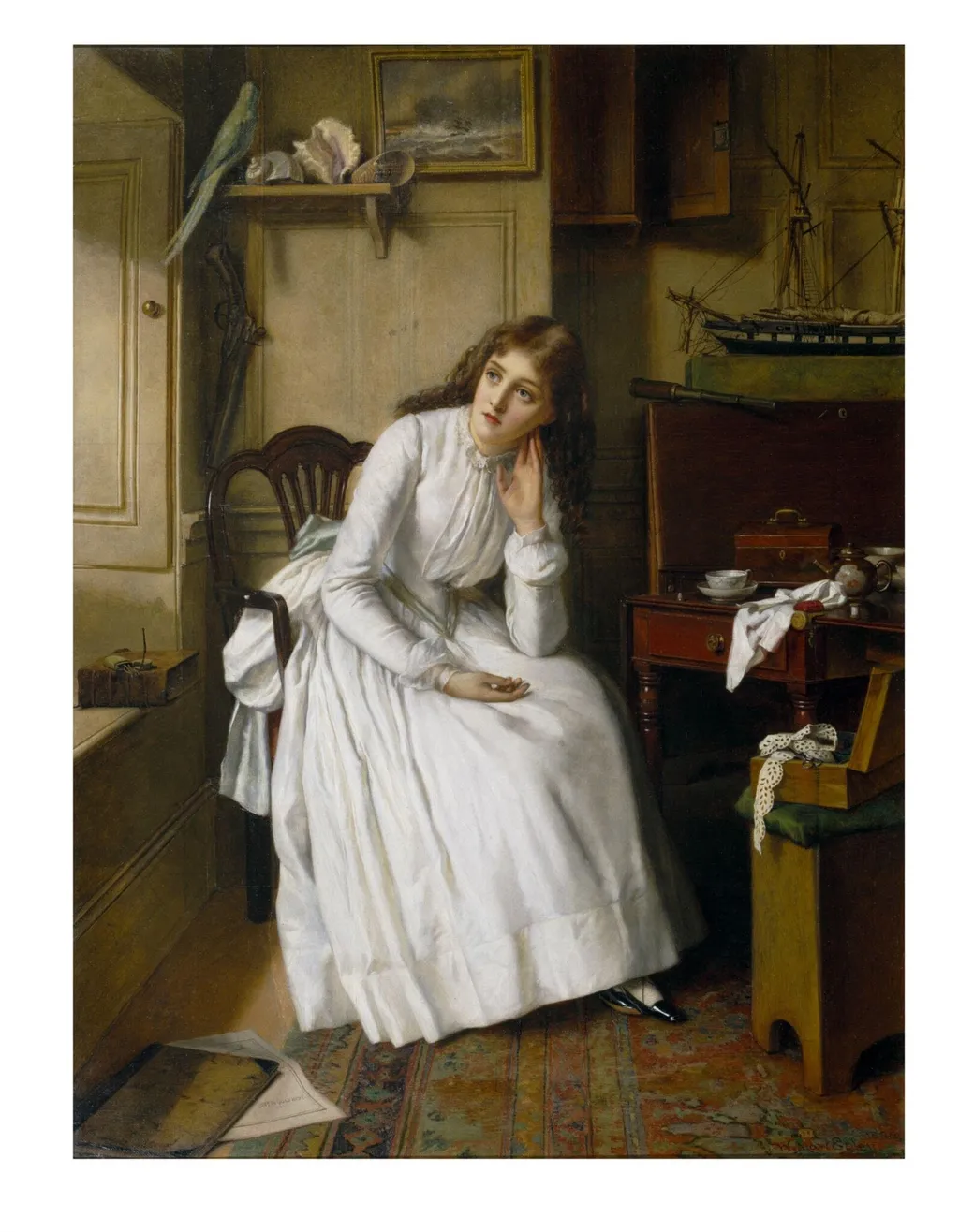
Florence Dombey in Captain Cuttle's Parlour is an oil painting by the Impressionist artist William Maw Egley. It dates from 1888 and is held in the collection of the Victoria and Albert Museum. An oil painting by an unknown artist, this work captures a quiet moment from Charles Dickens’ novel Dombey and Son.
About this work
This painting shows Florence Dombey sitting in a dim parlor with Captain Cuttle.
This painting shows Florence Dombey sitting in a dim parlor with Captain Cuttle. She wears a long dark dress with a white collar. The room is simple, with a lamp and some books on the table.
It comes from Charles Dickens' novel *Dombey and Son*. Florence hides here to escape her strict father. The clothing matches styles from 1848, when the book was written.
This work is hanging at the Victoria and Albert Museum.
Overview
An oil painting by an unknown artist, this work captures a quiet moment from Charles Dickens’ novel Dombey and Son. It portrays Florence Dombey, a young girl seeking solace, seated in the modest parlor of Captain Cuttle, a loyal family friend. The scene reflects a pivotal emotional refuge within the narrative, rendered with restrained detail and subdued lighting.
Subject & Meaning
Florence, fleeing emotional neglect from her father, finds temporary safety in the humble surroundings of Captain Cuttle’s home. The painting emphasizes her vulnerability and isolation, contrasted with the quiet dignity of her protector. The setting, stripped of ornament, underscores the theme of compassion amid social hardship, central to Dickens’ critique of familial and class dynamics.
Technique & Style
The composition uses muted tones and soft contrasts to evoke a somber, intimate atmosphere. Florence’s dark dress and white collar draw focus to her figure, while the dim interior, illuminated by a single lamp, enhances the sense of seclusion. Brushwork is deliberate but unobtrusive, prioritizing narrative clarity over decorative flourish.
History & Provenance
The painting was exhibited across Britain between 1889 and 1895, likely as part of a series illustrating Dickens’ novels for public audiences. It entered the collection of the Victoria and Albert Museum, where it remains today. Its origin and artist remain undocumented, suggesting it was produced for popular literary illustration rather than elite patronage.
Context
Created decades after the novel’s 1848 publication, the painting responds to the Victorian era’s growing interest in visual adaptations of literature. Fashion details align with mid-century dress, reinforcing historical authenticity. Such works served to deepen public engagement with serialized fiction, bridging literary and visual culture in an age before mass media.
Legacy
Though not widely attributed to a named artist, the painting endures as a visual anchor for Dickens’ themes of resilience and moral quietude. It contributes to the broader tradition of 19th-century narrative painting, preserving a moment of emotional stillness within a story otherwise marked by social upheaval and familial rupture.
Own this work as a print
Artist & collection
Artist
William Maw Egley (1826 in London – 20 February 1916) was an English artist of the Victorian era.

 A Day-Dream
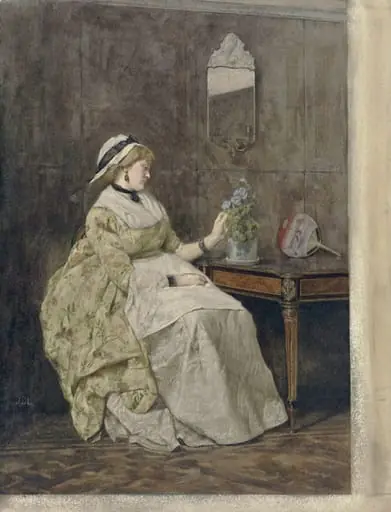 Contemplation
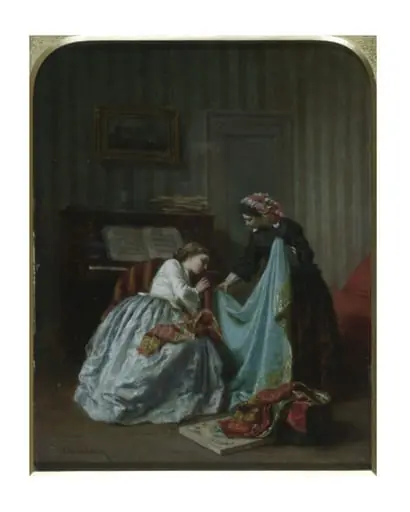 Interior with two women examining cloth
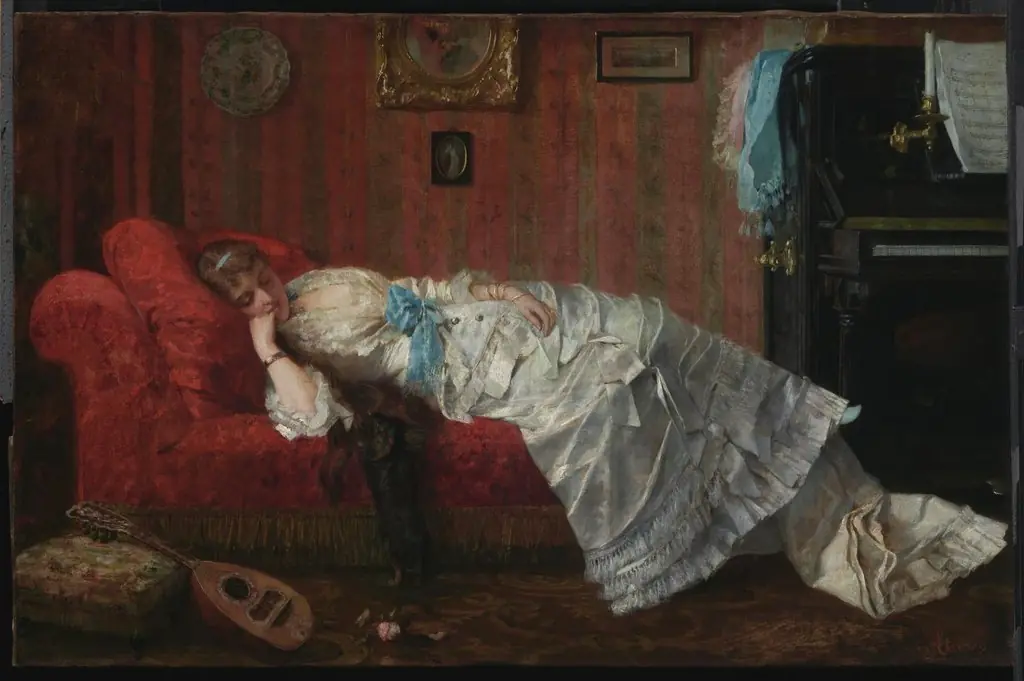 Young Woman Resting in a Music Room
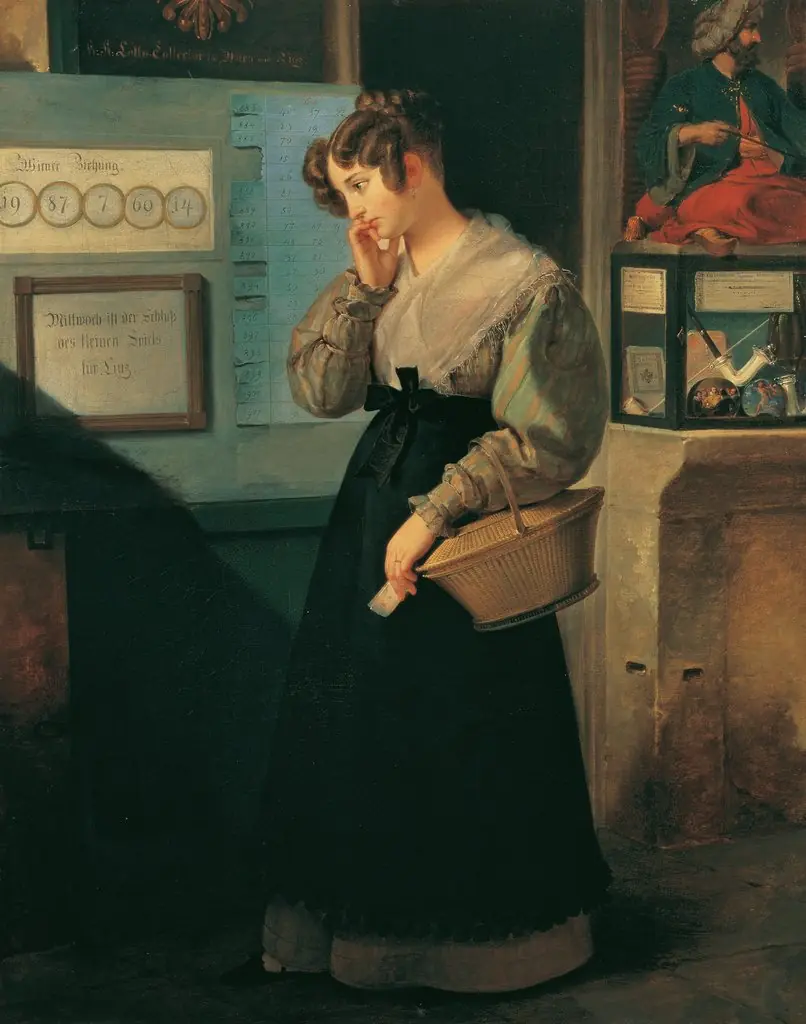 Girl at the Lottery
 Grandmother's Birthday
 The Important Response
 Throwing off Her Weeds
 Emily Merelina Meymott, Baroness Shand (1830 - 1911)
 Young Woman Looking through a Window
 Interior with mother and daughter at the window