Artwork
Girl at the Lottery
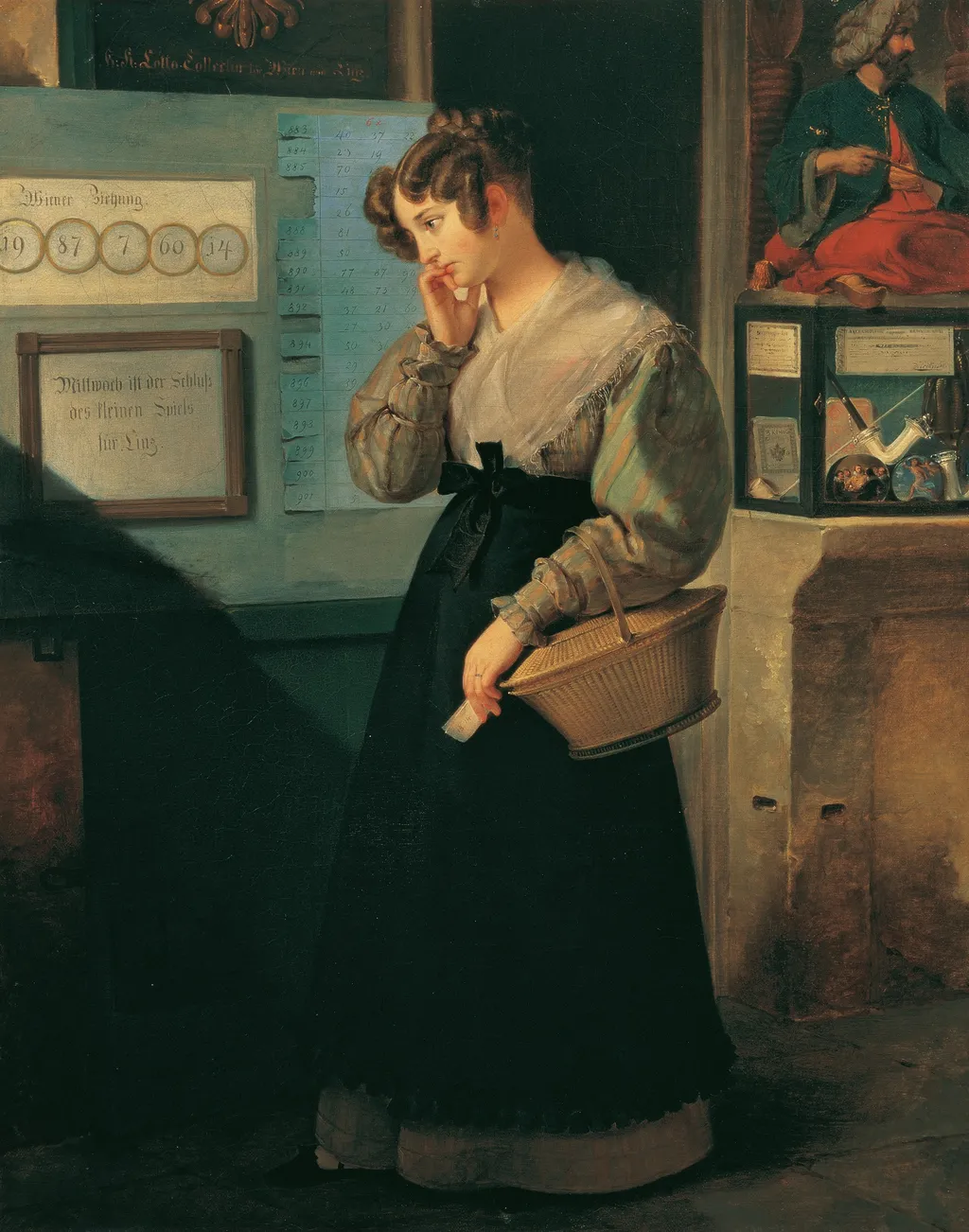
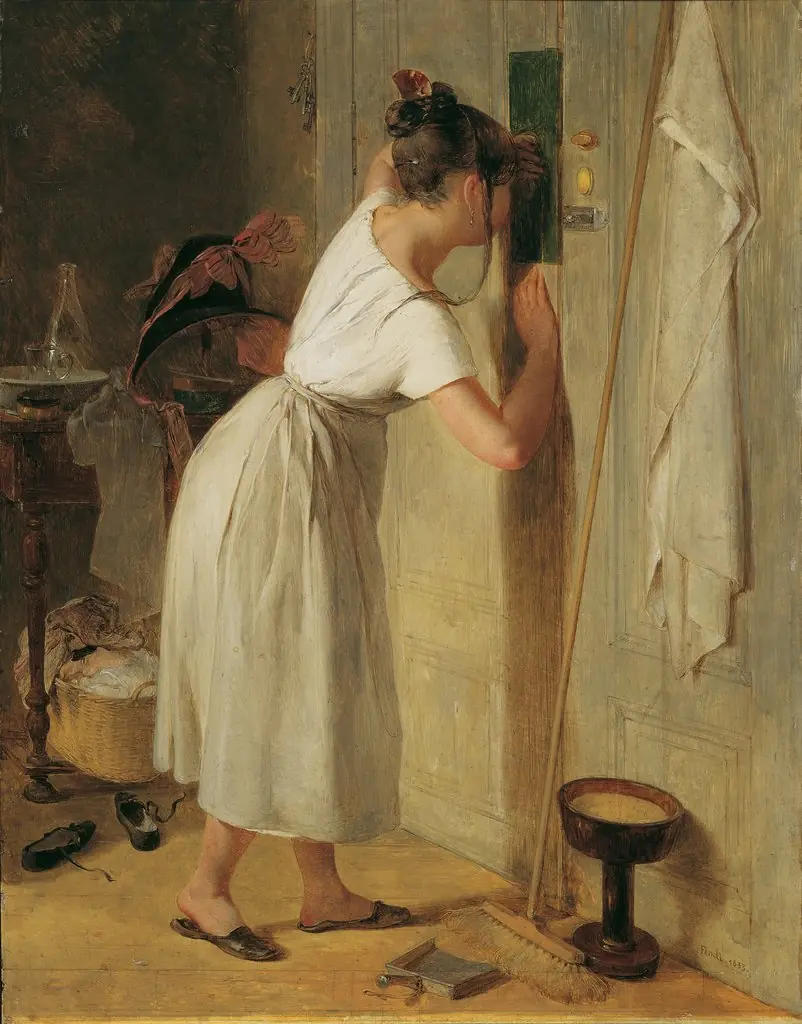
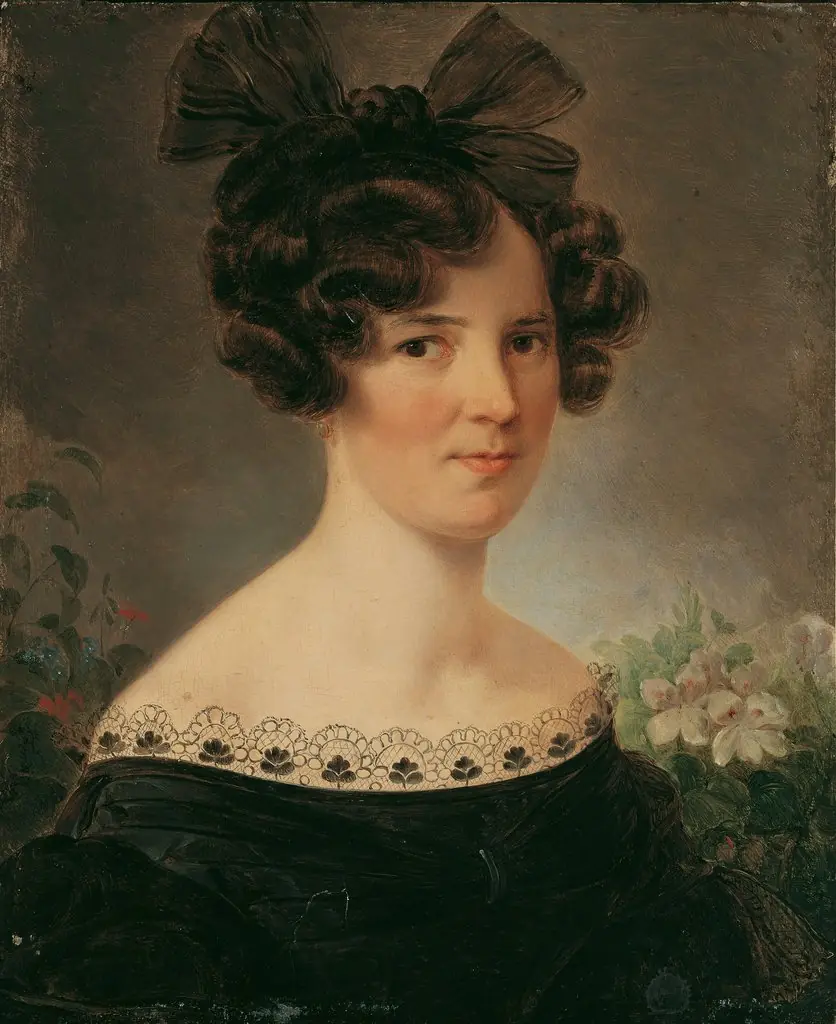
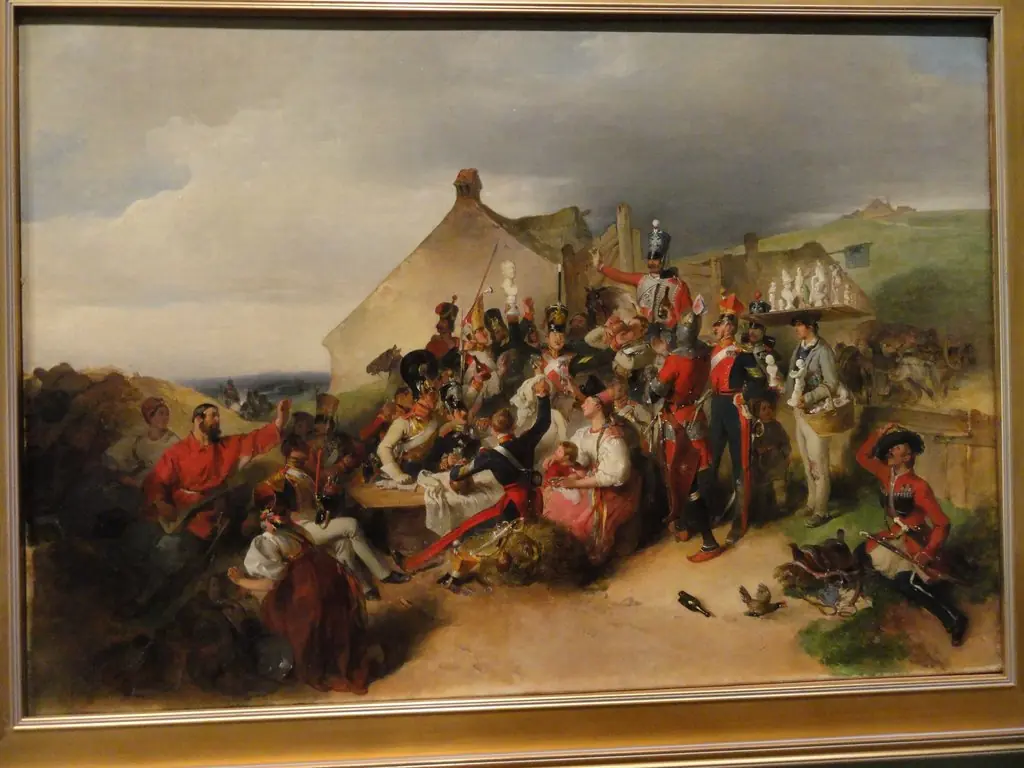
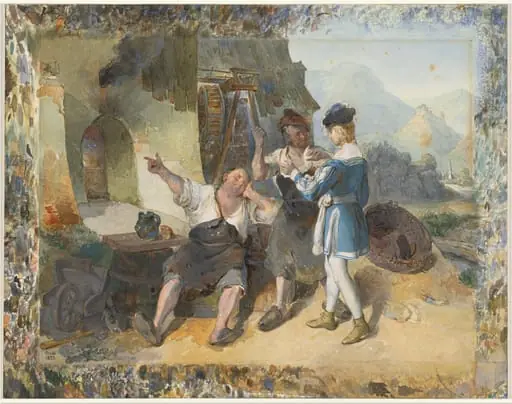
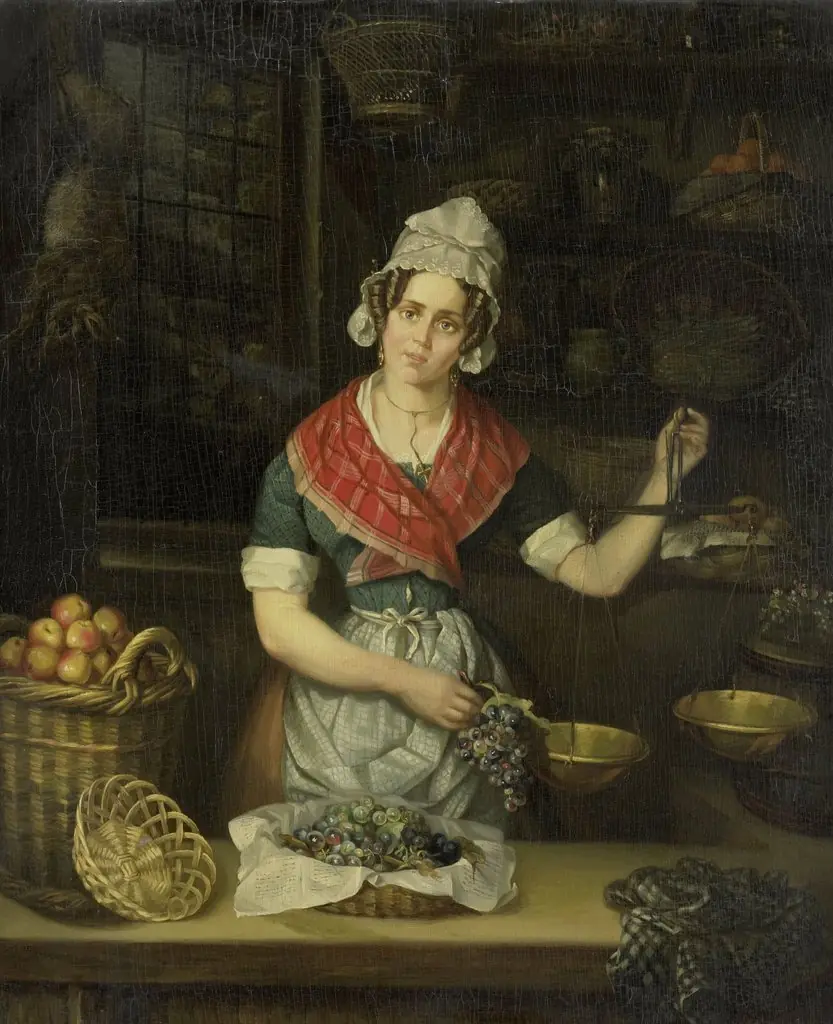
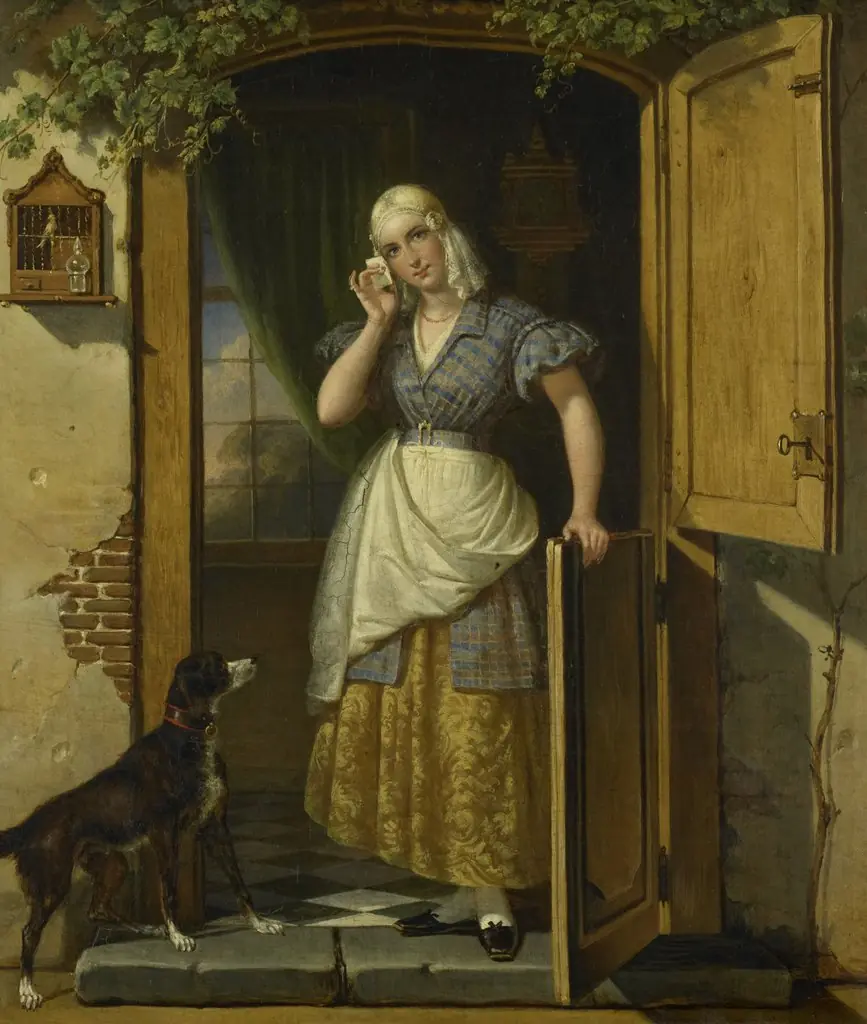
Girl at the Lottery is an oil painting by the Biedermeier artist Peter Fendi. It dates from 1829 and is held in the collection of the Kunsthistorisches Museum.
About this work
The use of chiaroscuro in this painting creates a sense of depth and dimensionality, drawing the viewer's eye to the girl's face and the lottery board.
The painting "Girl at the Lottery" by Peter Fendi, created in 1829, depicts a young girl standing in front of a wall with a lottery board. She is dressed in a long black skirt and a striped blouse, with her hair styled in an updo. The girl holds a wicker basket in her left hand and a piece of paper in her right hand, which she brings to her face as if deep in thought.
In the background, a man sits on a ledge, wearing a red robe and a turban. The overall atmosphere of the painting is one of contemplation and quiet reflection.
The use of chiaroscuro in this painting creates a sense of depth and dimensionality, drawing the viewer's eye to the girl's face and the lottery board.
Overview
Painted in 1829 by Austrian artist Peter Fendi, this oil-on-canvas work captures a quiet moment of everyday life during the Biedermeier era. Fendi, known for his focus on domestic scenes, rendered the subject with restrained emotion and careful attention to detail. The painting resides in the Kunsthistorisches Museum, Vienna, as part of its collection of 19th-century Austrian genre painting.
Subject & Meaning
A young girl stands before a lottery board, holding a slip of paper to her face in silent contemplation. Her attire—a striped blouse and dark skirt—suggests modest means, while the presence of a man in a red robe and turban in the background hints at cultural diversity or theatricality within the setting. The scene reflects the era’s fascination with ordinary rituals, where chance and hope shaped small, personal moments.
Technique & Style
Fendi employs chiaroscuro to model the girl’s form and draw focus to her expression and the lottery board. Soft transitions between light and shadow lend volume without drama, aligning with Biedermeier ideals of calm realism. The brushwork is precise yet unobtrusive, emphasizing texture in fabric and wicker without overt flourish, reinforcing the painting’s intimate tone.
History & Provenance
Commissioned during Fendi’s tenure as a court painter, the work entered the Kunsthistorisches Museum’s collection in the 19th century. It remained largely unaltered in provenance, reflecting its status as a representative example of Austrian domestic genre painting rather than a celebrated public commission. Its preservation underscores its role as a document of middle-class life in post-Napoleonic Vienna.
Context
In early 19th-century Austria, lotteries were common among all classes, offering a rare chance at modest fortune. The Biedermeier movement favored quiet interiors and uneventful moments over grand narratives. Fendi’s painting aligns with this aesthetic, transforming a mundane act into a study of stillness, where personal anticipation replaces spectacle.
Legacy
Though not widely exhibited beyond Austrian collections, the painting exemplifies the Biedermeier approach to genre scenes: unembellished, psychologically subtle, and rooted in observable reality. It contributes to the historical record of how ordinary citizens engaged with chance and routine, offering insight into the emotional rhythms of middle-class life in Habsburg Vienna.
Own this work as a print
Artist & collection
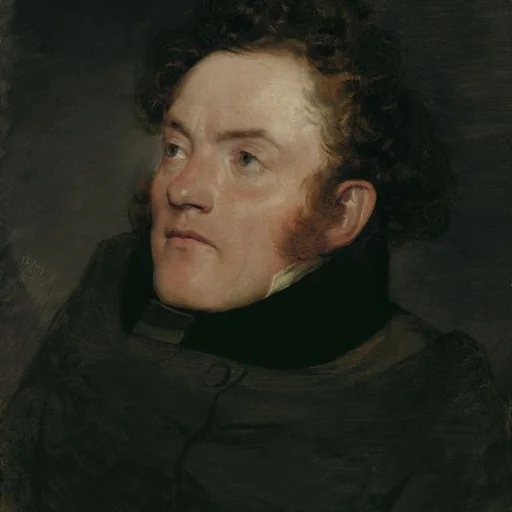
Artist
Peter Fendi (4 September 1796 – 28 August 1842) was an Austrian court painter, portrait and genre painter, engraver, and lithographer. He was one of the leading artists of the Biedermeier period.