Artwork
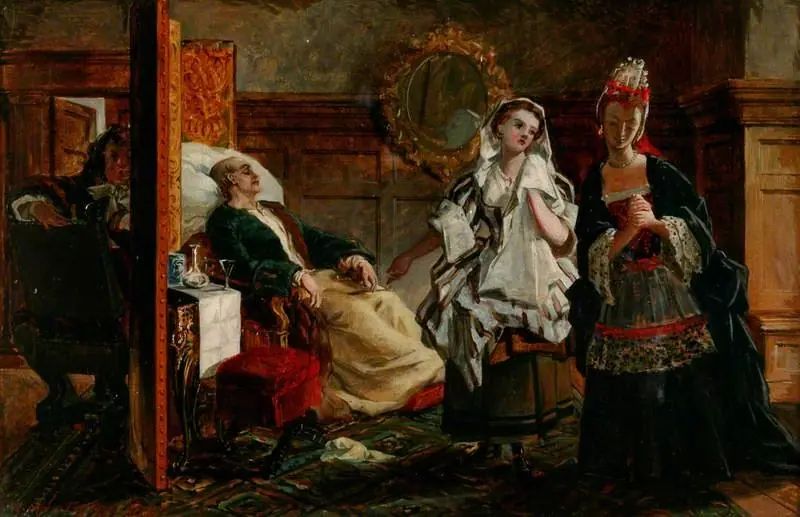
Scene from Molière's 'Monsieur de Pourceaugnac'
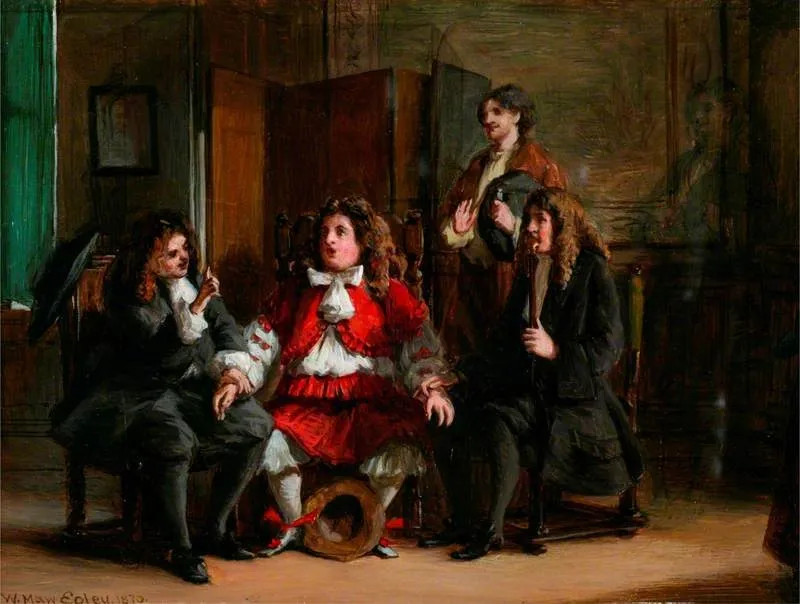
Scene from Molière's 'Monsieur de Pourceaugnac' is an unspecified painting by the Realist artist William Maw Egley. It dates from 1870 and is held in the collection of the Victoria and Albert Museum.
About this work
Overview
Egley, trained by his father as a miniaturist and later influenced by William Powell Frith, specialized in intimate, humor-infused domestic scenes.
Painted in 1870 by William Maw Egley, this work captures a moment from Molière’s comedy 'Monsieur de Pourceaugnac'. Egley, trained by his father as a miniaturist and later influenced by William Powell Frith, specialized in intimate, humor-infused domestic scenes. The painting reflects his interest in translating theatrical narratives into quiet, observed moments of everyday life, rendered with precise detail and restrained color.
Subject & Meaning
The scene portrays a theatrical interlude from Molière’s farce, likely depicting the arrival or discomfiture of the titular character, Pourceaugnac. The figure in the vivid red and white costume, seated prominently, suggests the comedic outsider disrupting the social order. The hat on the floor implies sudden movement or abandonment, reinforcing the play’s themes of absurdity and social pretense. The other figures, dressed plainly, appear as observers or participants in the unfolding farce.
Technique & Style
Egley employs a restrained palette dominated by muted tones, allowing the red and white costume to anchor the composition. His brushwork is precise, emphasizing fabric texture and the solidity of wooden furnishings. The lighting is even and naturalistic, enhancing the sense of a captured moment rather than a staged performance. The background, with its simple window and domestic interiors, grounds the theatricality in a believable, lived-in space.
History & Provenance
The painting entered the collection of the Victoria and Albert Museum in the late 19th century, likely acquired as part of the museum’s broader interest in theatrical and decorative arts. It remained relatively unremarked upon in public discourse until the late 20th century, when renewed attention to Victorian genre painting brought Egley’s work back into scholarly view. Its provenance is unbroken since acquisition, with no record of private ownership after its initial exhibition.
Context
In 1870, British audiences were increasingly drawn to French comedy, particularly Molière’s satires of social pretension. Egley’s choice to depict this scene aligns with a broader Victorian fascination with continental theater, filtered through domestic realism. His approach diverged from grand historical painting, instead favoring quiet, character-driven moments that mirrored the moral and social observations popular in contemporary literature and stage.
Legacy
Though Egley is not widely known today, this painting exemplifies a significant strand of Victorian art that bridged theater and domestic realism. It stands as a quiet testament to the era’s appetite for narrative art that was neither monumental nor overtly sentimental. The work continues to be studied for its subtle rendering of social dynamics and its role in the visual culture of 19th-century British theater appreciation.
Artist & collection
Artist
William Maw Egley (1826 in London – 20 February 1916) was an English artist of the Victorian era.

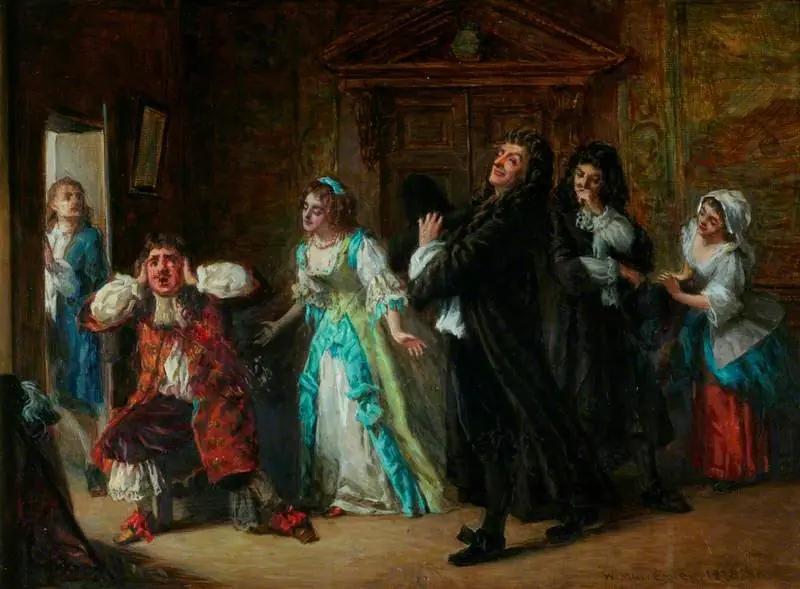
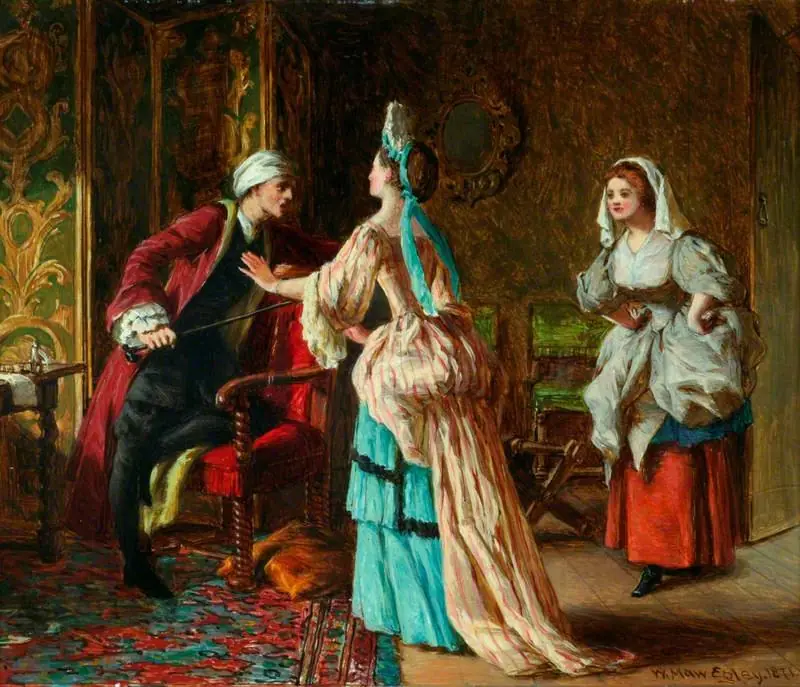
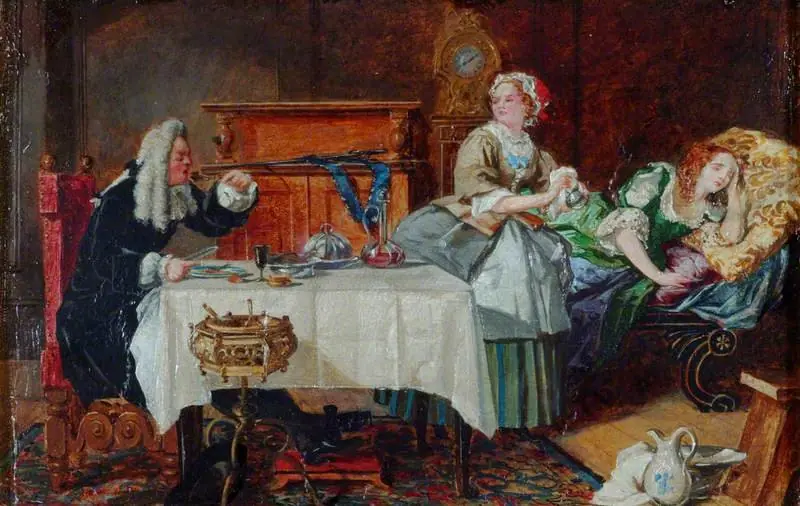
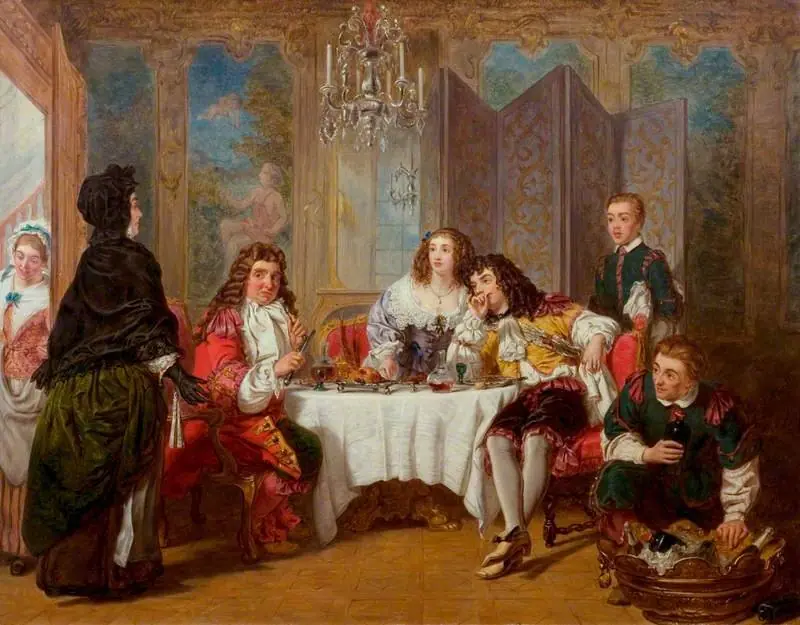 Madame Jourdain Finds Her Husband Entertaining Dorimène and Dorante (from Molière's 'Le Bourgeois Gentilhomme')
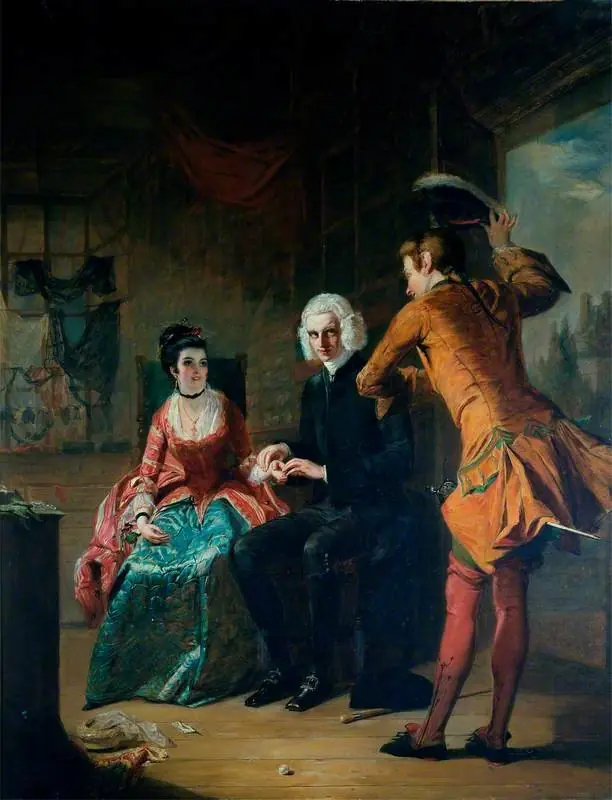 Scene from Laurence Sterne's 'A Sentimental Journey'
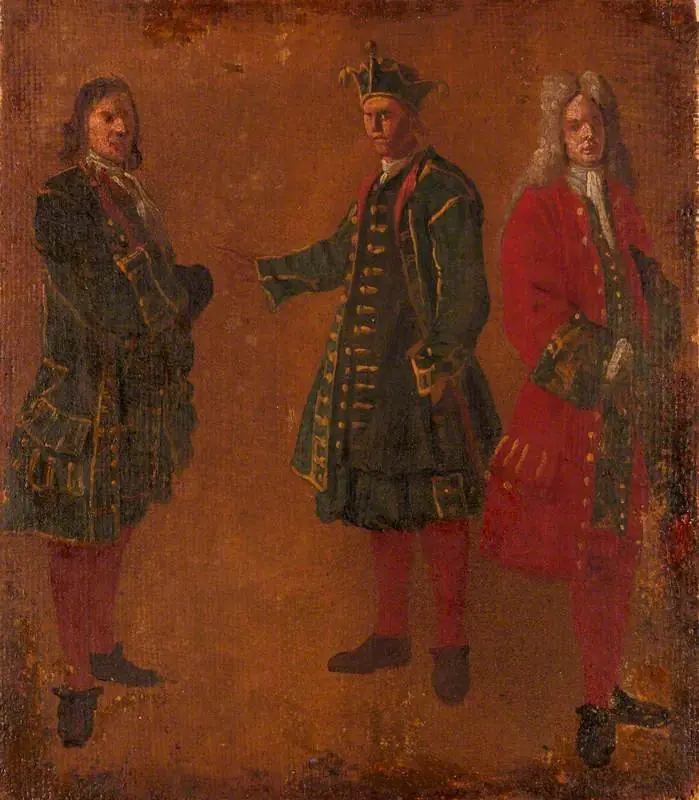 Three Studies of Men
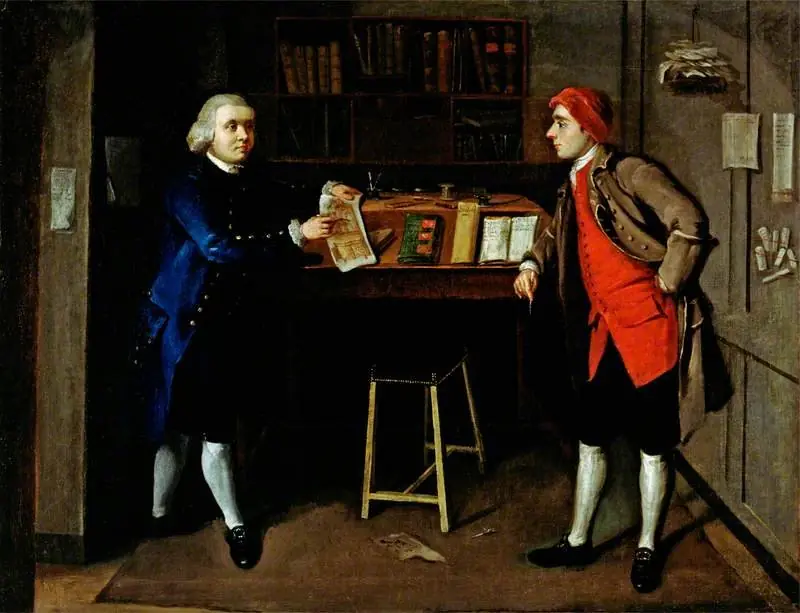 A Cabinet-Maker's Office
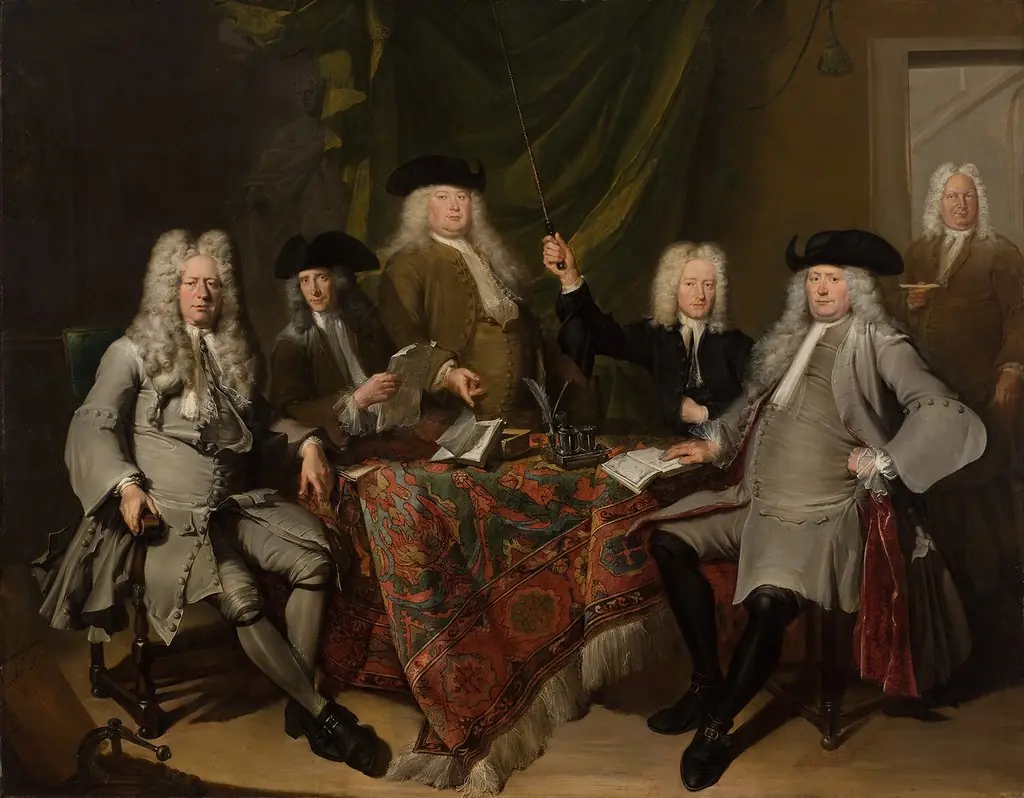 Portrait of the Inspectors of the Collegium Medicum
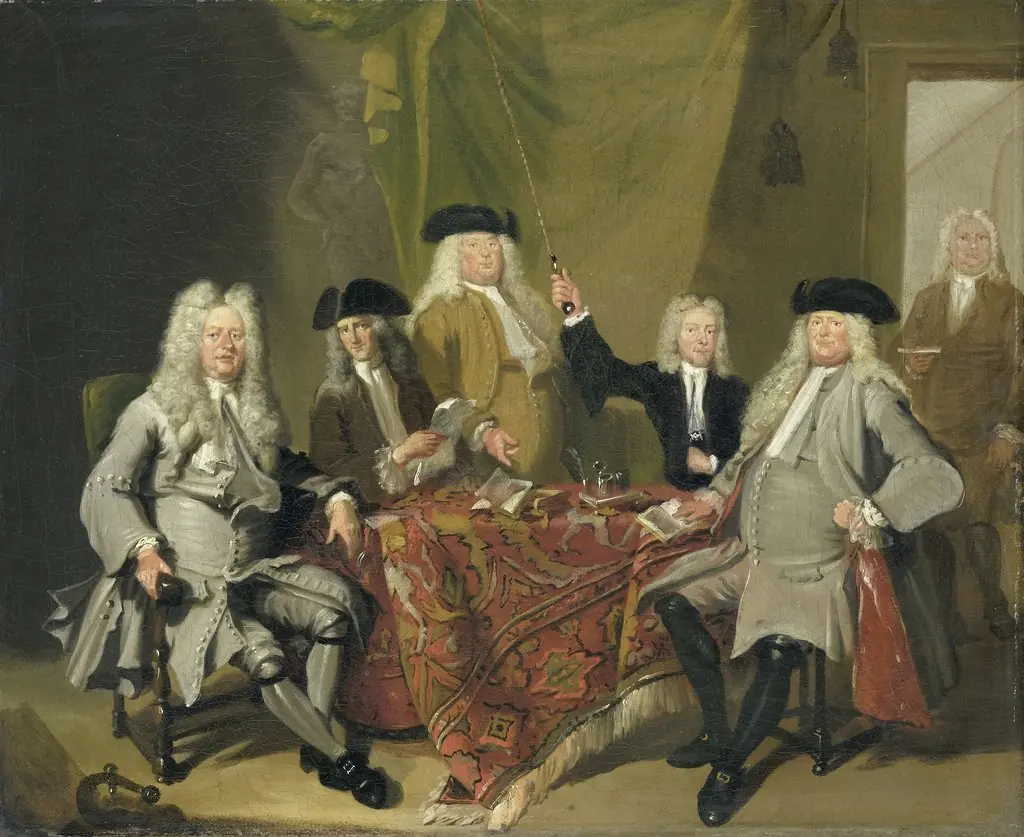 Inspectors of the Collegium Medicum in Amsterdam, 1724
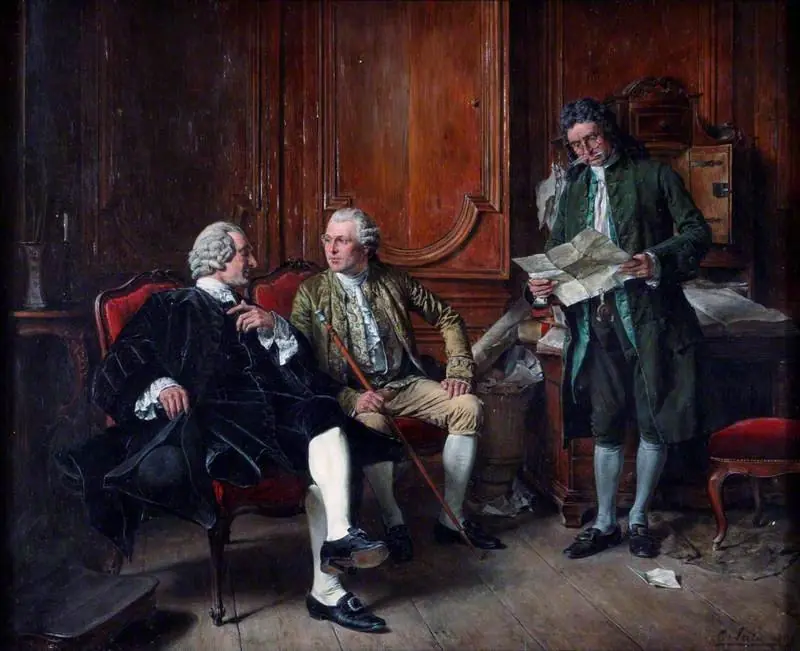 Conversation Piece: Three Men in Eighteenth-Century Costume
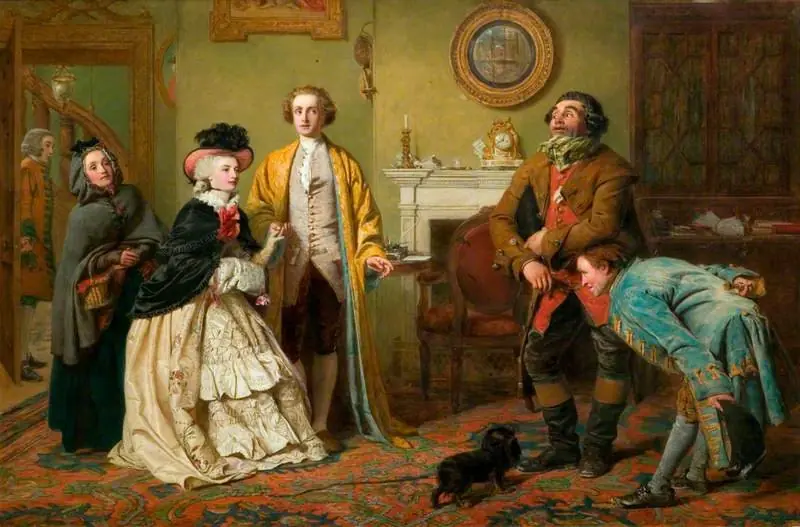 Mr Honeywood Introduces the Bailiffs to Miss Richland as His Friends (from Oliver Goldsmith's 'The Good-Natured Man', Act III, Scene 1)
 Inspectors of the Collegium Medicum in Amsterdam, 1724