Artwork
Democritus in Meditation
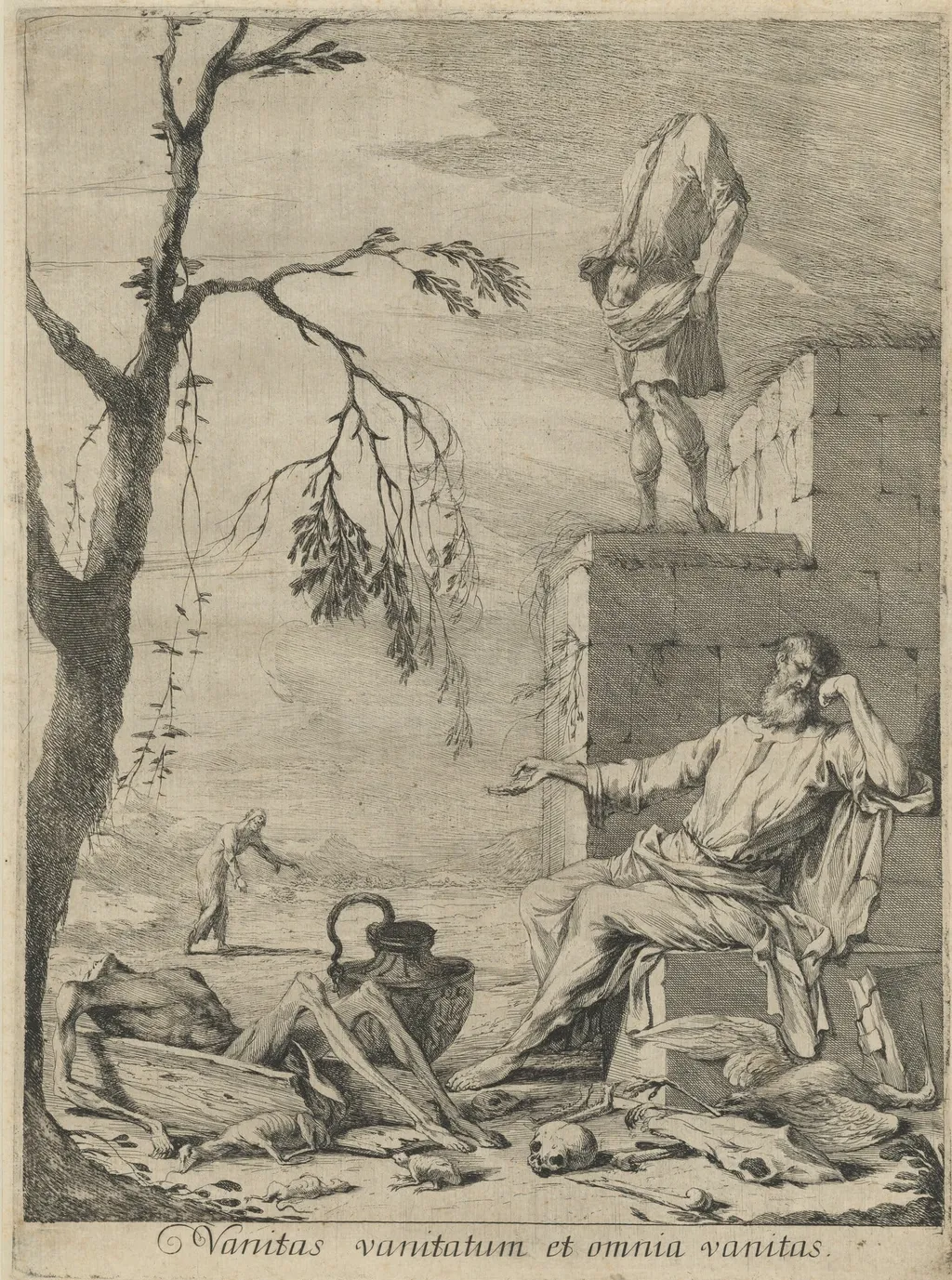
Democritus in Meditation is an ink print by the Baroque artist Gabriel Ehinger. It dates from 1670 and is held in the collection of the National Gallery of Art.
About this work
Overview
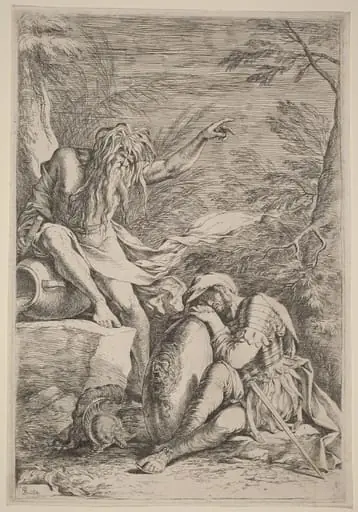
Gabriel Ehinger created this etching around 1670, depicting the ancient Greek philosopher Democritus in a contemplative pose. Rendered on laid paper, the work is part of the National Gallery of Art’s collection in Washington, D.C. The image captures a solitary figure immersed in thought, framed by sparse but symbolic elements that suggest intellectual solitude rather than narrative action.
Subject & Meaning
The figure is traditionally identified as Democritus, known as the 'laughing philosopher' for his focus on human folly and the pursuit of tranquility.
The figure is traditionally identified as Democritus, known as the 'laughing philosopher' for his focus on human folly and the pursuit of tranquility. Here, he is shown in quiet introspection, hand resting on his head, surrounded by objects that may allude to natural philosophy or the material world. The distant figures on a pedestal and beyond hint at the broader human context he observes, reinforcing themes of detachment and reflection.
Technique & Style
Ehinger employed etching on laid paper to achieve fine linear detail and subtle tonal gradations. The texture of the paper enhances the tactile quality of the scene, while delicate hatching defines the folds of the robe and the roughness of the stone wall. Light falls selectively, modeling the figure and casting soft shadows that deepen the sense of interiority, characteristic of Northern European printmaking of the period.
History & Provenance
The print entered the National Gallery of Art’s collection through the A.W. Mellon Educational and Charitable Trust, established in the 1930s. While Ehinger’s career remains poorly documented, this work is among the few securely attributed prints by him. Its survival and preservation reflect its appeal to collectors interested in philosophical imagery and 17th-century graphic arts.
Context
In the late 17th century, depictions of ancient philosophers in contemplative poses were popular in Northern Europe, often serving as moral or intellectual allegories. Ehinger’s etching aligns with this trend, resonating with humanist ideals and the era’s fascination with classical antiquity. The inclusion of symbolic objects and layered spatial depth reflects broader artistic interests in psychological realism and allegorical narrative.
Legacy
Though Ehinger was not a major figure in printmaking history, this etching endures as a quiet example of philosophical imagery in early modern graphic art. It contributes to the understanding of how classical themes were reinterpreted in print form for private, scholarly audiences. Its preservation allows continued study of how visual language conveyed intellectual solitude in the Baroque era.
Artist & collection