Artwork
Joseph and His Brothers
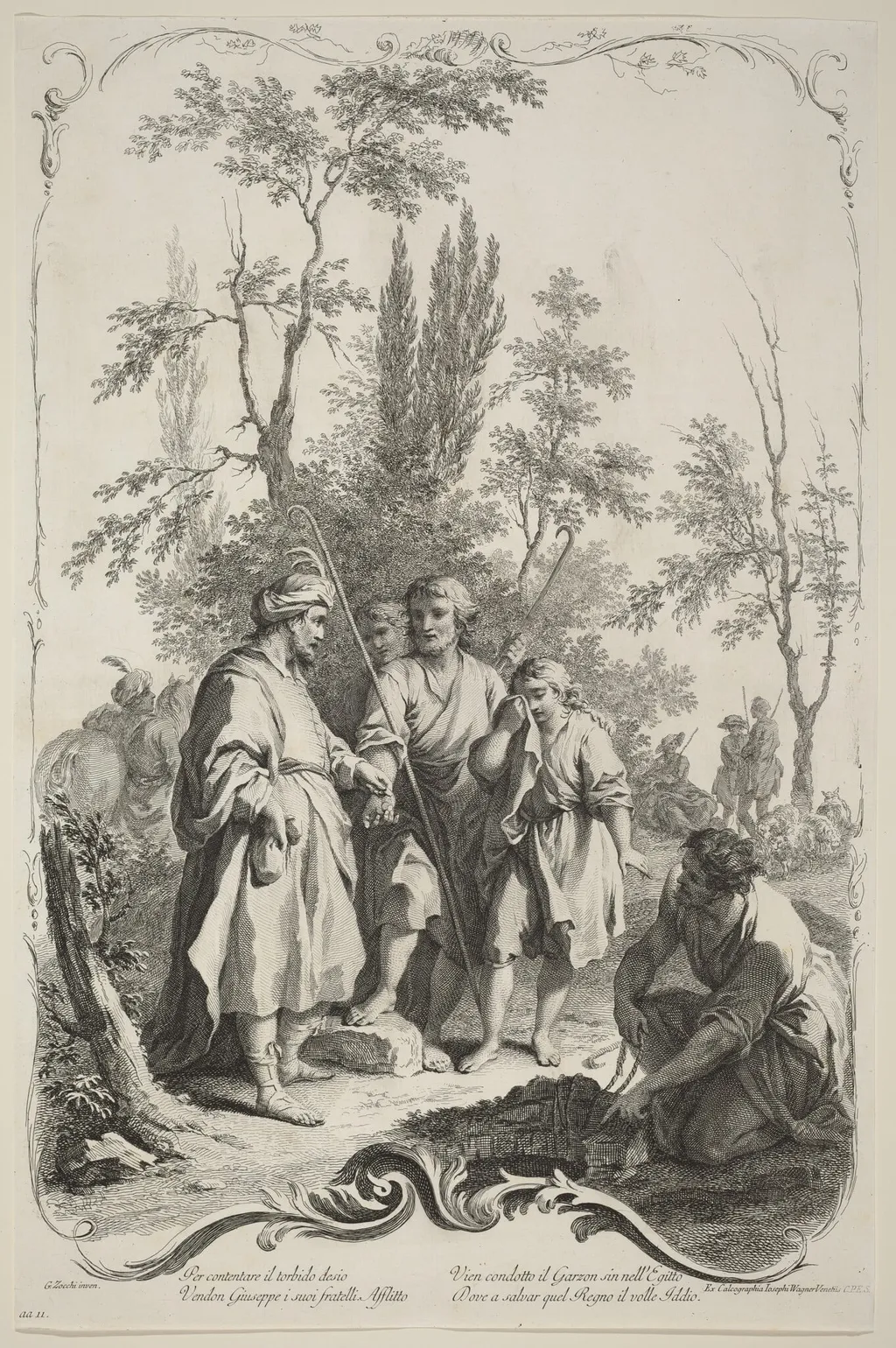
Joseph and His Brothers is an ink print by the Baroque artist Joseph Wagner. It dates from 1745 and is held in the collection of the National Gallery of Art.
About this work
Overview
Joseph Wagner’s print titled *Joseph and His Brothers* is an early‑mid‑18th‑century work executed in etching and engraving on laid paper. Dated to around 1745, the image is a black‑and‑white composition that measures roughly the size of a typical hand‑held print of the period.
Subject & Meaning
The scene depicts four male figures gathered in a forested setting. An older man wearing a turban embraces a younger companion who holds a staff, while a third figure gestures toward them and a fourth leans against a tree, looking downward. The arrangement suggests a moment of dialogue or reunion among relatives, echoing the biblical narrative of Joseph’s encounter with his brothers.
Technique & Style
Wagner combines etching’s fluid lines with the sharper incisions of engraving to render intricate textures in clothing folds, foliage, and the rocky ground. The fine cross‑hatching creates subtle tonal variations, while the delineated outlines give the figures a clear presence against the wooded backdrop, characteristic of detailed printmaking in the mid‑1700s.
History & Provenance
The work was produced in Wagner’s workshop in the 1740s, a period when he was active in Venice and known for reproducing religious and mythological subjects. The print has circulated among European collections since its creation, appearing in several 19th‑century catalogues of Wagner’s oeuvre, though its precise ownership trail remains partially undocumented.
Context
During the mid‑18th century, prints served both as decorative objects and as means of disseminating biblical stories to a broad audience. Wagner’s choice of a familiar scriptural episode reflects contemporary interest in moralizing subjects, while the forest setting aligns with the period’s taste for pastoral and narrative landscapes.
Artist & collection


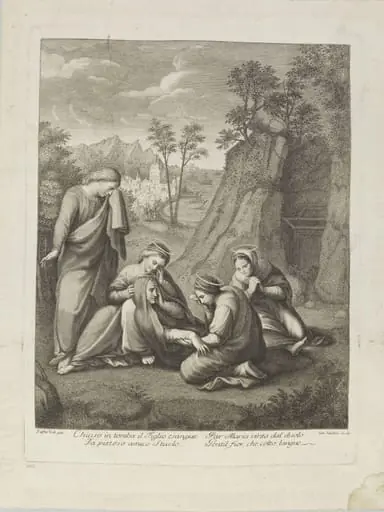 The three Maries at the tomb of Jesus Christ
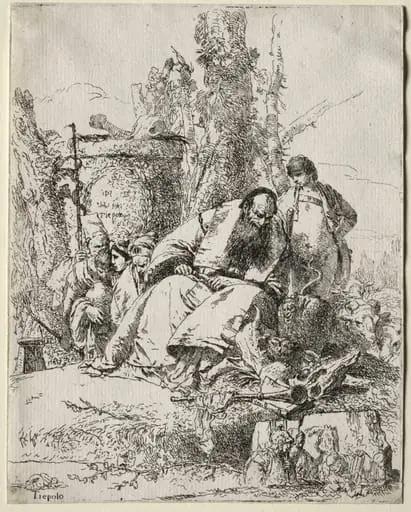 Scherzi di Fantasia: seated Magician, boy and four figures
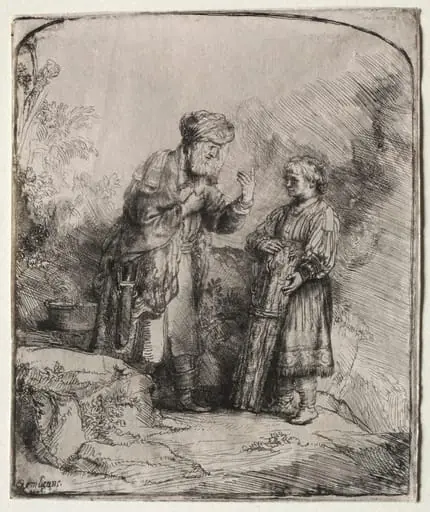 Abraham and Isaac
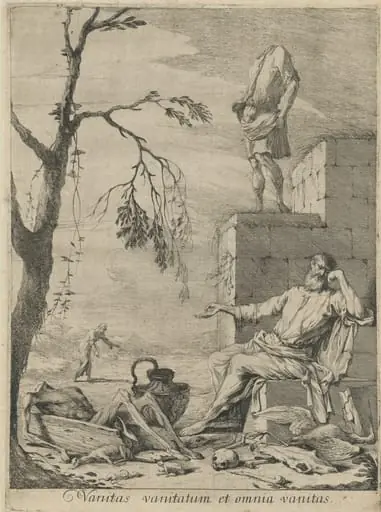 Democritus in Meditation
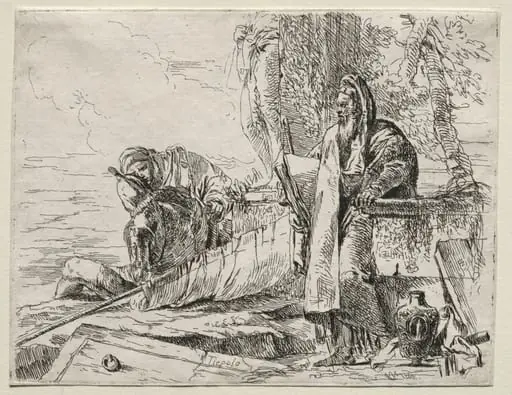 Various Caprices: The Philosopher Holding a Book
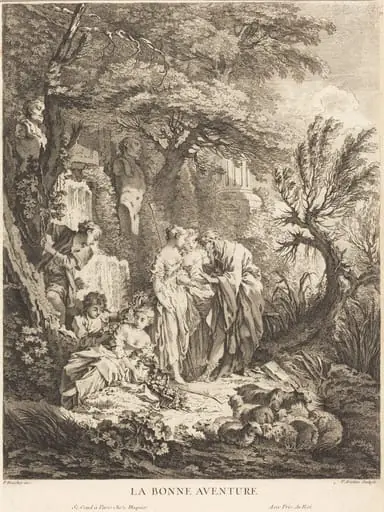 La Bonne Aventure
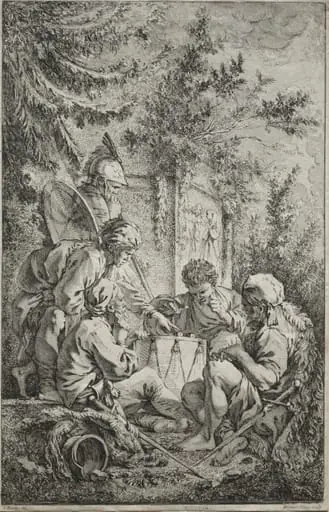 The First Guard
 The Senses: Touch (after Boucher)
 An Angel Foretells the Birth of Abraham's Son
 Predigt Johannes des Täufers
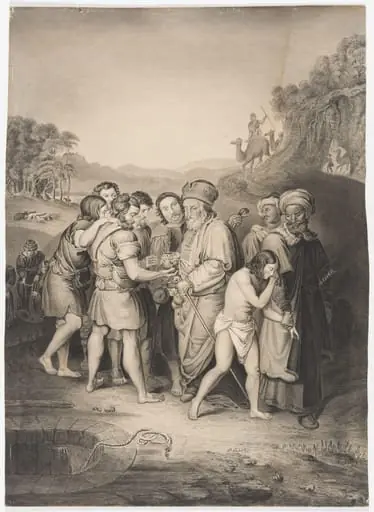 Joseph and his brethren