Artwork
Pietà
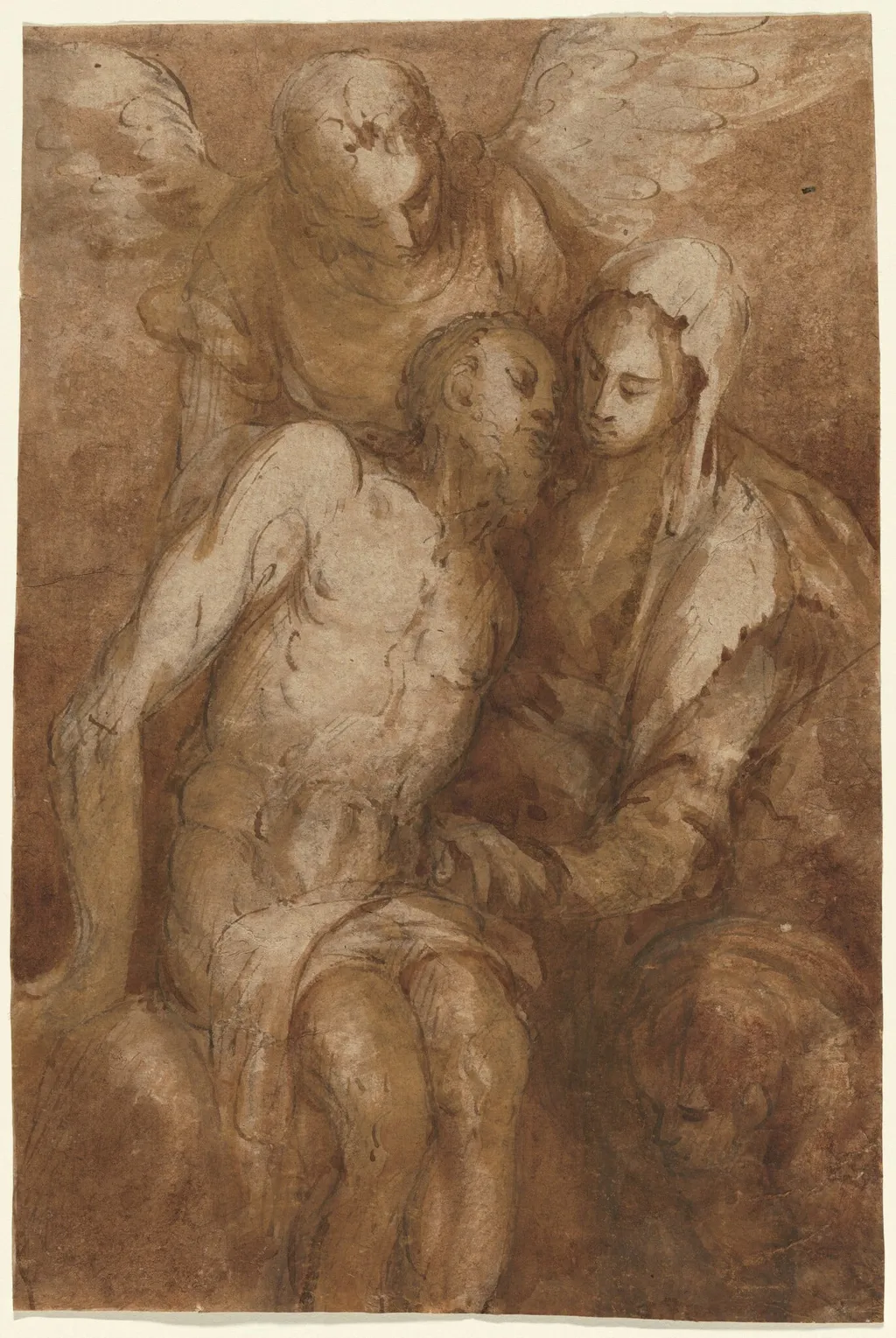
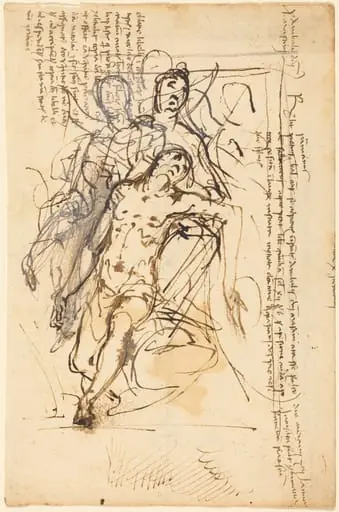
Pietà is a chalk drawing by the Renaissance artist El Greco. It dates from 1570 and is held in the collection of the National Gallery of Art.
About this work
Overview
El Greco’s drawing titled *Pietà* dates from around 1570. Executed on laid paper, the work combines pen work in brown ink with a brown wash applied over an initial black‑chalk sketch. The composition presents the Virgin Mary cradling the lifeless body of Christ, rendered in a restrained tonal palette.
Subject & Meaning
The image captures the biblical moment after the crucifixion when Mary holds her son’s corpse. By focusing on the intimate gesture between mother and child, the drawing emphasizes sorrow and devotion, inviting contemplation of loss and compassion without elaborate narrative detail.
Technique & Style
El Greco employed cross‑hatching with brown ink to model form and suggest volume, while the brown wash deepens shadows and unifies the scene. The underlying black chalk provides a structural framework, allowing the artist to achieve subtle gradations of tone on the textured surface of laid paper.
History & Provenance
Created early in El Greco’s career, the drawing reflects a period when the artist was still developing his distinctive style. It remains a rare example of his work in a monochrome medium, contrasting with the vibrant color schemes that later defined his paintings.
Context
The *Pietà* aligns with the Counter‑Reformation’s emphasis on emotive religious imagery, serving as a devotional aid. Its modest scale and subdued palette suggest it was intended for private contemplation rather than public display, typical of many Renaissance drawings used as study or meditation pieces.
Artist & collection
Artist
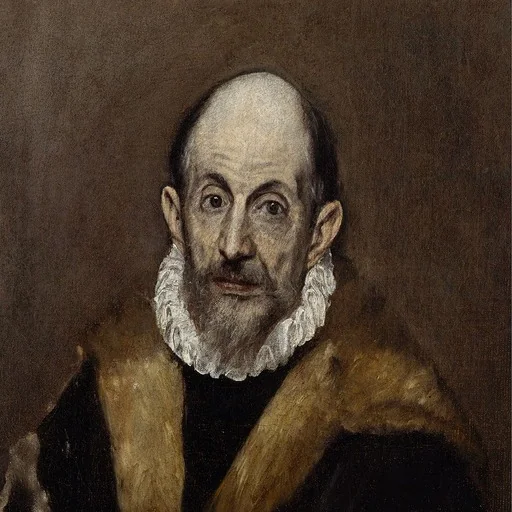
Doménikos Theotokópoulos was born in 1541 in Candia (modern Heraklion), the capital of Venetian-ruled Crete, where he was trained in the post-Byzantine tradition of icon painting.

 The Pietà
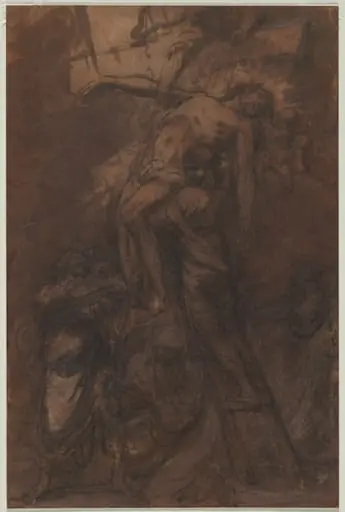 Descent from the Cross
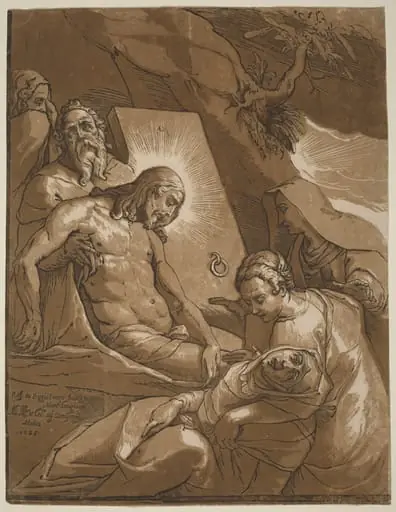 The Entombment
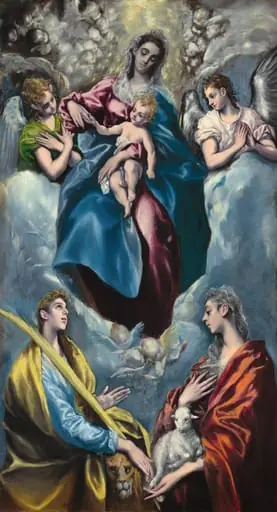
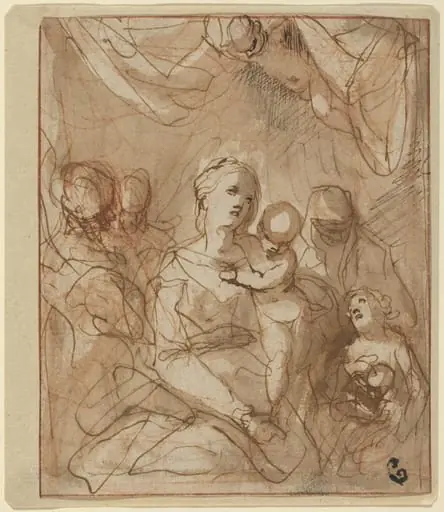 The Virgin and Infant Jesus with Saints
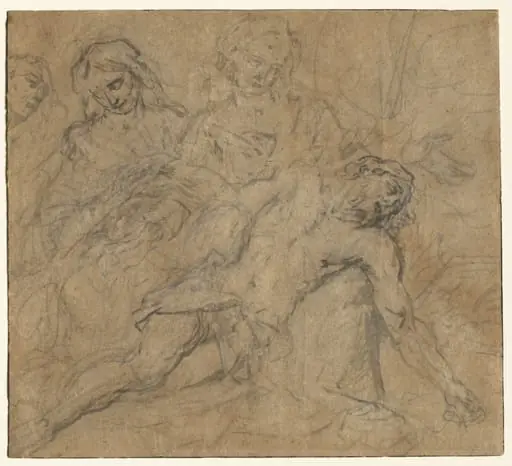 The Lamentation
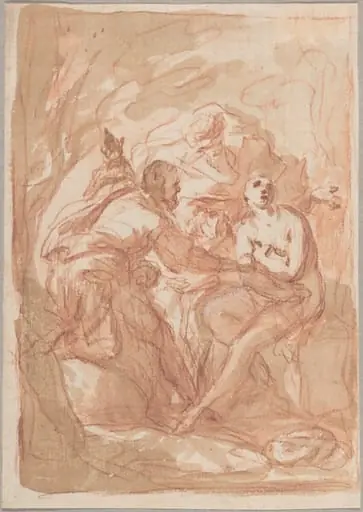 Susanna and the Elders
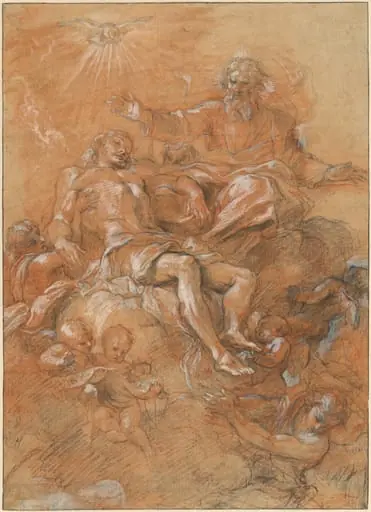 God the Father and the Holy Spirit Receiving the Body of Christ
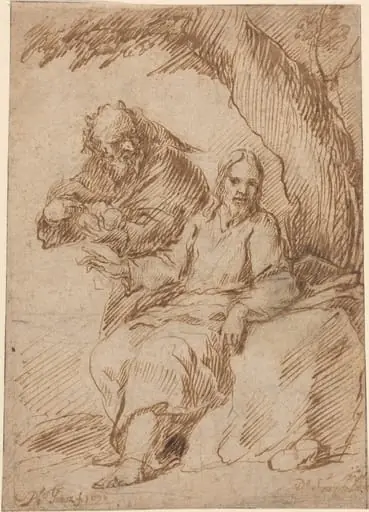 The Temptation of Christ in the Desert
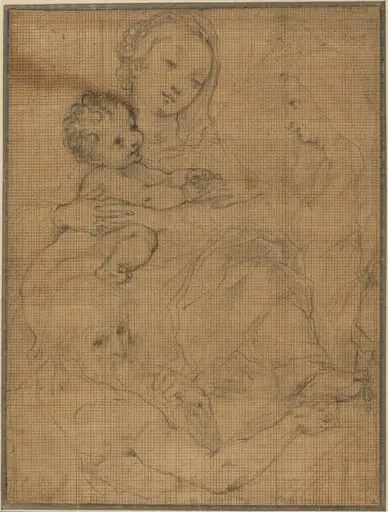 Mystic Marriage of Saint Catherine with Saint Jerome
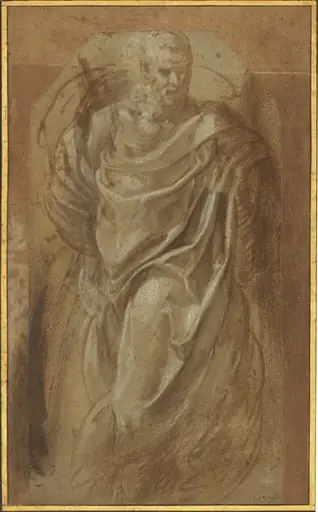 A Standing Man in Classical Drapery