Artwork
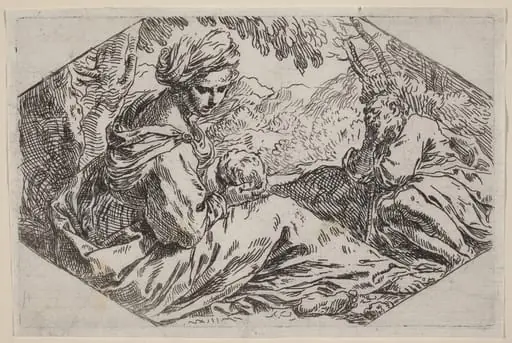
The Temptation of Christ in the Desert
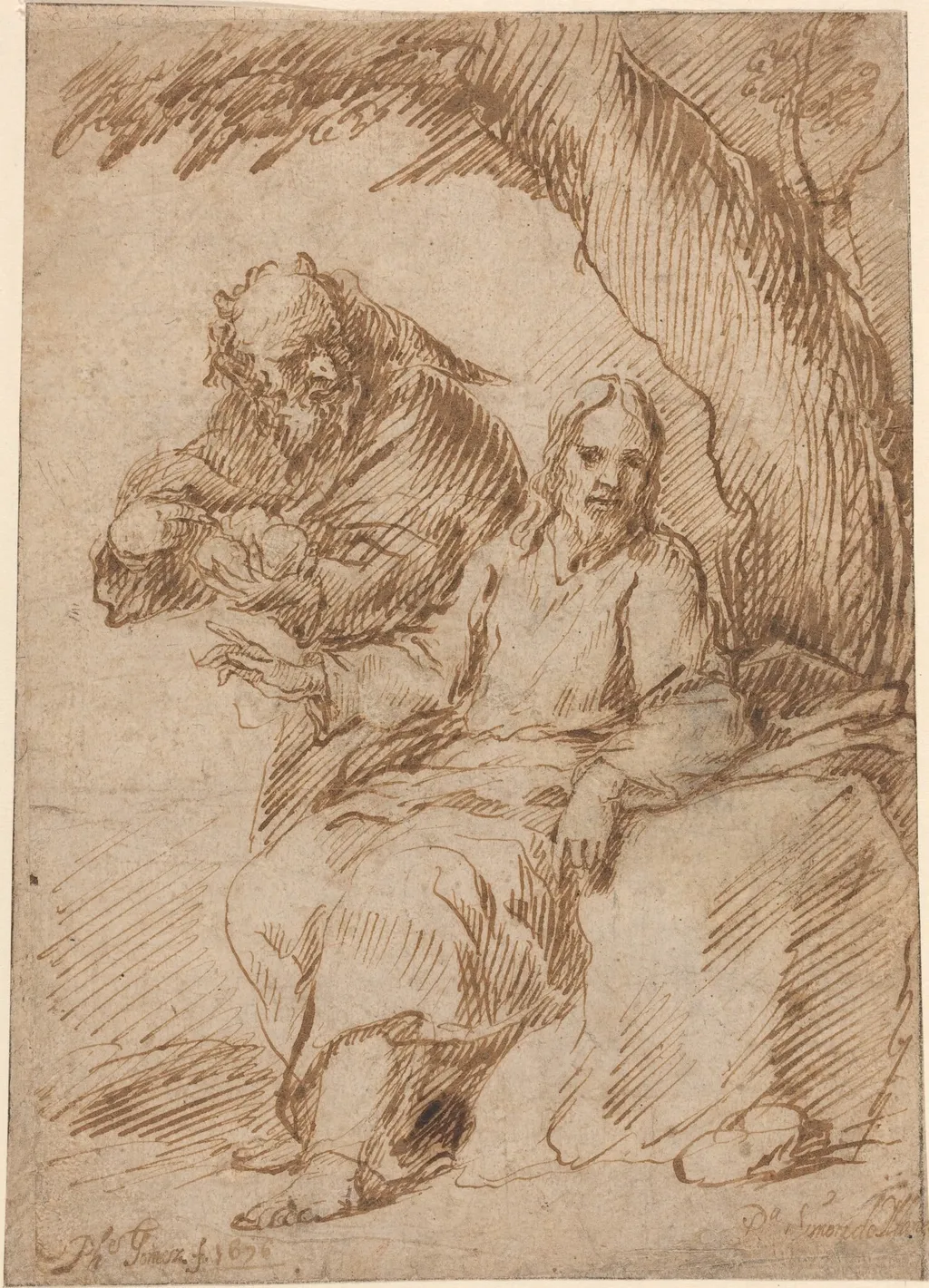
The Temptation of Christ in the Desert is an ink drawing by the Baroque artist Felipe Gomez de Valencia. It dates from 1676 and is held in the collection of the National Gallery of Art. Created around 1676, this pen-and-brown‑ink drawing on laid paper is attributed to the Spanish Baroque artist Felipe Gómez de Valencia.
About this work
Overview
Created around 1676, this pen-and-brown‑ink drawing on laid paper is attributed to the Spanish Baroque artist Felipe Gómez de Valencia. It presents a biblical episode, the temptation of Christ, rendered in a compact, monochrome format typical of preparatory studies of the period.
Subject & Meaning
The composition shows the youthful Jesus seated on a rock, his gaze directed inward, while a bearded elder—interpreted as a prophet, angel, or the devil—stands nearby extending an object that may represent fruit or a stone. The sparse setting emphasizes the spiritual trial rather than the surrounding desert.
Technique & Style
Using fine pen strokes and varying brown ink tones, the artist achieves a layered texture, balancing strong contour lines with delicate shading. The minimal background is suggested by faint linear marks, creating depth without detracting from the central figures and reinforcing a contemplative atmosphere.
History & Provenance
The work belongs to a series of religious studies produced by Gómez de Valencia in the late seventeenth century, a time when Spanish artists frequently prepared detailed drawings before executing larger oil paintings. Its current location and ownership history remain undocumented in the available records.
Artist & collection


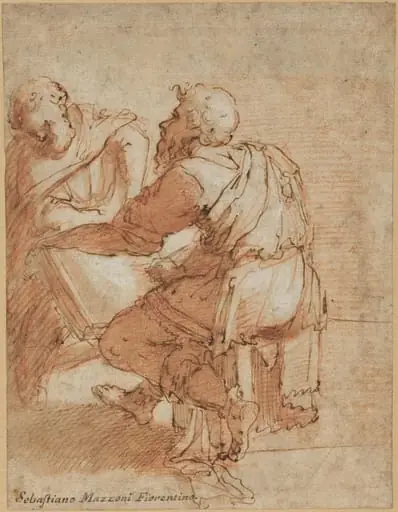 Study for "The Four Doctors of the Church"
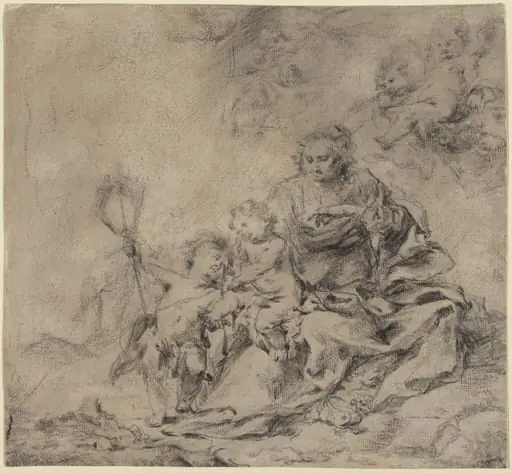 The Virgin and Child with John the Baptist
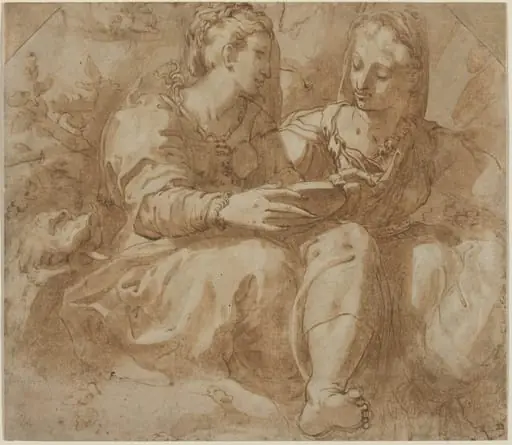 Two Seated Women
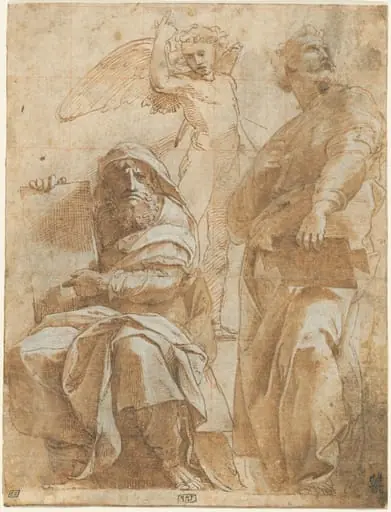 The Prophets Hosea and Jonah
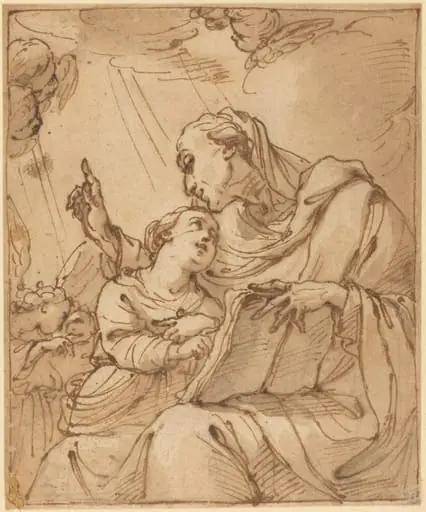 The Education of the Virgin
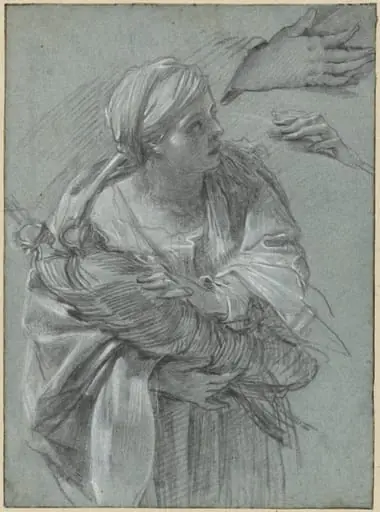 Creusa Carrying the Gods of Troy
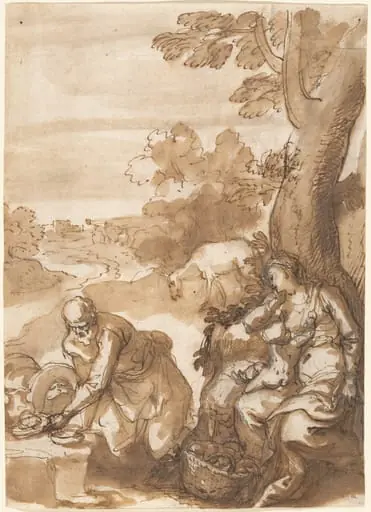 Rest on the Flight into Egypt
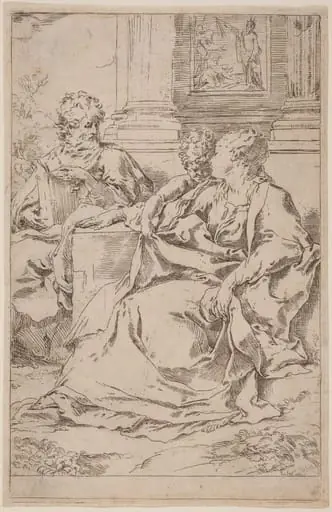 Holy Family
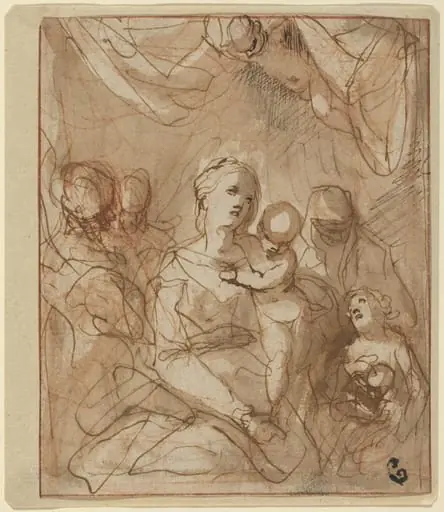 The Virgin and Infant Jesus with Saints
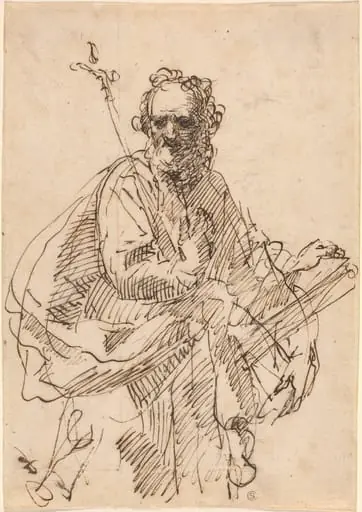 A Standing Saint with a Crucifix and a Book
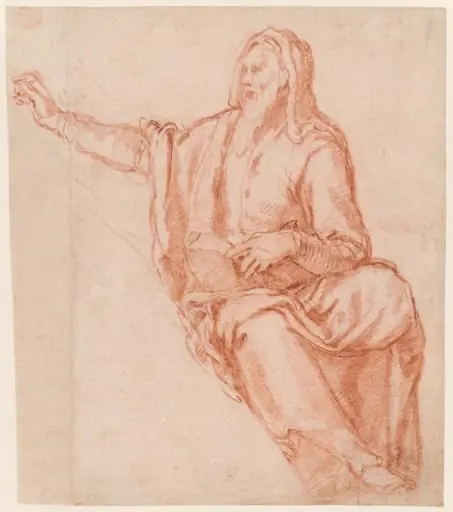 Jeremiah (Design for a Lunette)
 The Rest on the Flight into Egypt