Artwork
Retrato de un caballero desconocido
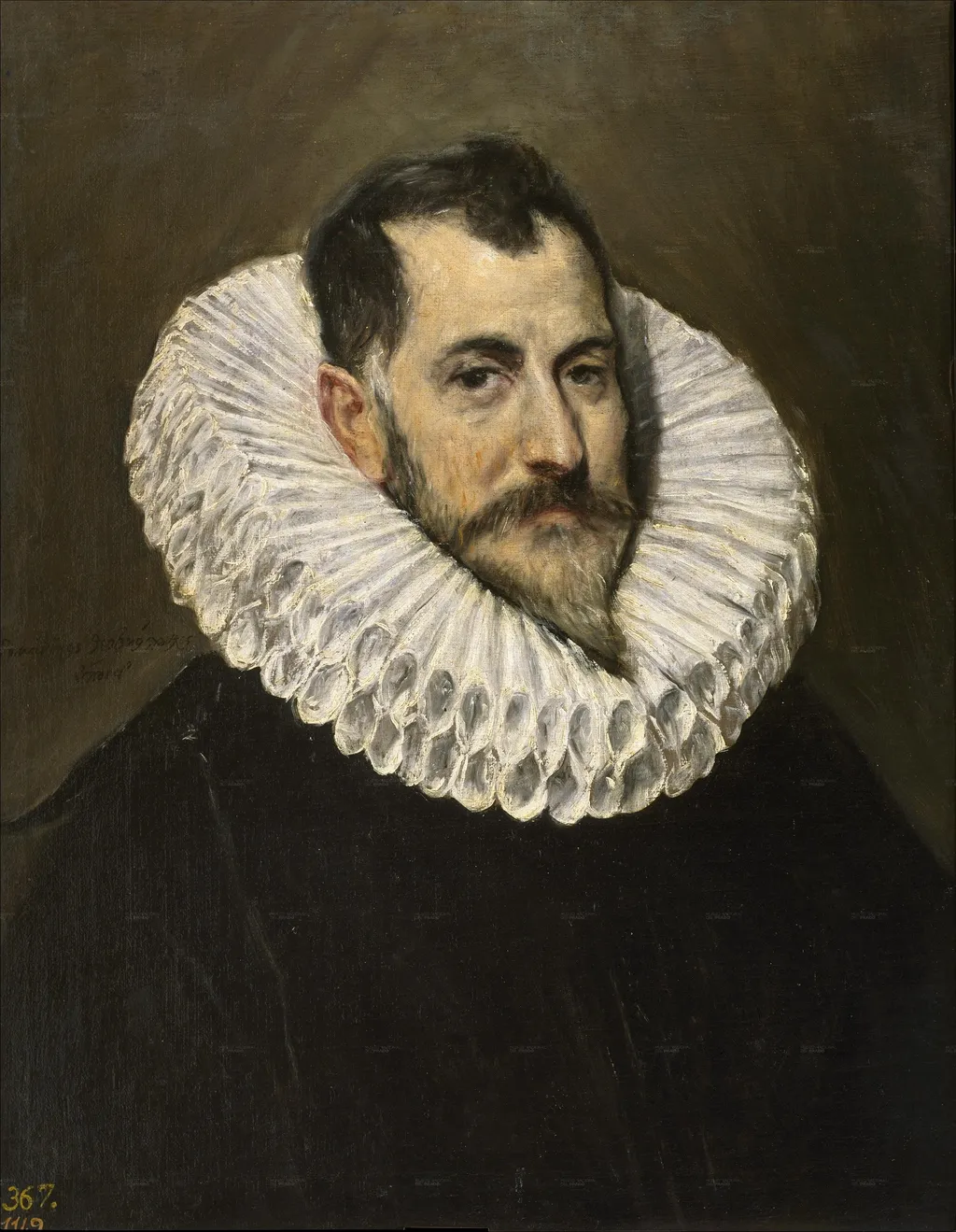
Retrato de un caballero desconocido is an oil painting by El Greco. It dates from 1600 and is held in the collection of the Museo del Prado.
About this work
Overview
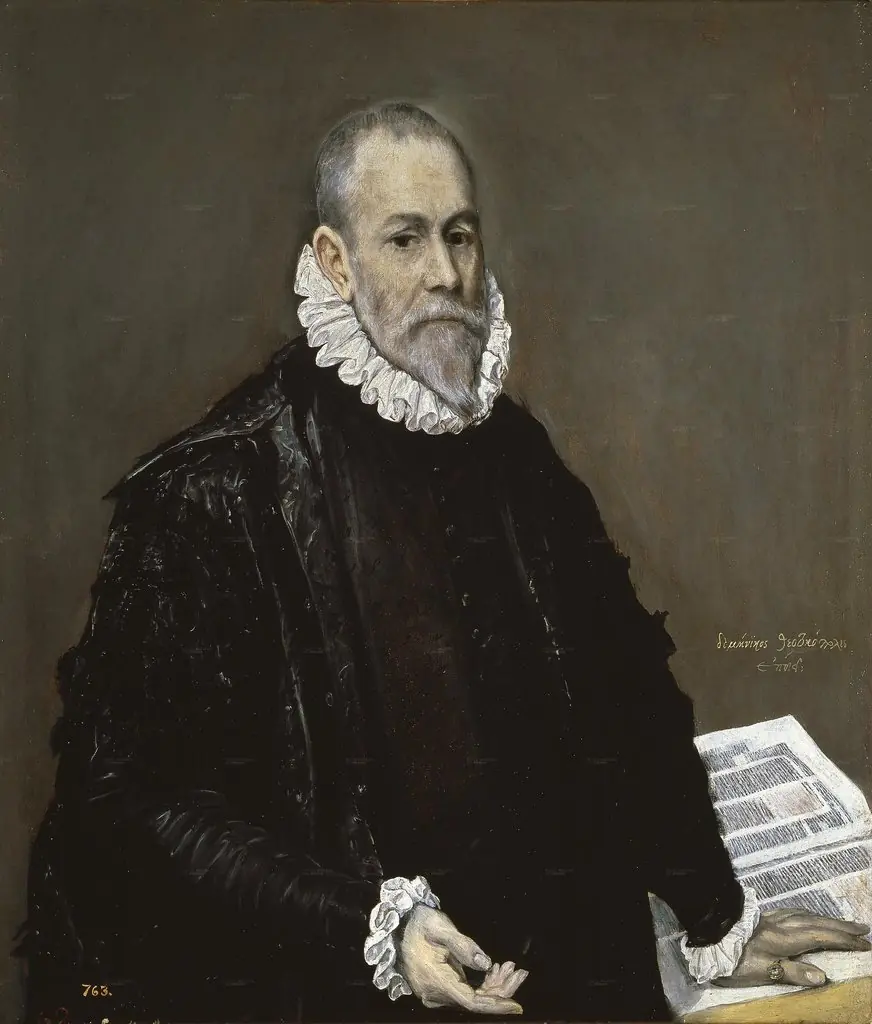
El Greco’s oil portrait, titled *Retrato de un caballero desconocido*, was executed in Toledo between 1603 and 1607. The work is part of the Prado Museum’s collection and depicts a solitary figure in a dark setting, rendered with the artist’s characteristic elongated forms and expressive brushwork.
Subject & Meaning
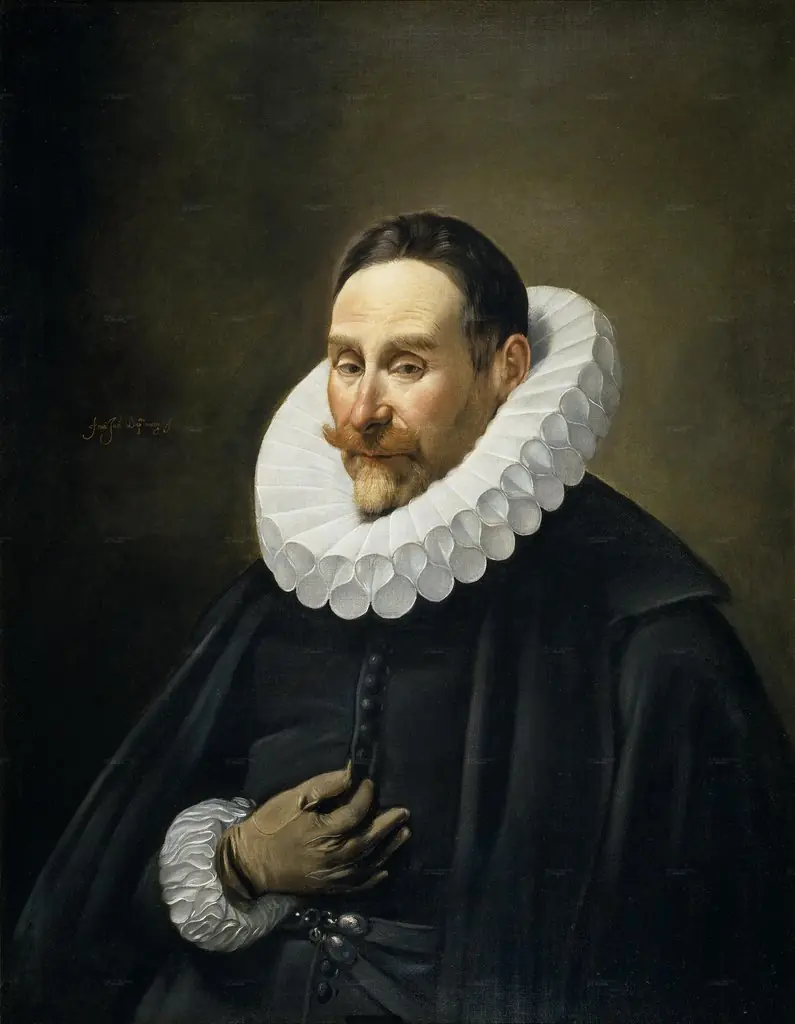
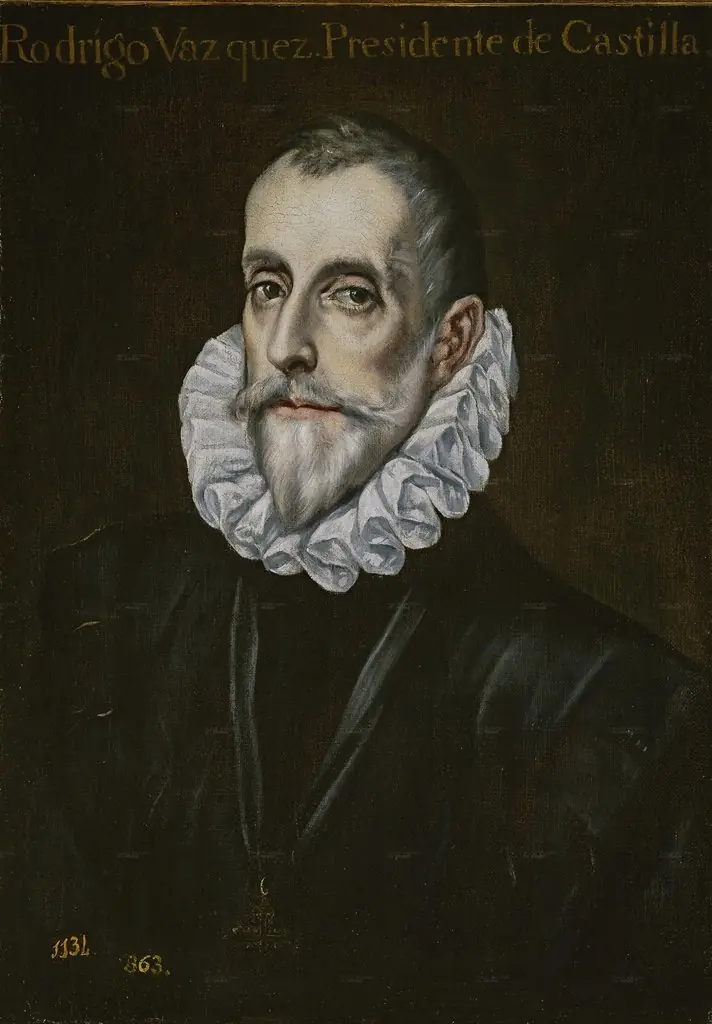
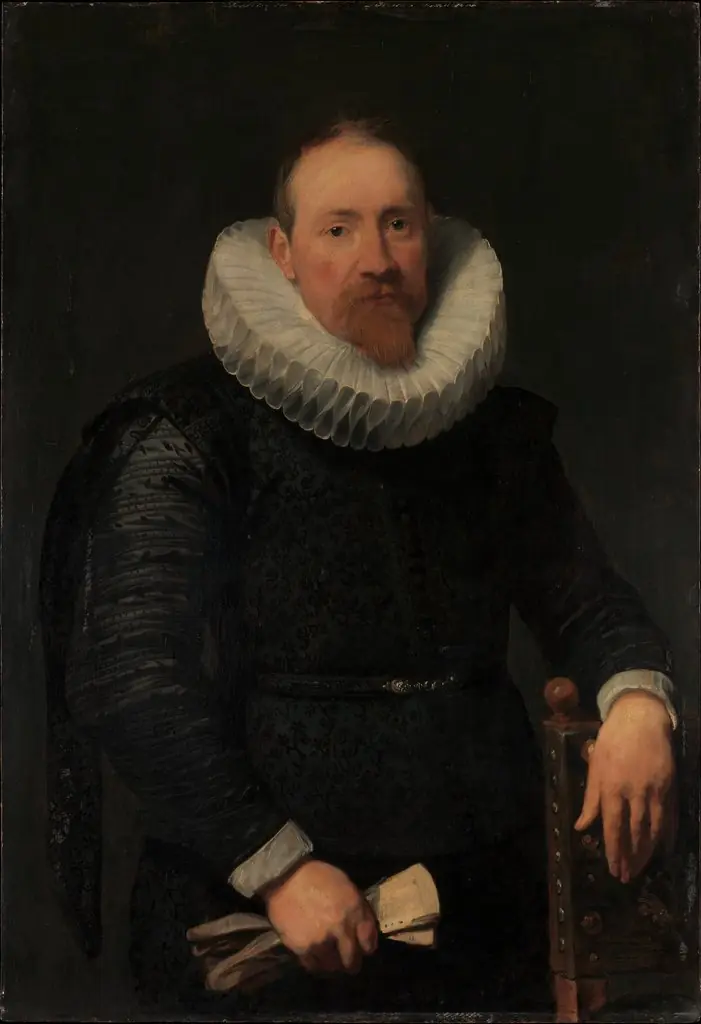
The sitter is an unidentified gentleman, shown with a dark beard, a black garment, and a prominent white millstone collar. The stark contrast between the illuminated face and the deep background emphasizes the individual’s presence, a common aim in El Greco’s secular portraiture, which often left the identity of the figure ambiguous.
Technique & Style
El Greco employs a pronounced chiaroscuro, using strong light on the face and collar against a nearly black backdrop. Thick, textured strokes give the flesh and fabric a tactile quality, while the elongated proportions and fluid lines reflect the artist’s late-Mannerist sensibility.
History & Provenance
Created during the final decade of El Greco’s career, the painting entered the Museo del Prado’s holdings in the 20th century. Scholars have suggested a possible link to Miguel de Cervantes, noting the author’s residence near Toledo in 1604 and his connections to El Greco’s social circle, though no definitive evidence confirms this identification.
Context
The portrait belongs to a series of similar works in which El Greco portrayed anonymous gentlemen in black attire and white ruffs, set against dark backgrounds. The most renowned example from this group is *El caballero de la mano en el pecho* (c. 1580), illustrating the artist’s sustained interest in exploring individual character through minimalist settings.
Own this work as a print
Artist & collection
Artist
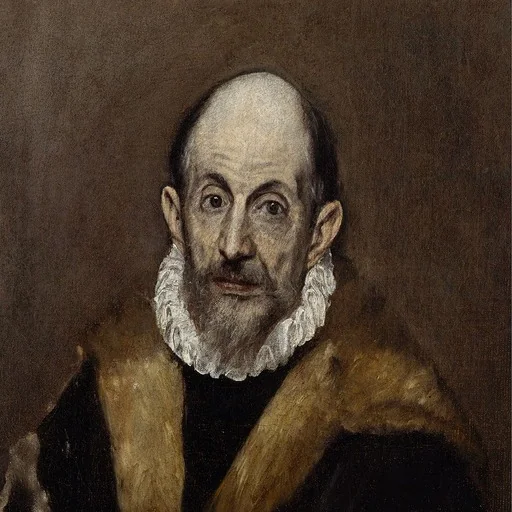
Doménikos Theotokópoulos was born in 1541 in Candia (modern Heraklion), the capital of Venetian-ruled Crete, where he was trained in the post-Byzantine tradition of icon painting.