Artwork
Saint John the Evangelist and Saint Francis
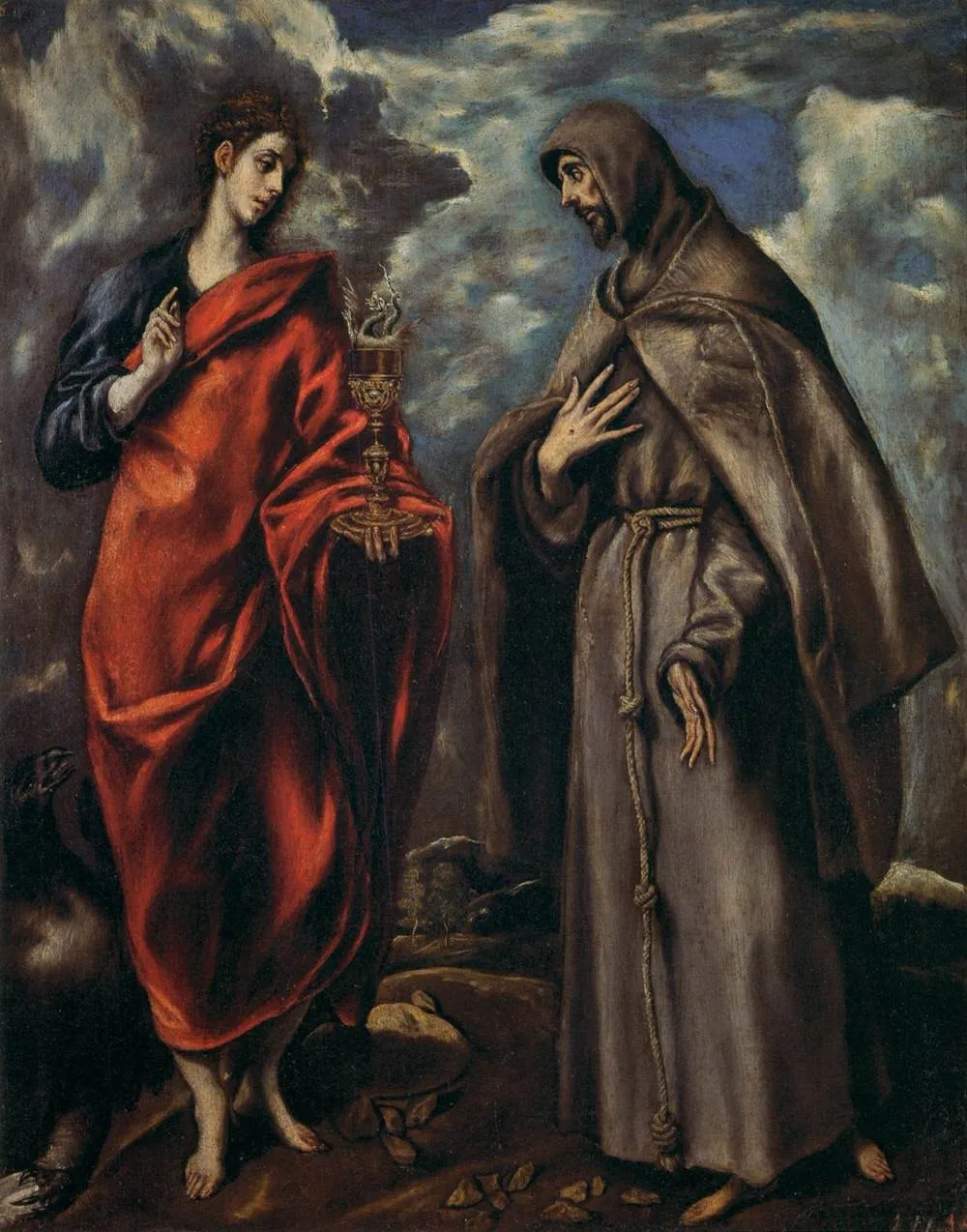
Saint John the Evangelist and Saint Francis is an unspecified painting by the Mannerist artist El Greco. It dates from 1600 and is held in the collection of the Uffizi Gallery.
About this work
Overview
Originally owned by Spain’s ducal family of Sueca, it entered the Uffizi’s collection in 1975 after passing through the Ruspoli y Godoy lineage.
Painted around 1600, this oil on canvas depicts Saint John the Evangelist and Saint Francis of Assisi standing side by side against a brooding, cloud-filled sky. Executed by El Greco, the work bears his full Greek name inscribed on a central rock. Originally owned by Spain’s ducal family of Sueca, it entered the Uffizi’s collection in 1975 after passing through the Ruspoli y Godoy lineage. Its somber tone and elongated figures reflect El Greco’s mature style, distinct from Renaissance naturalism.
Subject & Meaning
Saint John, identified by the eagle at his feet and the chalice holding his head, symbolizes divine revelation and martyrdom, referencing the legend of his survival after drinking poisoned wine. Saint Francis, barefoot and clad in a simple brown habit with a rope belt, embodies humility and spiritual devotion. Their mutual gaze and John’s gesture toward the chalice suggest a silent exchange between mystical authority and ascetic witness, uniting theological and monastic ideals.
Technique & Style
El Greco employs elongated forms and a cool, luminous palette to heighten spiritual tension. The saints’ draped robes cascade in sharp, angular folds, contrasting with the soft, swirling clouds above. The chalice glows with an unnatural gold, drawing attention as a focal point. Brushwork is fluid yet deliberate, with thin glazes creating depth in shadows and a luminous glow around the figures, characteristic of his late period’s expressive abstraction.
History & Provenance
The painting remained in the possession of the ducal family of Sueca at their estate in Boadilla del Monte until the early 19th century. It passed to the Ruspoli y Godoy family through Carlota de Godoy’s marriage to Prince Camillo Ruspoli in 1821. Scholar Manuel Bartolomé Cossío first documented it in 1821; Harold Wethey later included it in his 1962 catalogue raisonné. In 1975, it was re-framed and donated to the Uffizi, where it remains on display.
Context
Created during El Greco’s time in Toledo, the painting reflects Counter-Reformation interests in saintly models and mystical experience. The pairing of John, a Gospel writer and miracle worker, with Francis, founder of a mendicant order, aligns with contemporary devotional trends emphasizing personal holiness. El Greco’s departure from classical proportions and his emphasis on inner light diverged from mainstream Italian trends, marking a uniquely Spanish spiritual expression.
Legacy
The work contributed to the 19th- and 20th-century reassessment of El Greco as a visionary rather than a mannerist outlier. Its inclusion in major scholarly catalogues helped establish his place in the canon of Western art. The painting’s preservation and public display in the Uffizi underscore its significance as a bridge between Spanish mysticism and broader European artistic evolution, influencing later interpretations of religious symbolism in modern art.
Artist & collection
Artist
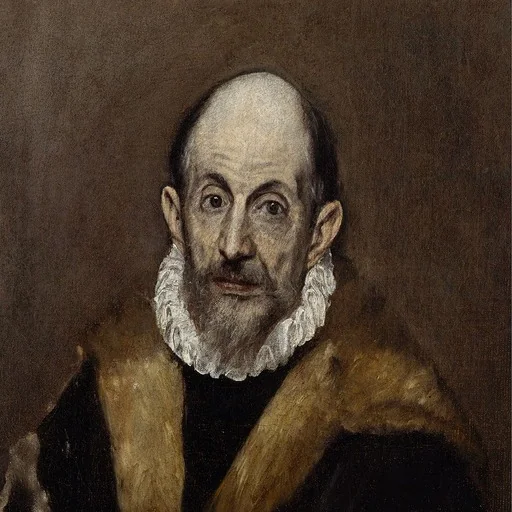
Doménikos Theotokópoulos was born in 1541 in Candia (modern Heraklion), the capital of Venetian-ruled Crete, where he was trained in the post-Byzantine tradition of icon painting.

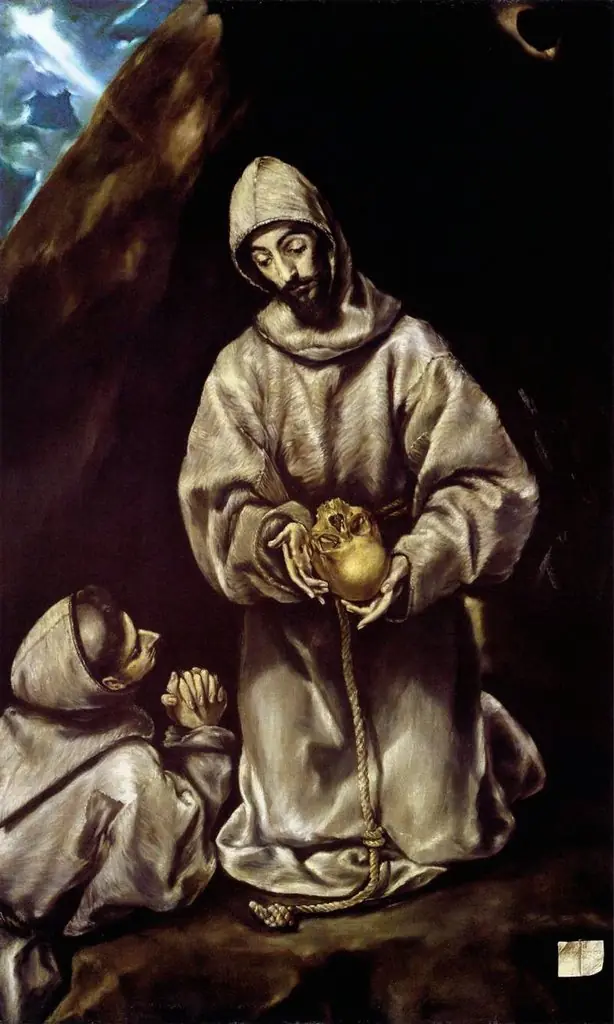 St Francis and Brother Leo Meditating on Death
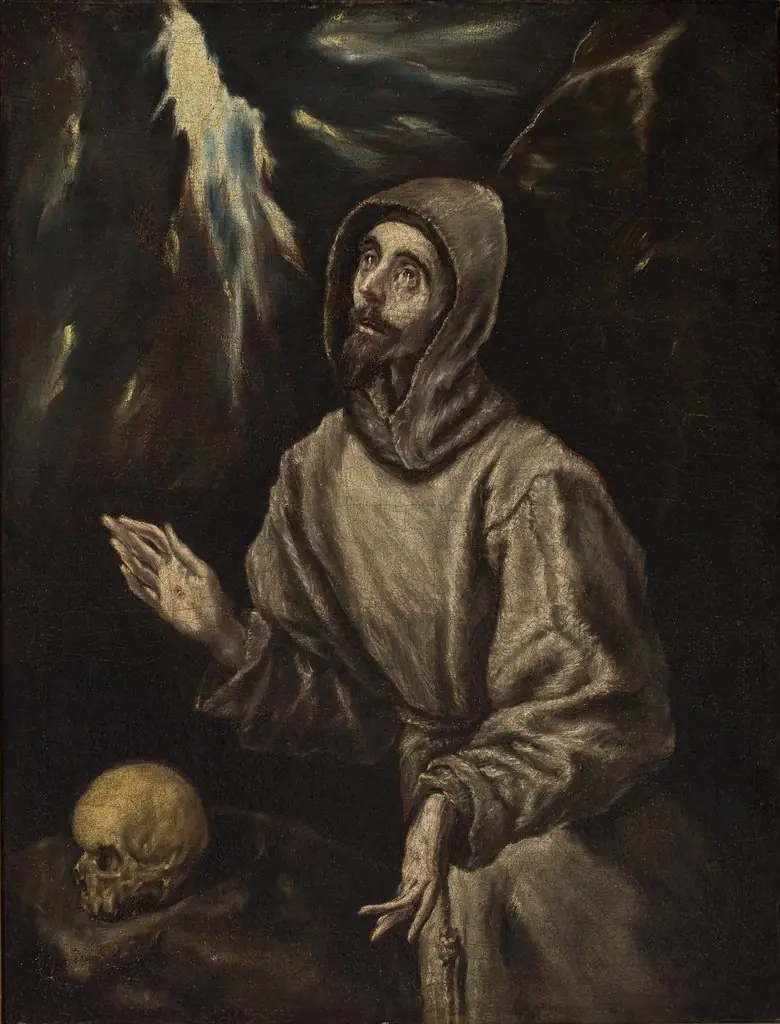 Ecstasy of Saint Francis Receiving the Stigmata
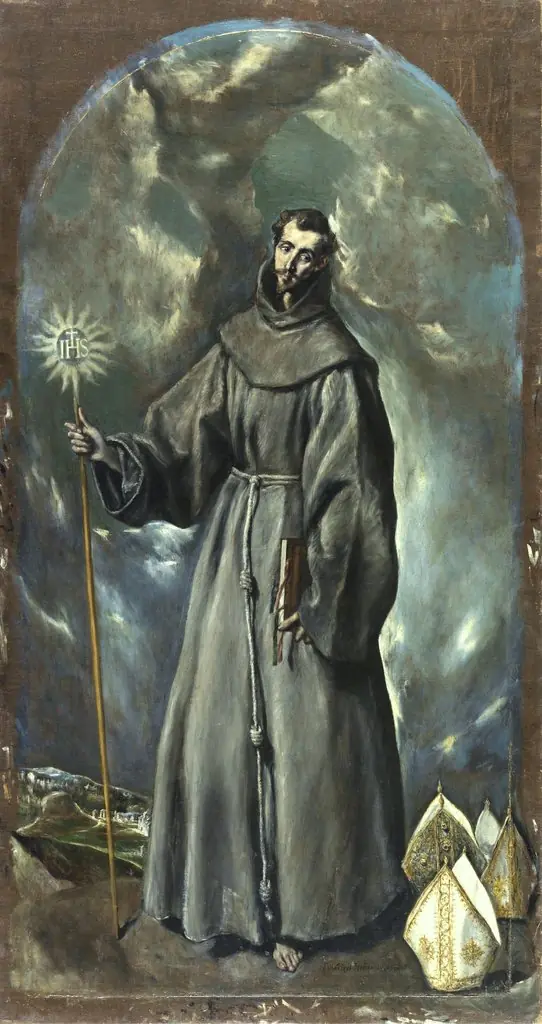 San Bernardino de Siena
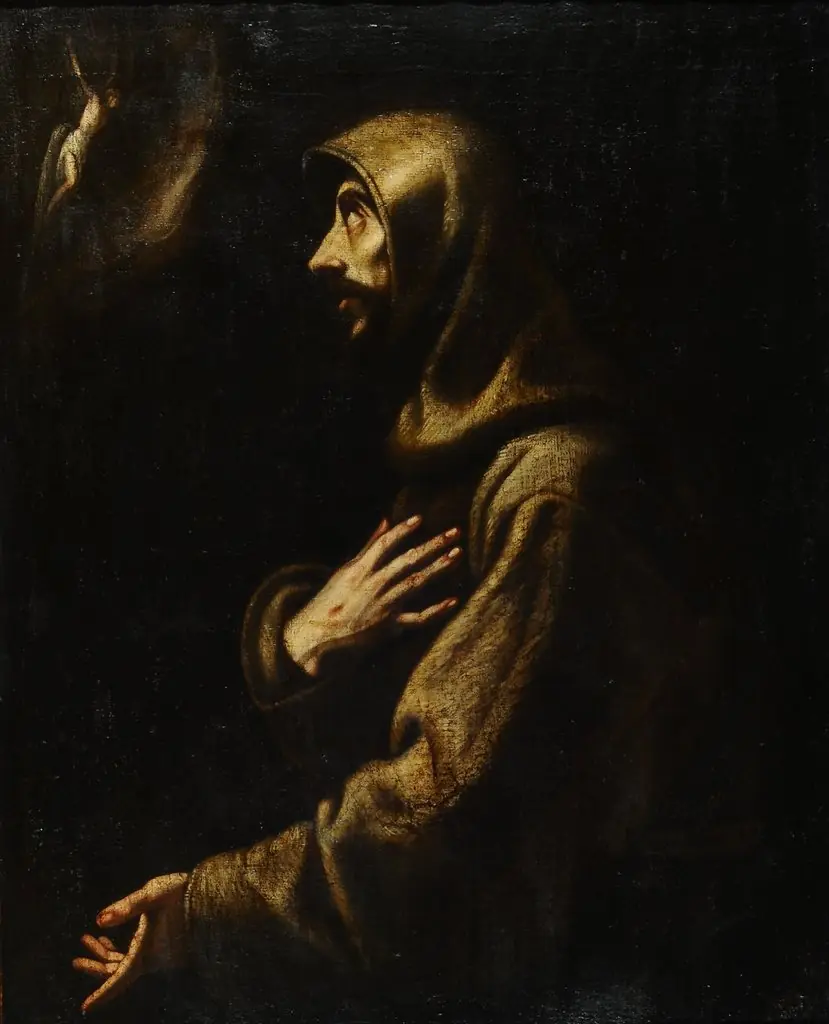 San Francisco in ecstasy
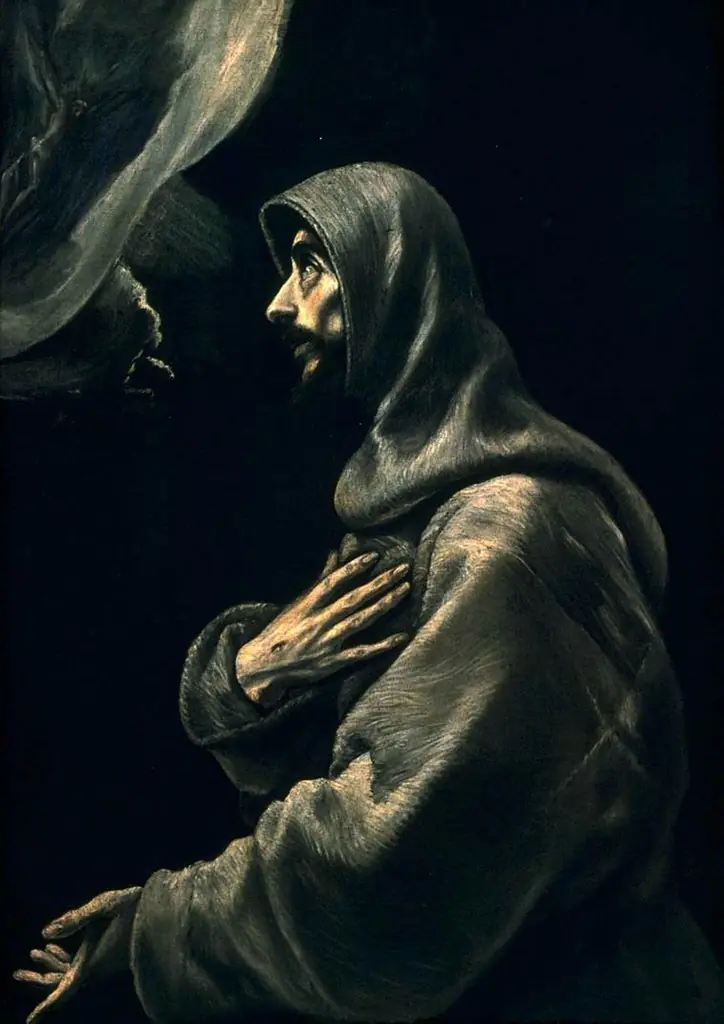 Saint Francis in Ecstasy
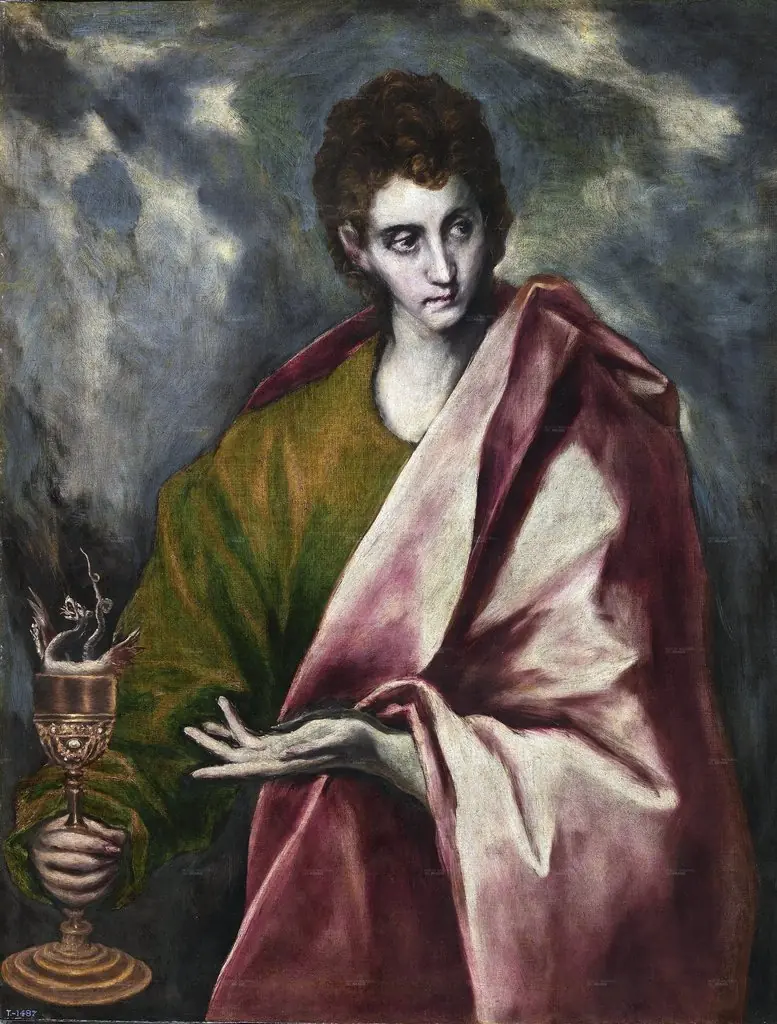 St John the Evangelist
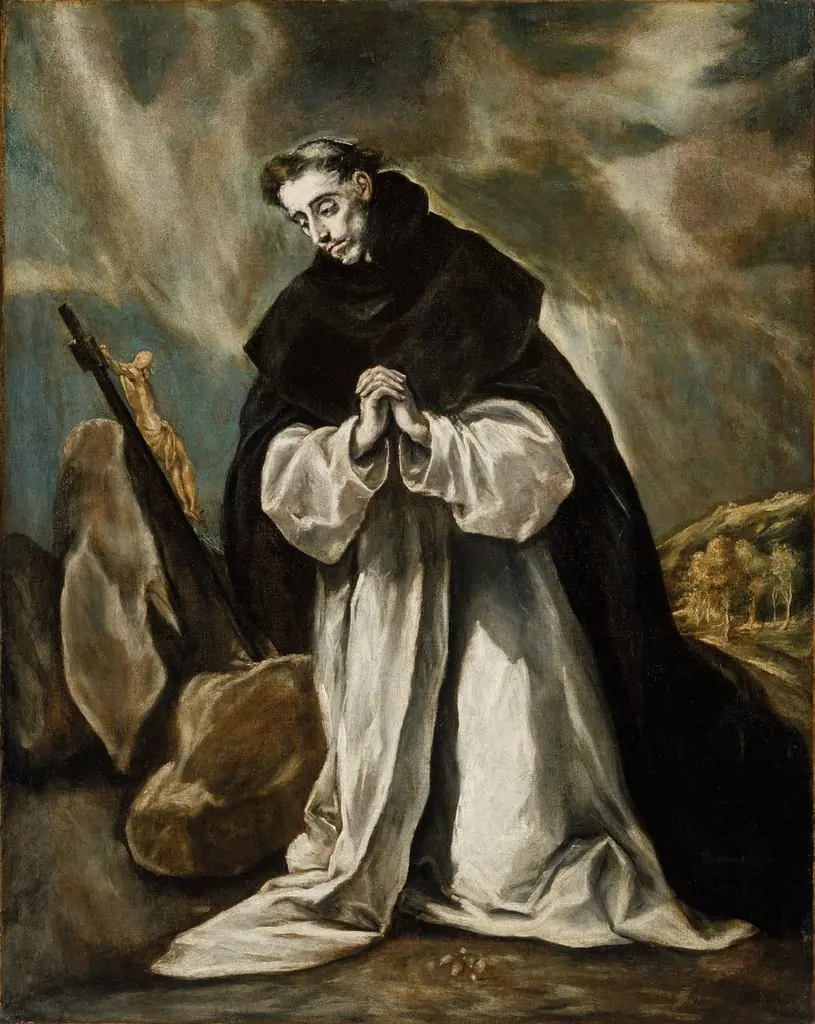 Saint Dominic in Prayer
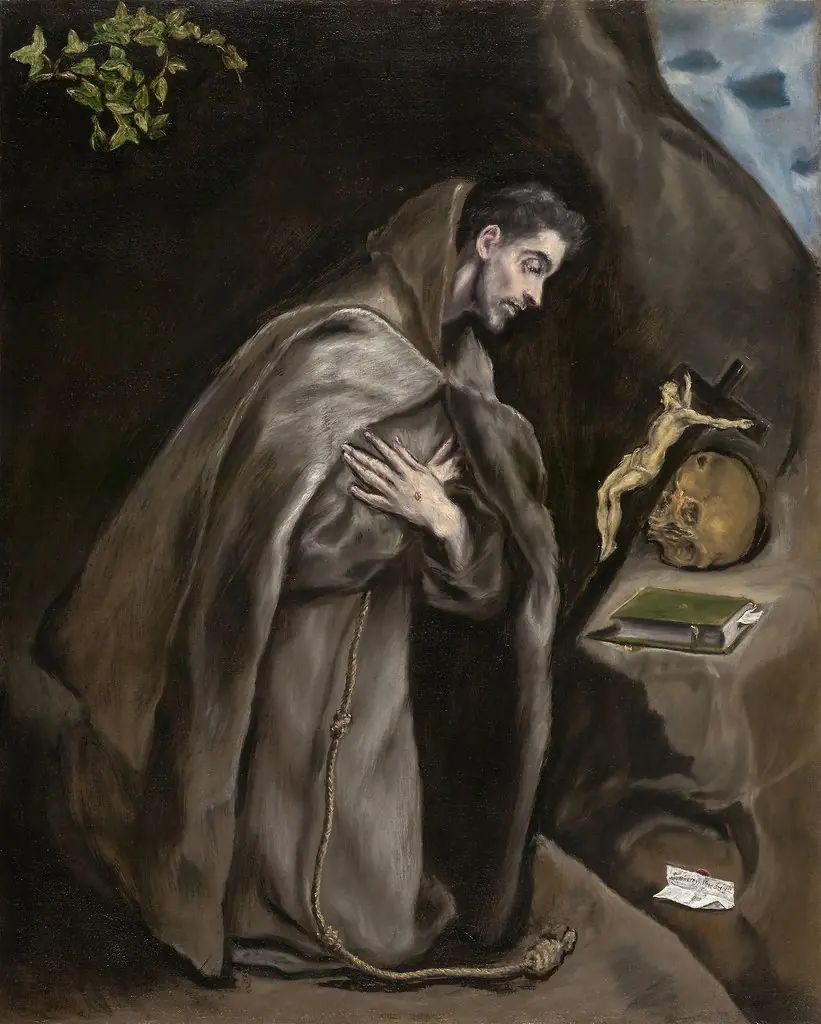 Saint Francis Kneeling in Meditation
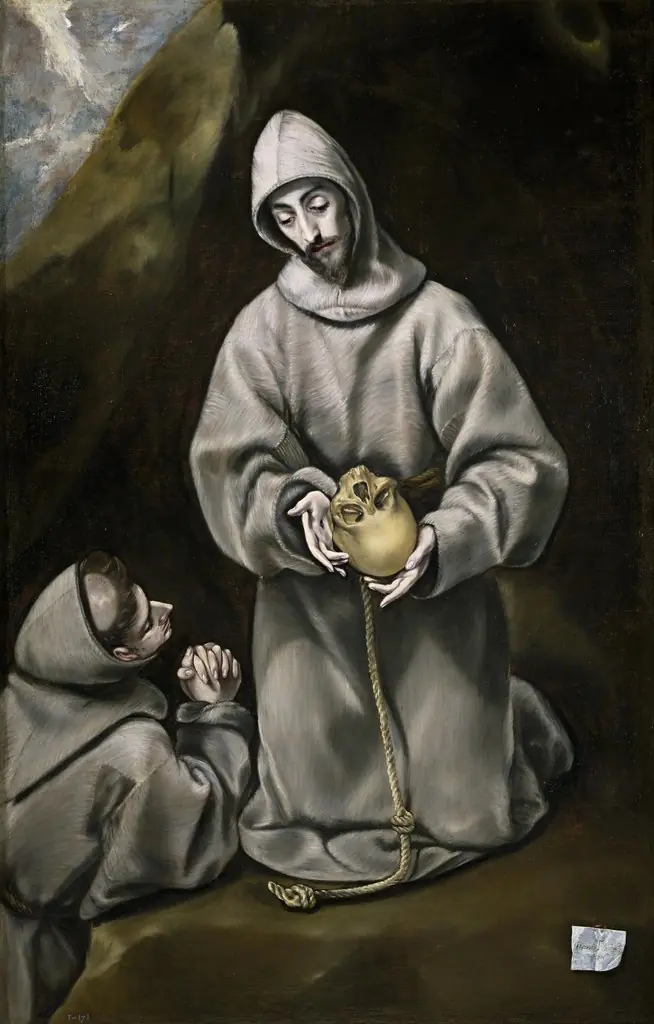 Saint Francis of Assisi and Brother Leo Meditating on Death