Artwork
The Flying Dutchman
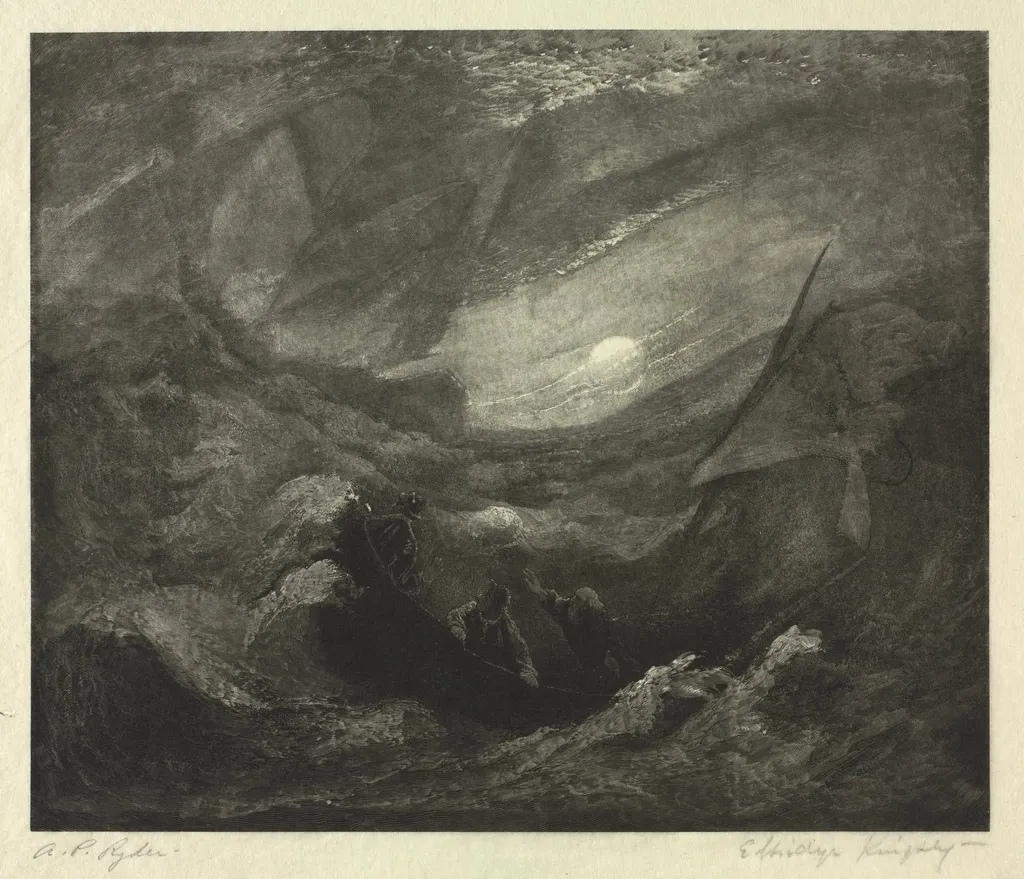
The Flying Dutchman is a print by the Impressionist artist Elbridge Kingsley. It dates from 1887 and is held in the collection of the Cleveland Museum of Art.
About this work
Overview
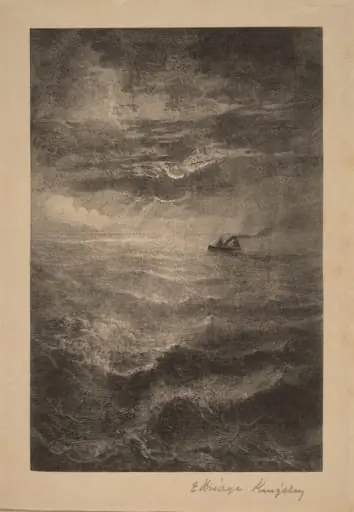
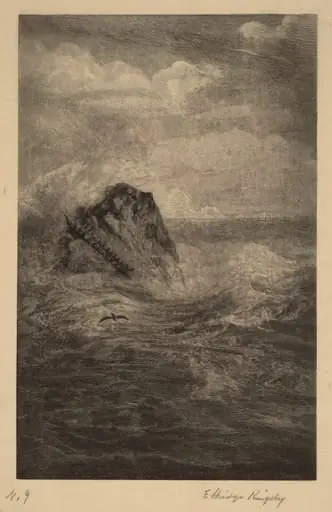
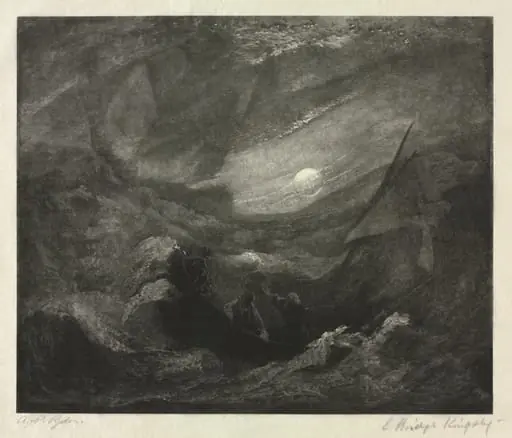
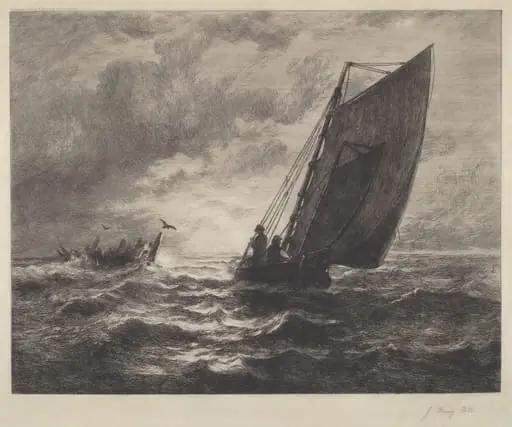
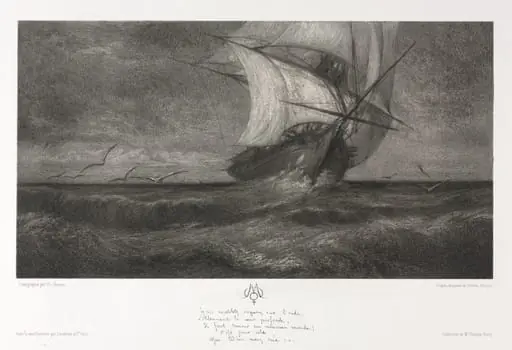
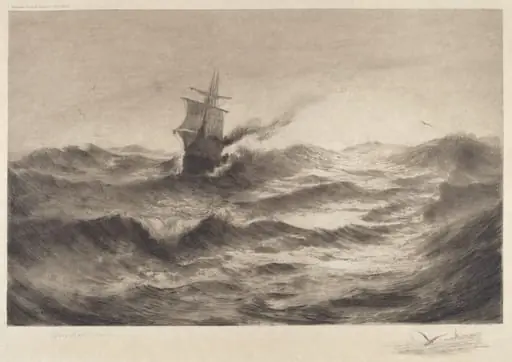
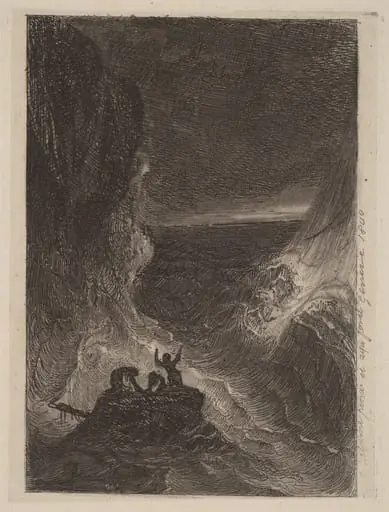
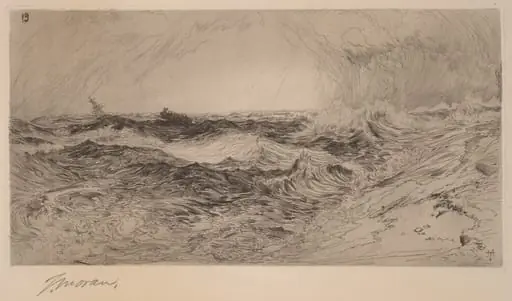
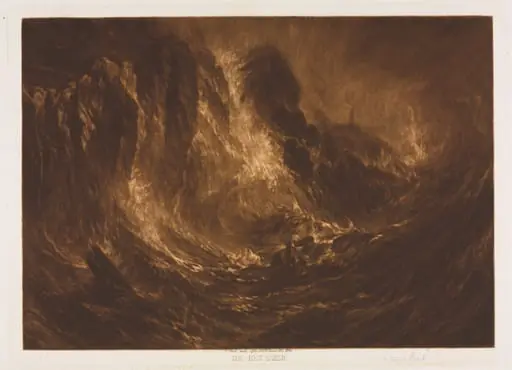
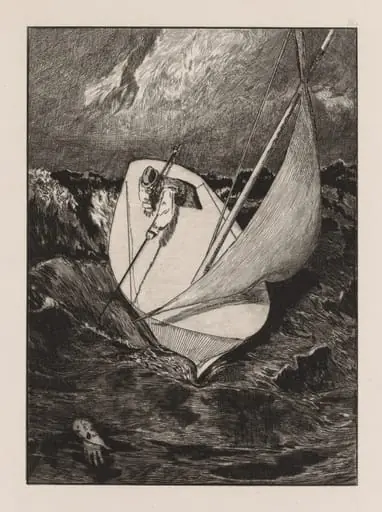
Created in 1887 by Elbridge Kingsley, this print captures the legendary ghost ship known as the Flying Dutchman amid a violent maritime storm.
Created in 1887 by Elbridge Kingsley, this print captures the legendary ghost ship known as the Flying Dutchman amid a violent maritime storm. It is part of the collection at The Cleveland Museum of Art. The composition emphasizes motion and elemental force, rendering the vessel as both physical presence and spectral symbol. The work belongs to a 19th-century tradition of maritime imagery infused with folklore and Romantic sensibility.
Subject & Meaning
The Flying Dutchman, according to seafaring legend, is a doomed ship condemned to sail forever without ever making port. Kingsley’s depiction aligns with this myth, portraying the vessel engulfed in tempestuous seas under a brooding sky. The ship’s isolation and defiance of natural law suggest themes of eternal punishment and human hubris, common in 19th-century interpretations of nautical folklore.
Technique & Style
Kingsley employs tonal contrast to heighten the drama: deep indigos and charcoal grays dominate the sea and sky, while the ship’s sails and rigging are rendered in lighter, muted hues. Sharp linear details in the sails and waves suggest movement, while subtle gradations in shadow model form without overt modeling. The print’s medium allows for crisp edges and atmospheric depth, enhancing the illusion of a storm’s chaos.
History & Provenance
The print was produced in 1887 and entered the Cleveland Museum of Art’s collection through documented acquisition. Its creation coincided with a revival of interest in maritime legends among American artists and illustrators. Though not widely exhibited during Kingsley’s lifetime, the work has remained in institutional care since its acquisition, preserving its historical and artistic context.
Context
In the late 19th century, maritime themes were popular in American art, reflecting national identity tied to trade and exploration. The Flying Dutchman myth, popularized in literature and opera, offered artists a vehicle to explore sublime nature and existential dread. Kingsley’s print engages with this cultural current, aligning with contemporaneous works that merged realism with mythic narrative.
Legacy
While not among the most widely reproduced images of the legend, Kingsley’s print contributes to a broader visual archive of 19th-century American maritime folklore. Its restrained palette and focus on atmospheric tension distinguish it from more theatrical European interpretations. The work remains a quiet but significant example of how American artists engaged with transatlantic myths through printmaking.
Artist & collection