Artwork
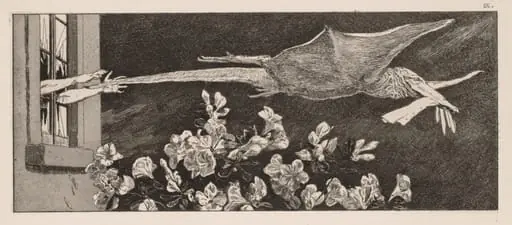
A Glove: The Rescue
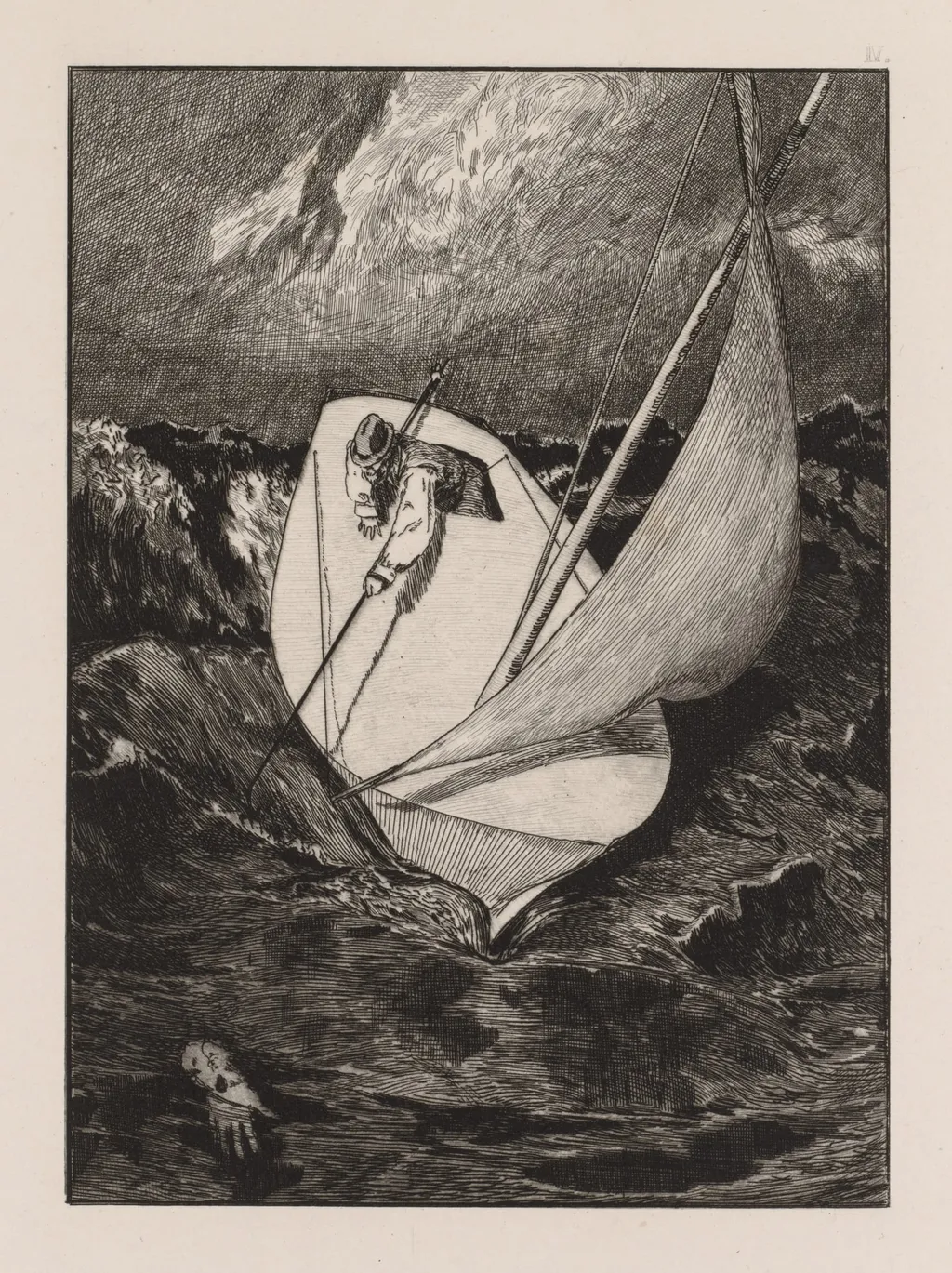
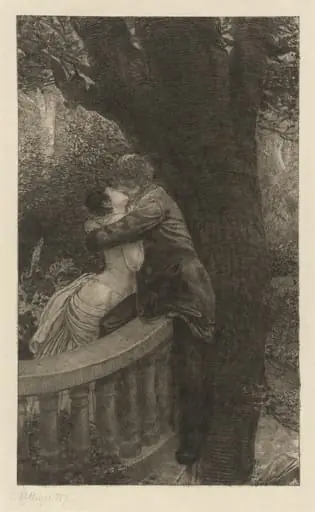
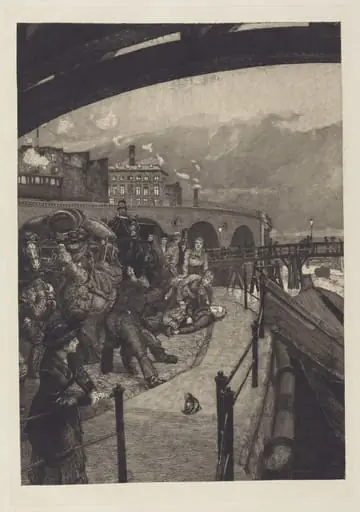
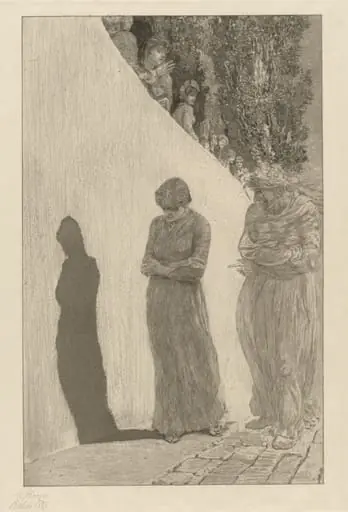
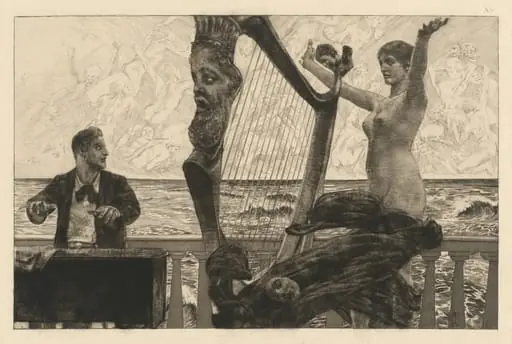
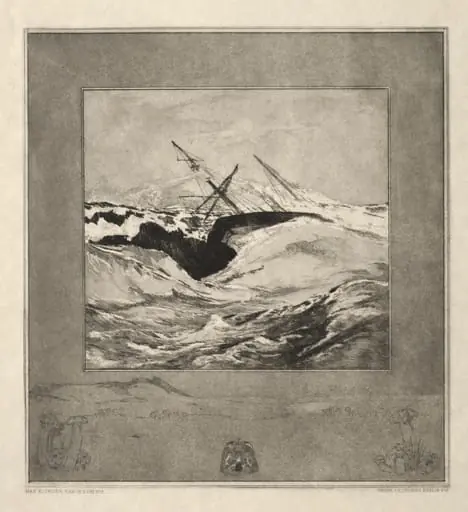
A Glove: The Rescue is a print by the Impressionist artist Max Klinger. It dates from 1880 and is held in the collection of the Cleveland Museum of Art.
About this work
Overview
Created in 1880 by German artist Max Klinger, *A Glove: The Rescue* is an etching from his series *Paraphrase on the Finding of a Glove*.
Created in 1880 by German artist Max Klinger, *A Glove: The Rescue* is an etching from his series *Paraphrase on the Finding of a Glove*. Klinger, active across multiple media, used printmaking to explore psychological and symbolic narratives. This work exemplifies his interest in merging graphic precision with emotional depth, aligning with broader European movements like Symbolism and Jugendstil that favored introspective, metaphor-laden imagery over literal representation.
Subject & Meaning
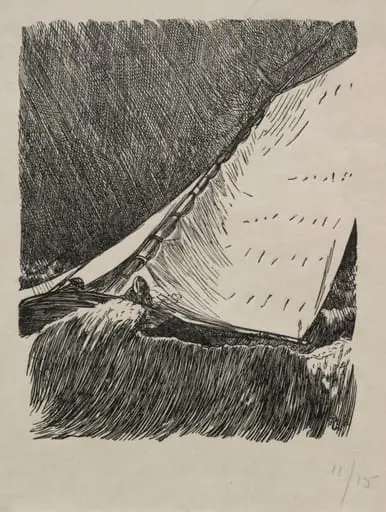
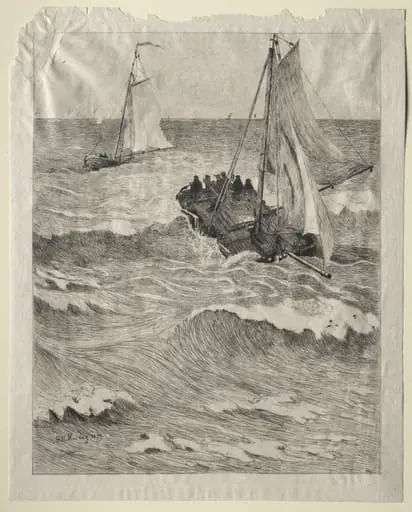
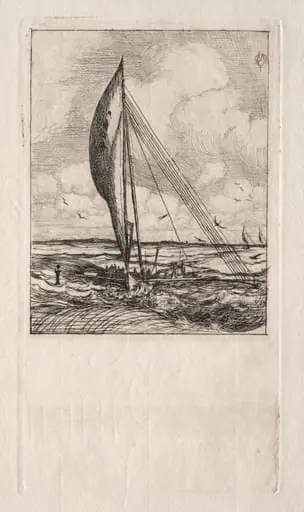
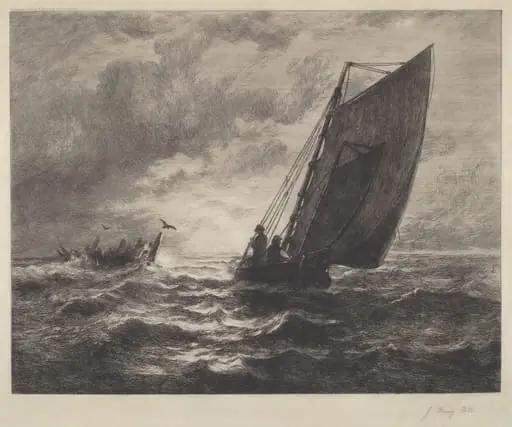
The scene depicts a desperate maritime rescue: a capsizing boat, two figures struggling against the sea, and a single glove emerging from the water, held by a submerged hand. The glove, an ordinary object, becomes a focal point of longing and loss. Klinger transforms a mundane find into a symbol of fate or memory, suggesting the fragility of human connection amid chaos. The narrative resists clear resolution, inviting contemplation rather than storytelling.
Technique & Style
Klinger employed etching to achieve sharp contrasts between light and shadow, using fine lines to render wind, rain, and turbulent waves. The chiaroscuro effect heightens the drama, isolating the glove in a pool of pale light against the dark sea and sky. The composition’s diagonal tilt and compressed space intensify tension, while the delicate rendering of the glove contrasts with the aggressive, angular strokes of the storm, emphasizing the object’s fragile significance.
History & Provenance
The print was produced during Klinger’s early career, shortly after he gained recognition for his graphic work. It was part of a larger, multi-plate series that combined narrative progression with symbolic motifs, reflecting his theoretical writings on the relationship between print and painting. The series was exhibited in Germany and Austria, contributing to his reputation as a leading figure in the graphic arts of the 1880s.
Context
Emerging in the late 19th century, Klinger’s work responded to a cultural shift away from realism toward psychological and spiritual themes. Influenced by Romanticism and the rise of Symbolism, he sought to elevate printmaking to the status of fine art. His focus on the uncanny and the metaphorical aligned with contemporaries in Vienna and Munich who rejected academic conventions in favor of introspective, often enigmatic imagery.
Legacy
Klinger’s *Paraphrase on the Finding of a Glove* series, including this print, influenced later artists interested in narrative ambiguity and the emotional potential of print media. His integration of literary symbolism into visual form helped bridge 19th-century Symbolism and early 20th-century Expressionism. Though less widely known today, his technical innovations in etching remain significant in the history of graphic arts.
Artist & collection
Artist
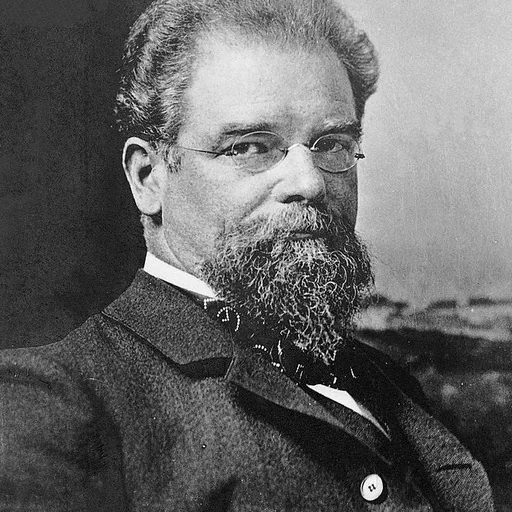
Max Klinger (18 February 1857 – 5 July 1920) was a German artist who produced significant work in painting, sculpture, prints and graphics, as well as writing a treatise articulating his ideas on art and the role of…