Artwork
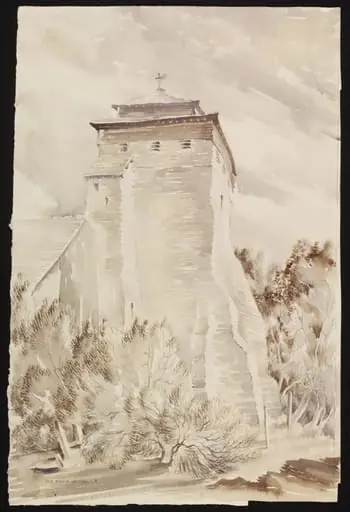
Bettws-y-Edewain Church Tower, Montgomeryshire
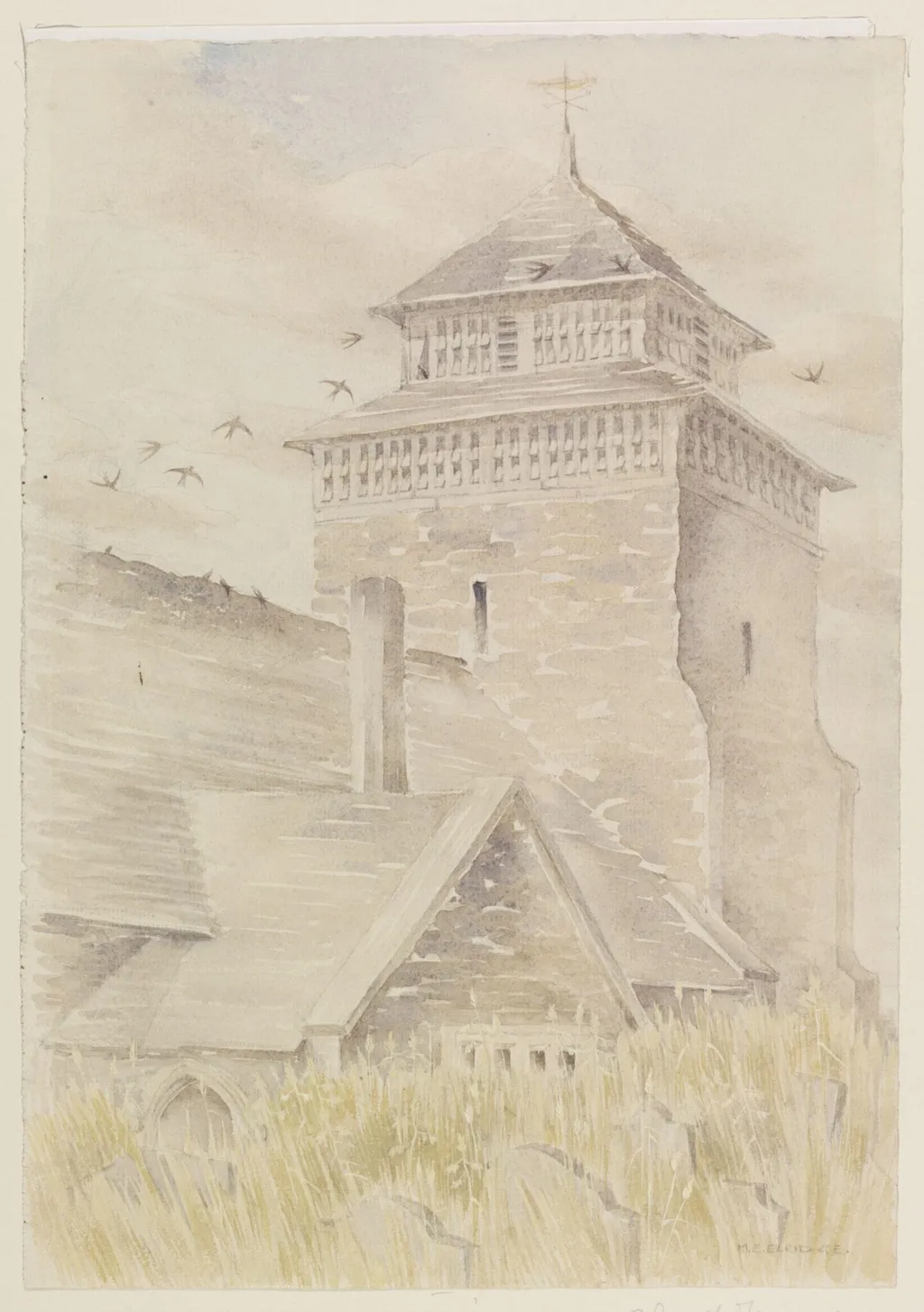
Bettws-y-Edewain Church Tower, Montgomeryshire is a watercolor work on paper by Mildred E. Eldridge. It dates from 1941 and is held in the collection of the Victoria and Albert Museum. Mildred E.
About this work
Overview
Swallows hover near the belfry, and overgrown gravestones emerge from the meadow, giving the scene a quiet, rural character.
Mildred E. Eldridge’s watercolour records the stone tower of St Beuno’s Church at Bettws‑Cedewain in Montgomeryshire. The composition centers on the verticality of the tower, its pointed roof capped by a cross, while a modest ancillary structure and tall grasses occupy the foreground. Swallows hover near the belfry, and overgrown gravestones emerge from the meadow, giving the scene a quiet, rural character.
Subject & Meaning
The painting captures a moment of stillness in a Welsh countryside setting, emphasizing the endurance of the church amid a landscape of neglect and natural growth. The presence of swallows suggests seasonal activity, while the unkempt graves hint at the passage of time and the community’s fading connection to the site.
Technique & Style
Eldridge employs a restrained palette of browns, greys and muted tones, rendered in transparent watercolour washes that soften edges and convey atmospheric cloud cover. The delicate handling allows fine architectural details of the tower to emerge against the broader, diffuse background, creating a subtle contrast between structure and surrounding vegetation.
History & Provenance
Created as part of the Recording Britain project during the Second World War, the work was commissioned to document at‑risk historic sites across the United Kingdom. The scheme, funded by the Pilgrim Trust and overseen by Sir Kenneth Clark, mobilised artists to capture vulnerable landscapes and buildings before wartime damage or post‑war development altered them.
Context
The Recording Britain initiative sought to preserve visual records of the nation’s architectural heritage at a time when many rural churches faced neglect or possible destruction. Eldridge’s contribution reflects the broader effort to safeguard cultural memory through artistic documentation, situating this watercolour within a national archive of wartime topographical art.
Artist & collection
Artist
Mildred E. Eldridge painted the hills and barns of 1940s Wales in watercolours. She left us five small scenes of rural life, each titled by the place it shows: a stone barn in Llanrhaeadr, peat cutters near Cefn Coch,…

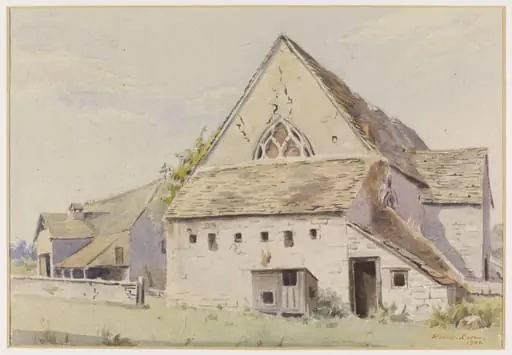 The Old Church (now a barn), Leonard Stanley
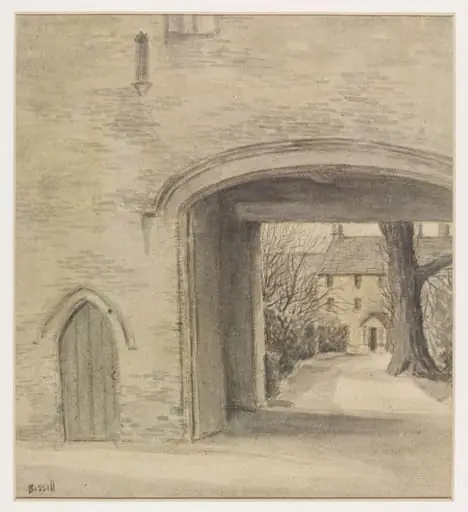 Old Monastery Doorway, now the entrance to Quenington Court, Quenington
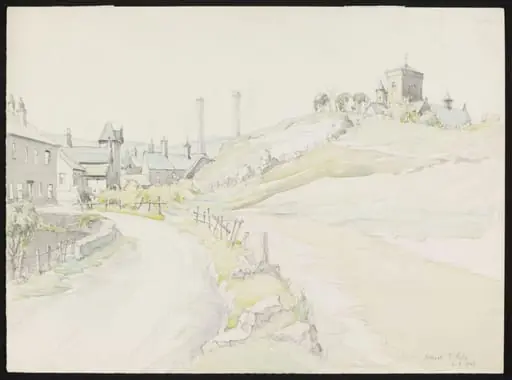 The church and village of Lumb
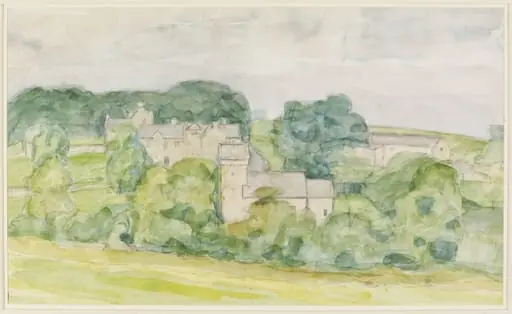 Llannichangel, Glamorganshire
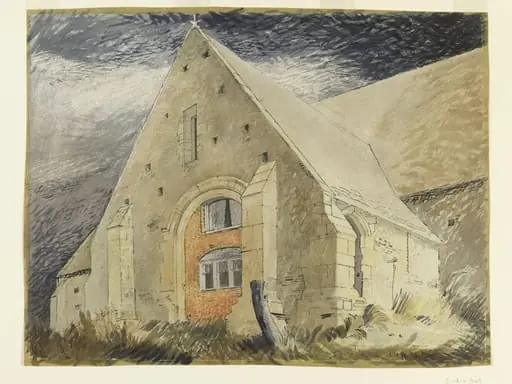 Tithe Barn, Great Coxwell, Berkshire
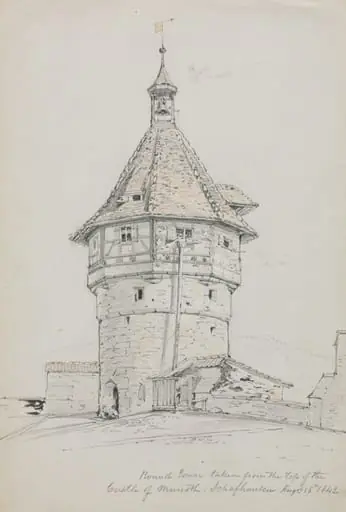 Round Tower, Castle of Munoth, Schafhausen, Switzerland
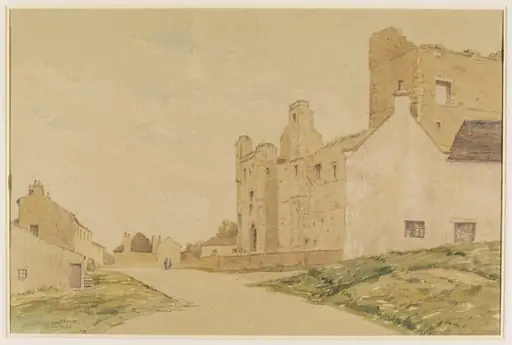 Middleham Castle
 Syde Church
 Pengwern Old Hall, Festiniog, Merionethshire
 A Castle in Normandy