Artwork
Llannichangel, Glamorganshire
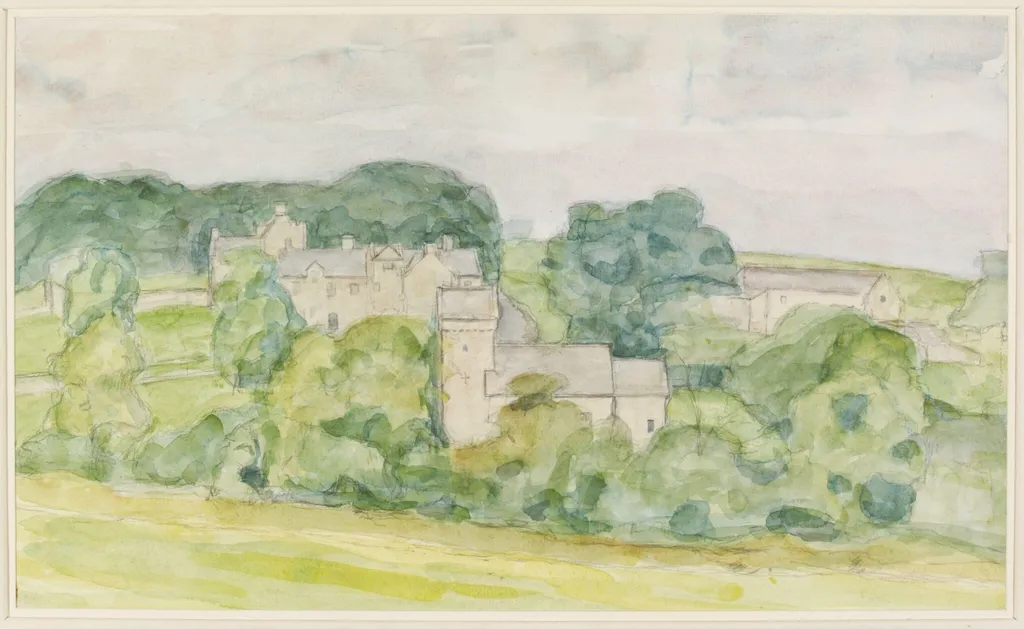
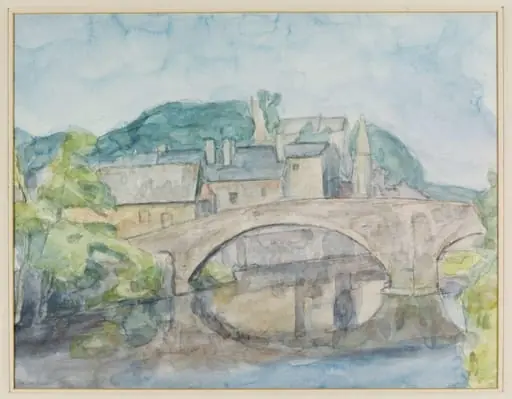
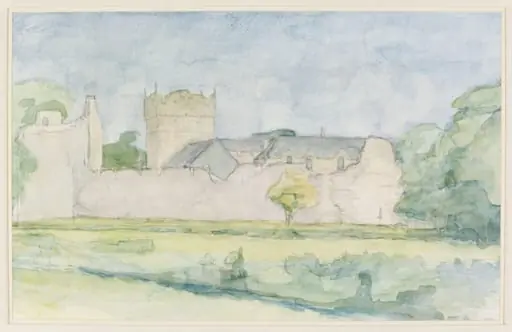
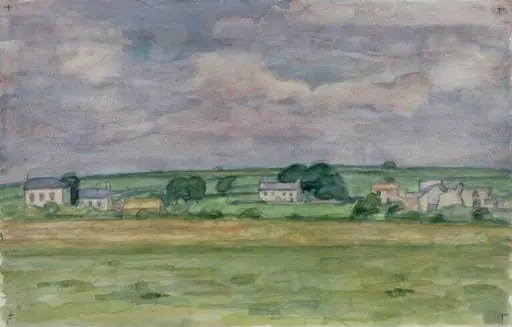
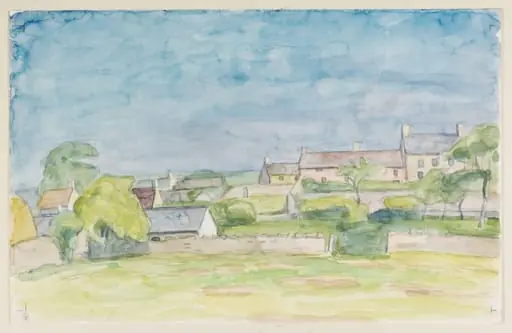
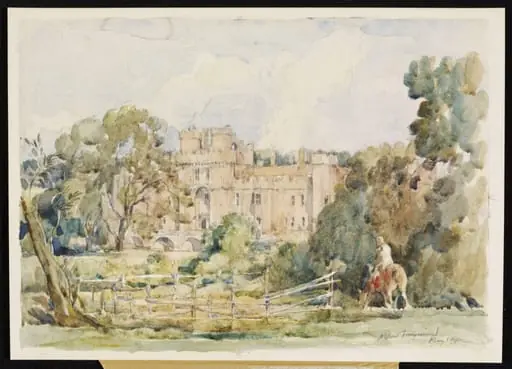
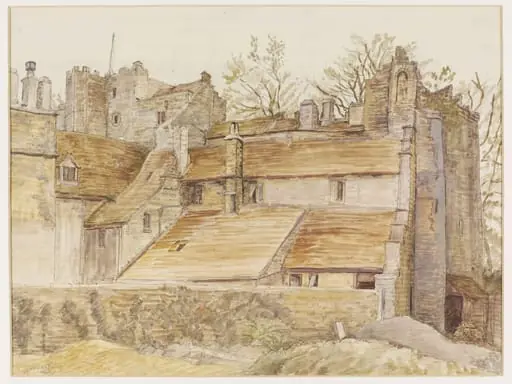
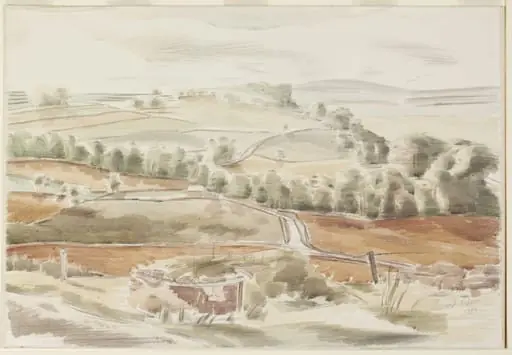
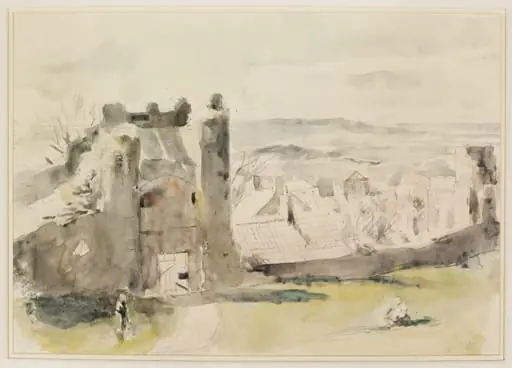
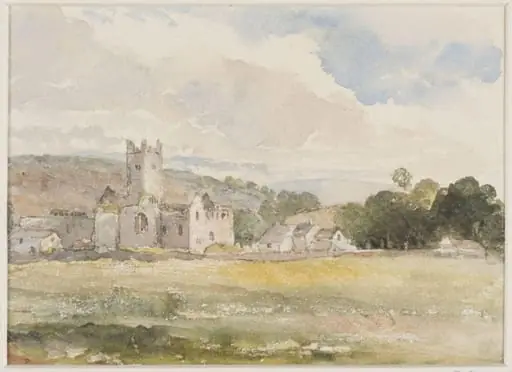
Llannichangel, Glamorganshire is a watercolor work on paper by Graham Bell. It dates from 1940 and is held in the collection of the Victoria and Albert Museum.
About this work
Overview
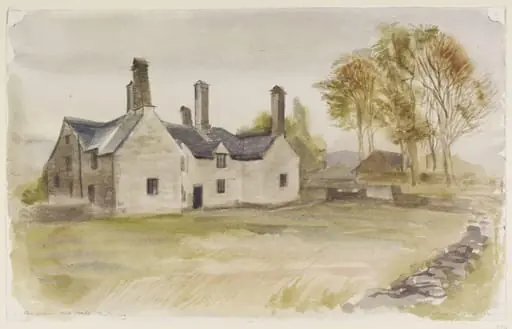
Graham Bell’s 1940 watercolour captures the rural landscape of Llanmihangel Place and the adjoining St Michael and All Angels church in Glamorganshire. Rendered in soft, airy washes, the composition presents a weathered manor and its church set against rolling hills and scattered trees, evoking a tranquil, timeless atmosphere.
Subject & Meaning
The painting portrays a historic Welsh estate and its parish church, emphasizing the harmonious relationship between architecture and the surrounding countryside. By focusing on the modest scale of the structures within a broad, gentle landscape, Bell underscores the continuity of local heritage and the quiet endurance of rural community life.
Technique & Style
Executed in watercolour, the work relies on delicate, translucent strokes that suggest light and atmosphere rather than precise detail. Bell balances areas of wash with retained paper, creating contrast between the bright, white walls and the darker, muted roofs, while the surrounding foliage is suggested through loose, suggestive brushwork.
History & Provenance
The piece was produced under the Recording Britain project, a wartime effort coordinated by Sir Kenneth Clark to document sites deemed vulnerable to bombing, invasion, or rapid change. Bell’s contribution records this specific Welsh locale as part of a national visual archive intended to safeguard cultural memory during the early 1940s.
Context
During World War II, Britain faced extensive aerial bombardment and social upheaval, prompting the Recording Britain scheme to enlist artists to capture at‑risk landscapes and buildings. Bell’s depiction of Llanmihangel reflects the broader aim of preserving images of traditional rural settings that might otherwise be lost amid wartime transformation.
Artist & collection
Artist
Frank Graham Bell (21 November 1910 – 9 August 1943) was a painter of portraits, landscapes and still-life, and a founder member of the realist Euston Road School.