Artwork
Crăițe
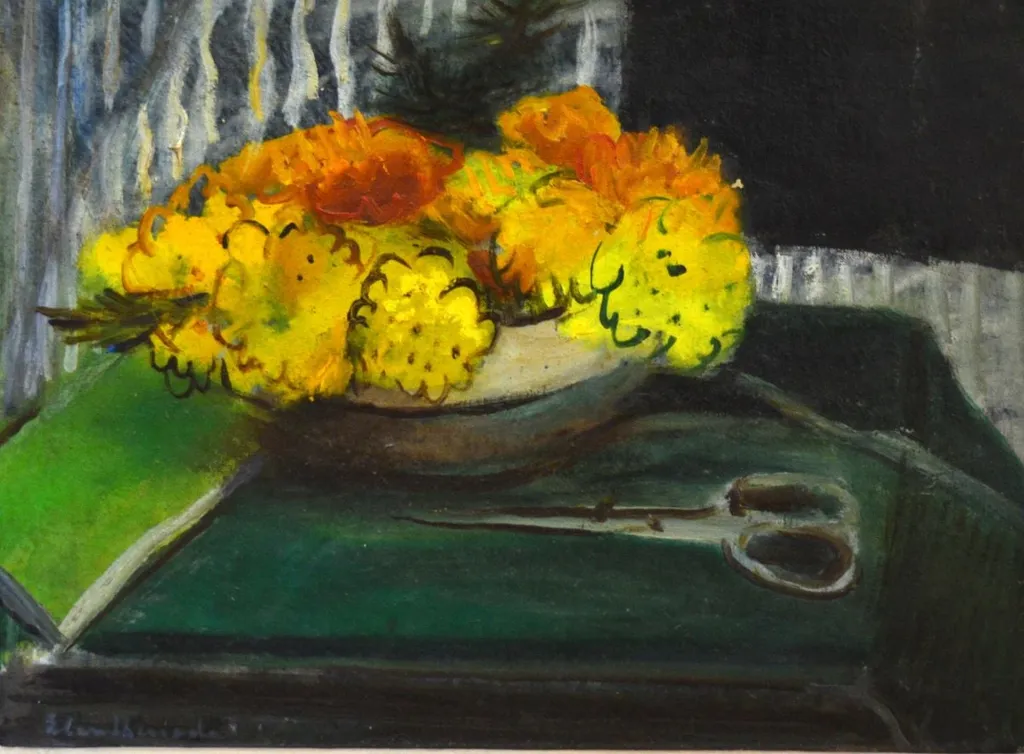
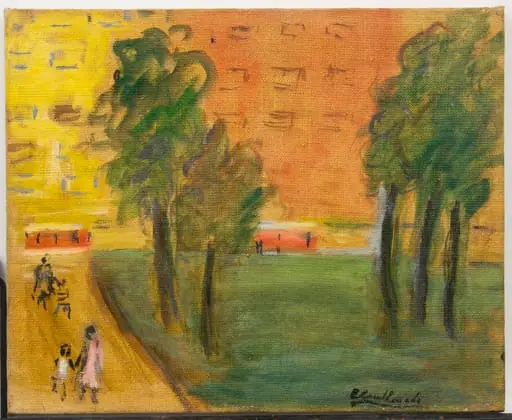
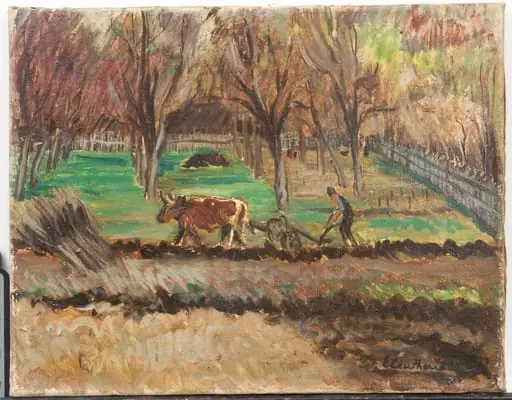
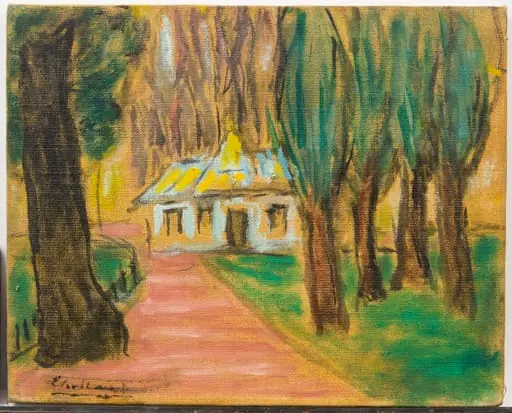
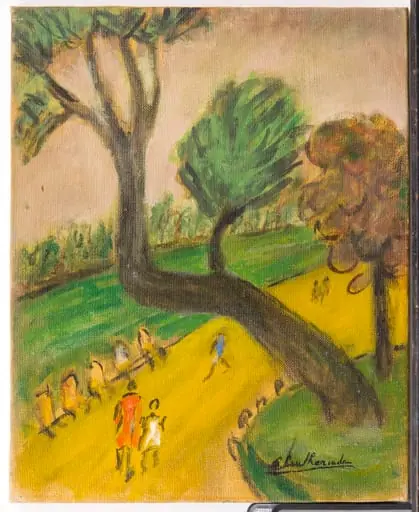
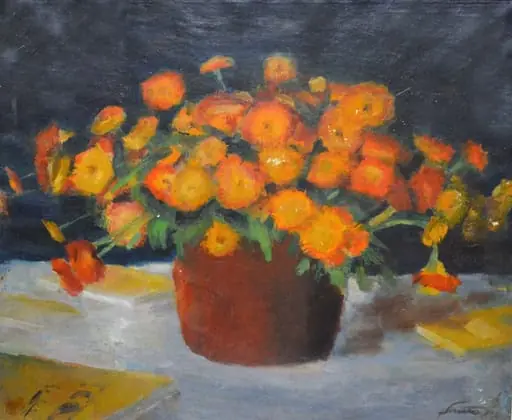
Crăițe is a print by Micaela Eleutheriade. It dates from 1950 and is held in the collection of the Bucharest Municipality Museum.
About this work
Overview
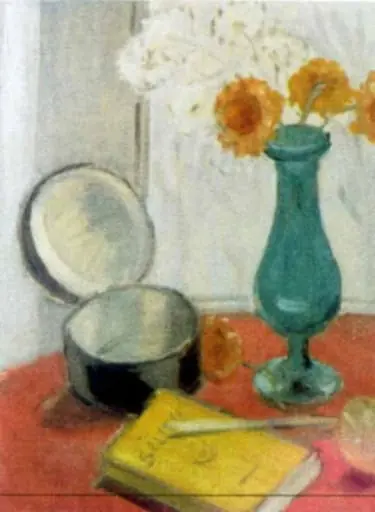
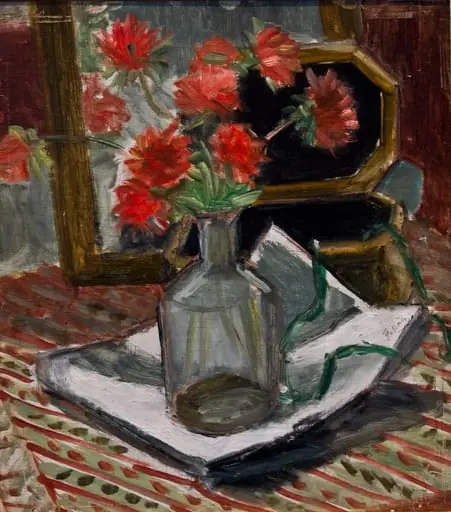
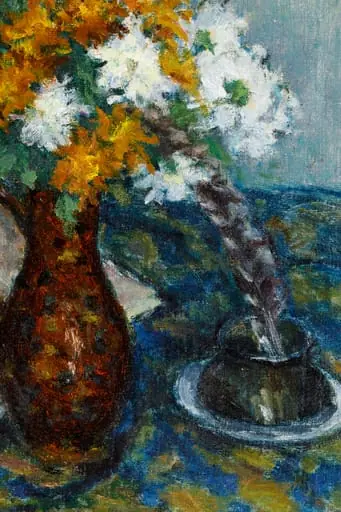
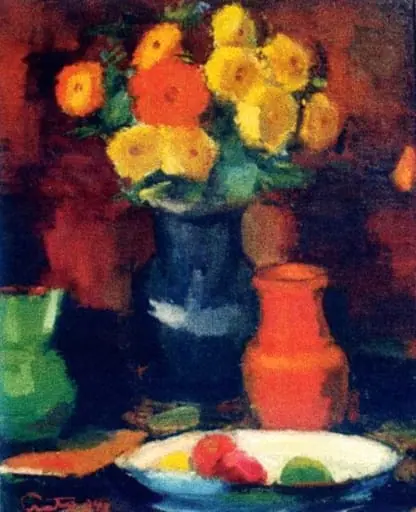
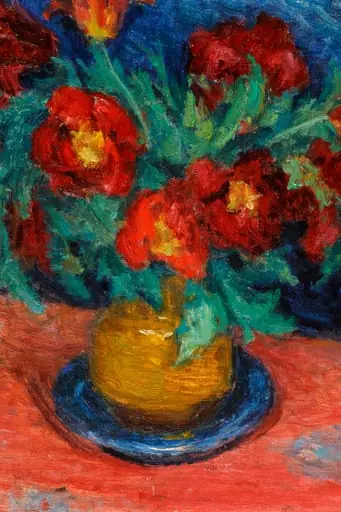
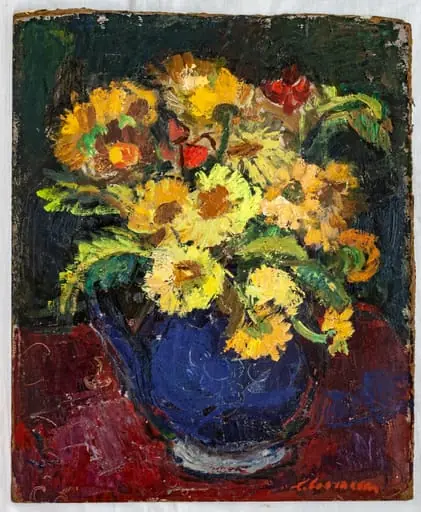
The work presents a simple arrangement of yellow flowers in a white ceramic vessel, resting on a green surface.
Crăițe is a still-life painting attributed to Micaela Eleutheriade, dated around 1950. It is part of the collection at the Museum of Ethnography. The work presents a simple arrangement of yellow flowers in a white ceramic vessel, resting on a green surface. The composition avoids theatricality, favoring quiet observation over dramatic effect. The painting’s scale and tone suggest an intimate, personal moment rather than a public display.
Subject & Meaning
The subject is a modest arrangement of wildflowers in a domestic setting. The flowers, loosely gathered and spilling beyond the bowl, suggest a moment caught in transit—perhaps gathered from a garden and placed without ceremony. The absence of human figures and the muted surroundings invite reflection on transience and quiet beauty. The title, Crăițe, may reference a regional term for small, unassuming blooms, reinforcing the work’s focus on humble natural forms.
Technique & Style
Eleutheriade employs soft, blended brushwork to render the flowers and bowl, avoiding sharp outlines. The palette is restrained: pale yellows, off-whites, and muted greens contrast with a dark, indeterminate background tinged with gray and blue. Light falls gently across the surface, modeling forms without casting strong shadows. The technique prioritizes atmosphere over detail, emphasizing texture and tone to evoke stillness.
History & Provenance
The painting entered the Museum of Ethnography’s collection in the mid-20th century, likely through donation or acquisition from the artist’s circle. Little is documented about its exhibition history prior to its inclusion in the museum’s holdings. Its presence in an ethnographic institution, rather than a fine arts gallery, suggests its value was recognized for its cultural resonance rather than its formal innovation.
Context
Created in postwar Romania, Crăițe reflects a broader trend among regional artists who turned to domestic and natural subjects amid political upheaval. While official art promoted grand narratives, painters like Eleutheriade focused on quiet, everyday scenes. This work aligns with a quiet resistance to ideological spectacle, valuing personal observation and the dignity of the ordinary.
Legacy
Crăițe remains a quiet example of mid-century Romanian still-life painting, notable for its emotional restraint and sensitivity to light and texture. It has not been widely reproduced or studied outside institutional contexts, yet it continues to be displayed as representative of a contemplative artistic voice. Its endurance lies in its unassuming presence, offering a space for stillness amid more turbulent historical currents.
Artist & collection

Artist
Micaela Eleutheriade (1900–1982) was a noted Romanian painter and engraver. She was a descendant, through her mother, of the painter Gheorghe Tattarescu, the pioneer of neoclassicism in Romania.