Artwork
Natură moartă (Flori de soc și gălbenele)
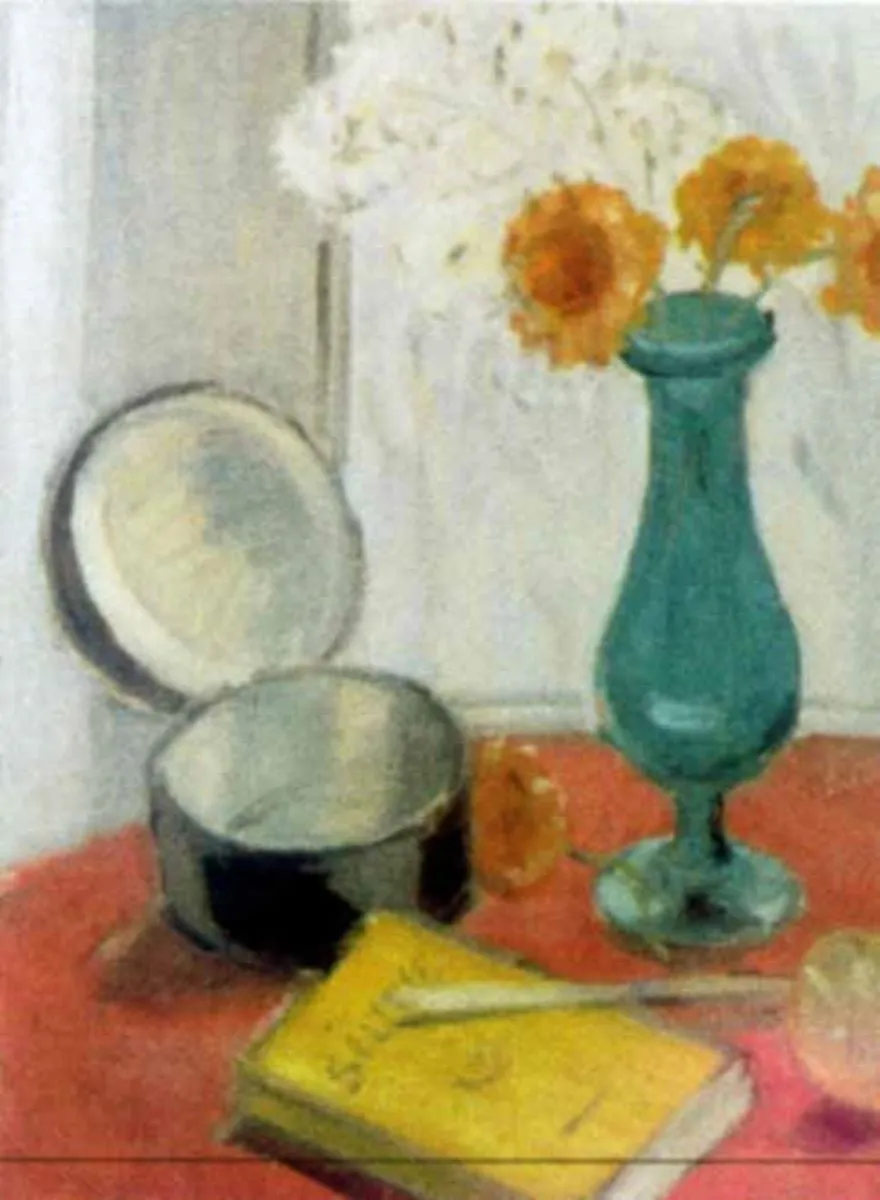
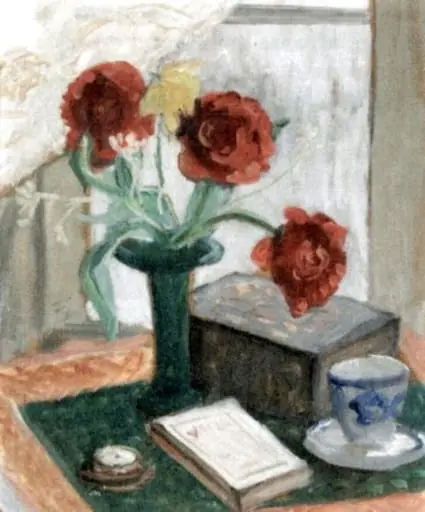
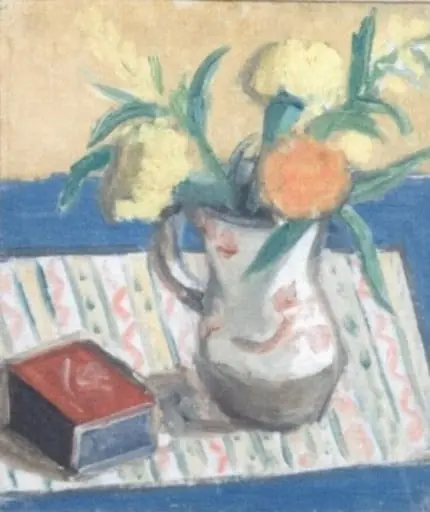
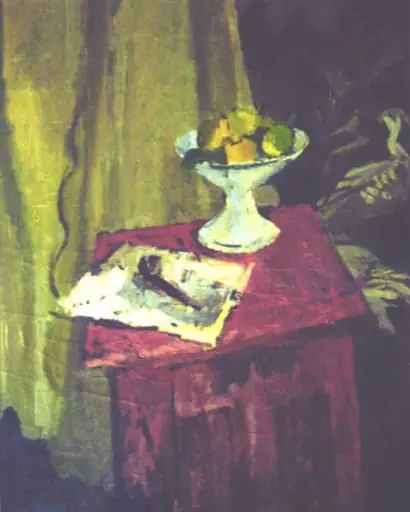
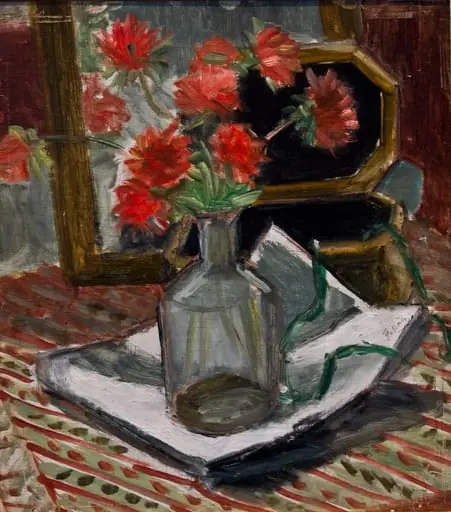
Natură moartă (Flori de soc și gălbenele) is an unspecified painting by Theodor Pallady. It dates from 1921 and is held in the collection of the Art Museum of Constanta.
About this work
Overview
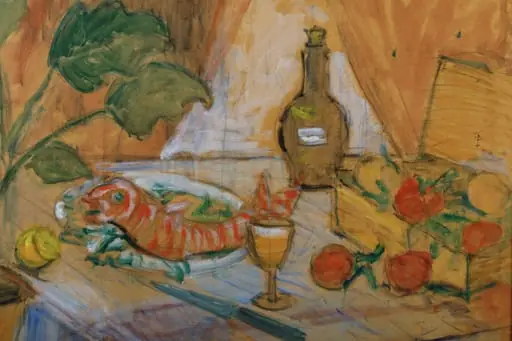
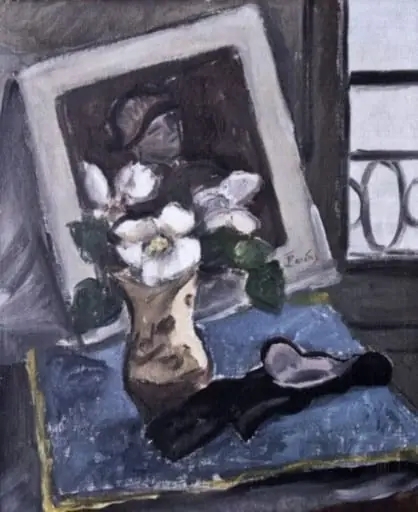
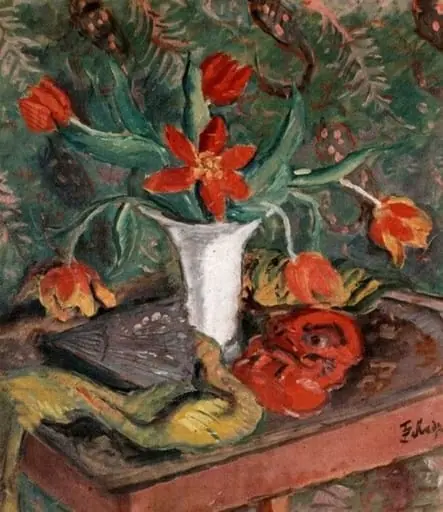
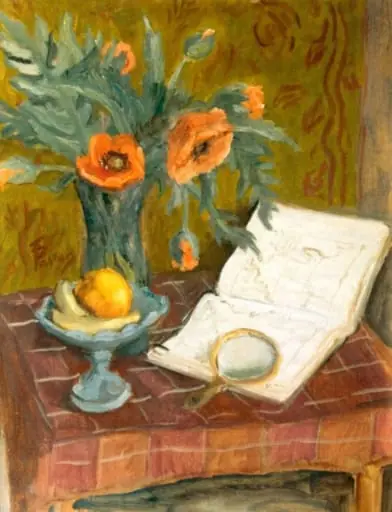
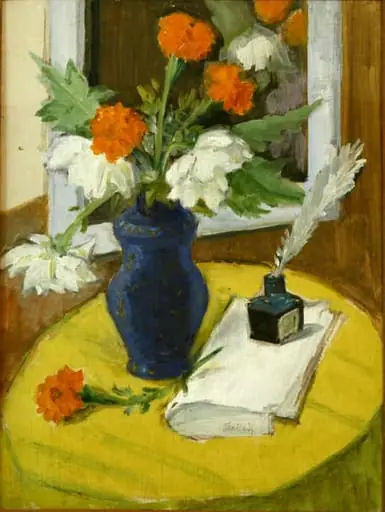
Painted around 1921 by Theodor Pallady, this still life presents a sparse arrangement of four ordinary objects on a small table. The composition is restrained, with no decorative elements beyond the objects themselves and a plain, light-toned wall behind them. The quietude of the scene is heightened by the absence of life or movement, suggesting a moment suspended in time.
Subject & Meaning
The painting features a wilting bouquet of elderflower and marigold in a tall blue-green vase, alongside a metal box, an open mirror reflecting nothing, and a yellow book or envelope. The mirror’s void reflection and the faded blooms imply absence or the passage of time. These elements together evoke a contemplative mood, not as a narrative, but as an observation of quiet decay and stillness.
Technique & Style
The palette is muted, dominated by earthy yellows, faded greens, and pale walls, reinforcing the sense of somber stillness.
Pallady employs subtle tonal variations rather than dramatic contrasts to model form. The surfaces are rendered with soft, deliberate brushwork, emphasizing texture over shine. The light appears diffused, falling evenly across the objects, which enhances their quiet presence. The palette is muted, dominated by earthy yellows, faded greens, and pale walls, reinforcing the sense of somber stillness.
History & Provenance
The work is held in the collection of the Museum of Ethnography, though its origins lie in Pallady’s personal studio practice rather than a commissioned piece. It was likely created during his return to Romania after years in Paris, reflecting a shift toward introspective subjects. Its presence in an ethnographic institution suggests an interest in cultural artifacts, though the painting itself remains a private, intimate study.
Context
Created in the early 1920s, this piece emerges from a period when Romanian artists were redefining national identity through everyday imagery. Pallady, influenced by French modernism, avoided overt symbolism, instead focusing on the dignity of ordinary things. The still life aligns with broader European trends toward minimalism and psychological depth in post-war art.
Legacy
Though not widely exhibited, this work exemplifies Pallady’s mature style—reserved, poetic, and attentive to quiet detail. It influenced later Romanian painters who sought emotional resonance in simplicity. Its placement in an ethnographic museum underscores its role as a cultural artifact of domestic contemplation, valued for its understated honesty rather than its spectacle.
Artist & collection