Artwork
Porumbel turcesc
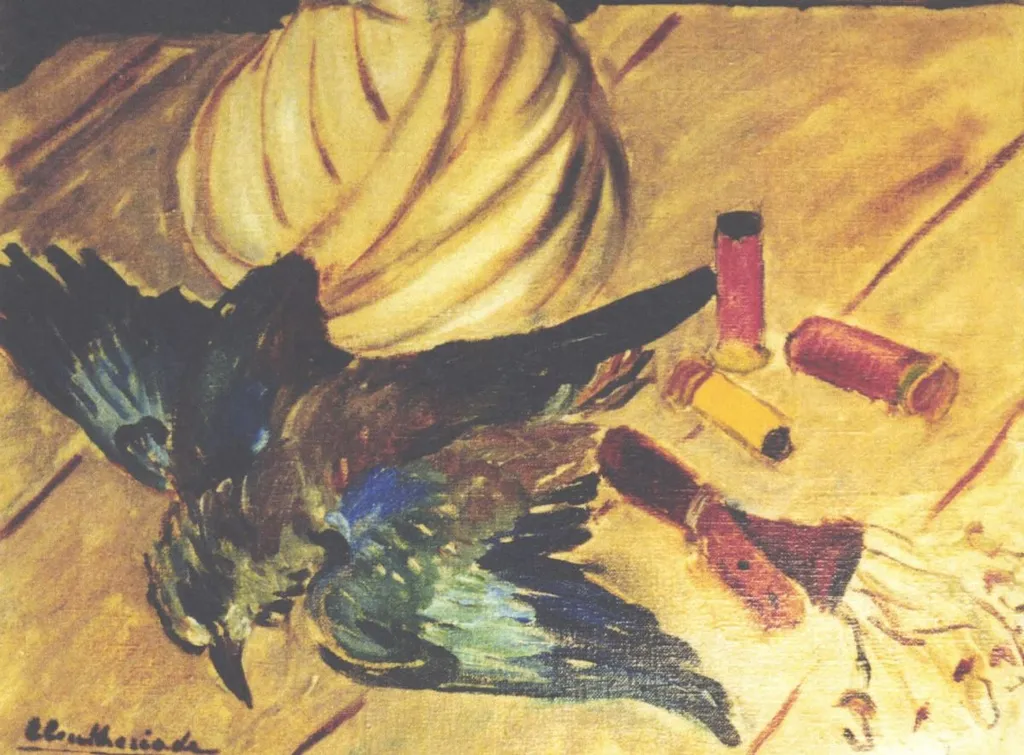
Porumbel turcesc is a print by Micaela Eleutheriade. It dates from 1950 and is held in the collection of the Bucharest Municipality Museum.
About this work
Overview
Porumbel turcesc, created around 1950 by Micaela Eleutheriade, is a small-scale image work held in the collection of the Museum of Ethnography.
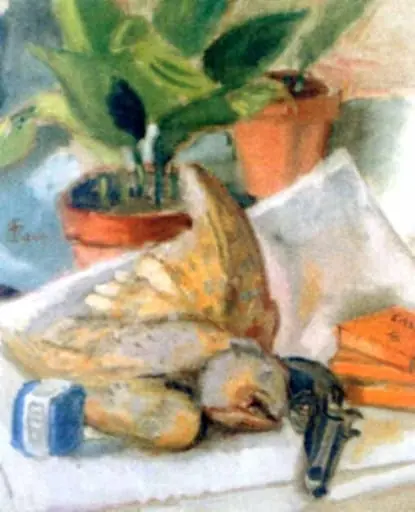
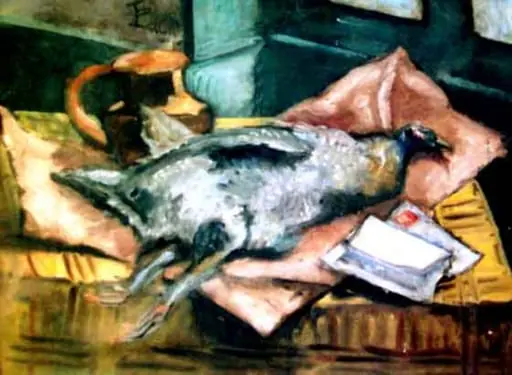
Porumbel turcesc, created around 1950 by Micaela Eleutheriade, is a small-scale image work held in the collection of the Museum of Ethnography. It presents a quiet, still-life composition centered on a dead bird and woven textile fragments. The piece avoids narrative clarity, instead inviting contemplation through material contrast and spatial arrangement. Its title, meaning 'Turkish pigeon,' hints at cultural references without explicit explanation.
Subject & Meaning
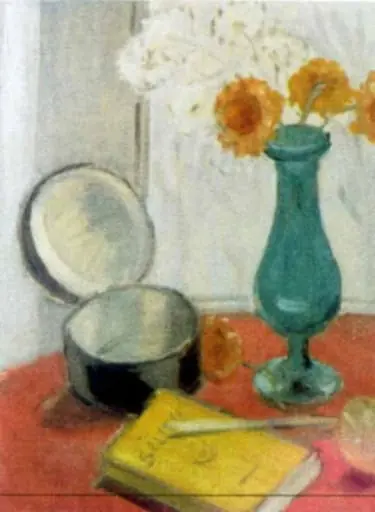
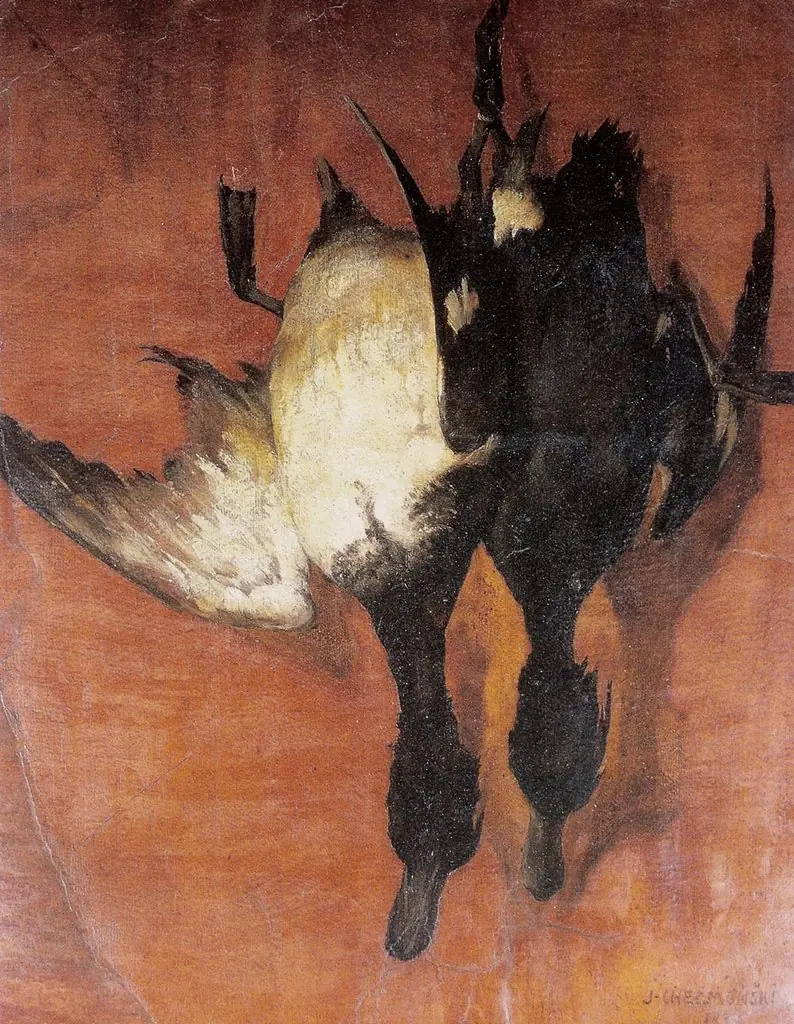
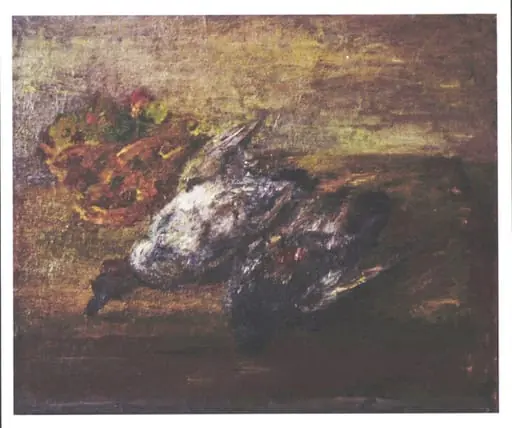
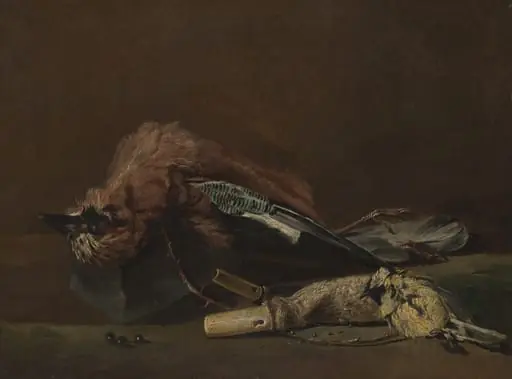
The central subject is a deceased bird, its plumage vividly colored against a muted backdrop. Surrounding it are domestic objects—a red bottle, a yellow tube, rolled papers—suggesting a discarded or abandoned scene. The tightly woven turban fragment implies human presence, now absent. The juxtaposition of lifeless nature and crafted textiles may evoke themes of transience, cultural memory, or the quiet aftermath of daily life.
Technique & Style
Eleutheriade employs a restrained, observational approach, emphasizing texture over detail. The bird’s feathers are rendered with subtle gradations of brown, green, and blue, while the turban’s golden threads are depicted with precise, linear density. The background remains deliberately indistinct, allowing the objects to emerge through contrast. The composition is tightly framed, focusing attention on surface and arrangement rather than depth or perspective.
History & Provenance
The work entered the Museum of Ethnography’s collection in the mid-20th century, though its acquisition history is not publicly documented. No exhibition records or prior ownership details are available. The artist’s signature, faintly placed in the corner, is the only identifying mark. Its preservation suggests it was regarded as a significant, if intimate, artifact within the artist’s broader practice.
Context
Created in the postwar period, the piece reflects a broader interest among Eastern European artists in everyday materials and quiet, symbolic compositions. Eleutheriade’s focus on textiles and organic remnants aligns with regional traditions of folk art reinterpretation. The work avoids overt political or ideological messaging, instead grounding itself in tactile, sensory observation of ordinary objects.
Legacy
Porumbel turcesc remains a quiet example of Eleutheriade’s engagement with materiality and absence. While not widely exhibited, it contributes to scholarly understanding of mid-century Romanian art that prioritized subtlety over spectacle. Its presence in an ethnographic museum underscores its resonance with cultural artifacts, bridging fine art and vernacular tradition without claiming either exclusively.
Artist & collection

Artist
Micaela Eleutheriade (1900–1982) was a noted Romanian painter and engraver. She was a descendant, through her mother, of the painter Gheorghe Tattarescu, the pioneer of neoclassicism in Romania.