Artwork
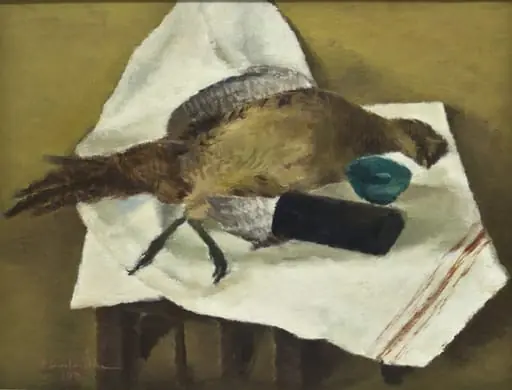
Fazanul
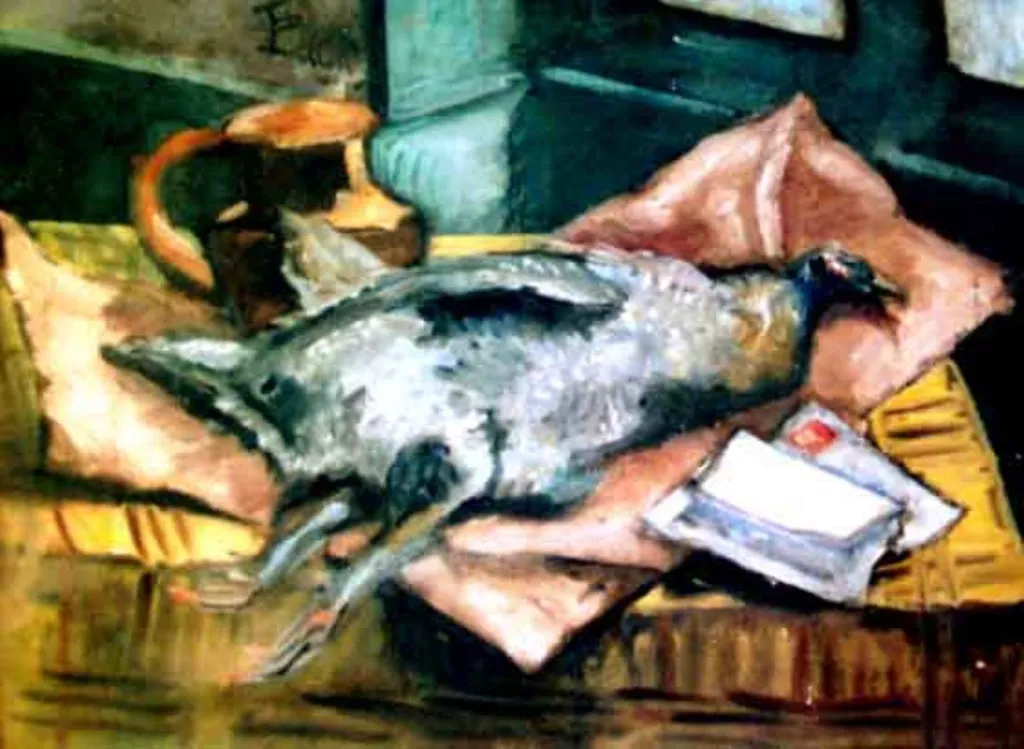
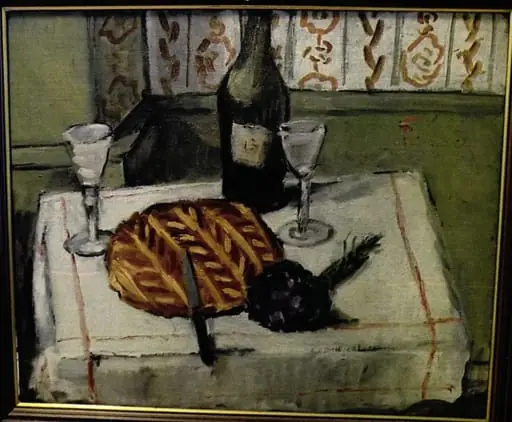
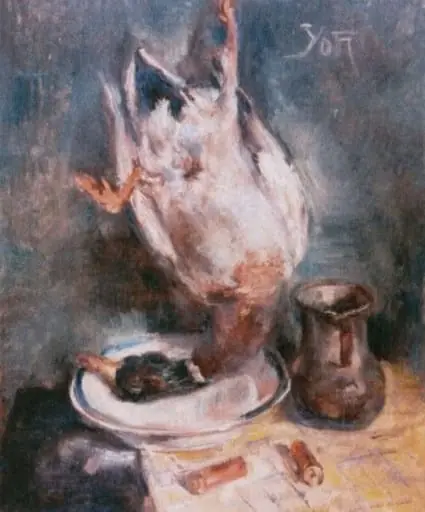
Fazanul is an unspecified painting by Theodor Pallady. It is held in the collection of the Romanian Academy in Bucharest.
About this work
Overview
The paint is applied thickly and irregularly, creating a tactile surface that emphasizes materiality over refinement.
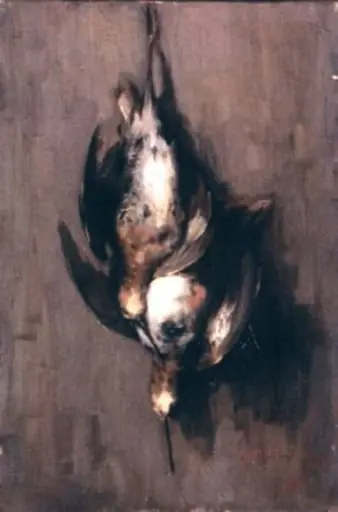
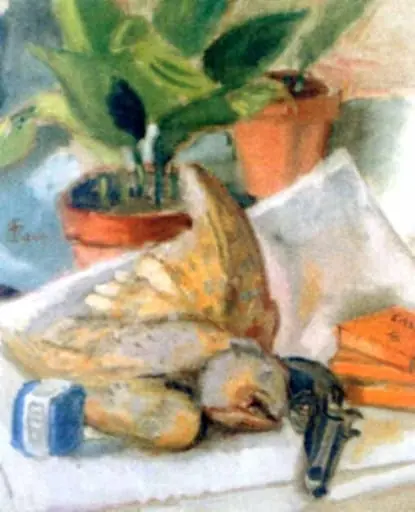
This image depicts a dead pheasant resting on a cloth, surrounded by modest domestic objects: scattered papers, a wrapped parcel, and a wooden bowl containing another bird. The palette is restrained, dominated by muted earth tones and soft grays, with minimal contrast. The paint is applied thickly and irregularly, creating a tactile surface that emphasizes materiality over refinement. The composition feels quiet and unadorned, avoiding dramatic tension.
Subject & Meaning
The still life centers on a hunted bird, its stillness suggesting death or capture. The presence of a second bird in the bowl and scattered papers may hint at domestic routines or the aftermath of a meal. The absence of human figures and the muted tones evoke a sense of quiet resignation. The scene does not glorify the hunt but observes its remnants with detached neutrality, inviting reflection on transience and everyday labor.
Technique & Style
Thick, uneven brushwork creates a rough, tactile surface, characteristic of impasto. The feathers of the pheasant are rendered with loose, textured strokes that blur into the cloth beneath, dissolving clear boundaries between object and background. Colors are subdued, with shadows deepening without sharp definition. The handling of paint prioritizes physical presence over illusionistic detail, emphasizing the weight and texture of the materials depicted.
History & Provenance
The work’s origin is undocumented, with no known artist, date, or exhibition history. It appears to be a private or regional study rather than a commissioned piece. Its informal composition and unpolished technique suggest it may have been created outside academic traditions, possibly as an observational exercise or personal record. No significant ownership trail or archival references have been established.
Context
This image aligns with 19th-century rural still-life traditions in which hunters or peasants recorded their harvests. Unlike ornate European still lifes, it lacks symbolic flourishes or luxury items. Its simplicity reflects a practical, non-idealized view of nature and sustenance. Similar works from this period often emerged from regional art circles where formal training was limited, and subjects were drawn from daily life.
Legacy
The work contributes to a lesser-known strand of observational art that valued directness over polish. Its unembellished approach anticipates later modernist interests in materiality and everyday subject matter. Though not widely recognized, it offers insight into how non-academic artists engaged with nature and mortality without romanticism. Its quiet presence endures as a record of unremarkable, yet tangible, human experience.
Artist & collection
Artist
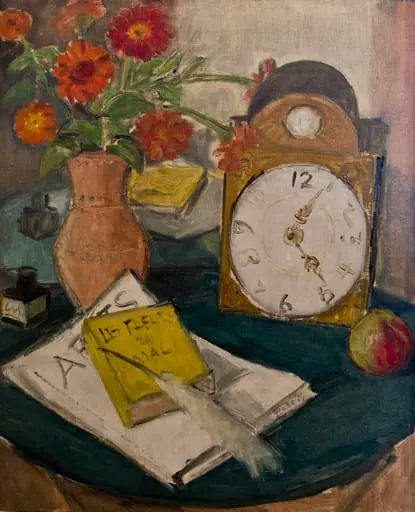
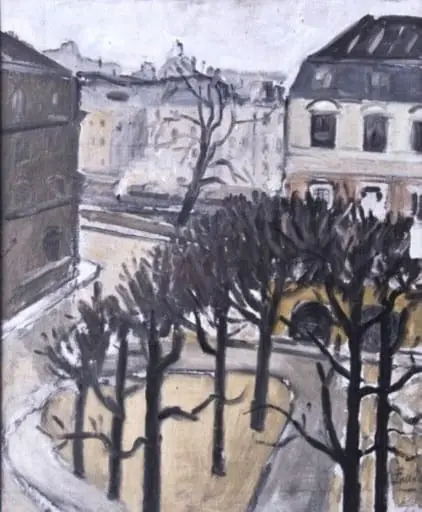
Theodor Pallady made still lifes and interiors in early 20th-century Bucharest. His Place Dauphine shows a quiet Parisian square, while Natură moartă (Ulcică cu flori și chibrituri) piles everyday objects on a table.…