Artwork
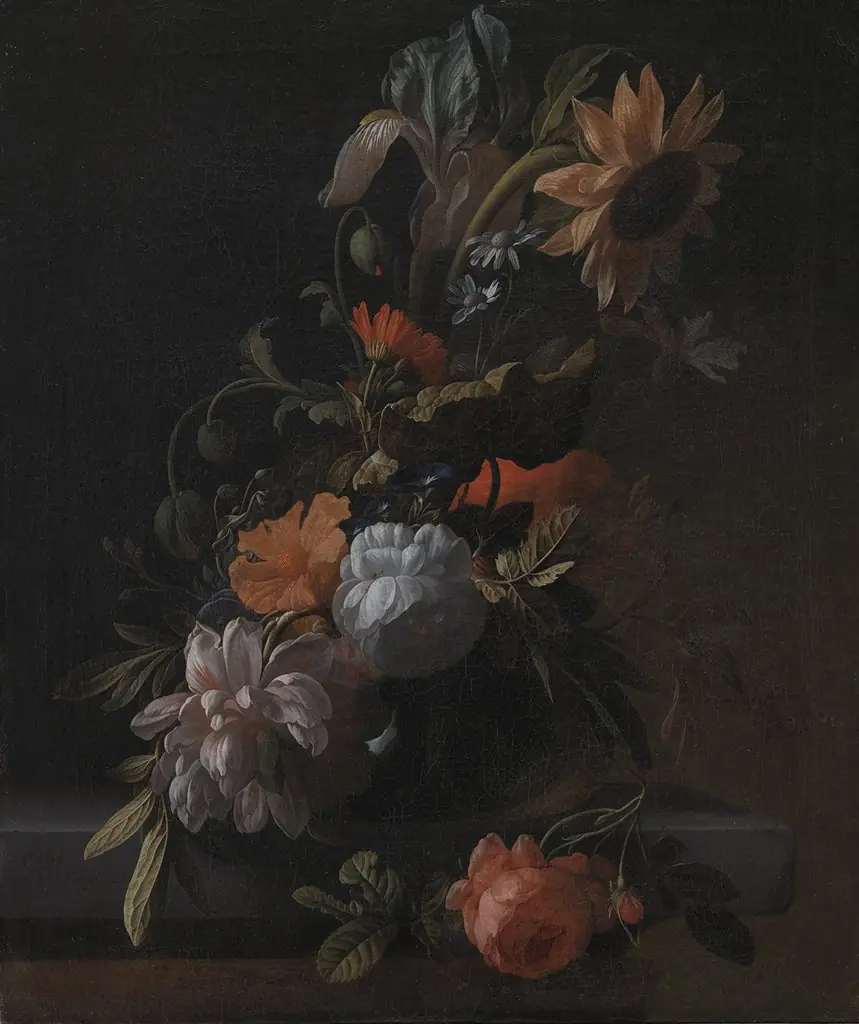
A Vase of Flowers
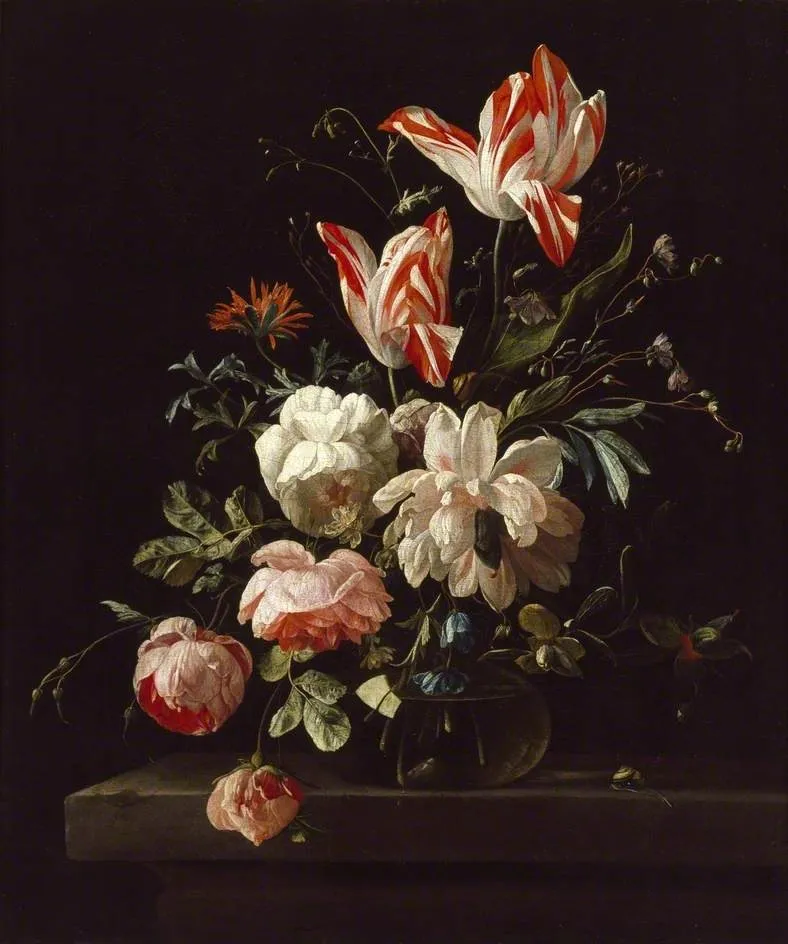
A Vase of Flowers is an oil painting by Elias van den Broeck. It dates from 1690 and is held in the collection of the Ashmolean Museum.
About this work
Overview
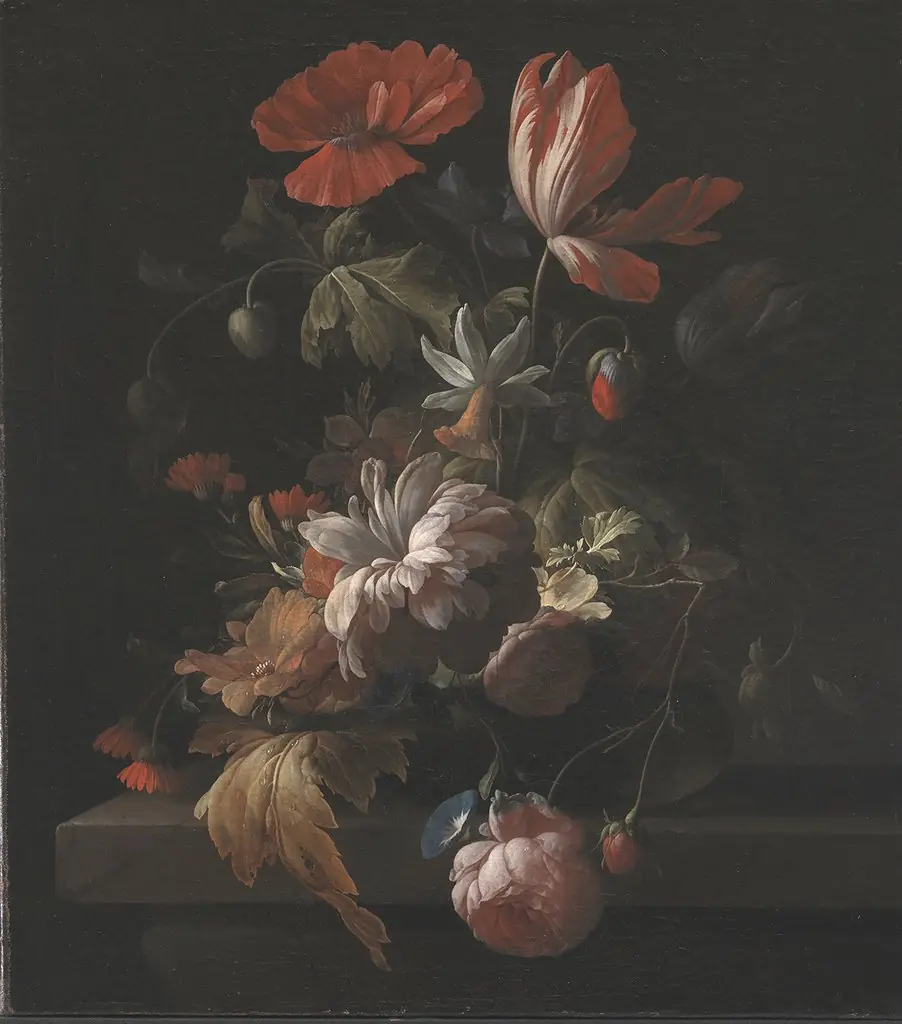
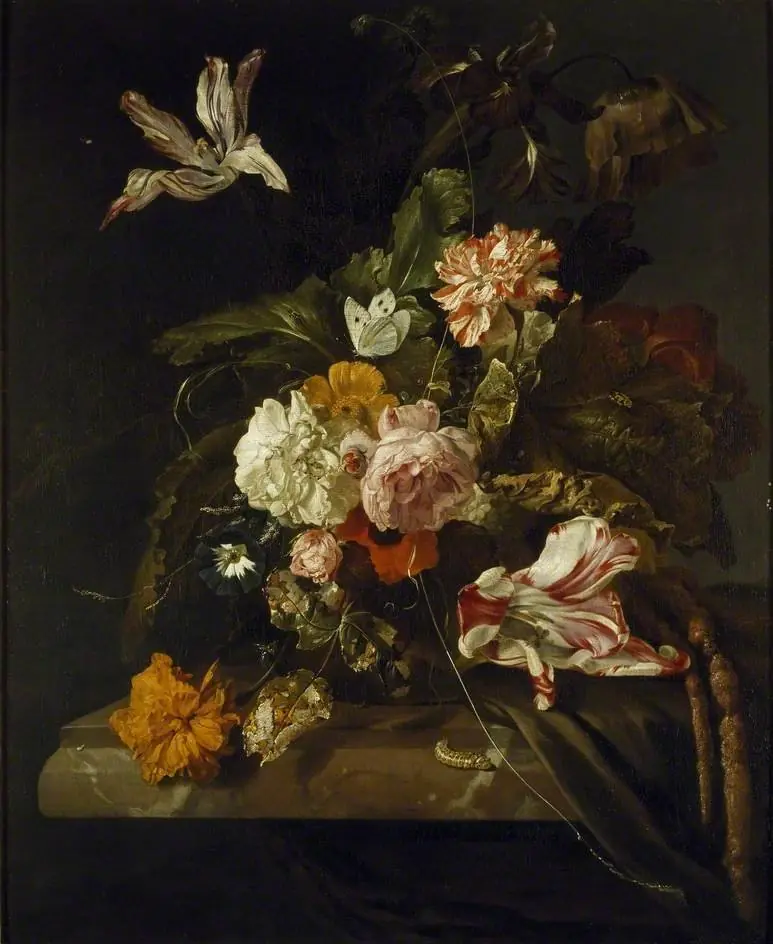
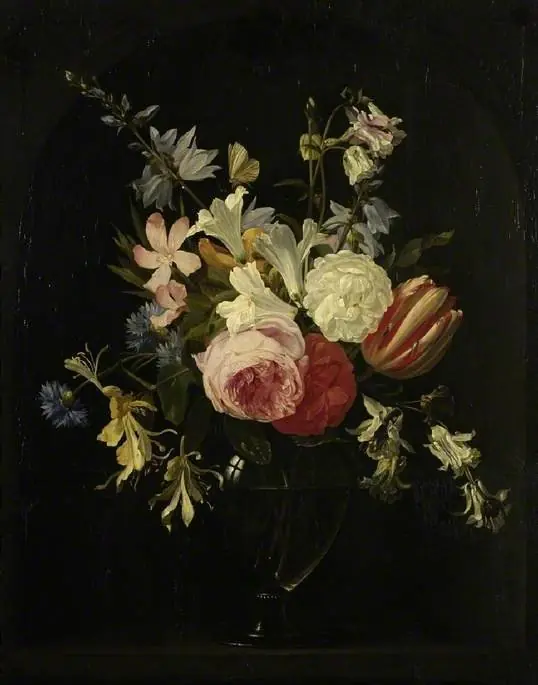
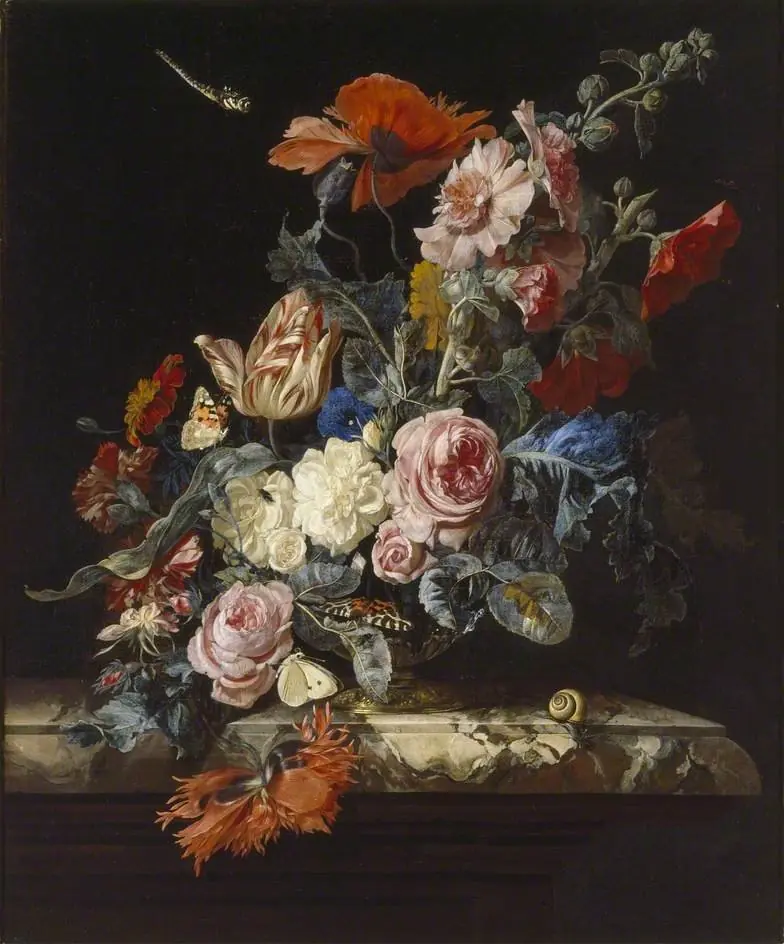
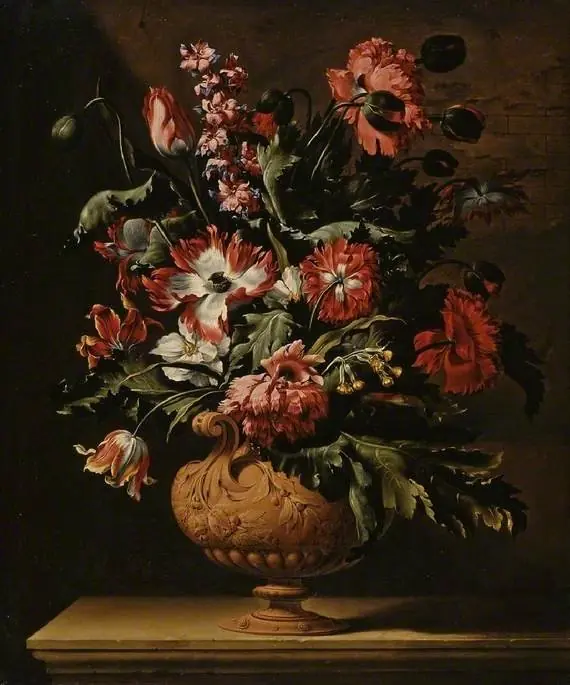
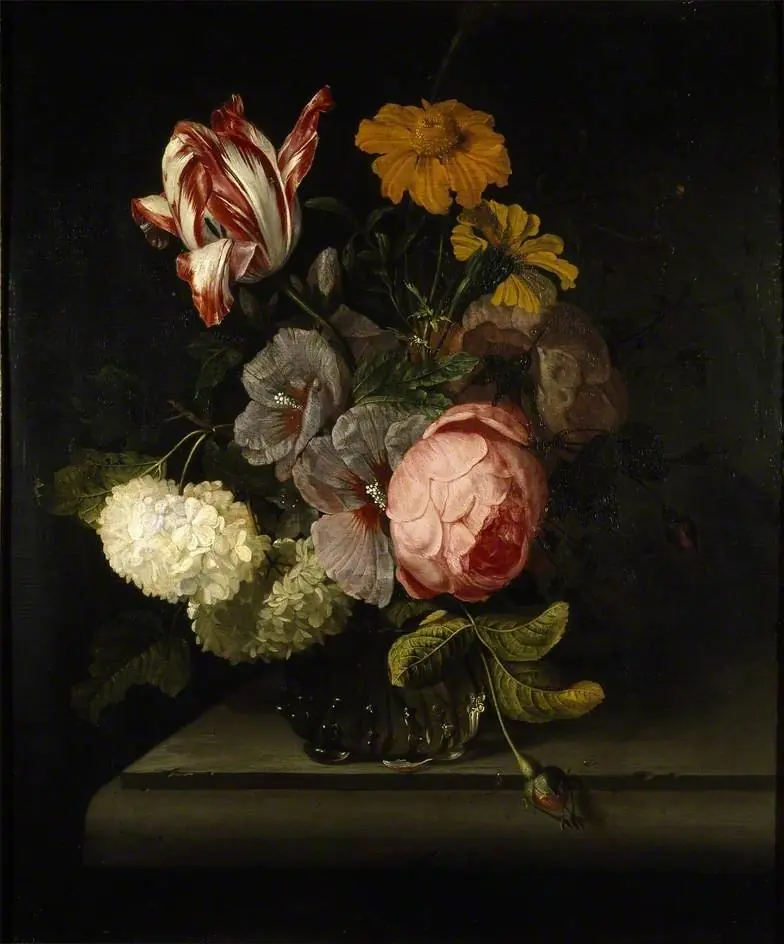
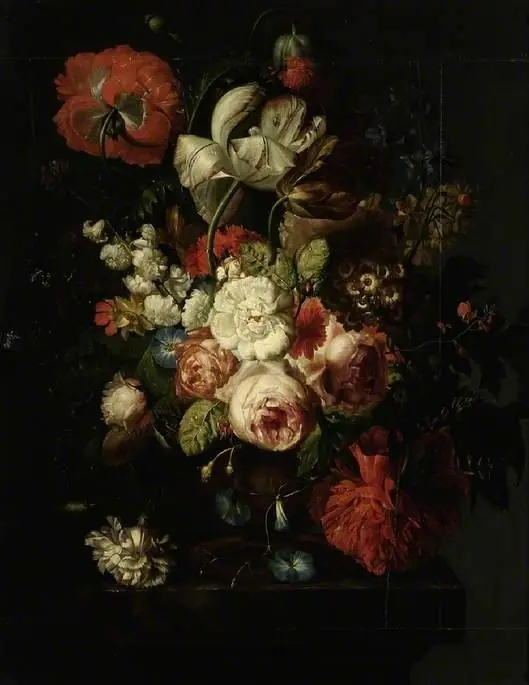
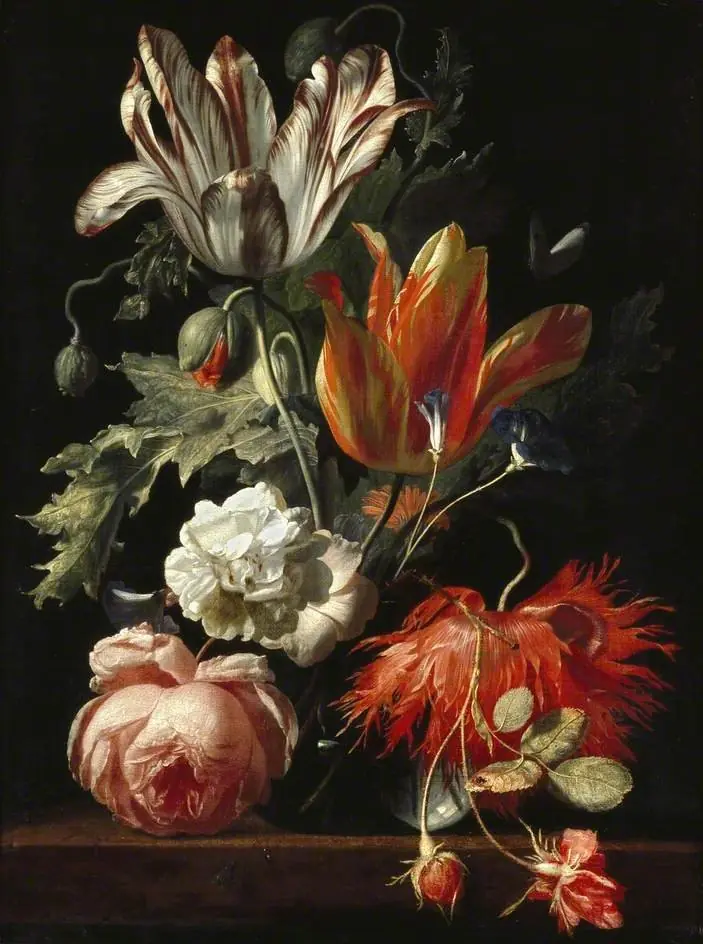
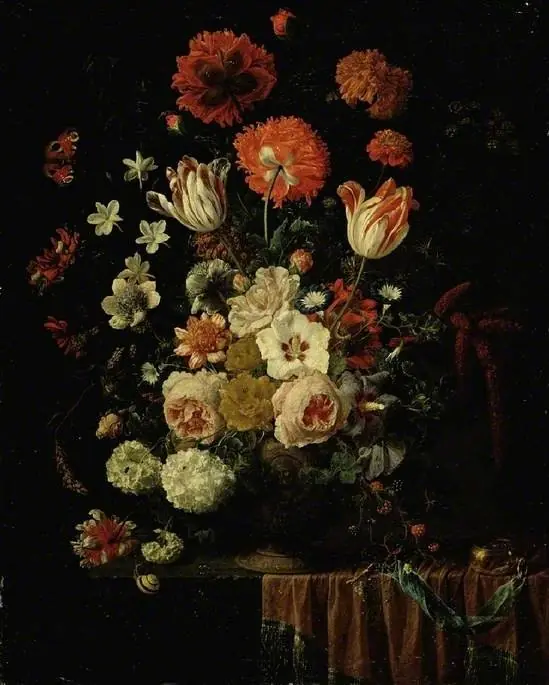
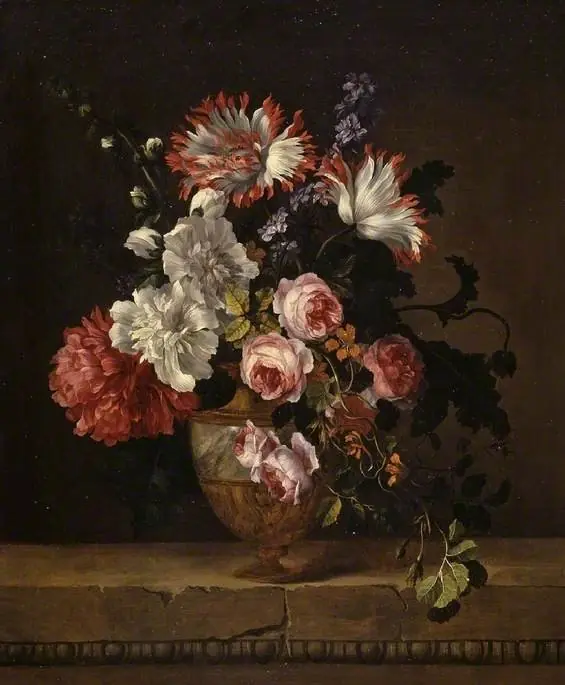
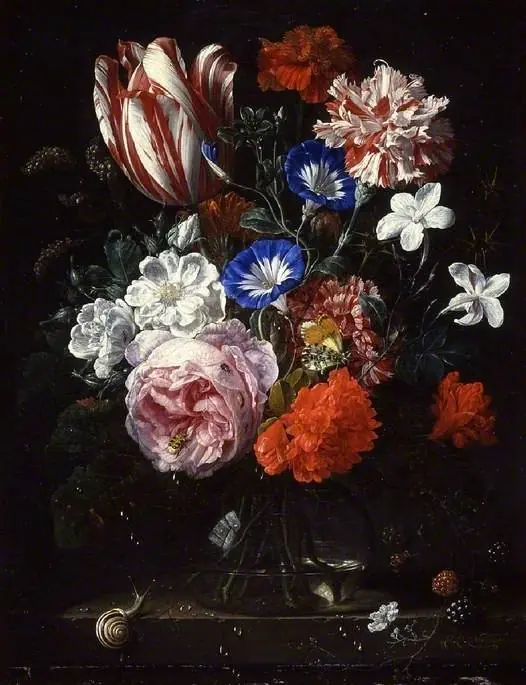
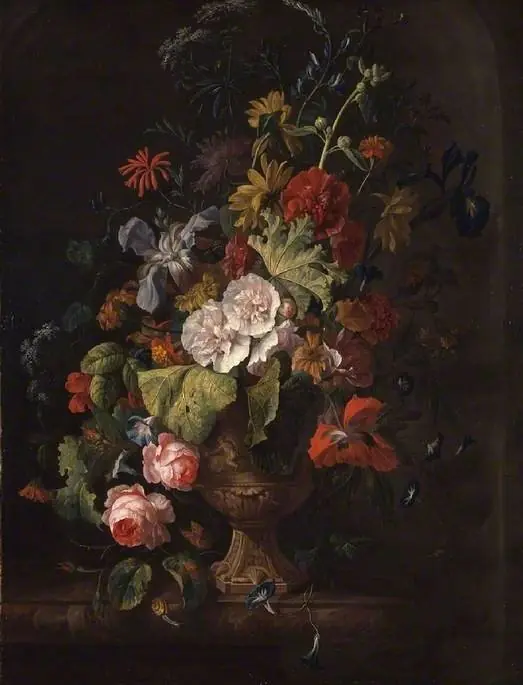
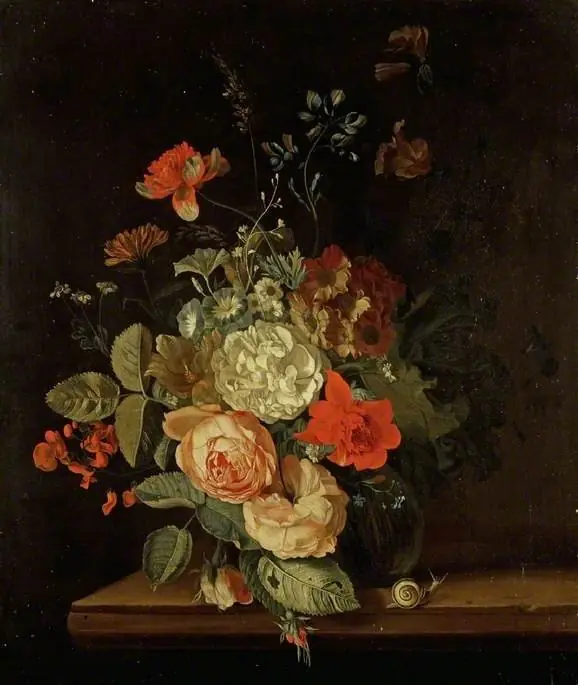
Painted around 1690 by Elias van den Broeck, this oil-on-canvas still life presents a dense arrangement of cut flowers in a dark ceramic vase.
Painted around 1690 by Elias van den Broeck, this oil-on-canvas still life presents a dense arrangement of cut flowers in a dark ceramic vase. Van den Broeck, trained in the Dutch Republic and influenced by his time in Antwerp, specialized in floral compositions that balanced naturalism with decorative precision. The work resides in the Ashmolean Museum’s collection, reflecting his standing among late 17th-century Dutch still life artists.
Subject & Meaning
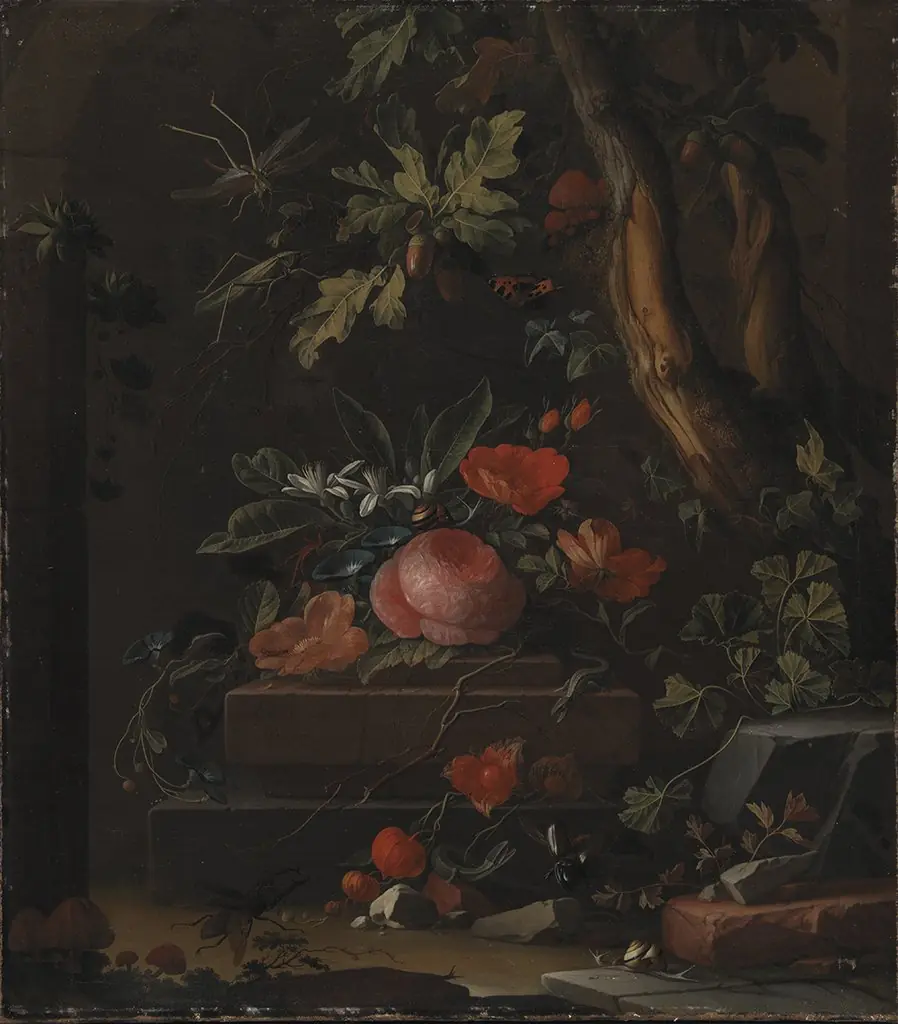
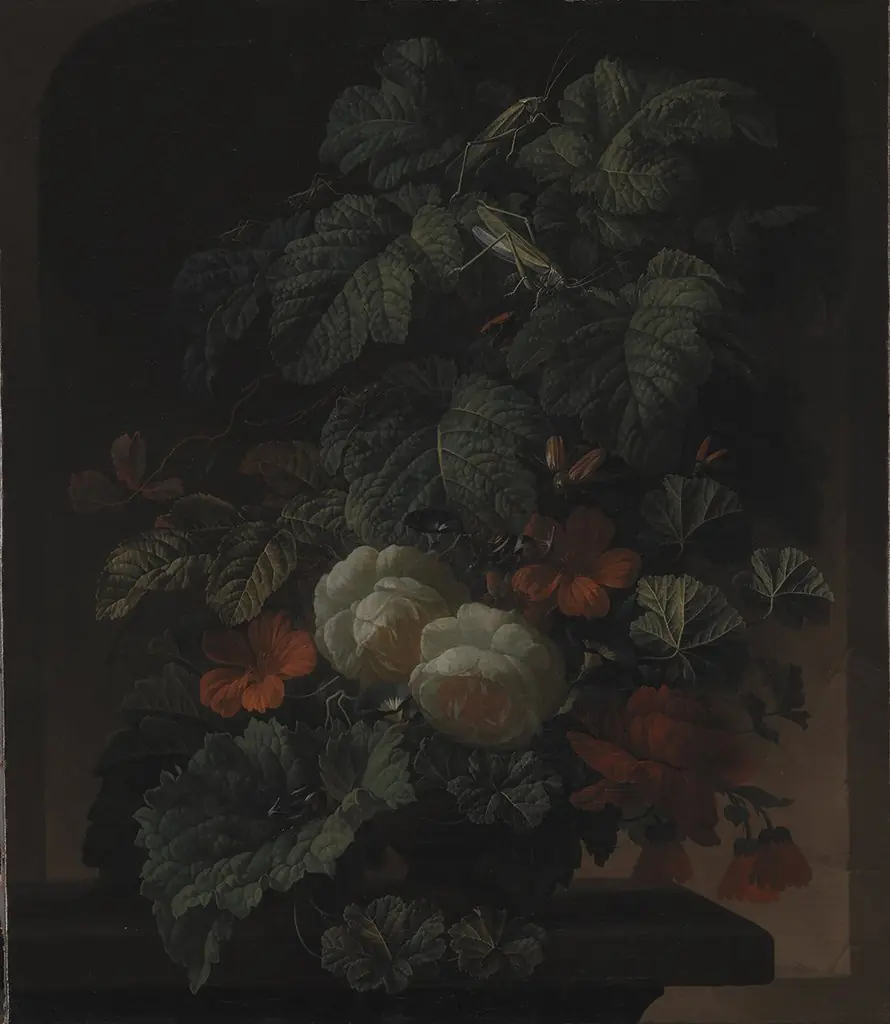
The painting features a loose, overflowing bouquet of white, pink, and striped red tulips, alongside other seasonal blooms. Rather than symbolizing a specific allegory, the arrangement emphasizes the transient beauty of nature and the painter’s skill in capturing fleeting vitality. The absence of insects or decay suggests a moment suspended in time, honoring the aesthetic appeal of cultivated flora without overt moralizing.
Technique & Style
Van den Broeck employs chiaroscuro to model each petal and stem with subtle gradations of light and shadow, lending volume and texture to the flowers. The dark, recessive background enhances the luminosity of the blooms, while loose brushwork in the foliage contrasts with the refined rendering of individual petals. The composition avoids rigid symmetry, favoring a naturalistic tumble that mimics the spontaneity of a freshly gathered bouquet.
History & Provenance
Created during van den Broeck’s mature period in Amsterdam, the painting aligns with his established reputation as a dealer and painter of floral still lifes. It entered the Ashmolean Museum’s collection in the 19th century, likely through a private donation or acquisition. Its survival in good condition reflects its continued appreciation among collectors of Dutch Golden Age still life painting.
Context
In late 17th-century Amsterdam, flower paintings were popular among the urban elite, serving as both decorative objects and demonstrations of connoisseurship. Van den Broeck’s work fits within a tradition that valued botanical accuracy and refined technique, influenced by earlier masters like Jan Davidsz de Heem. His time in Antwerp exposed him to Flemish richness, which he tempered with Dutch restraint.
Legacy
Van den Broeck’s floral compositions contributed to the enduring appeal of Dutch still life painting, influencing later artists through their quiet precision and attention to natural detail. While not as widely known as some contemporaries, his works remain valued for their technical control and understated elegance. This painting exemplifies a genre that celebrated the ordinary through disciplined observation.
Artist & collection
Artist
Elias van den Broeck (c. 1652 in probably in Amsterdam – buried 6 February 1708 in Amsterdam) was a Dutch still life painter mainly known for his flower pieces. He trained in the Dutch Republic and worked for some time…