Artwork
A Vase of Flowers
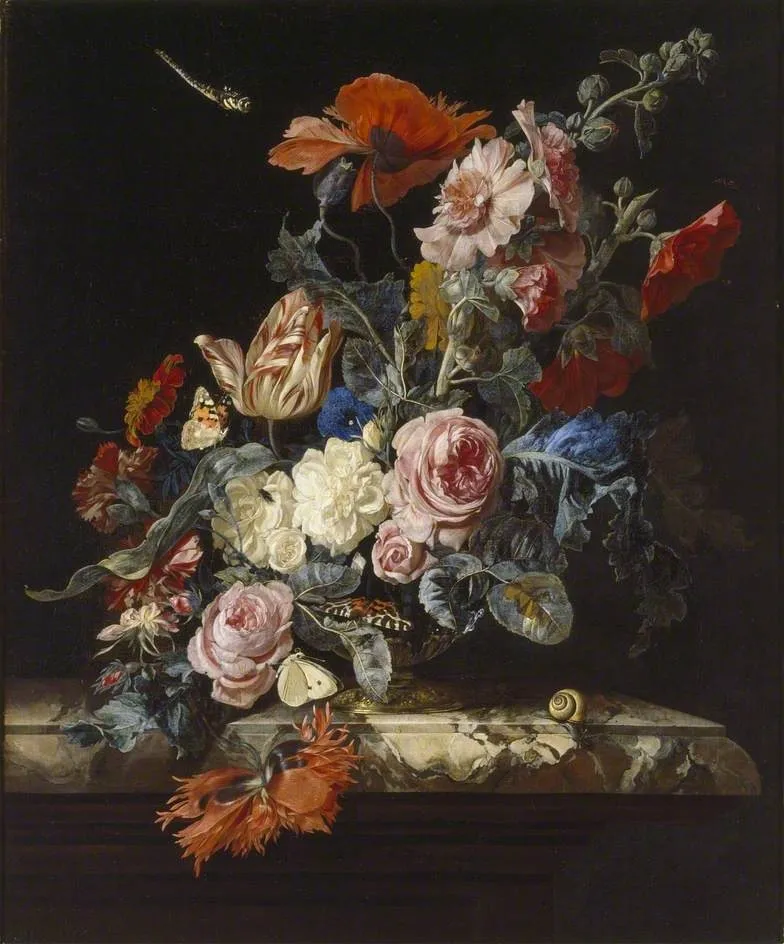
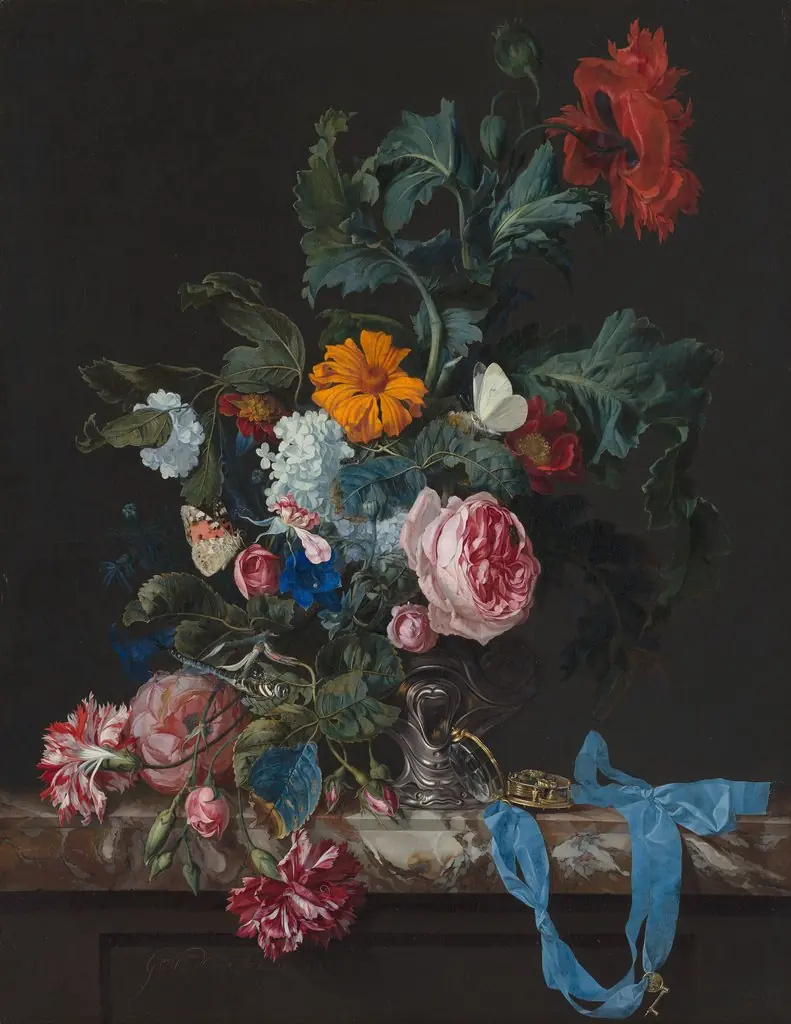
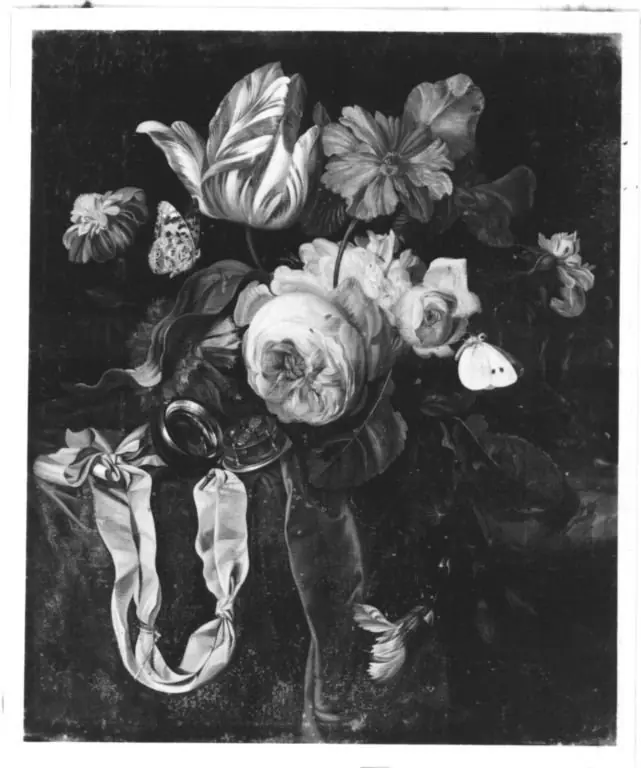
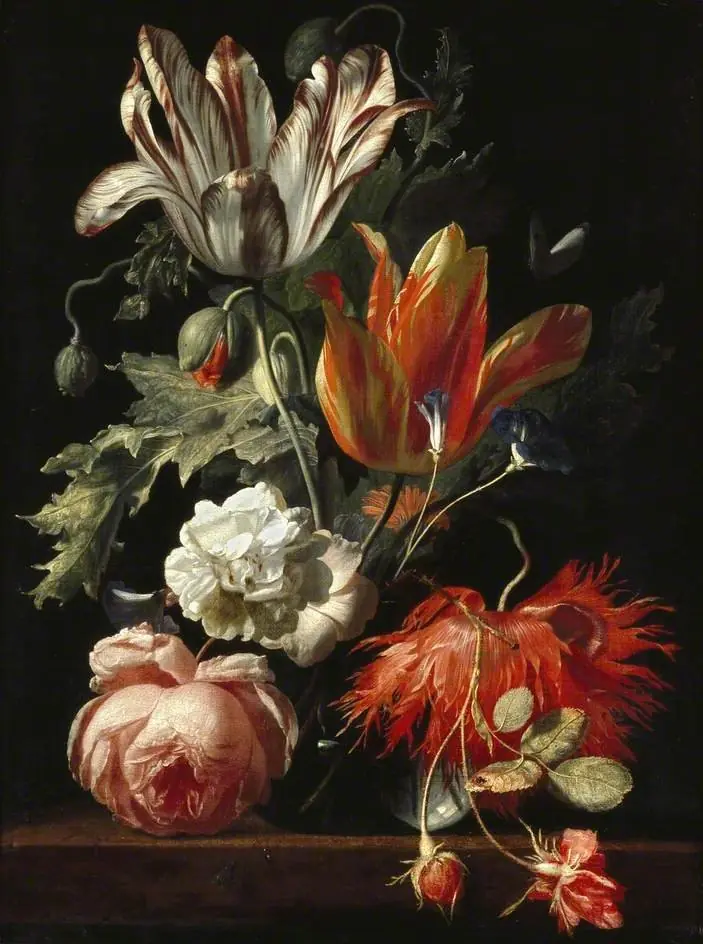
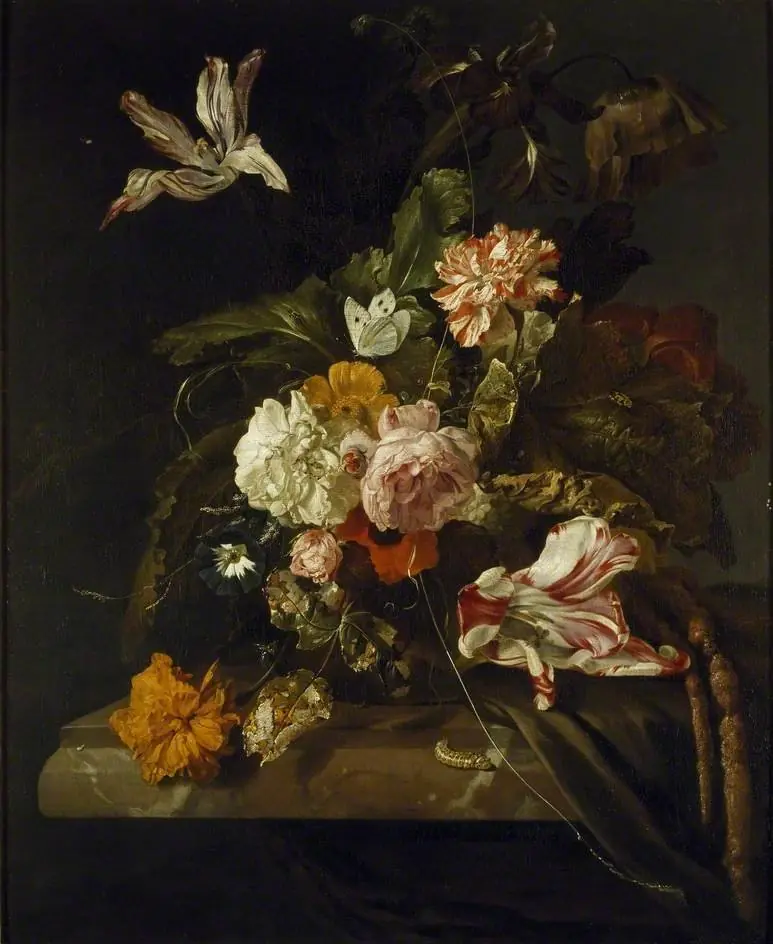
A Vase of Flowers is an oil painting by the Dutch Golden Age artist Willem van Aelst. It dates from 1663 and is held in the collection of the Ashmolean Museum.
About this work
Overview
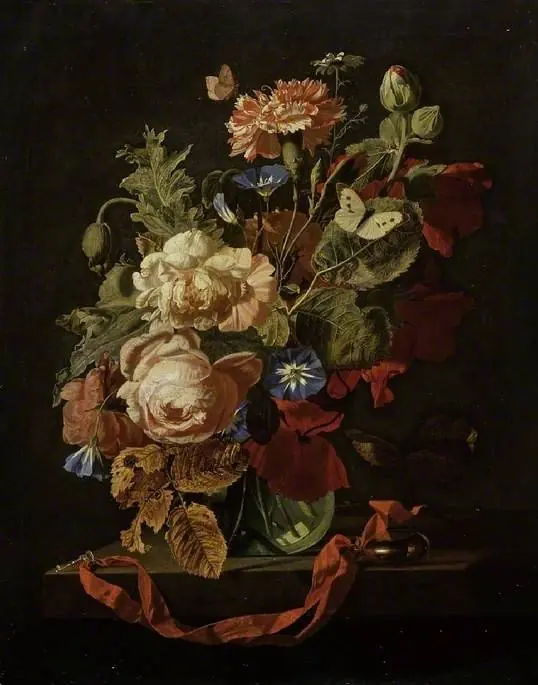
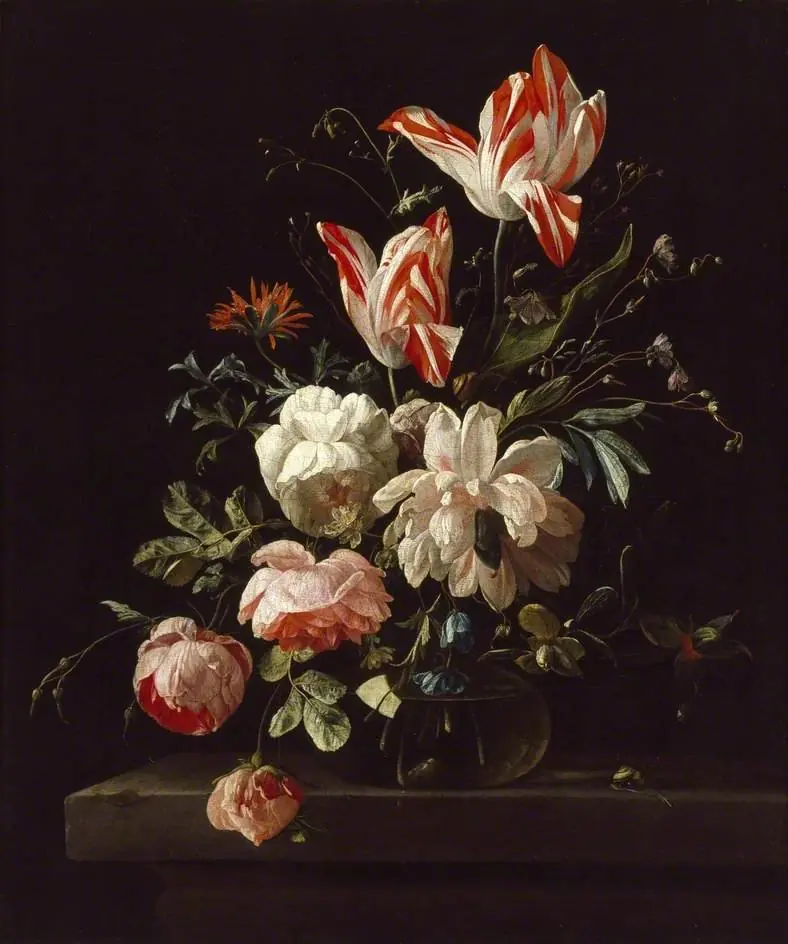
Willem van Aelst’s *A Vase of Flowers* (1663) is an oil painting that presents a carefully arranged bouquet set upon a tabletop. The composition centers on a decorative vase filled with pink, white and red blossoms, accompanied by green foliage, a few butterflies and a small snail. The work exemplifies the refined still‑life tradition of mid‑17th‑century Dutch painting.
Subject & Meaning
The painting depicts a transient collection of garden flowers, rendered with meticulous attention to their individual forms and colors. By including insects and a snail, van Aelst alludes to the fleeting nature of beauty and the passage of time, a common symbolic thread in Dutch still lifes that juxtaposes vitality with decay.
Technique & Style
Executed in oil on canvas, the piece showcases van Aelst’s skillful handling of light and shadow to model surfaces and create a sense of three‑dimensionality. Fine brushwork captures the delicate textures of petals, the sheen of leaves, and the iridescent wings of butterflies, while subtle chiaroscuro lends depth to the tabletop setting.
History & Provenance
Created during the height of the Dutch Golden Age, the work entered the collection of the Ashmolean Museum, where it remains on display. Van Aelst, a specialist in floral and game still lifes, produced this painting as part of his broader oeuvre that catered to the period’s market for luxurious domestic decor.
Artist & collection
Artist
Willem van Aelst (16 May 1627 – buried 22 May 1683) was a Dutch Golden Age artist who specialized in still-life painting with flowers or game.