Artwork
Untitled
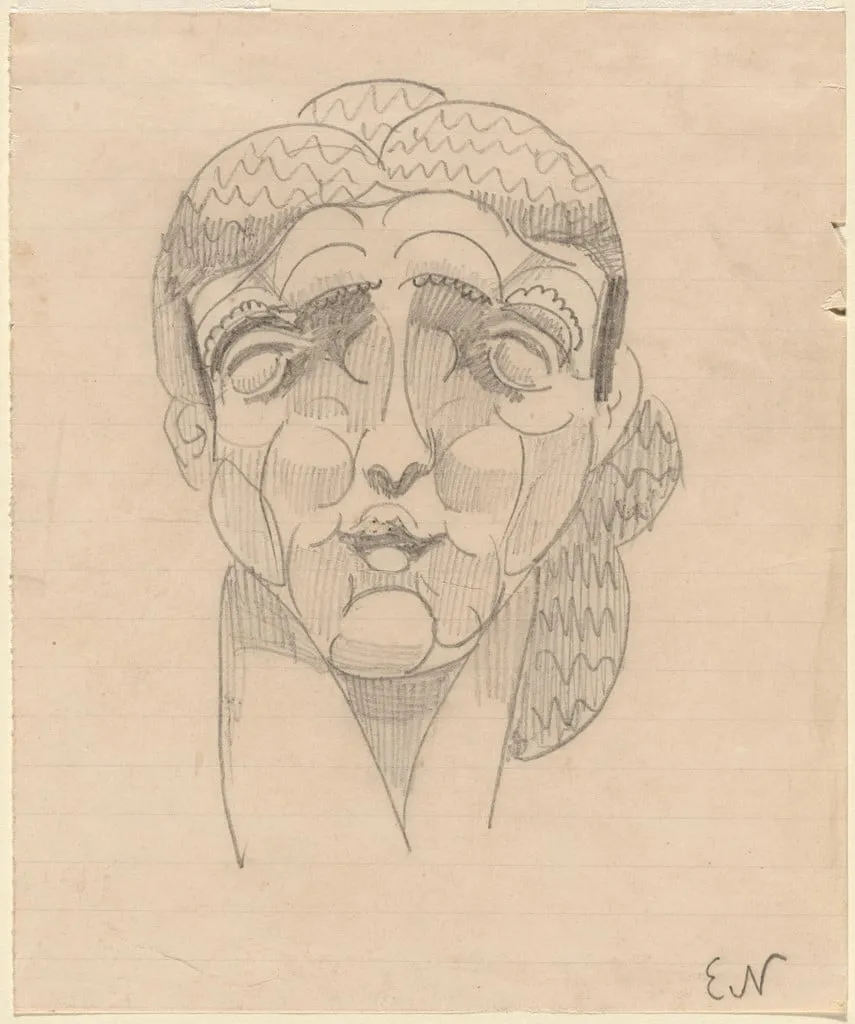
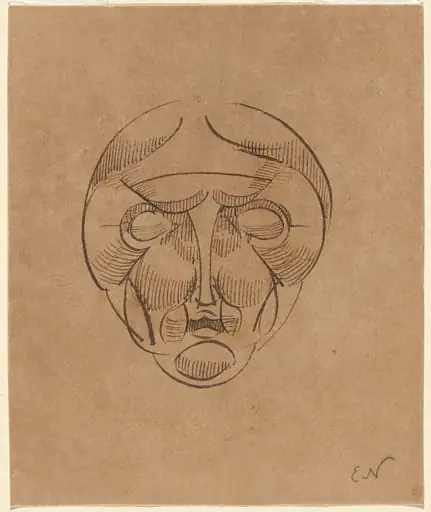
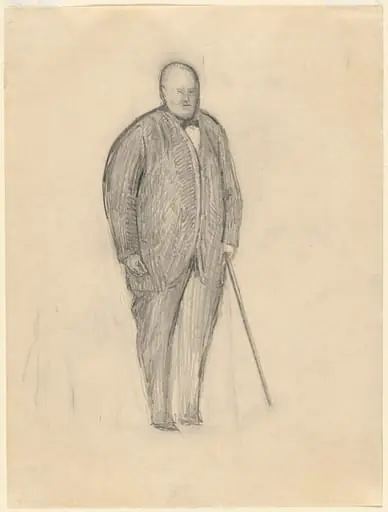
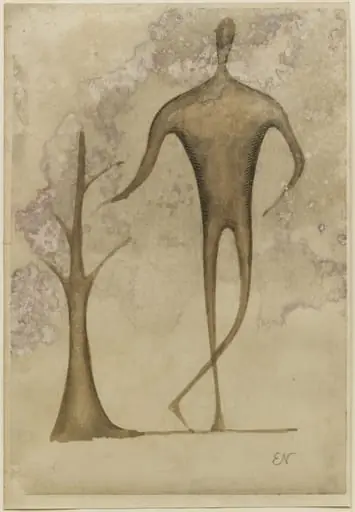
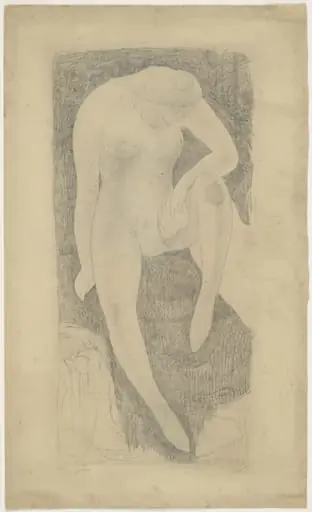
Untitled is a graphite drawing by Elie Nadelman. It dates from 1906 and is held in the collection of the Museum of Modern Art.
About this work
Overview
Executed on lightly yellowed paper, it reflects the artist’s early engagement with figural representation before his later sculptural focus.
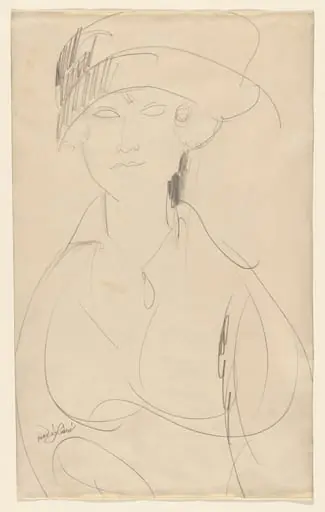
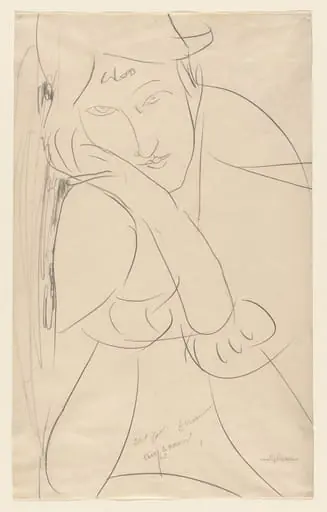
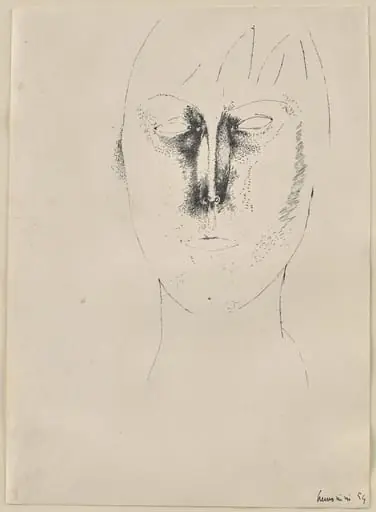
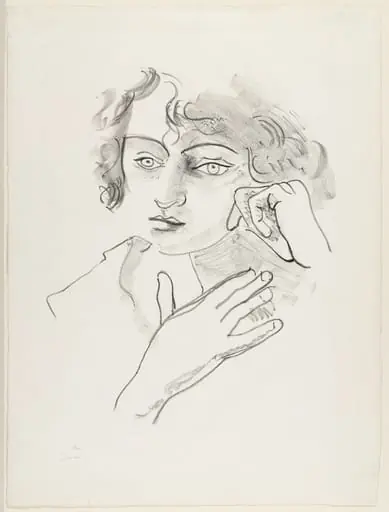
Created around 1906, this pencil drawing by Elie Nadelman is a modest yet expressive study of a human face. Executed on lightly yellowed paper, it reflects the artist’s early engagement with figural representation before his later sculptural focus. The work is part of The Museum of Modern Art’s collection, representing Nadelman’s formative years in Paris, where he absorbed influences from both modernist experimentation and folk traditions.
Subject & Meaning
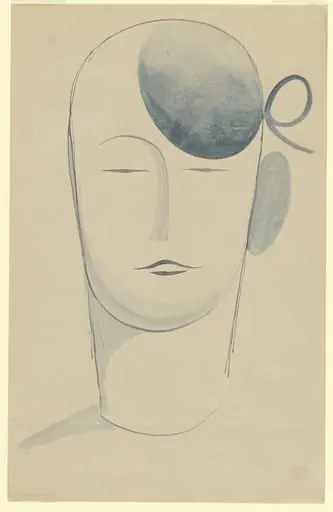
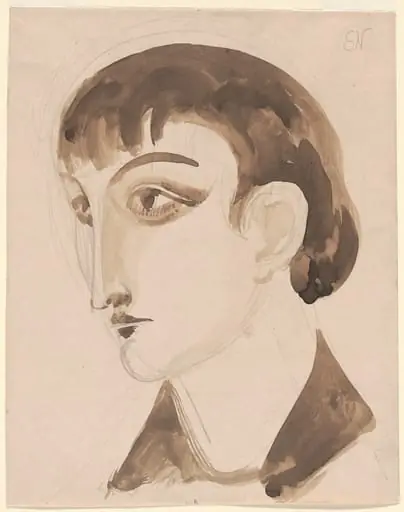
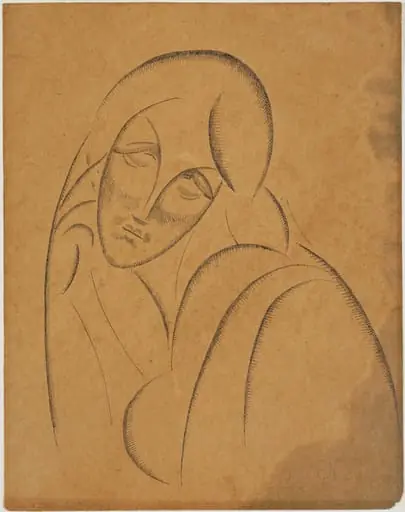
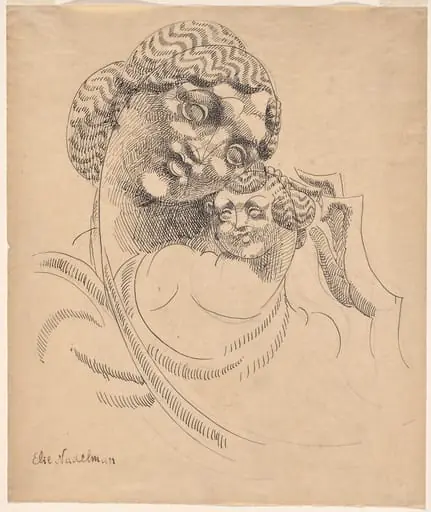
The drawing presents a simplified, almost mask-like portrait, emphasizing expressive features over anatomical precision. Large, rounded eyes and a small mouth suggest an emotional intensity, while the wavy hair and minimal neck strokes reduce the figure to its essential contours. The absence of context or narrative invites contemplation of the subject’s inner state, aligning with Nadelman’s broader interest in archetypal human forms drawn from folk and primitive sources.
Technique & Style
Nadelman employed loose, uneven pencil lines to convey movement and volume, avoiding polished finish in favor of immediacy. Light cross-hatching subtly models shadows beneath the eyes and along the nasal bridge, creating depth without heavy contrast. The sketchy quality, with varying line weight and occasional smudging, reflects a spontaneous, observational approach—more concerned with capturing presence than with technical refinement.
History & Provenance
The drawing dates from Nadelman’s early period in Paris, following his move from Poland and prior to his rise as a sculptor. It likely originated as a preparatory study or personal exercise, not intended for public display. Acquired by The Museum of Modern Art in the 20th century, it entered the collection as part of a broader effort to document modernist drawing practices and the artist’s transition from draftsmanship to three-dimensional form.
Context
In 1906, Paris was a hub for artists redefining representation through simplification and emotional directness. Nadelman, influenced by both avant-garde circles and non-Western folk art, sought to distill human figures into essential shapes. This drawing aligns with contemporaneous trends among the School of Paris, where traditional academic ideals were being challenged by more intuitive, expressive modes of depiction.
Legacy
Though minor in scale, this drawing exemplifies Nadelman’s enduring fascination with the human face as a vessel of universal expression. Its rawness and economy of line prefigure his later sculptural works, where simplified forms became his signature. As a surviving fragment of his early practice, it offers insight into the development of a modernist sensibility rooted in observation rather than idealization.
Artist & collection
Artist
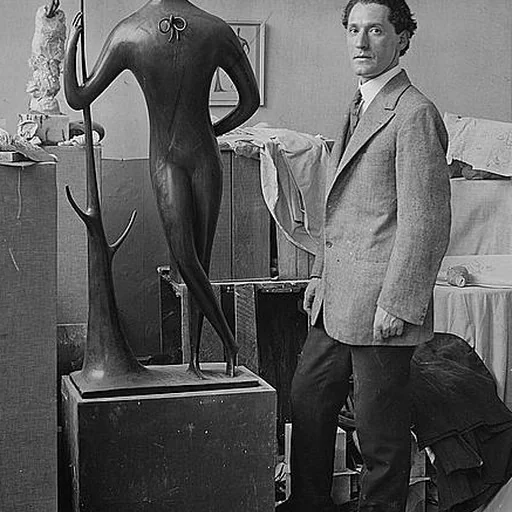
Elie Nadelman (born Eliasz Nadelman; February 20, 1882 – December 28, 1946) was a Polish-American sculptor, draughtsman of the School of Paris and a collector of folk art.