Artwork
Untitled
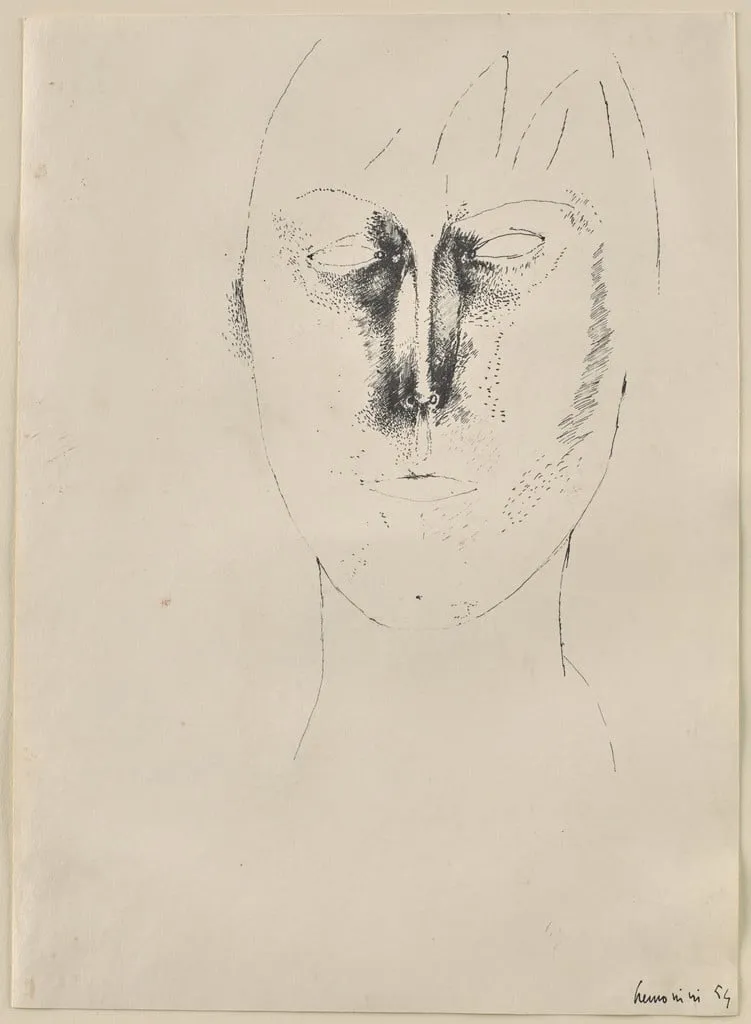
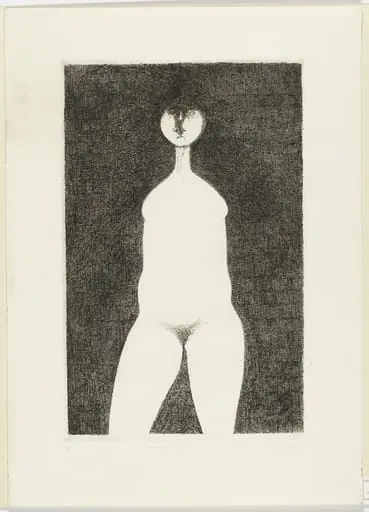
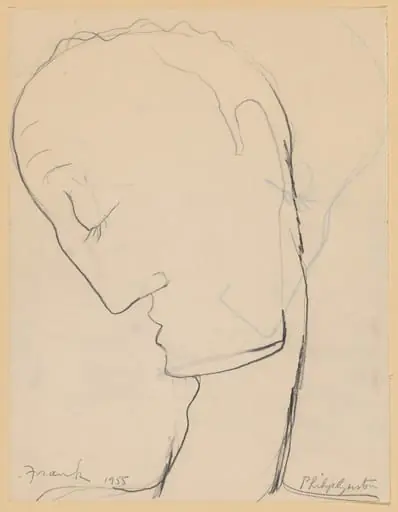
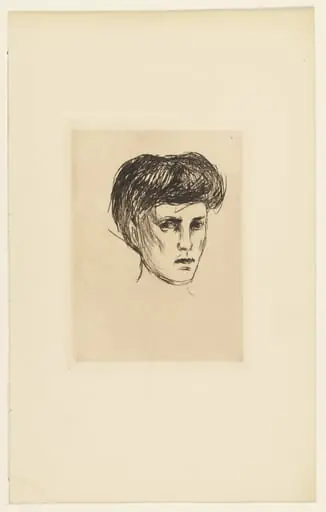
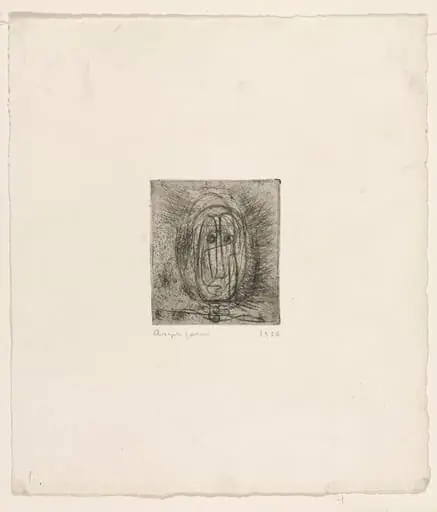
Untitled is an ink drawing by Leonardo Cremonini. It dates from 1954 and is held in the collection of the Museum of Modern Art.
About this work
Overview
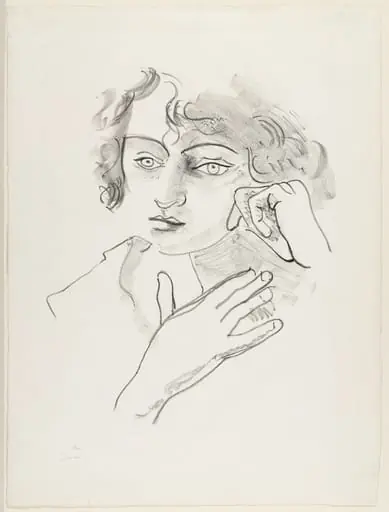
Created in 1954, this ink drawing by Leonardo Cremonini is part of The Museum of Modern Art’s collection. Executed on paper, the work presents a close-up portrait with the subject’s head cropped at the top edge. The composition focuses entirely on the face, eliminating background or contextual elements to emphasize presence over narrative.
Subject & Meaning
The subject is a solitary figure whose facial expression conveys quiet intensity. Without identifying details, the portrait resists specific biography, instead inviting contemplation of inner states. The intimacy of the view suggests a moment of stillness, as if the viewer shares a private space with the sitter, evoking vulnerability rather than performance.
Technique & Style
Cremonini employs bold, fluid ink lines and layered shading to model the face with minimal strokes. Cross-hatching and varying line weight create volume and texture, particularly around the eyes, nose, and jaw. The medium’s immediacy enhances the drawing’s rawness, with no corrections visible—each mark contributing to an unmediated sense of observation.
History & Provenance
The work entered MoMA’s collection shortly after its creation, reflecting the institution’s interest in postwar European drawing practices. While little public documentation exists about its early ownership, its acquisition aligns with MoMA’s mid-century focus on expressive, non-figurative, and psychologically charged works on paper.
Context
Made during a period when European artists were redefining figuration after the war, this drawing resonates with contemporaneous explorations of emotional depth through simplified form. Cremonini’s approach echoes the existential tone of Italian postwar art, where the human face became a site for exploring isolation and inner life beyond political or social commentary.
Legacy
Though not widely exhibited, the drawing remains a quiet example of mid-century ink portraiture that prioritizes emotional resonance over detail. It contributes to broader conversations about the power of line and absence in conveying psychological presence, influencing later artists who sought intimacy through restraint.
Artist & collection