Artwork
Interior of the Nieuwe Kerk, Amsterdam
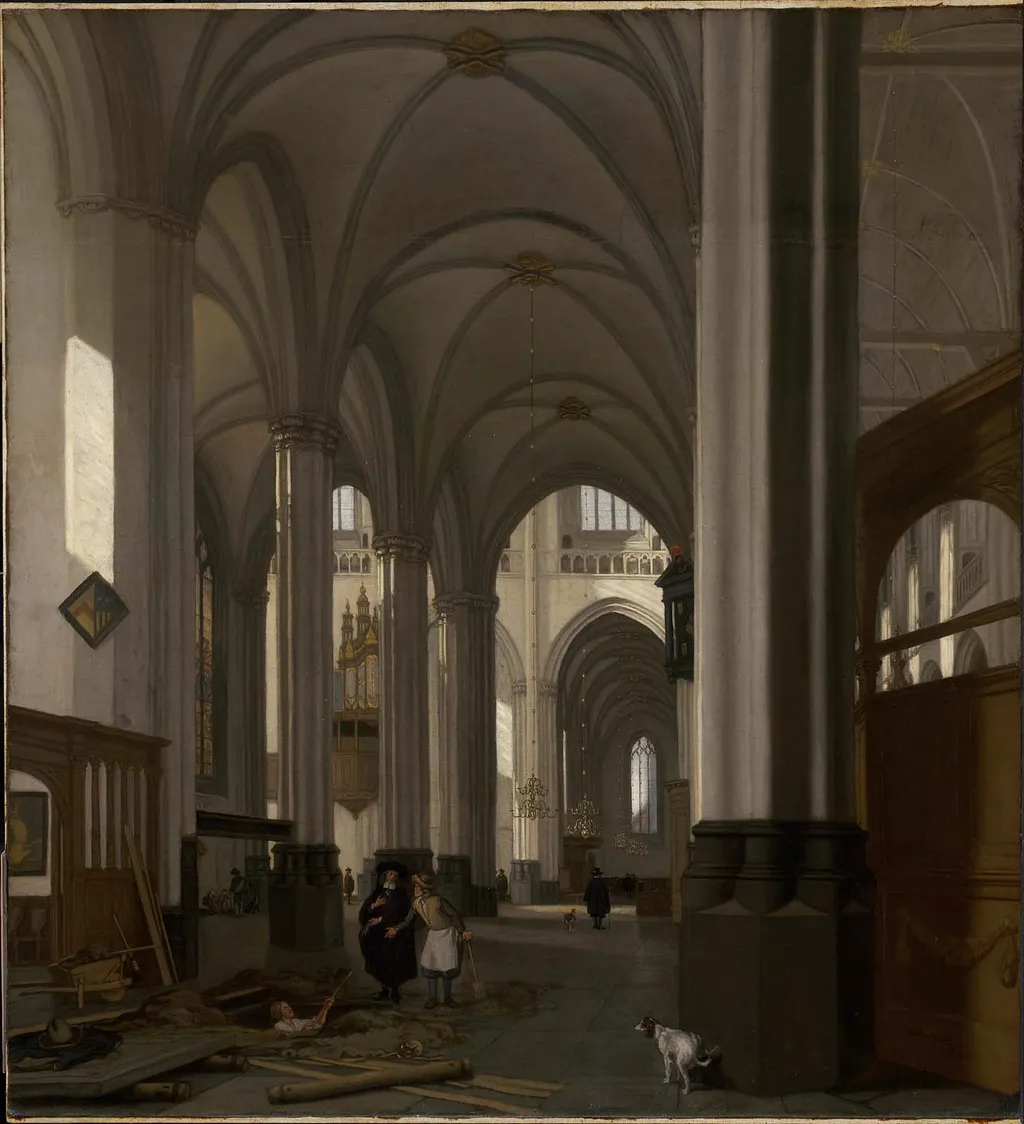
Interior of the Nieuwe Kerk, Amsterdam is an oil painting by the Dutch Golden Age artist Emanuel de Witte. It dates from 1689 and is held in the collection of the Museum of Fine Arts Boston.
About this work
Overview
This juxtaposition of the sacred architecture with mundane human activity reflects the artist's interest in the intersection of the spiritual and the secular.
Emanuel de Witte's 'Interior of the Nieuwe Kerk, Amsterdam,' painted in 1689, is a quintessential example of Dutch Golden Age church interior painting. The composition utilizes a low viewpoint to emphasize the soaring height of the Gothic nave, directing the viewer's gaze upward along the massive stone pillars and vaulted ceilings. Natural light streams through the large clerestory windows, illuminating the vast space and creating a serene, atmospheric quality characteristic of de Witte's mature style. Unlike the idealized, empty churches of Pieter Saenredam, de Witte populates his scenes with everyday life; here, two men converse in the foreground while a third figure reclines on the floor, accompanied by a dog and scattered tools that suggest maintenance or construction work. This juxtaposition of the sacred architecture with mundane human activity reflects the artist's interest in the intersection of the spiritual and the secular. Created late in de Witte's career, shortly before his death, the work demonstrates his mastery of perspective and light, solidifying his reputation as a leading specialist in architectural interiors during the late seventeenth century.
Subject & Meaning
The scene captures a moment of quiet activity within the church: two men converse near the foreground, a third figure lies on the floor, and a dog rests nearby. Scattered tools suggest ongoing maintenance, while small paintings and a chandelier provide subtle decorative cues, hinting at the blend of sacred space and everyday life.
Technique & Style
De Witte employs a careful balance of light and shadow to convey depth, allowing the illumination from the windows to cascade across the floor and walls. The chiaroscuro effect guides the viewer’s gaze toward the far end of the nave, where brighter light gathers, reinforcing the three‑dimensional illusion of the interior.
History & Provenance
Painted toward the end of de Witte’s career, the work entered the Museum of Fine Arts, Boston, as part of its European paintings collection. Its acquisition date and previous owners are not extensively documented, but the painting has been exhibited as a representative example of Dutch interior genre scenes from the late seventeenth century.
Context
De Witte specialized in architectural interiors, often focusing on churches and civic buildings. This piece reflects the Dutch Golden Age’s interest in precise perspective, atmospheric lighting, and the quiet observation of daily routines within public spaces, aligning with contemporary works by artists such as Pieter Saenredam.
Own this work as a print
Artist & collection

Artist
Emanuel de Witte was born circa 1617 in Alkmaar, the son of Pieter de Wit, a local schoolmaster.

 The Interior of the Oude Kerk, Amsterdam
 Interior of the Oude Kerk, Delft
 Interior of a Protestant, Gothic Church, with a Gravedigger in the Choir
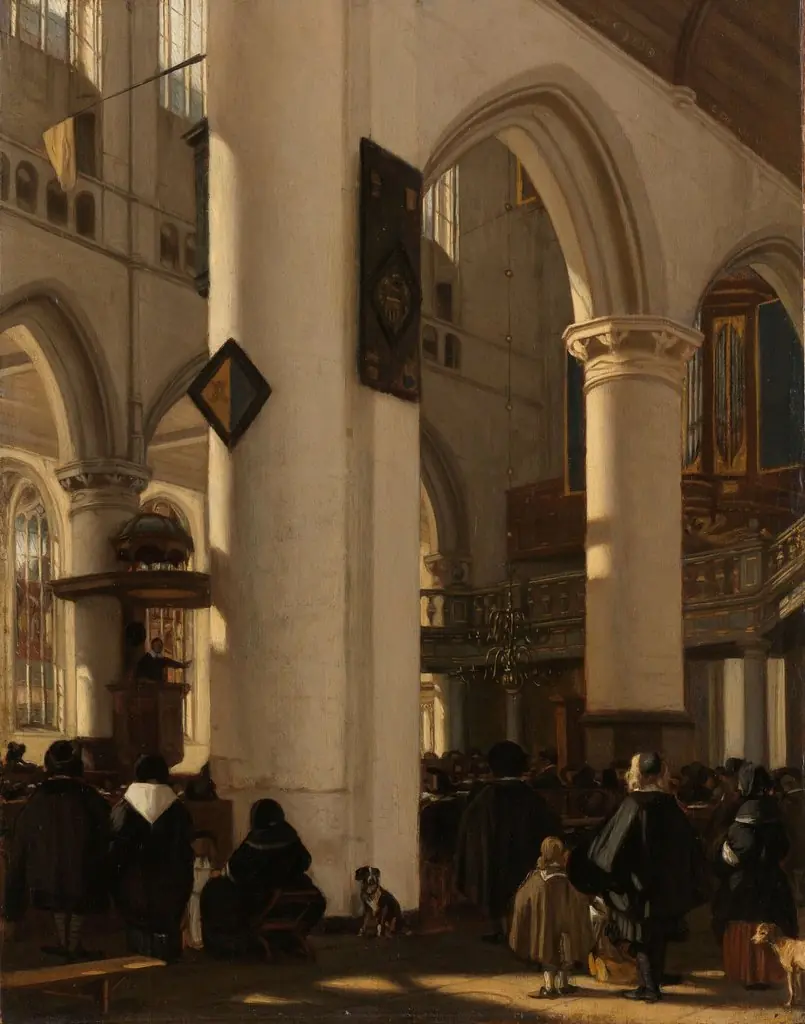 Interior of a Protestant, Gothic Church during a Service
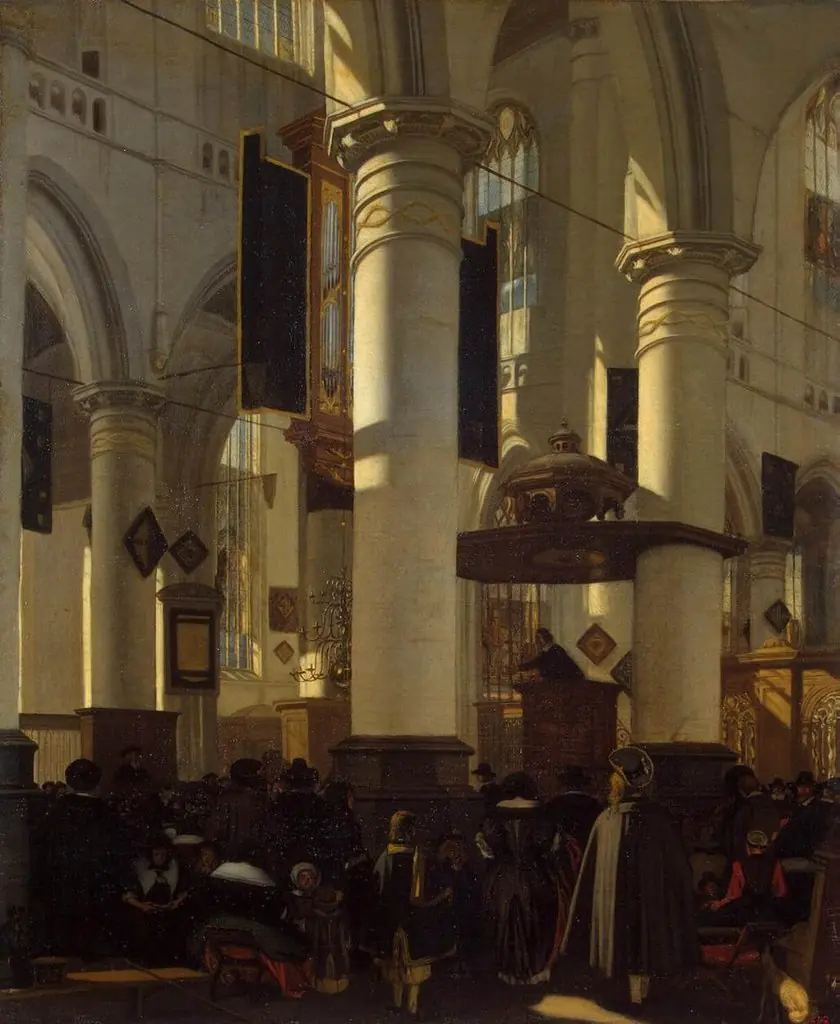 Interior of a Church
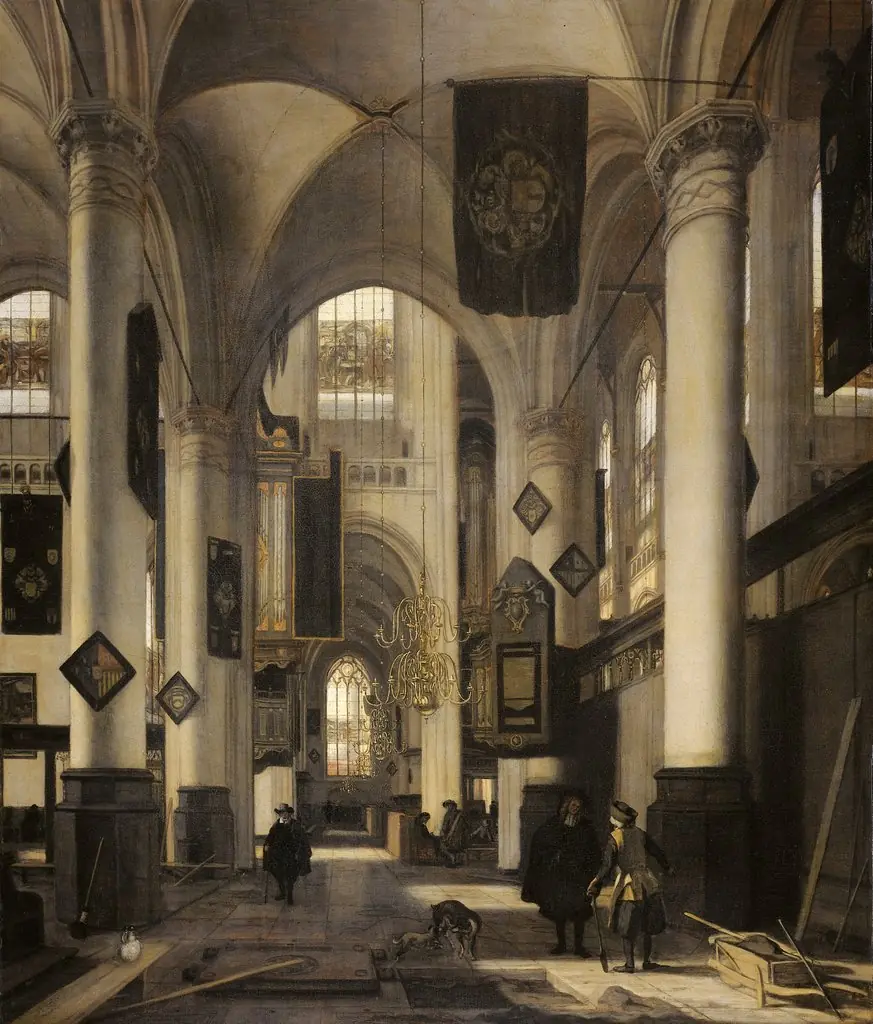 Interior of a Protestant Gothic Church
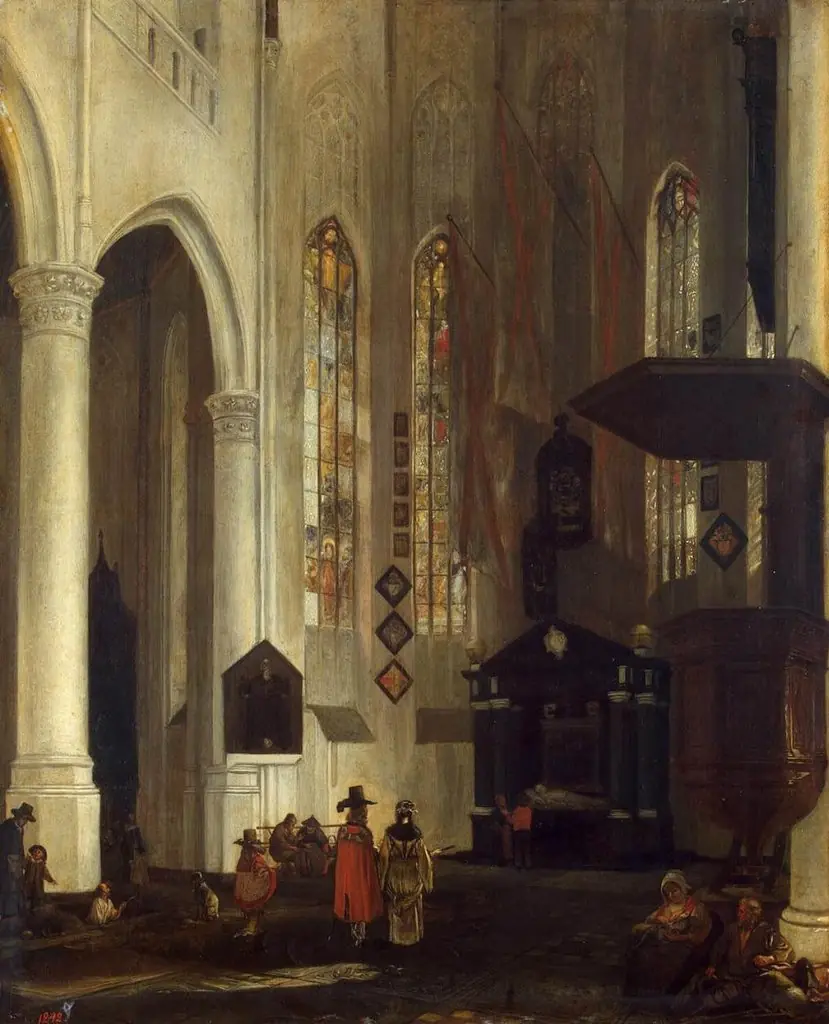 Old Church (Oudekerk) in Delft with the Tomb of Admiral Pieter Pieterszoon Hein (Heyn)
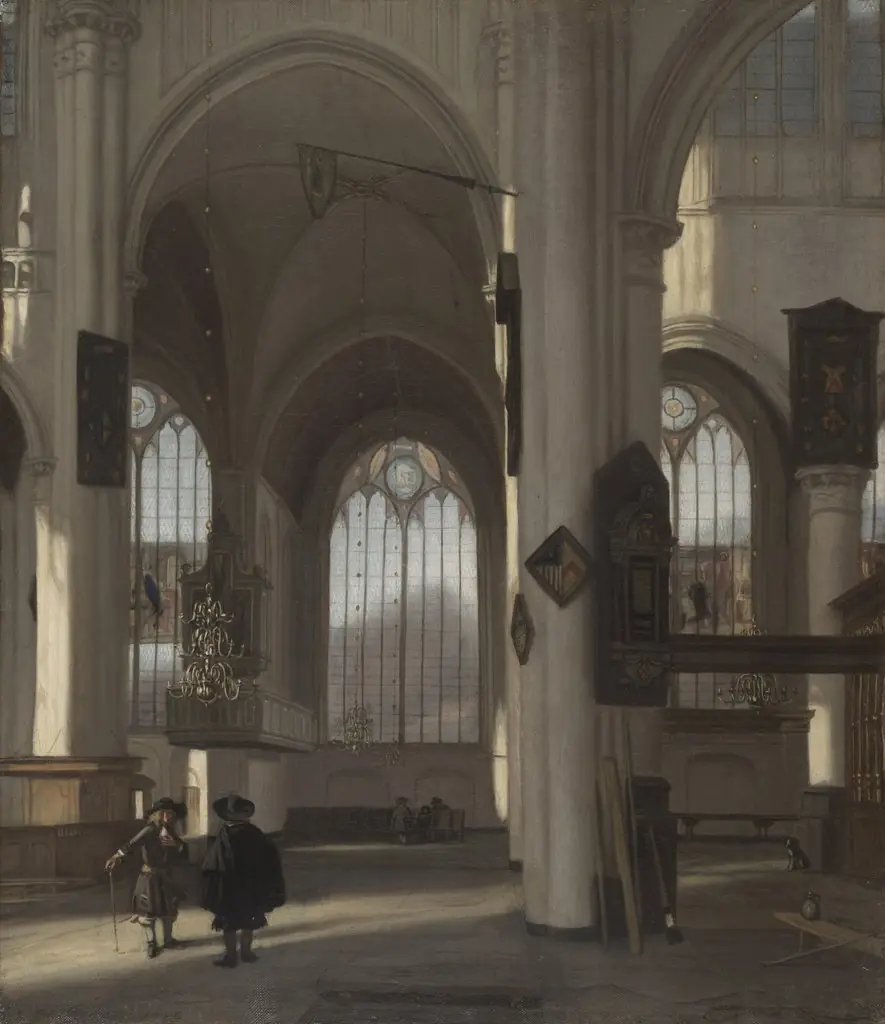 Interior of a Church
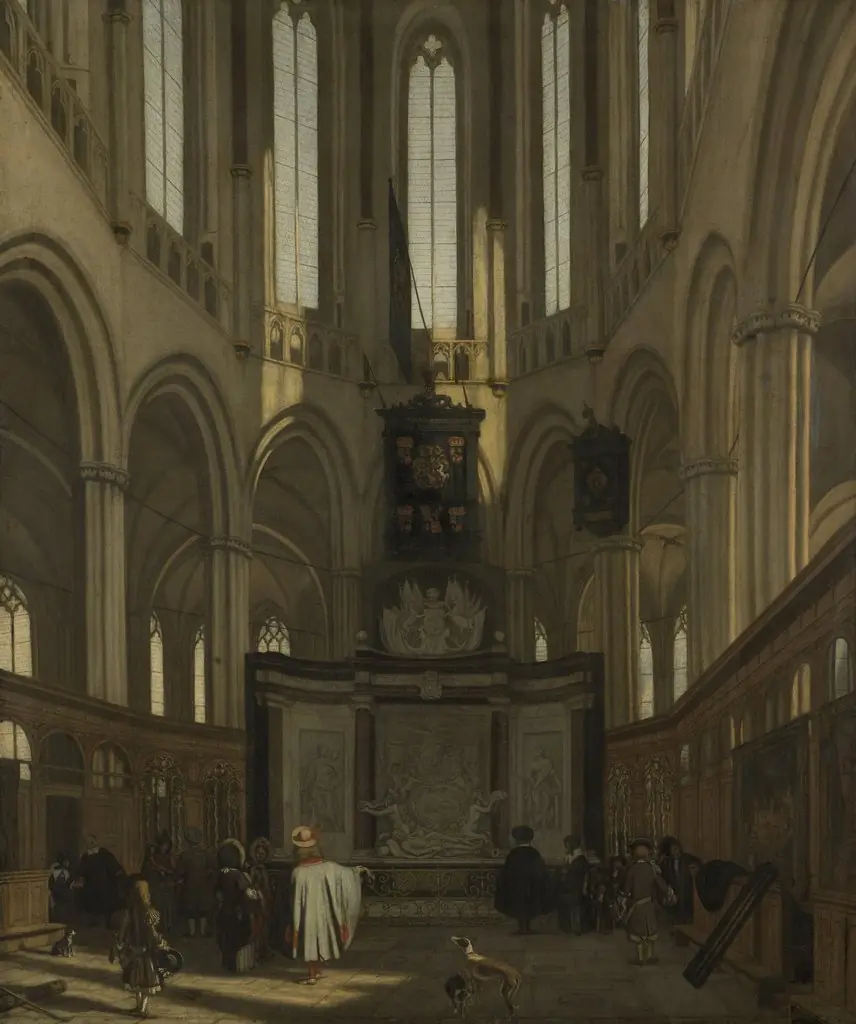 The Tomb of Michiel de Ruyter in the Nieuwe Kerk, Amsterdam
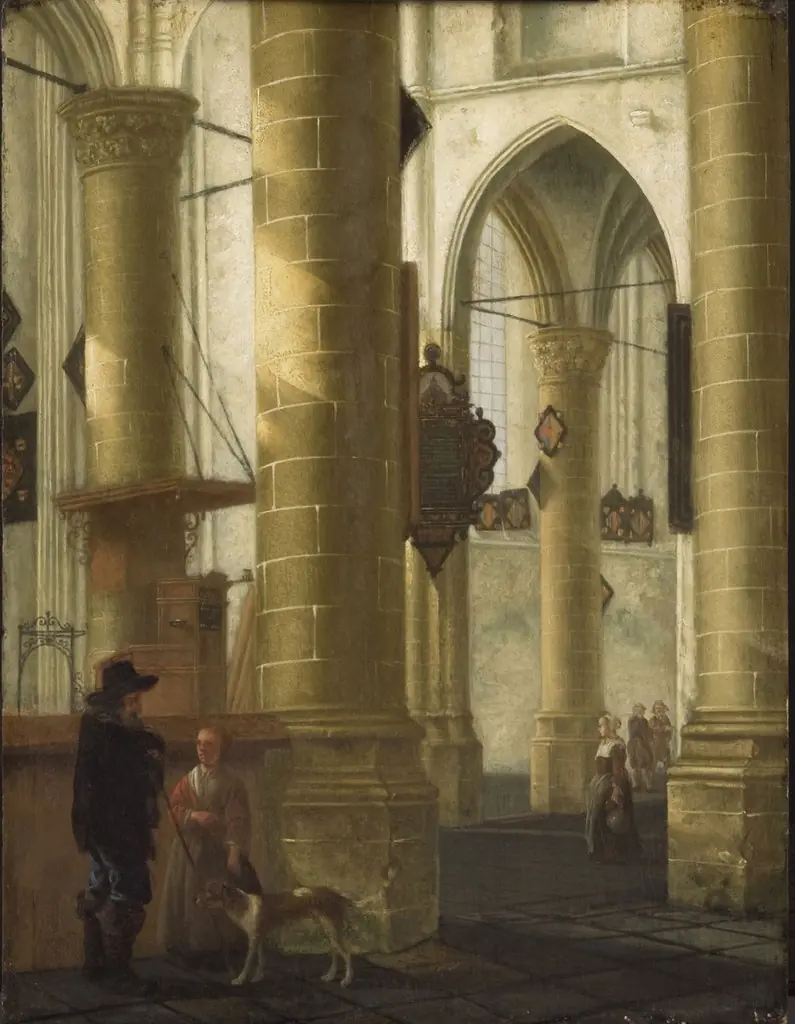 Interior of the Groote Kerk, Dordrecht
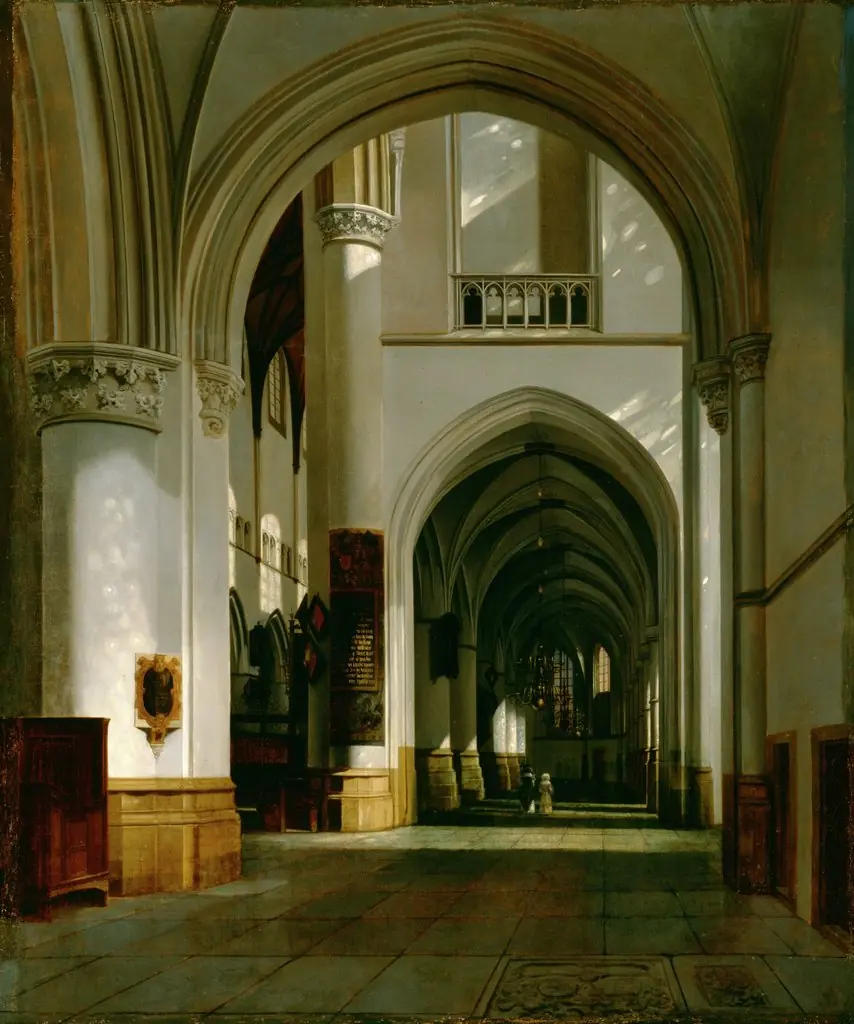 Interior of the Grote Kerk, Haarlem
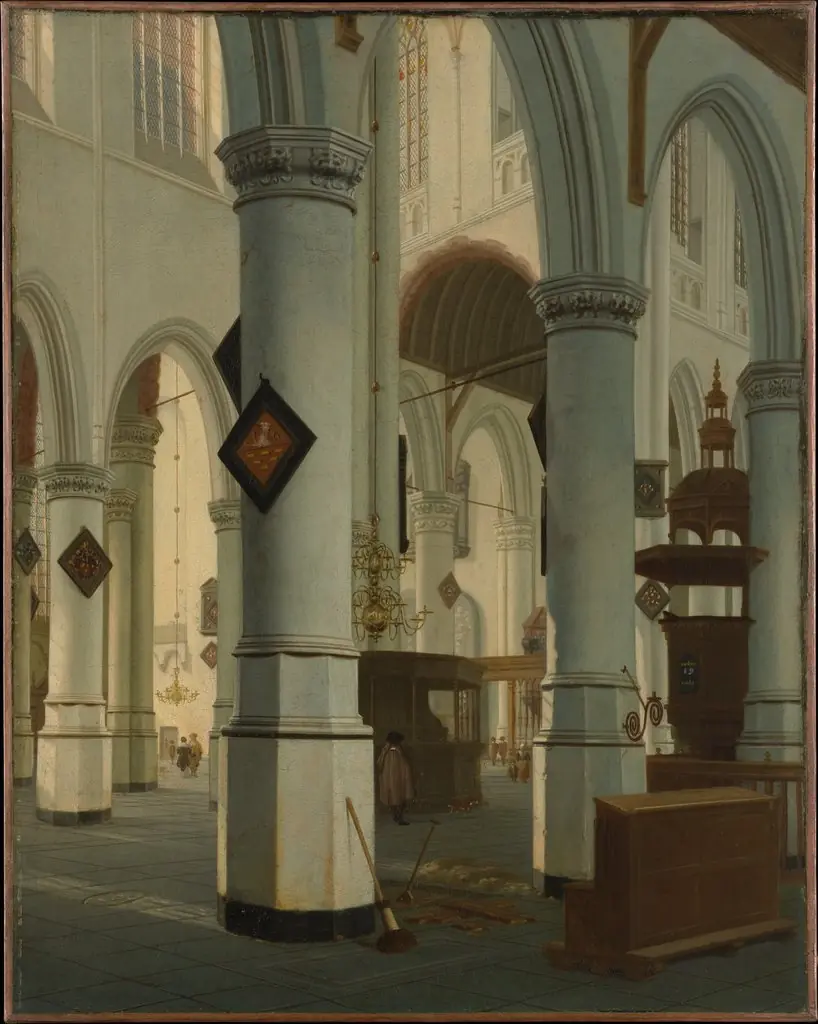 Interior of the Oude Kerk, Delft
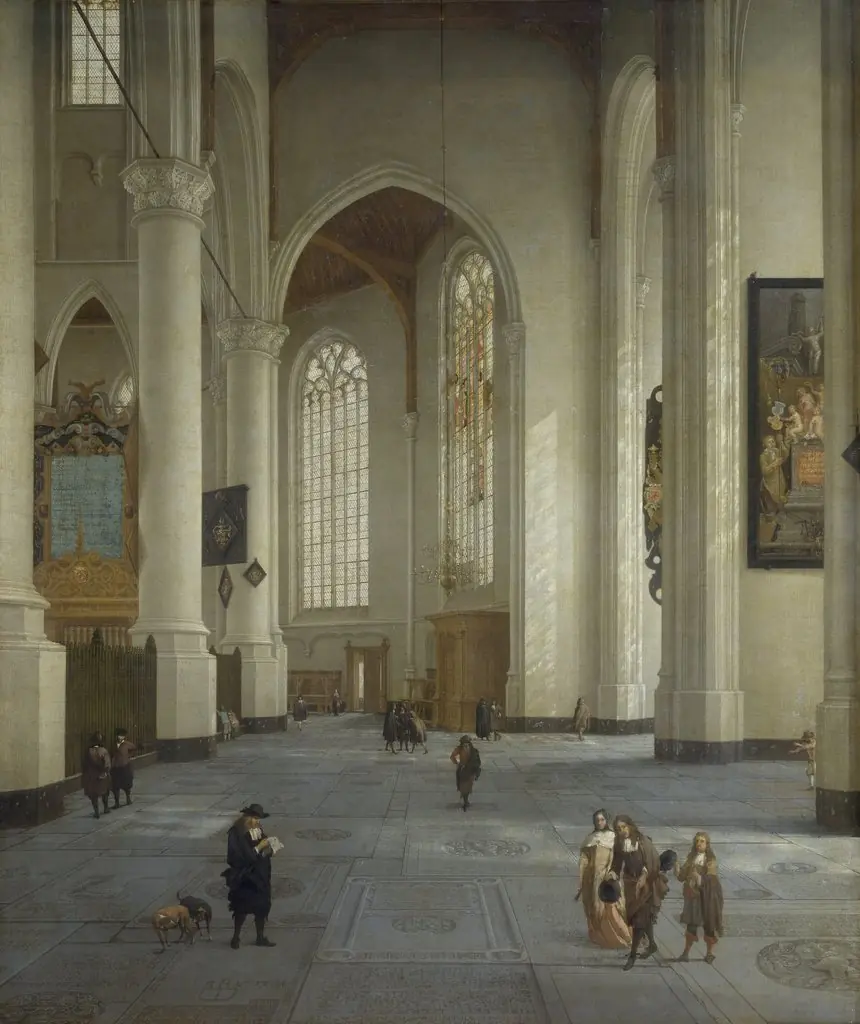 Interior of the St Laurenskerk, Rotterdam
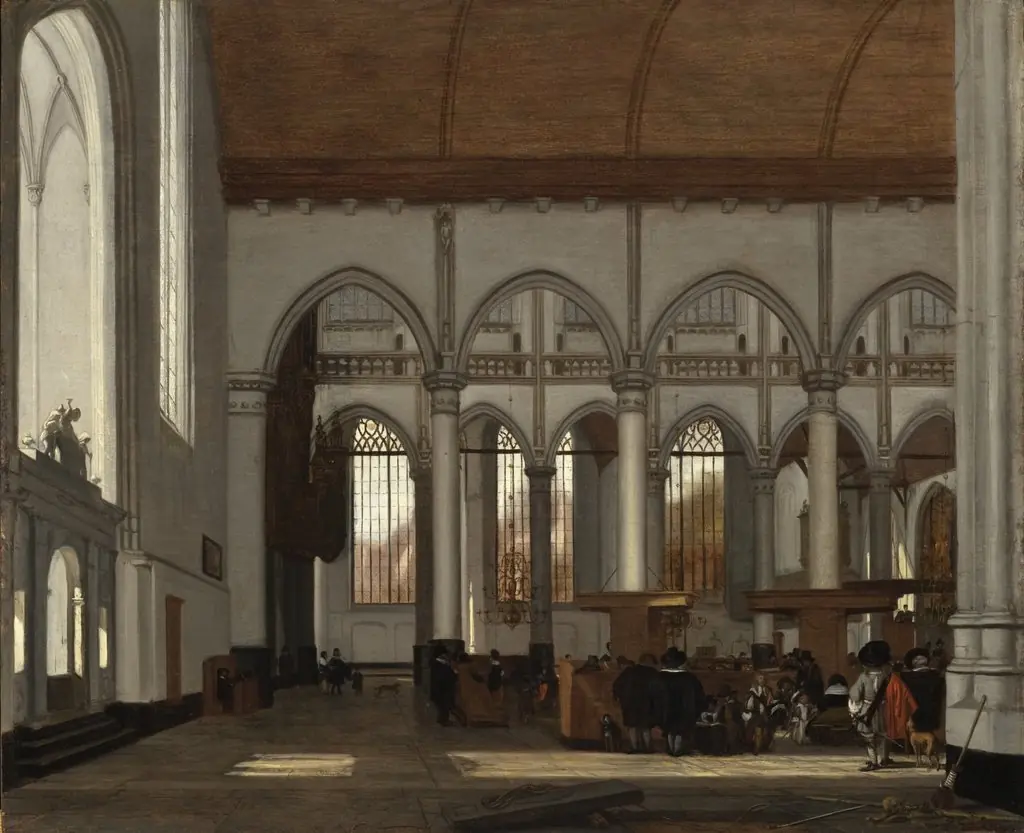 Interior of the Oude Kerk, Amsterdam
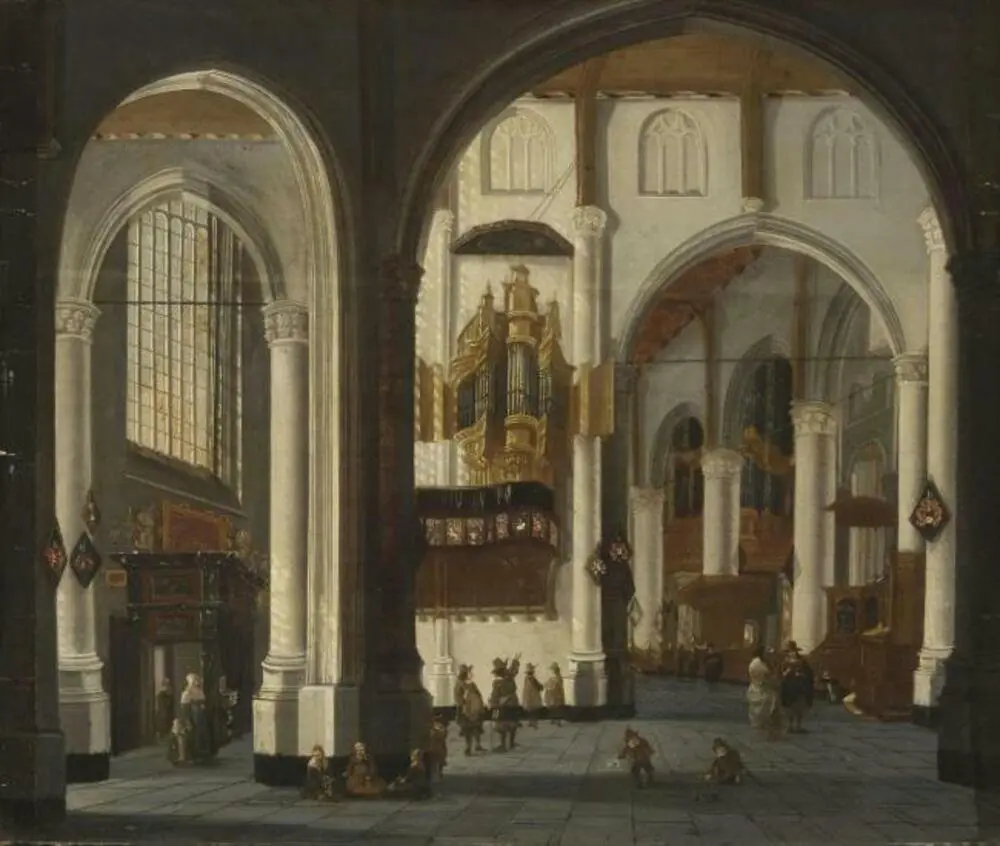 Interior of the St. Laurenskerk, Rotterdam
 The Interior of a Dutch Church
 Interior of the Oude Kerk, Delft
 Interior of the Buurkerk, Utrecht