Artwork
Interior of the Portuguese synagogue in Amsterdam
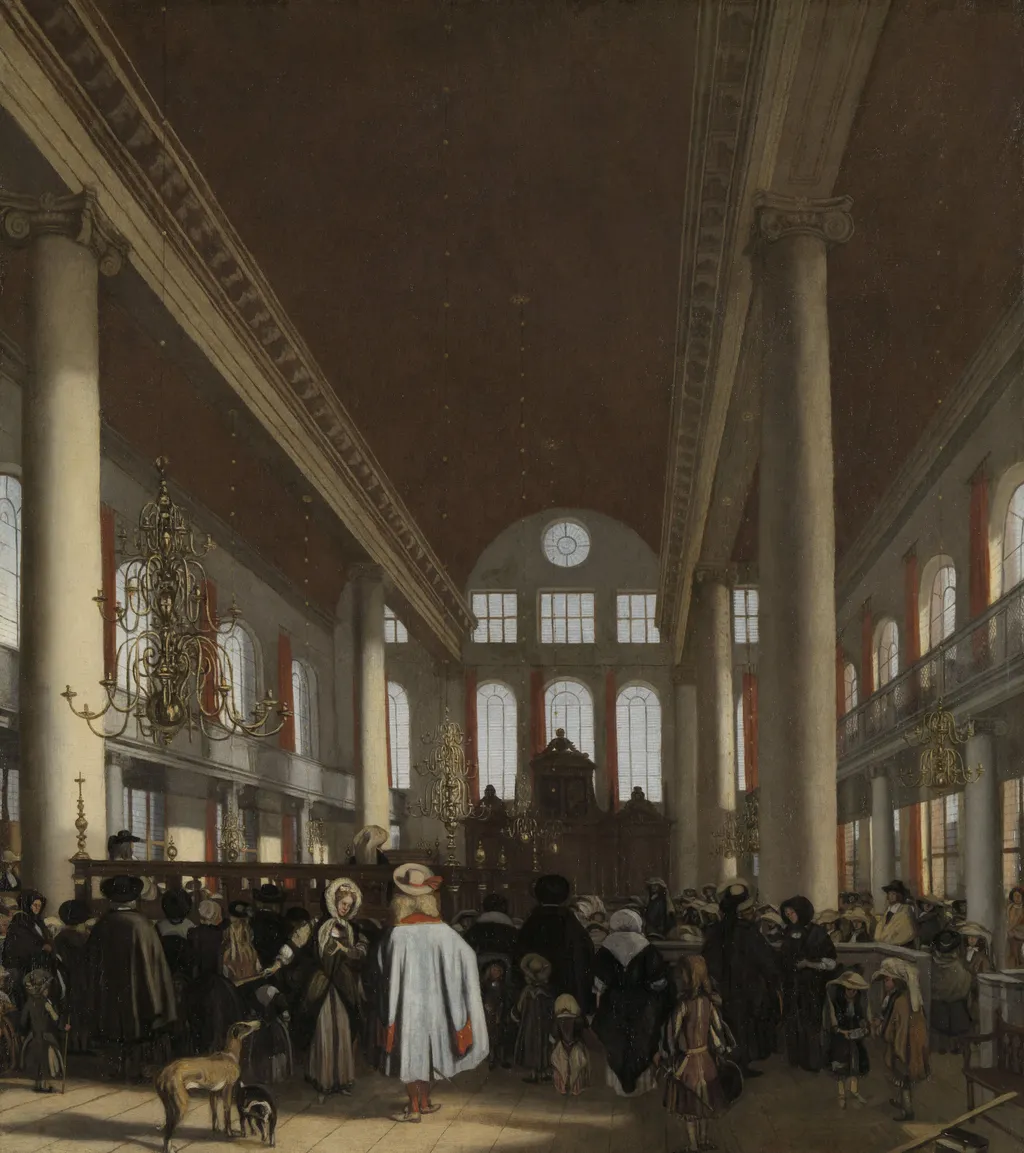
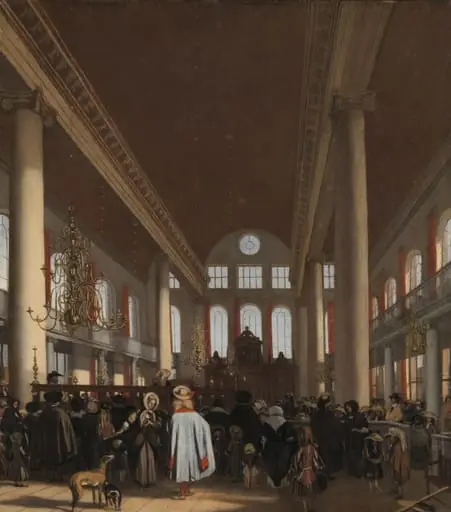
Interior of the Portuguese synagogue in Amsterdam is an oil painting by the Dutch Golden Age artist Emanuel de Witte. It dates from 1690 and is held in the collection of the Rijksmuseum.
About this work
Overview
Emanuel de Witte's 'Interior of the Portuguese Synagogue in Amsterdam,' painted in 1690, captures the solemn grandeur of the newly completed Ets Haim synagogue.
Emanuel de Witte's 'Interior of the Portuguese Synagogue in Amsterdam,' painted in 1690, captures the solemn grandeur of the newly completed Ets Haim synagogue. The composition utilizes a low viewpoint to emphasize the soaring height of the space, directing the eye upward toward the intricate wooden ceiling and the central bimah. De Witte employs his characteristic mastery of light, filtering illumination through high windows to create a dramatic interplay of shadow and brightness across the white plaster walls and polished stone floor. The scene is populated by congregants in 17th-century attire, depicted in quiet contemplation or conversation, which animates the architectural setting without disrupting its serene atmosphere. This work stands as a significant example of de Witte's specialization in church and synagogue interiors, where he moved beyond mere topographical accuracy to explore the spiritual and social dynamics of sacred spaces. Created during the height of the Dutch Golden Age, the painting reflects the prosperity and religious tolerance of Amsterdam's Jewish community at the time, documenting a specific architectural landmark with both precision and atmospheric depth.
Subject & Meaning
The painting records a moment of communal prayer within the 17th‑century Sephardic congregation that settled in Amsterdam after fleeing the Iberian Peninsula. By focusing on the collective presence of seated and standing figures, de Witte highlights the synagogue’s role as both a religious sanctuary and a social hub for the Portuguese Jewish diaspora.
Technique & Style
De Witte employs a subtle chiaroscuro, allowing shafts of daylight to filter through high windows and outline the tall columns and vaulted ceiling. This handling of light creates a convincing sense of depth, while the muted tones of the stone floor and white walls reinforce the tranquil atmosphere. The brushwork remains fine and controlled, typical of Dutch interior genre painting.
History & Provenance
The work entered the Rijksmuseum’s collection in the early 20th century, where it has been displayed as part of the museum’s Dutch Golden Age holdings. Its provenance traces back to private Dutch collections before being acquired by the national institution, reflecting the painting’s recognized value as a documentary record of Amsterdam’s Jewish heritage.
Context
Created during a period when Amsterdam was a refuge for expelled Jews, the painting reflects the city’s religious tolerance and the flourishing of Sephardic culture. De Witte, known for his church interiors, applied his expertise in rendering sacred spaces to a Jewish setting, thereby documenting a unique architectural and cultural landmark of the era.
Own this work as a print
Artist & collection

Artist
Emanuel de Witte was born circa 1617 in Alkmaar, the son of Pieter de Wit, a local schoolmaster.

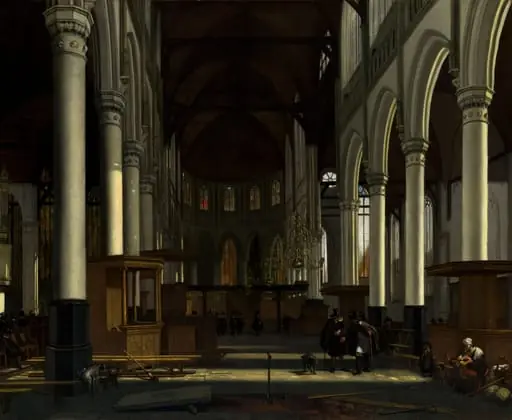 The Interior of the Oude Kerk, Amsterdam
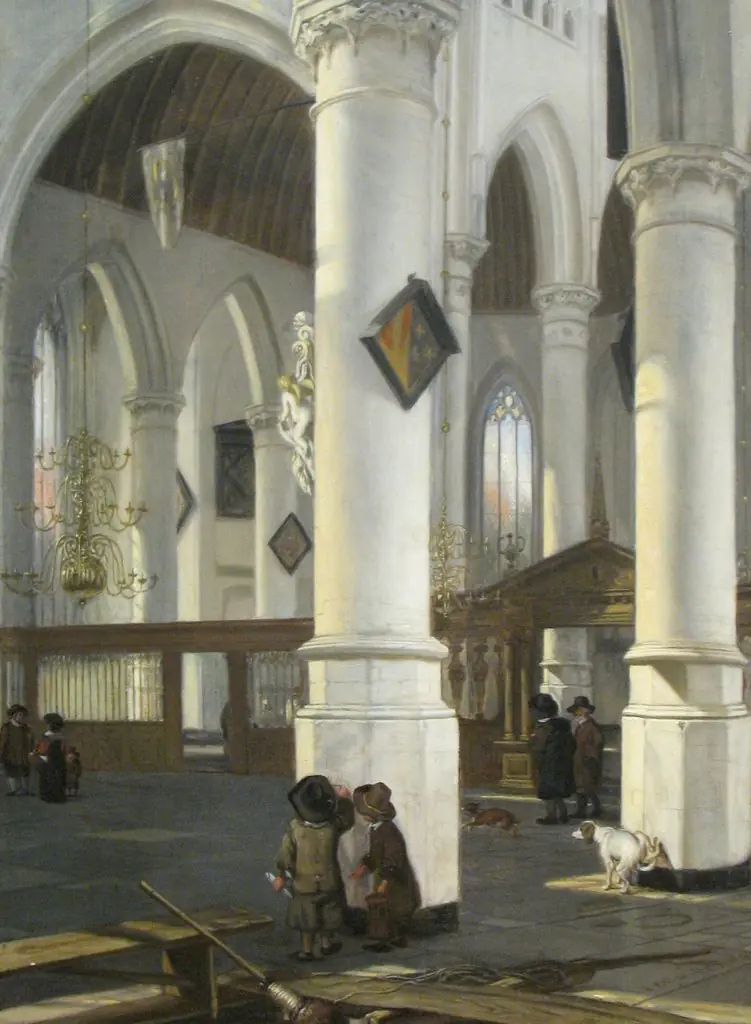 Interior of the Oude Kerk, Delft
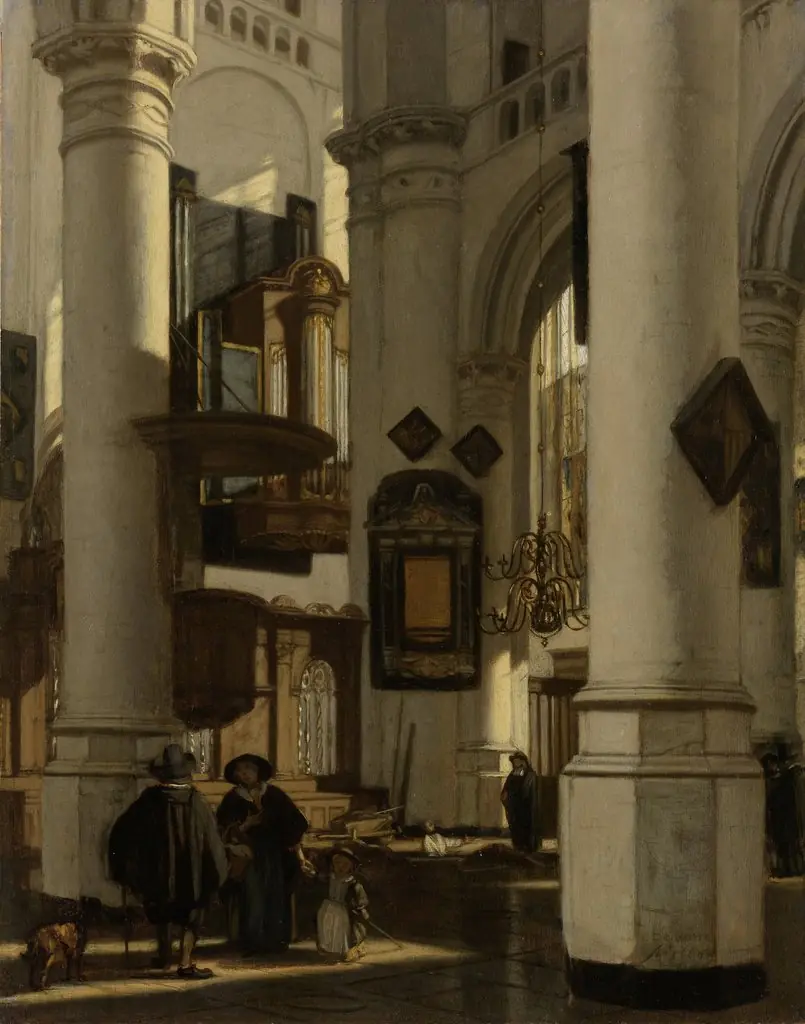 Interior of a Protestant, Gothic Church, with a Gravedigger in the Choir
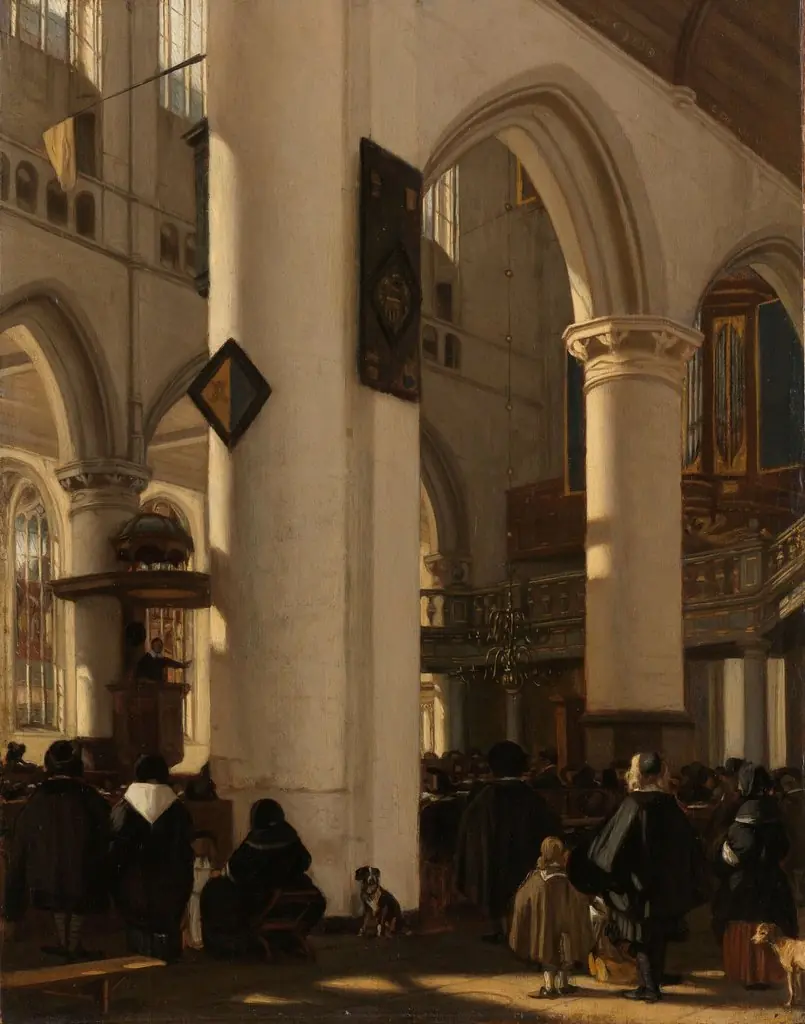 Interior of a Protestant, Gothic Church during a Service
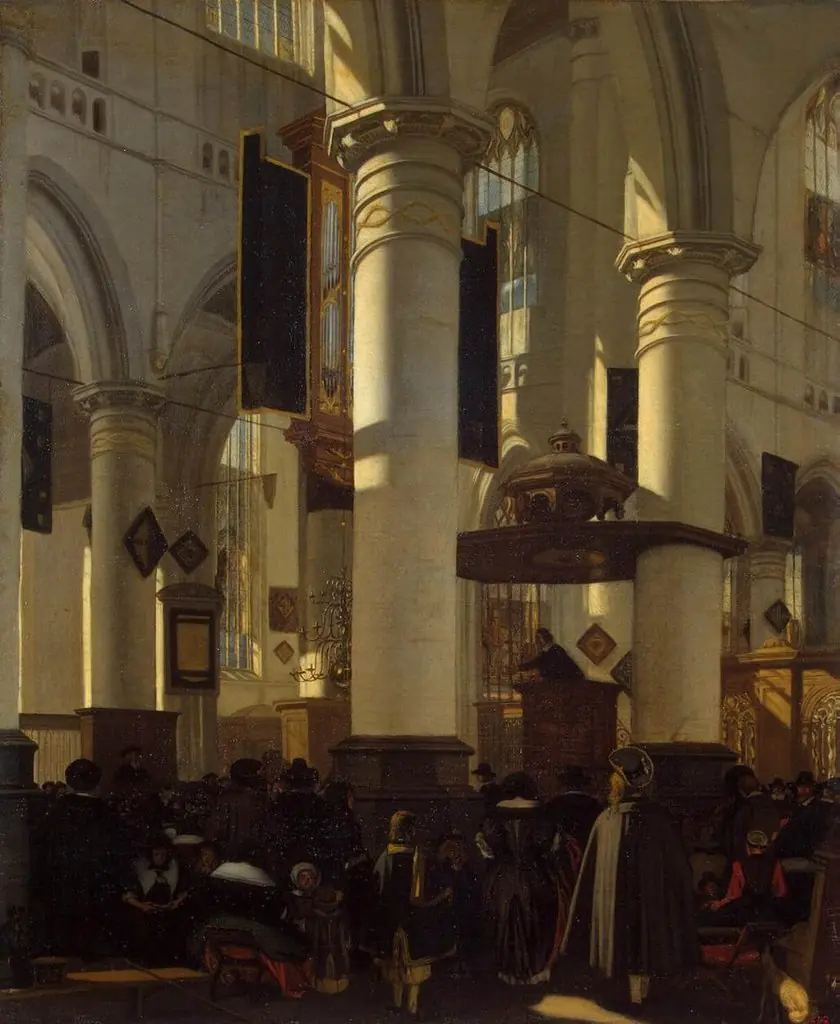 Interior of a Church
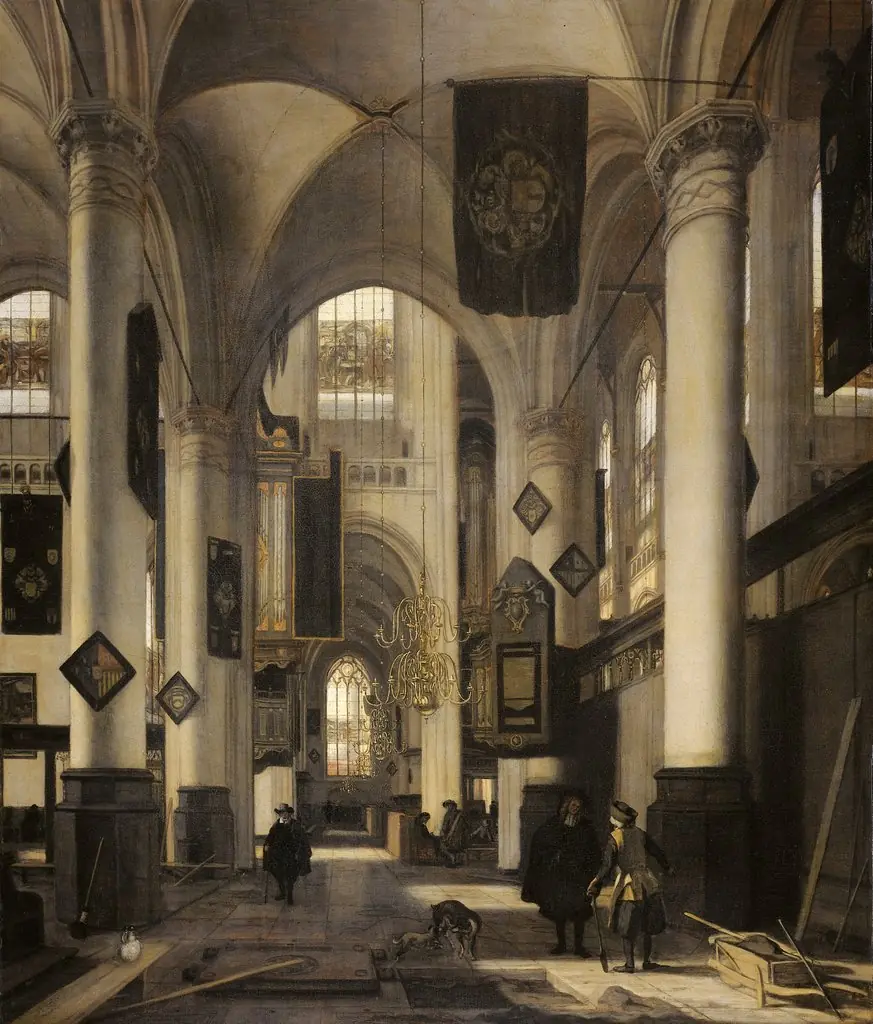 Interior of a Protestant Gothic Church
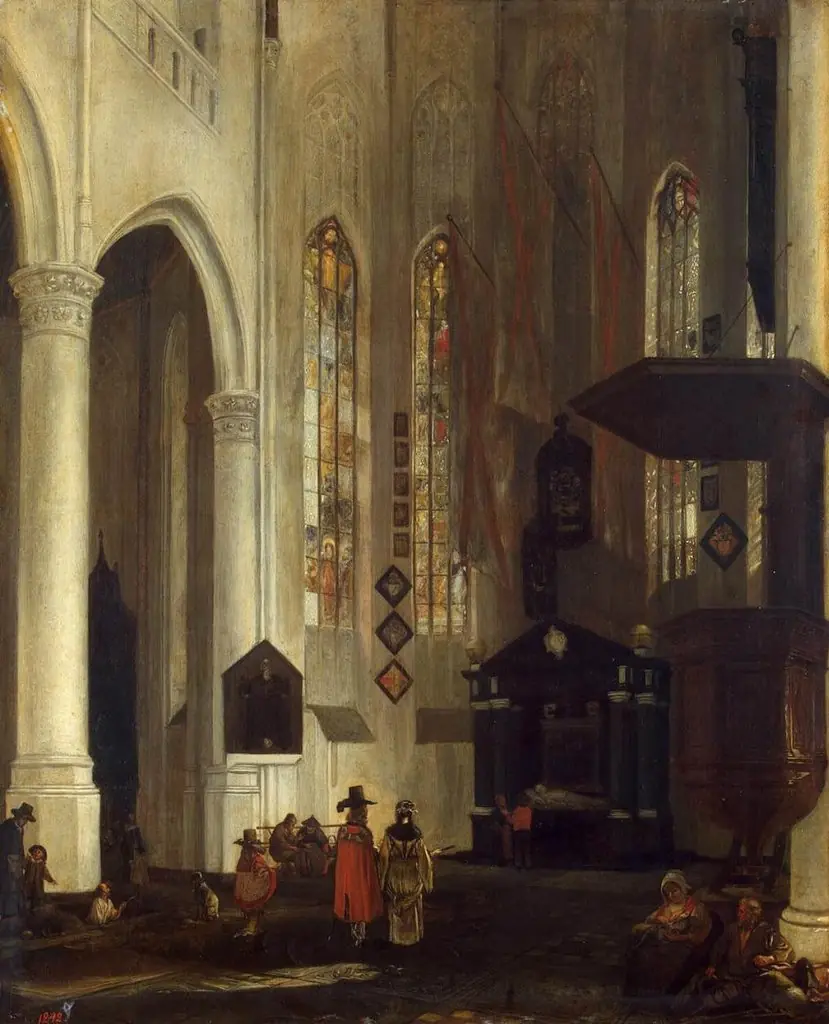 Old Church (Oudekerk) in Delft with the Tomb of Admiral Pieter Pieterszoon Hein (Heyn)
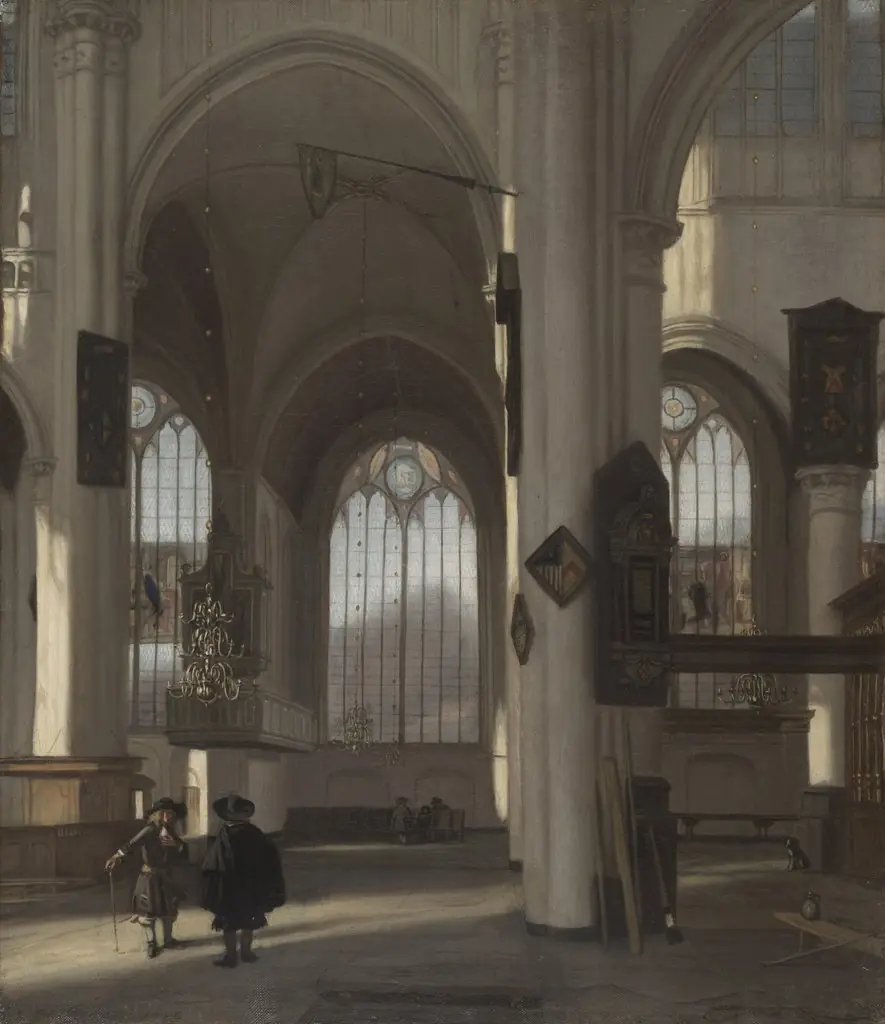 Interior of a Church