Artwork
Untitled
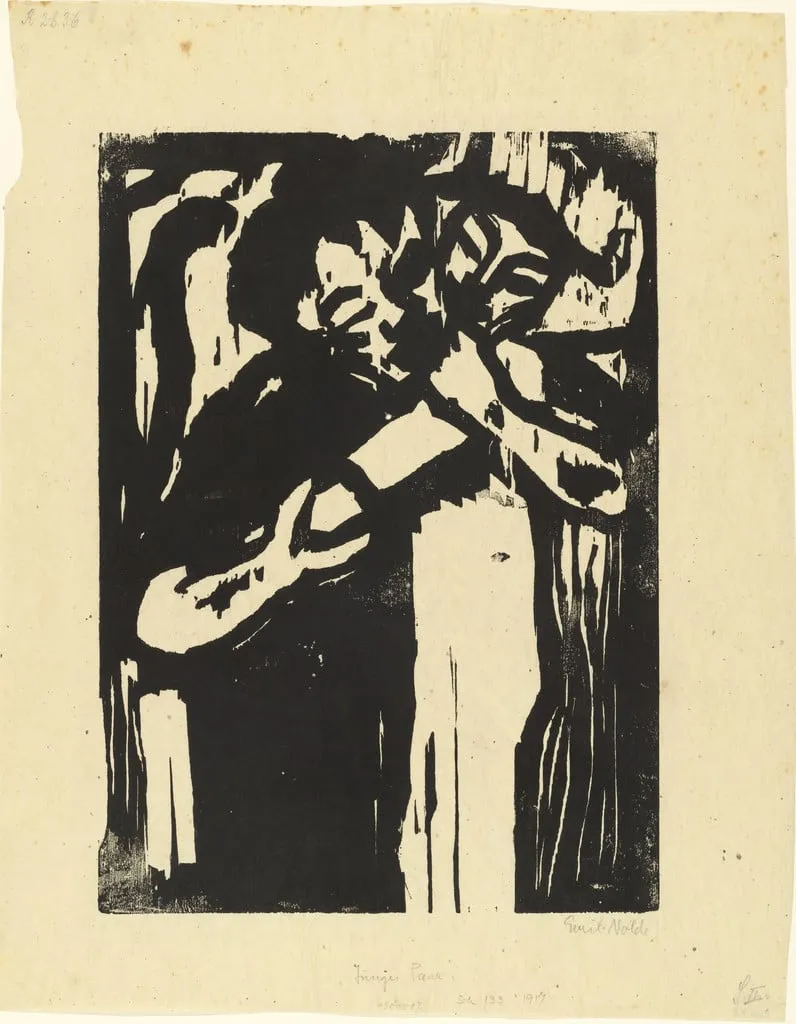
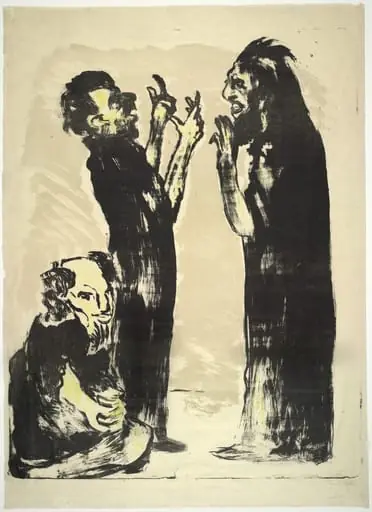
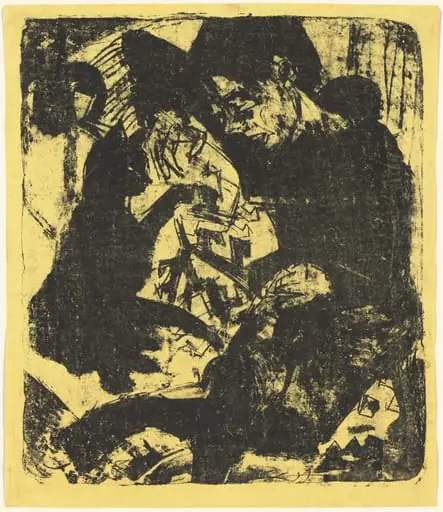
Untitled is an ink print by Emil Nolde. It dates from 1917 and is held in the collection of the Museum of Modern Art.
About this work
Overview
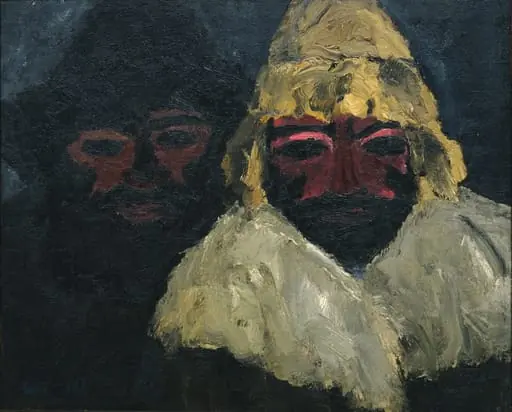
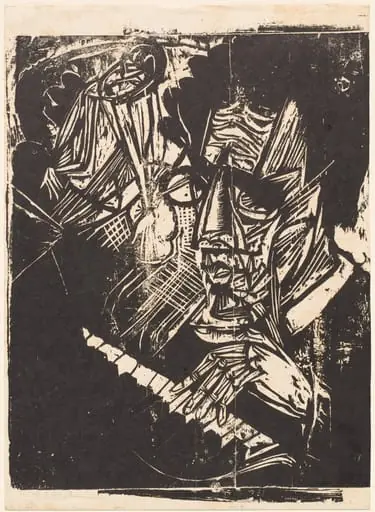
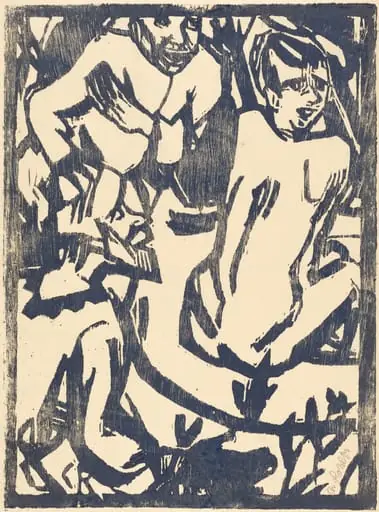
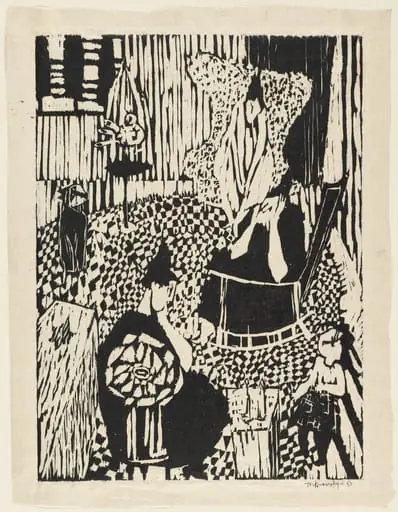
The composition features two indistinct figures amid a turbulent background, rendered with aggressive, uneven lines that emphasize texture over detail.
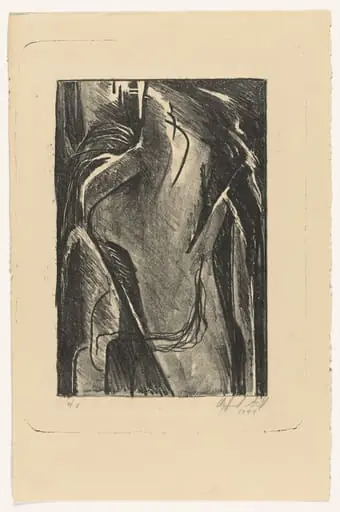
Created in 1917, this woodcut by Emil Nolde is part of The Museum of Modern Art’s collection. It is a black-and-white print made by carving into a wooden block and pressing ink onto paper. The composition features two indistinct figures amid a turbulent background, rendered with aggressive, uneven lines that emphasize texture over detail. The work reflects Nolde’s interest in expressive form over naturalistic representation.
Subject & Meaning
Two human forms stand near each other, their features softened and partially erased, suggesting anonymity or emotional distance. They are enveloped by a chaotic, storm-like environment composed of angular, swirling marks. The lack of clear identity in the figures and the overwhelming background may imply isolation, inner turmoil, or the fragility of human presence amid forces beyond control.
Technique & Style
Nolde employed the woodcut process to exploit the medium’s inherent roughness. Deep, jagged cuts in the woodblock produced bold, irregular black lines that contrast sharply with the untouched paper. The absence of smooth gradients or fine detail highlights the physicality of carving. This approach prioritizes emotional intensity over precision, aligning with Expressionist principles that valued raw gesture over polished finish.
History & Provenance
Made during World War I, the print emerged from a period when Nolde was deeply engaged with printmaking despite restrictions on his artistic output. It entered The Museum of Modern Art’s collection in the mid-20th century, where it has remained as part of its foundational holdings of German Expressionist works. Its provenance traces directly to the artist’s estate and early collectors of his prints.
Context
Nolde created this work amid the cultural upheaval of wartime Germany, a time when many artists turned to printmaking for its accessibility and immediacy. His use of stark contrasts and distorted forms aligned with broader Expressionist efforts to convey psychological states rather than external reality. The woodcut’s intensity reflects a broader artistic shift away from academic traditions toward visceral, personal expression.
Legacy
This woodcut exemplifies Nolde’s contribution to modern printmaking through his radical use of the medium’s physical constraints. It influenced later artists who embraced the expressive potential of carved surfaces and non-traditional mark-making. While not widely reproduced, it remains a key reference in studies of early 20th-century German prints and the role of technique in conveying emotional weight.
Artist & collection

Artist
Emil Nolde was a German painter and printmaker. He was one of the first Expressionists, a member of Die Brücke, and was one of the first oil painting and watercolor painters of the early 20th century to explore color.…