Artwork
Retrat d'un escultor
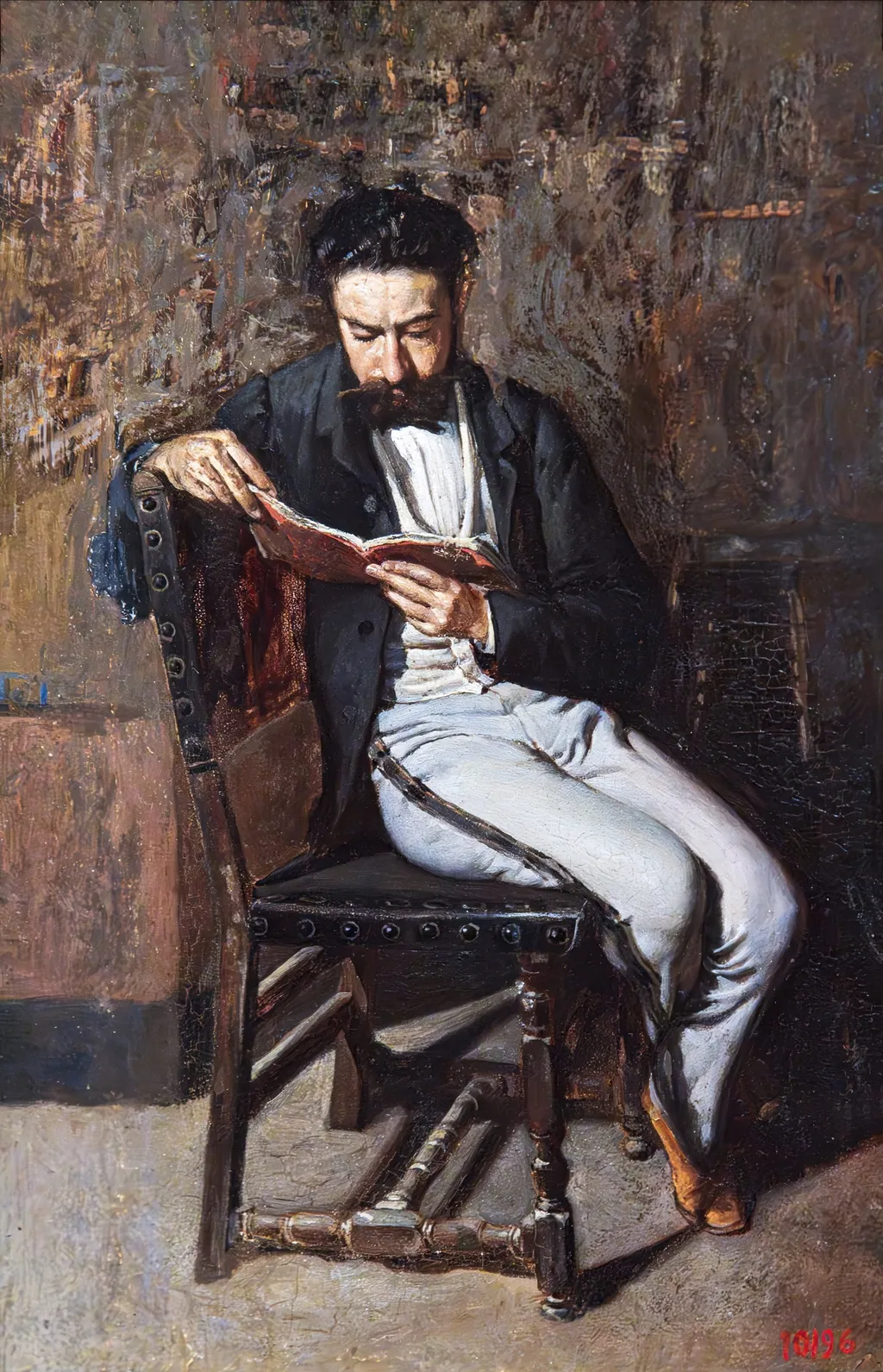
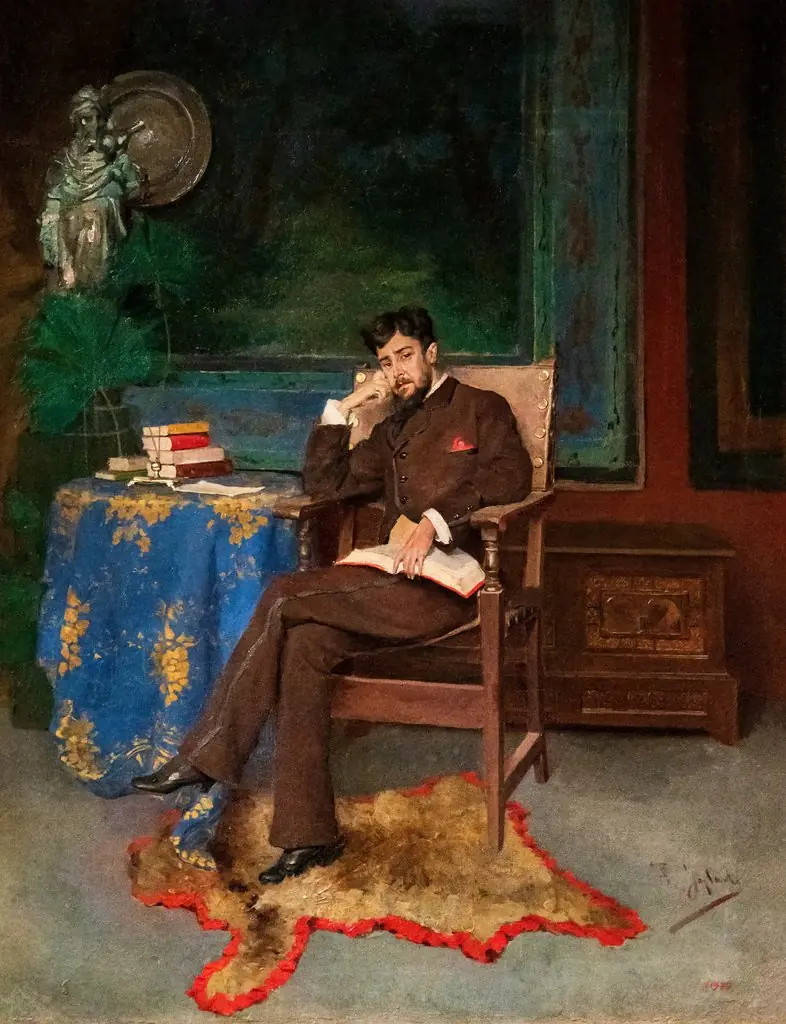
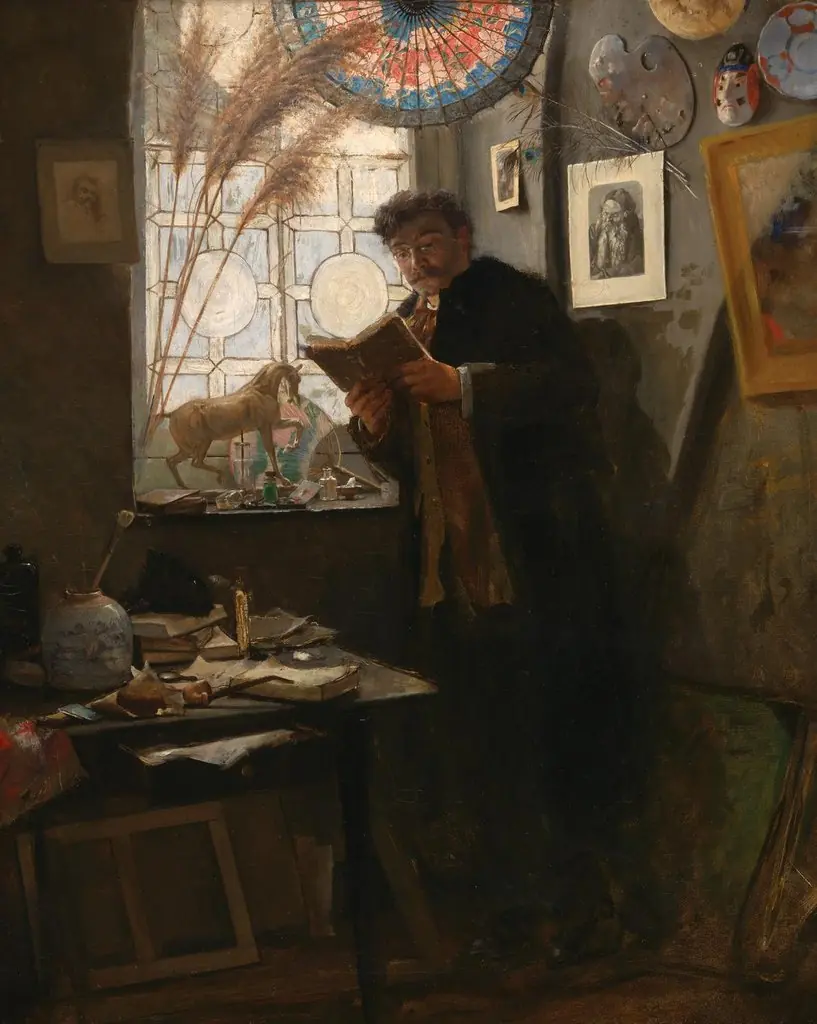
Retrat d'un escultor is an oil painting by the Art Nouveau artist Emilio Casals y Camps. It dates from 1870 and is held in the collection of the Museu Nacional d'Art de Catalunya.
About this work
Overview
Created in 1870 by the Catalan artist Emilio Casals i Camps, this work—titled *Retrat d'un escultor*—is part of the collection of the Museu Nacional d'Art de Catalunya. Although listed as a painting, the piece is executed on wood and reflects the decorative sensibilities of the Art Nouveau period.
Subject & Meaning
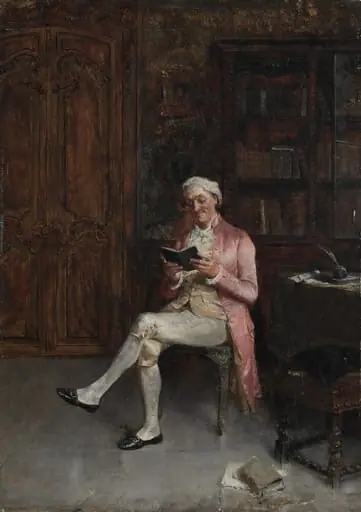
The composition portrays a solitary figure seated on a simple wooden chair, absorbed in a book. Dressed in a dark jacket, white shirt and trousers, and brown shoes, the man’s slightly tilted head and focused gaze suggest quiet contemplation. The intimate setting invites viewers to consider the value of study and personal reflection.
Technique & Style
Casals employs a warm palette of browns and muted tones, establishing a cozy atmosphere. Subtle chiaroscuro models the figure, giving the face and book a three‑dimensional presence against the mottled wall. The smooth brushwork and decorative borders align the piece with the ornamental aesthetic typical of late‑19th‑century Art Nouveau.
History & Provenance
The artwork entered the Museu Nacional d'Art de Catalunya’s holdings as part of its 20th‑century acquisitions of Catalan art. Its provenance before museum acquisition is not extensively documented, but the piece has remained in the institution’s collection since its initial donation, where it is displayed among other regional works from the same era.
Context
Produced during a time when Catalonia was embracing modernist currents, the painting reflects the period’s interest in everyday subjects rendered with refined elegance. The choice of a solitary reader resonates with contemporary cultural movements that emphasized intellectual pursuits and the rising middle‑class appreciation for private leisure.
Own this work as a print
Artist & collection
Artist
Emilio Casals Camps spent his life carving wooden reliefs in Barcelona’s Gothic Quarter, where he’d balance a mug of coffee on his workbench between chisels.