Artwork
Harlech Castle, North Wales
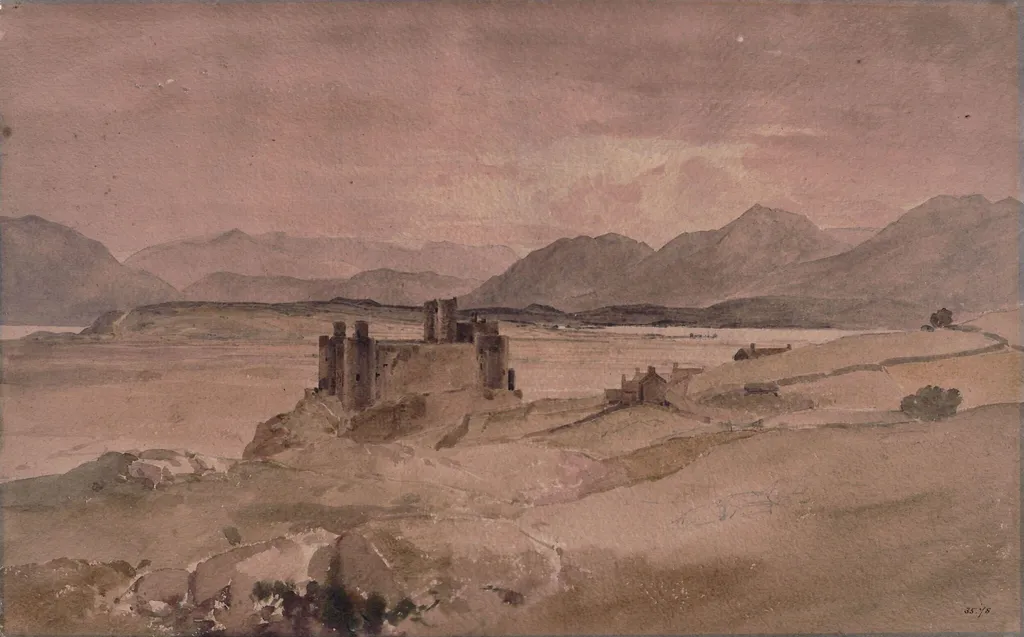
Harlech Castle, North Wales is a watercolor work on paper by the British Romanticist artist Andrew Wilson. It dates from 1805 and is held in the collection of the Victoria and Albert Museum.
About this work
Overview
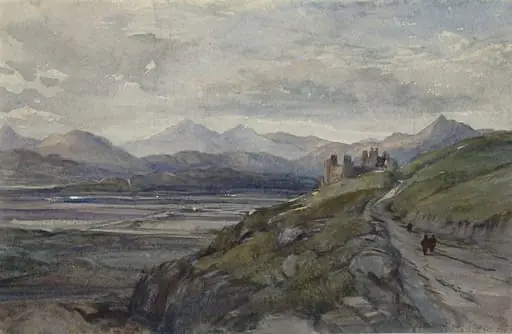
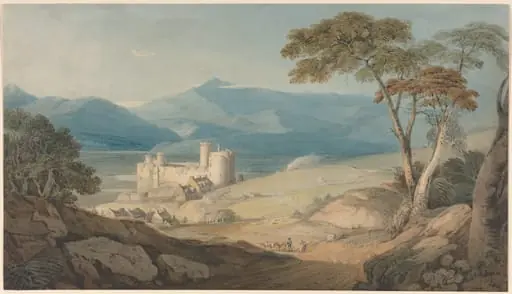
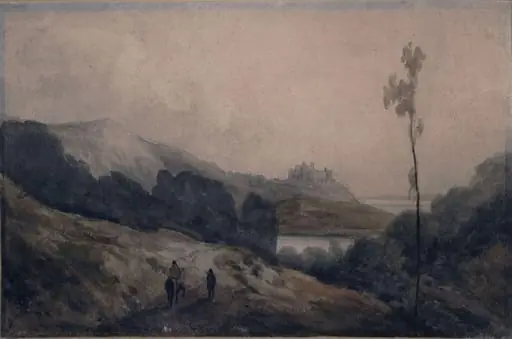
Andrew Wilson created this watercolour in 1805, capturing Harlech Castle in North Wales as a quiet, atmospheric study. Executed in loose, fluid strokes, the work reflects the artist’s interest in landscape as a subject worthy of contemplation rather than grandeur. The composition emphasizes solitude and time’s passage, with minimal human presence and subdued tones that evoke a sense of stillness.
Subject & Meaning
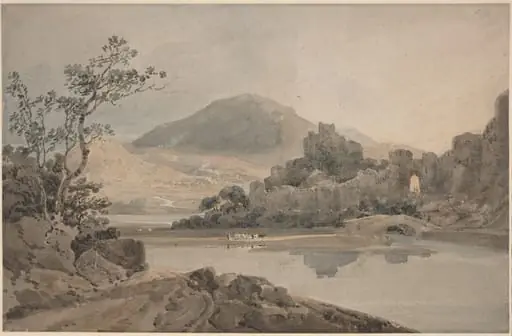
The castle, perched on a rugged hillside, appears weathered and partially reclaimed by nature. Its crumbling walls and isolated position suggest abandonment, aligning with early 19th-century sensibilities that valued ruins as symbols of historical depth. The winding path leading toward it implies quiet pilgrimage, reinforcing themes of memory and impermanence without overt narrative.
Technique & Style
Wilson employed a restrained watercolour technique, using diluted washes to suggest atmospheric depth and textured brushwork to convey the roughness of stone and earth. The sky is rendered in pale, diffused tones, softening the horizon and unifying the scene. Deliberately sketchy strokes avoid detail, prioritizing mood over precision, characteristic of Romantic-era landscape studies.
History & Provenance
Painted during Wilson’s travels in Wales, this work is one of several watercolours he produced documenting historic sites. It likely served as a personal record rather than a commissioned piece. The painting remained in private hands until entering a public collection in the late 19th century, where its modest scale and unassuming style contributed to its relative obscurity.
Context
In the early 1800s, British artists increasingly turned to medieval ruins as subjects, drawn to their emotional resonance amid industrial change. Wilson’s depiction aligns with Romantic ideals that saw nature and decay as sources of contemplation. Unlike grand historical paintings, this work invites quiet reflection, reflecting a shift toward intimate, personal responses to landscape.
Legacy
Though not widely exhibited, Wilson’s Harlech Castle exemplifies a quiet strand of Romantic landscape art that valued subtlety over spectacle. Its influence is seen in later topographical watercolours that prioritized atmosphere and emotional tone. The work remains a quiet testament to the period’s fascination with time, place, and the passage of history.
Artist & collection
Artist
This British watercolor artist worked around 1805–1848, painting detailed views of landscapes and castles across England and Wales.