Artwork
View from the Cat and Fiddle, Buxton
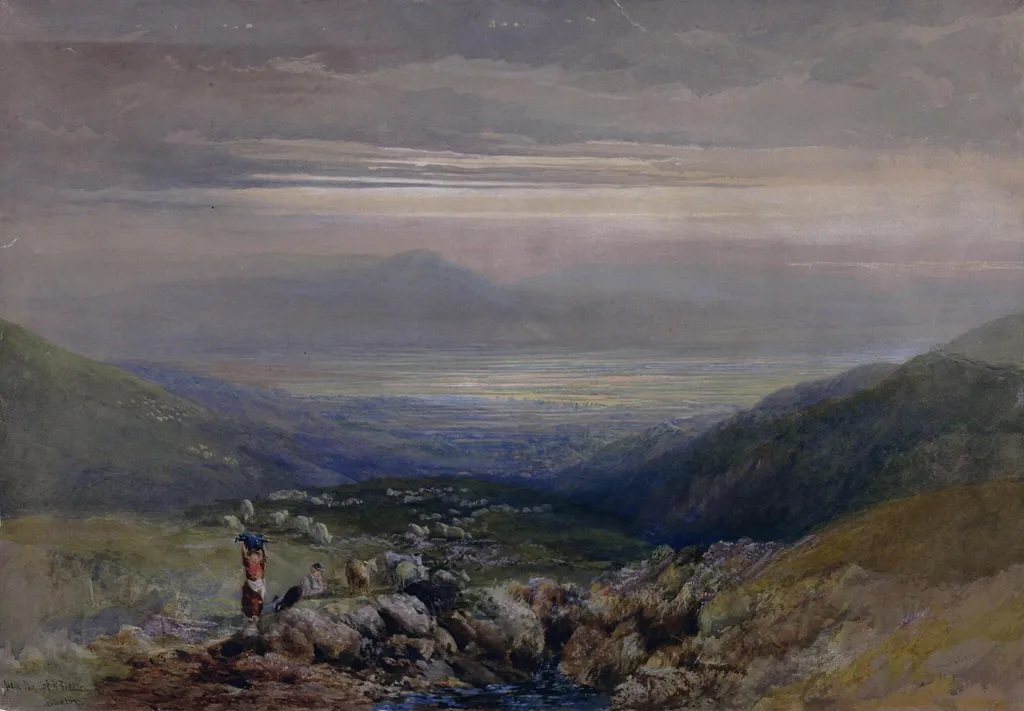
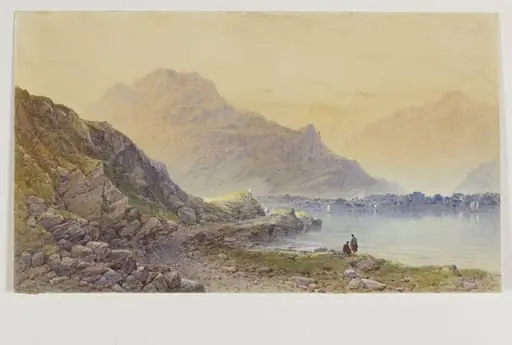
View from the Cat and Fiddle, Buxton is a watercolor work on paper by the Impressionist artist Emma Sophia Oliver. It dates from 1876 and is held in the collection of the Victoria and Albert Museum.
About this work
Overview
Painted in 1876 by Emma Sophia Oliver, this watercolour captures a landscape near Buxton using a blend of transparent and opaque pigments.
Painted in 1876 by Emma Sophia Oliver, this watercolour captures a landscape near Buxton using a blend of transparent and opaque pigments. The work is signed and dated by the artist, reflecting a deliberate completion. Its composition focuses on a broad valley, rendered with delicate washes and subtle layering to suggest depth and atmosphere, distinguishing it from more rigid topographical studies of the period.
Subject & Meaning
The scene depicts a quiet pastoral moment: two figures tend sheep on a sloping hillside, their presence small against the expansive land. The winding river and distant peaks suggest a tranquil, unspoiled countryside. There is no narrative drama—only the quiet rhythm of rural life and the shifting light of a clouded sky. The painting invites contemplation rather than storytelling, emphasizing harmony between human activity and natural form.
Technique & Style
Oliver combines traditional watercolour transparency with touches of opaque pigment to enhance texture in the foreground grass and rocky outcrops. Her brushwork is loose and responsive, using soft, broken strokes to convey atmospheric haze and the shimmer of distant water. The sky is rendered with gentle gradations, allowing patches of light to emerge naturally, creating a sense of air and movement without hard edges.
History & Provenance
The painting was created during a period when amateur watercolourists, particularly women, were active in documenting British landscapes. While specific ownership records are not widely documented, its survival and recognition suggest it was preserved within private or institutional collections. It is now held by the Victoria and Albert Museum, where it contributes to the study of 19th-century British watercolour practice.
Context
In the late 19th century, watercolour was widely practiced by amateur artists, especially women, as a socially acceptable medium for artistic expression. Buxton, a spa town in Derbyshire, attracted visitors drawn to its scenery and therapeutic reputation. Oliver’s work aligns with this tradition, capturing the region’s rolling topography with sensitivity, reflecting both personal observation and broader cultural interest in the English countryside.
Legacy
Oliver’s painting exemplifies the quiet precision of Victorian amateur watercolourists who prioritized atmosphere over grandeur. Though not widely exhibited in her lifetime, her work contributes to a broader understanding of how women engaged with landscape art outside formal academies. Today, it remains a representative example of the genre’s capacity to evoke place through subtle, observational technique.
Own this work as a print
Artist & collection

 View in Cumberland
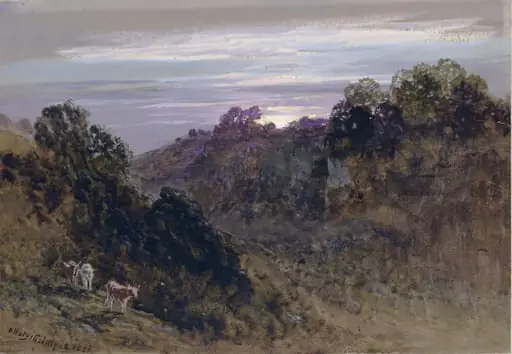 Hilly Landscape - Sunset
 A Welsh Landscape
 Welsh landscape
 Landscape with Ruins and Horseman : Stormy Effect
 Mountain Landscape
 Approaching Storm from the Alban Hills
 Deer Stalking in Scotland: Getting Ready
 A View from Moel Cynwich: Looking Over the Vale of Afon Mawddach and Toward Cader Idris
 Helvellyn
 Loch Long, Argyllshire
 Approaching Storm from the Alban Hills