Artwork
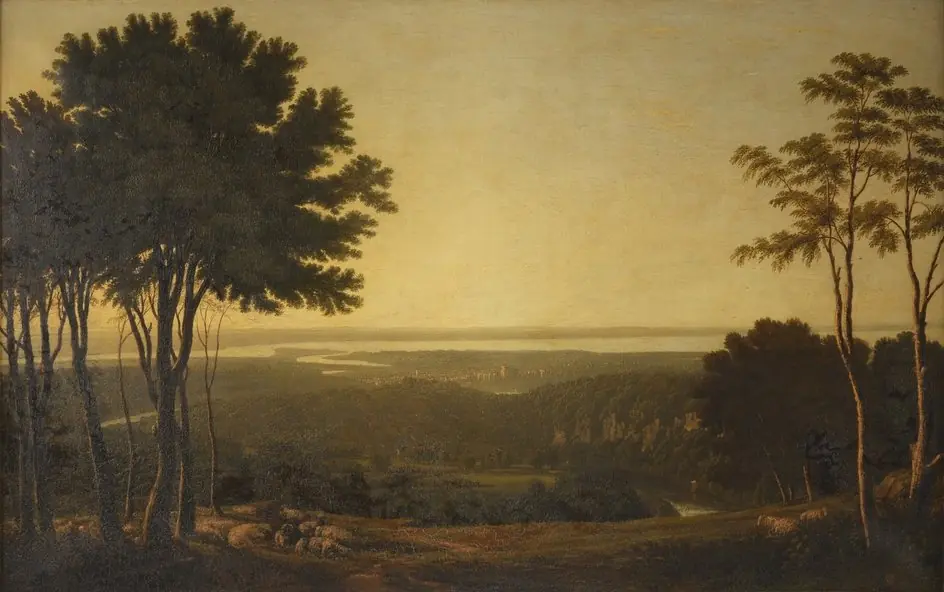
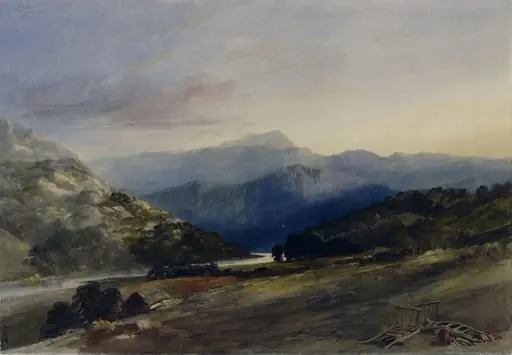
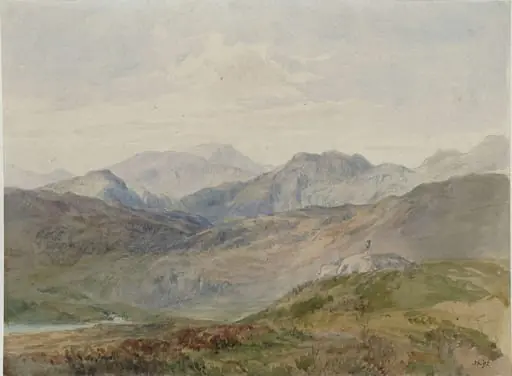
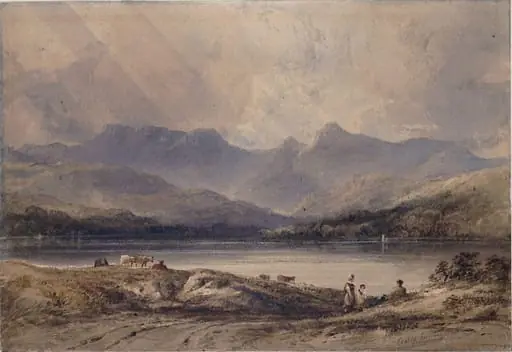
A View from Moel Cynwich: Looking Over the Vale of Afon Mawddach and Toward Cader Idris
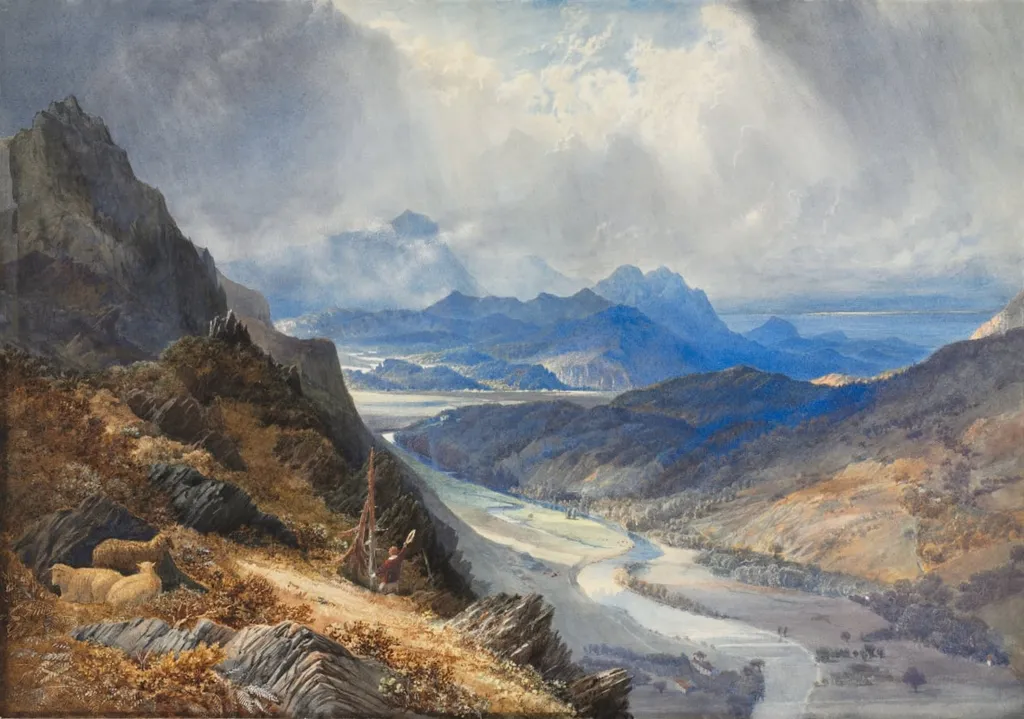
A View from Moel Cynwich: Looking Over the Vale of Afon Mawddach and Toward Cader Idris is a drawing by the Romanticist artist William Turner. It dates from 1850 and is held in the collection of the Cleveland Museum of Art.
About this work
You see a soft, misty mountain valley in Wales—rolling green hills, a winding river, and a distant peak under a pale sky.
You see a soft, misty mountain valley in Wales—rolling green hills, a winding river, and a distant peak under a pale sky.
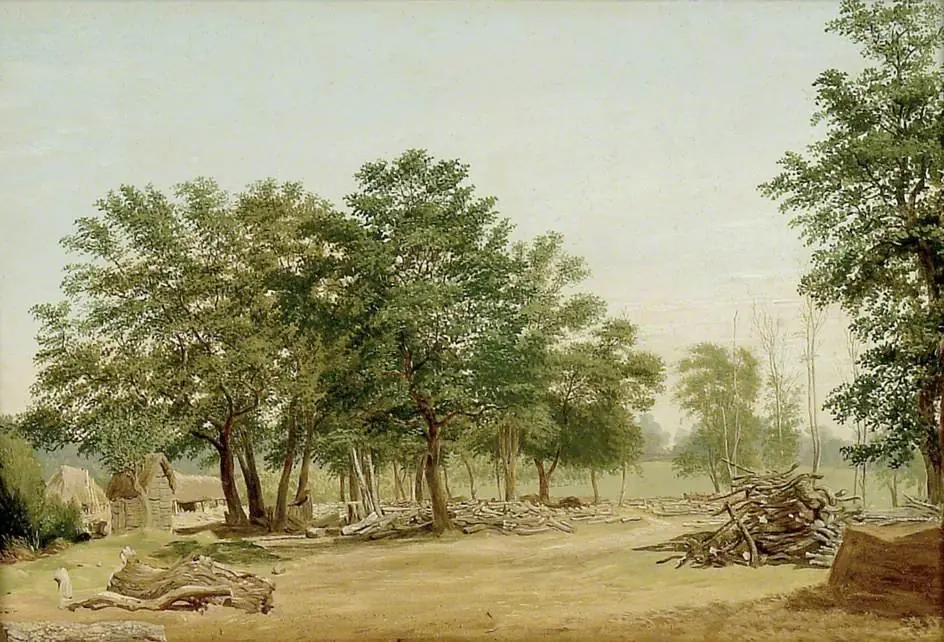
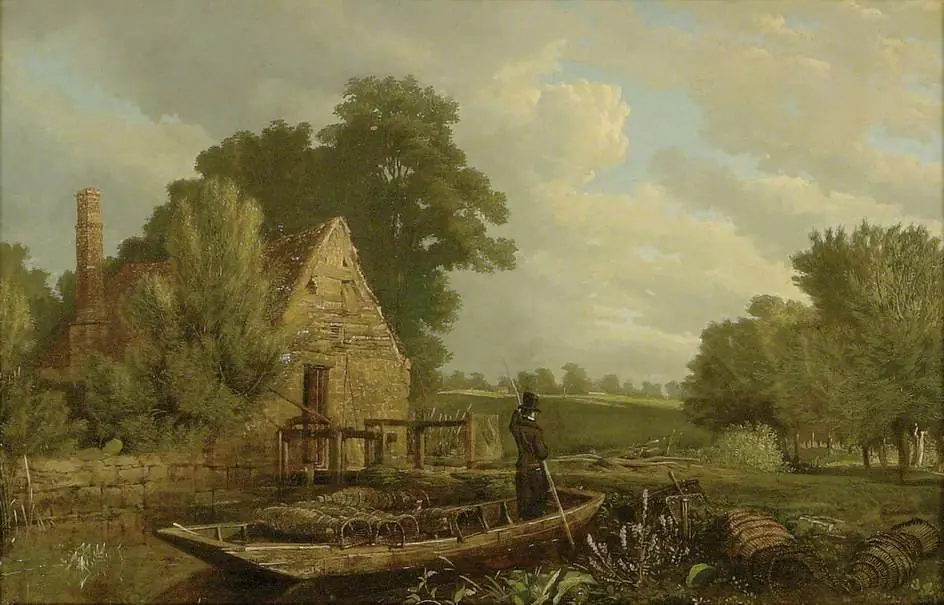
This painting feels like a quiet postcard from a long walk. The artist, also named William Turner, lived in the shadow of the more famous J.M.W. Turner. To avoid confusion, he signed his work "W. Turner of Oxford." The gentle colors and loose brushstrokes give the scene a dreamy, almost unfinished look.
If you like this, search for more works in the subject: england, 19th century.
Overview
This watercolor by William Turner of Oxford depicts a quiet, mist-laced valley in north Wales, framed by the distant bulk of Cader Idris. Created during a period of deliberate withdrawal from London’s art scene, the work reflects the artist’s preference for solitude and direct observation of the British landscape. Unlike his more famous namesake, he signed his pieces to distinguish his quieter, introspective style.
Subject & Meaning
The composition contrasts the intimate foreground—rolling hills dotted with grazing sheep—with the vast, hazy expanse of Snowdonia’s peaks. This juxtaposition suggests a contemplative relationship between human presence and the enduring scale of nature. The scene evokes stillness rather than grandeur, emphasizing quiet observation over dramatic spectacle.
Technique & Style
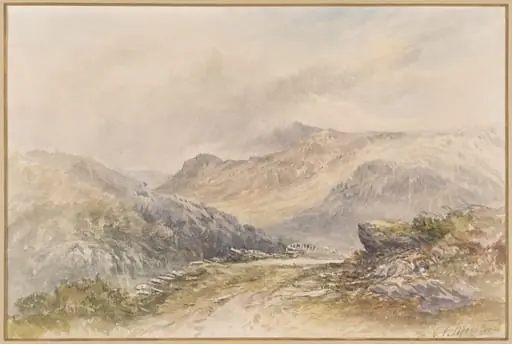
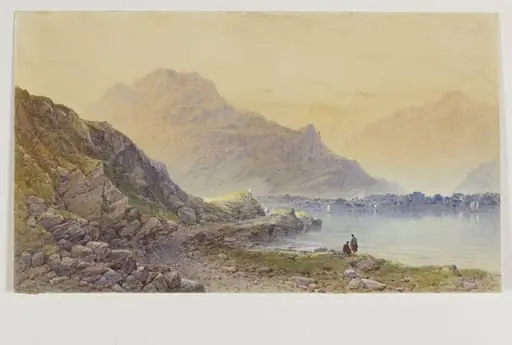
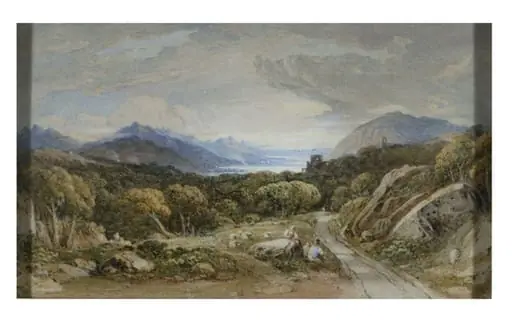
Rendered in delicate watercolor, the piece employs soft washes and loose, open brushwork to suggest atmosphere rather than define form. Colors are muted and pale, with minimal detail in the distance, enhancing the sense of distance and mist. The effect is neither polished nor theatrical, but tenderly evocative, as if capturing a fleeting moment of light and air.
History & Provenance
William Turner of Oxford produced this work during extended travels across Britain, often away from urban centers. He lived and worked in relative obscurity, signing his pieces to avoid confusion with J.M.W. Turner. Though little documented, his output was substantial, rooted in personal exploration rather than public acclaim or patronage.
Context
In early 19th-century Britain, landscape drawing was increasingly valued as both scientific record and personal expression. Turner’s work aligns with this trend, yet diverges from the sublime grandeur favored by contemporaries. His focus on modest, unidealized views reflects a quieter, more private engagement with nature, common among provincial artists of the time.
Legacy
Though never widely recognized in his lifetime, Turner’s watercolors offer a counterpoint to the dominant Romantic aesthetic. His restrained approach, emphasizing atmosphere over monumentality, has since been appreciated for its sensitivity and quiet authenticity, contributing to a broader understanding of 19th-century British landscape practice.
Artist & collection

Artist
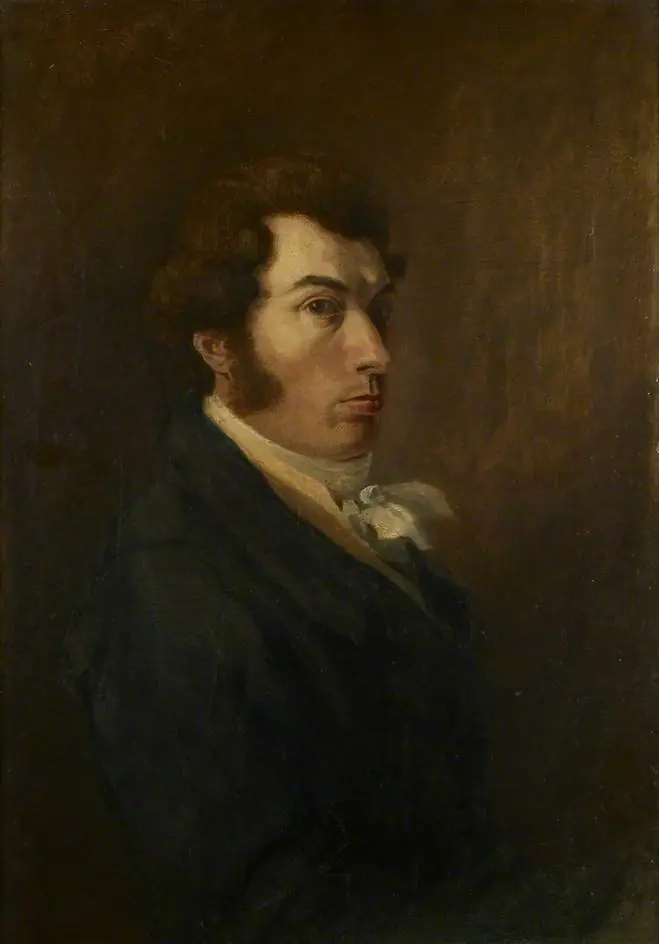
William Turner was a British painter who specialised in watercolour landscapes. He is often known as William Turner of Oxford or just Turner of Oxford to distinguish him from his contemporary, J. M. W. Turner. Many of…