Artwork
An Angel in Flight
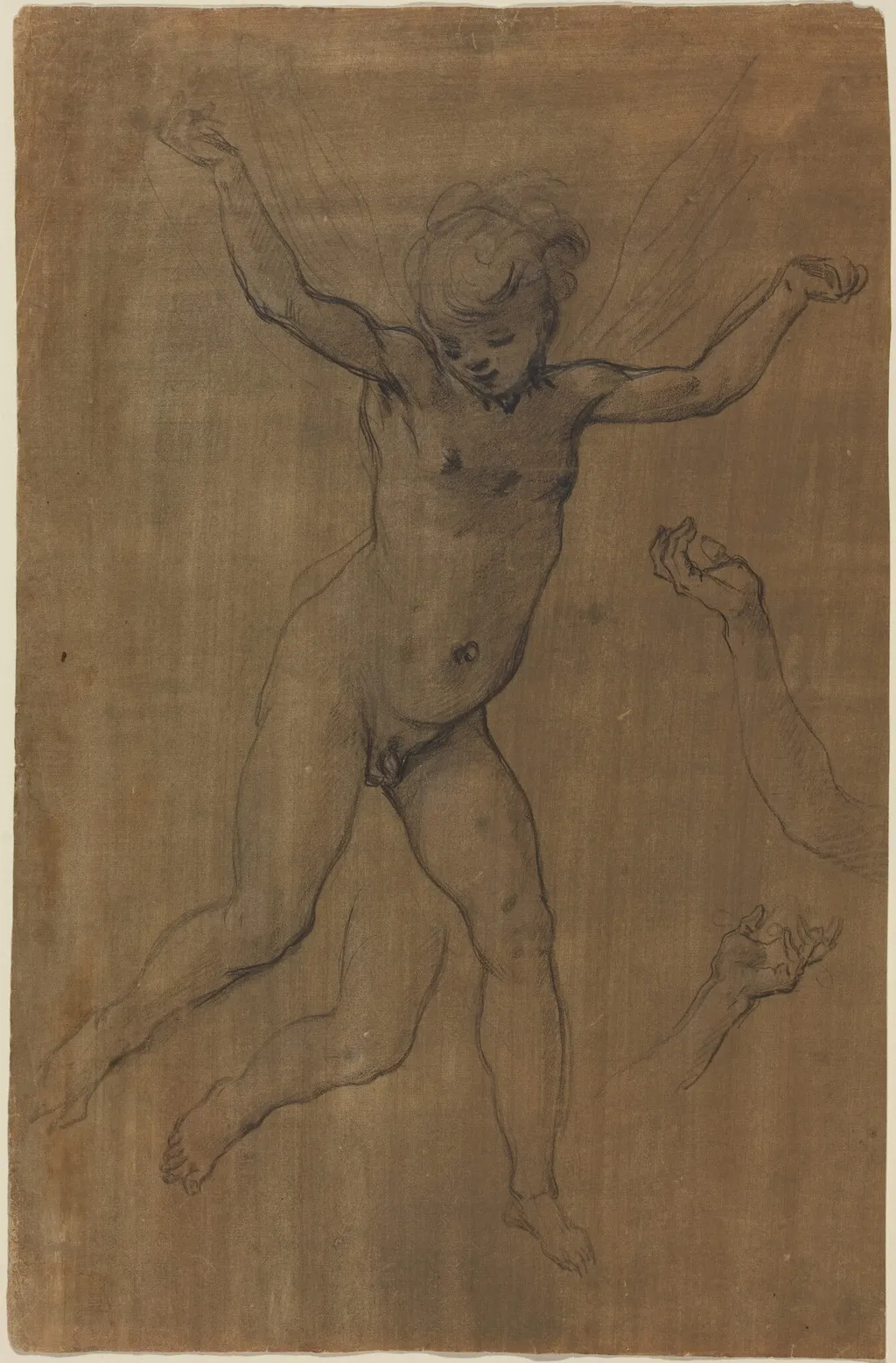
An Angel in Flight is a chalk drawing by the Renaissance artist Jacopo da Empoli. It dates from 1594 and is held in the collection of the National Gallery of Art.
About this work
Overview
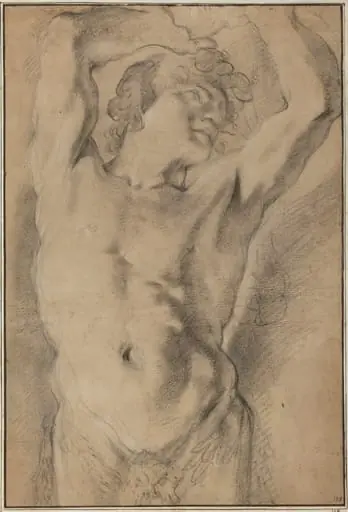
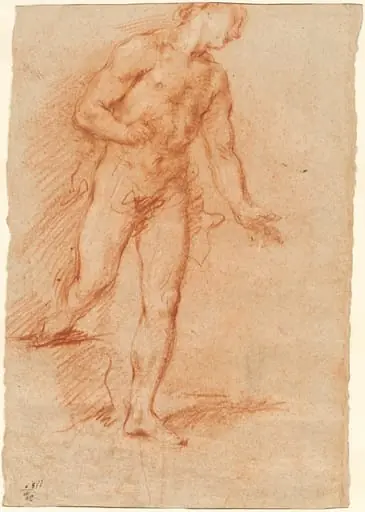
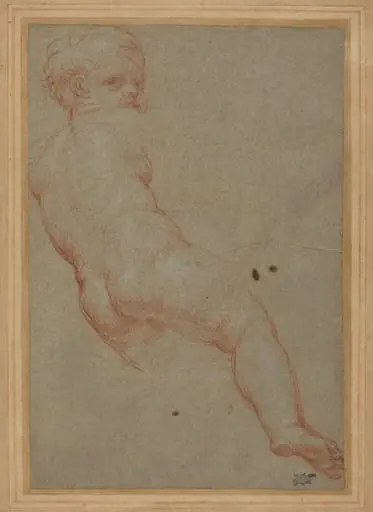
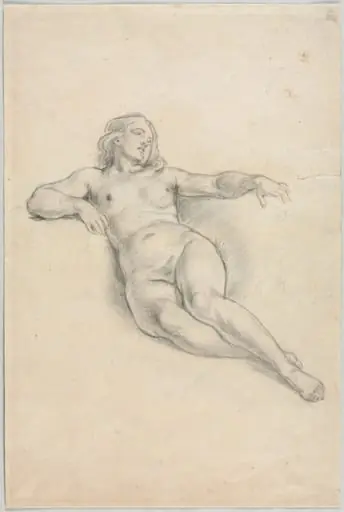
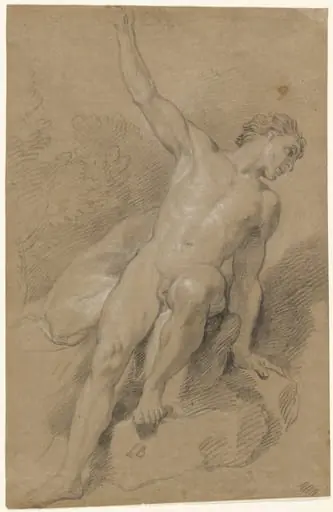
Jacopo da Empoli’s drawing An Angel in Flight, executed around 1594, is a study in black chalk and graphite on a brown‑toned, prepared sheet of paper. The work presents a nude, winged figure with arms outstretched, captured in a moment of ascent. The composition is rendered with swift, gestural lines that convey a sense of motion and fleeting presence.
Subject & Meaning
The figure represents an angelic being, its nakedness emphasizing the purity of form while the expansive wings suggest divine flight. The pose, with a tilted torso and spread limbs, evokes the tension between earthly anatomy and celestial aspiration, reflecting Renaissance interests in the intersection of human physiology and spiritual symbolism.
Technique & Style
Empoli employs loose, sketchy strokes of dark chalk that create a shadow‑like silhouette against the warm paper. The graphite accents define the delicate structure of the wings and the musculature of the body, while the unfinished areas hint at a rapid, exploratory drawing practice typical of Renaissance studies focused on anatomy and dynamic movement.
History & Provenance
Created in the late 16th century, the drawing belongs to a period when artists used preparatory sketches to investigate form and motion. Though specific ownership records are scarce, the work has been associated with Empoli’s workshop in Florence, where such studies were integral to the training of apprentices and the development of compositional ideas.
Context
During the Renaissance, the study of the human body and its potential for movement was central to artistic training. Artists like Empoli produced anatomical sketches and dynamic figures to refine their understanding of proportion, musculature, and the portrayal of kinetic energy, aligning with contemporary scientific and artistic inquiries.
Artist & collection


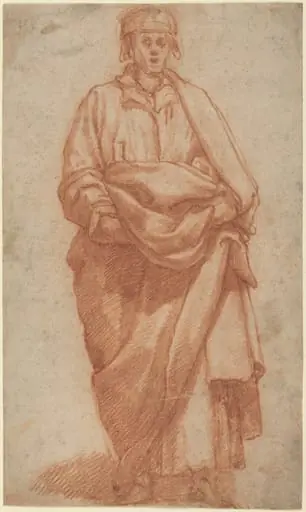
![Standing Draped Man [recto], by Jacopo da Empoli](https://artifactworldgallery.com/img/jacopo-da-empoli--standing-draped-man-recto--b3cdc92a1134339d-w320.webp)
![Seated Draped Man [verso], by Jacopo da Empoli](https://artifactworldgallery.com/img/jacopo-da-empoli--seated-draped-man-verso--e4aec542e44bf41e-w320.webp)