Artwork
Study of a Draped Figure
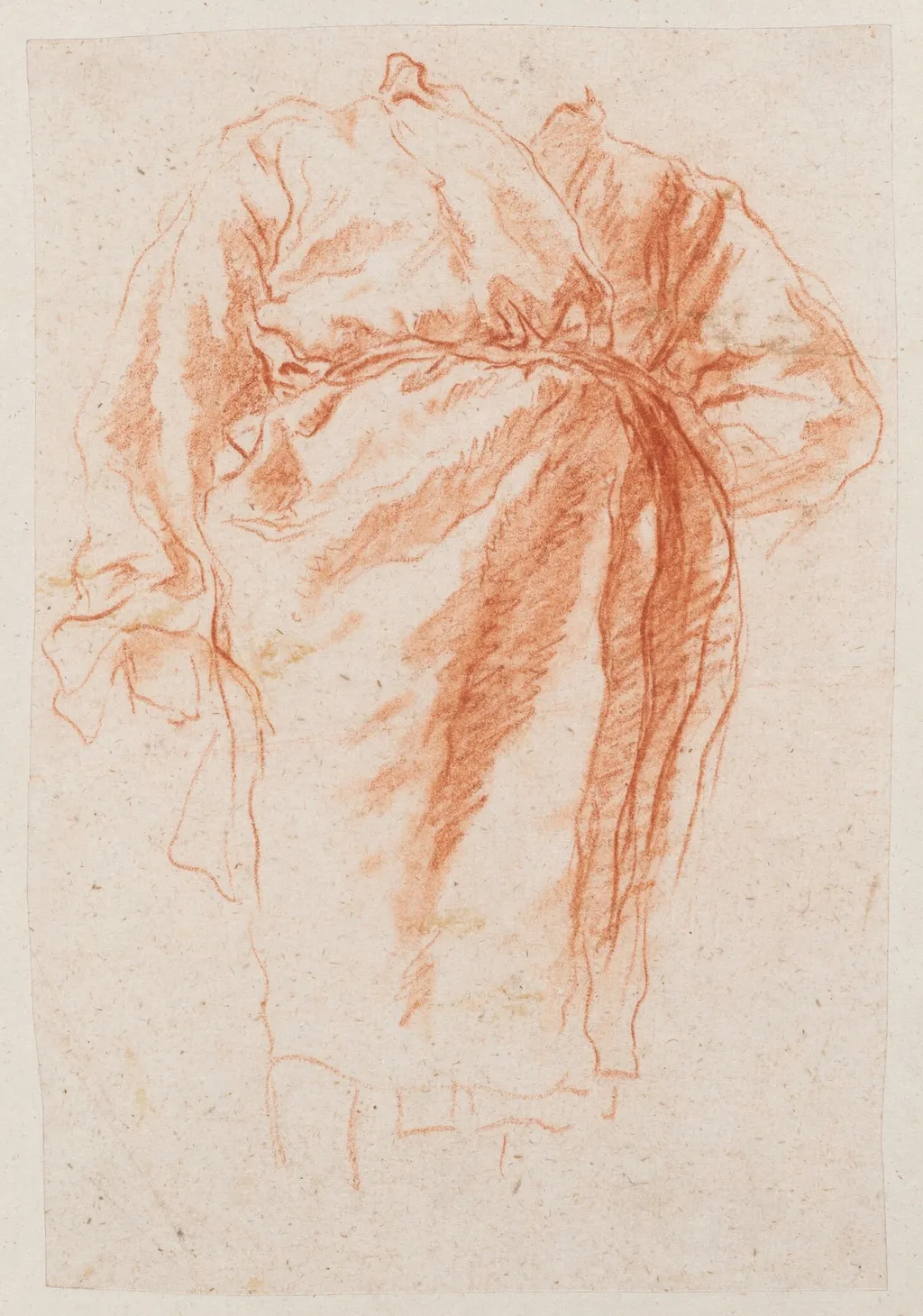
Study of a Draped Figure is a chalk drawing by the Baroque artist Giovanni Battista Tiepolo. It dates from 1750 and is held in the collection of the National Gallery of Art.
About this work
Overview
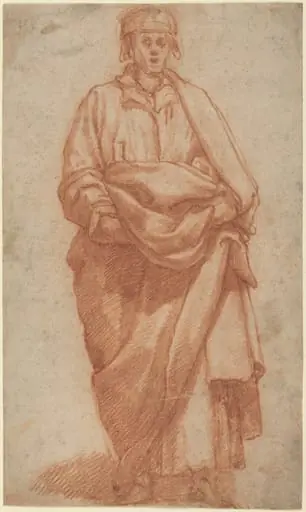
Created around 1750, this red chalk drawing by Giovanni Battista Tiepolo is a preparatory study for a larger composition. Executed on laid paper, it reflects the artist’s routine practice of exploring form and movement through quick, expressive mark-making. Tiepolo, a central figure in 18th-century Venetian art, produced numerous such studies to refine his approach to the human figure in motion.
Subject & Meaning
The drawing captures a single draped figure, posed with one arm bent and the other resting near the hip. The folds of fabric suggest natural weight and subtle tension, emphasizing the body’s underlying structure. Rather than depicting a specific narrative, the study focuses on the aesthetic and structural possibilities of drapery, serving as a visual exercise in volume and gesture.
Technique & Style
Tiepolo employed red chalk with fluid, varied strokes, using lighter pressure for soft contours and heavier application for shadowed areas. The textured paper enhances the warmth of the medium, creating a luminous effect. His rapid, confident lines convey immediacy, characteristic of working drawings meant to capture form dynamically rather than to finish a polished image.
History & Provenance
The drawing originates from Tiepolo’s active period in Venice, during which he produced hundreds of preparatory sketches for frescoes and altarpieces. While its exact early ownership is undocumented, it aligns with the corpus of studies preserved from his studio, later collected by institutions and private patrons interested in his working methods.
Context
Tiepolo’s drawings emerged within a tradition of Italian draftsmanship that valued observation and anatomical fluency. Though associated with the Rococo’s elegance, his studies retain a structural rigor rooted in earlier Renaissance practices. Unlike the theatricality of Baroque art, his approach favored grace and naturalism, reflecting a shift toward more intimate, observational artistry.
Legacy
This study exemplifies how Tiepolo’s sketches informed his monumental frescoes, preserving the vitality of his hand in finished works. Such drawings are now valued not merely as preparatory tools but as autonomous expressions of artistic thought. They continue to inform understanding of 18th-century studio practice and the role of drawing in large-scale composition.
Artist & collection

Artist
Giovanni Battista Tiepolo, also known as Giambattista Tiepolo, was an Italian painter and printmaker from the Republic of Venice who painted in the Rococo style, considered an important member of the 18th-century Venetian school.



![Standing Draped Man [recto], by Jacopo da Empoli](https://artifactworldgallery.com/img/jacopo-da-empoli--standing-draped-man-recto--b3cdc92a1134339d-w320.webp)
![Studies of Legs and Drapery [recto], by Abraham Bloemaert](https://artifactworldgallery.com/img/abraham-bloemaert--studies-of-legs-and-drapery-recto--93eb35075fbdb28d-w320.webp)
![Seated Draped Man [verso], by Jacopo da Empoli](https://artifactworldgallery.com/img/jacopo-da-empoli--seated-draped-man-verso--e4aec542e44bf41e-w320.webp)