Artwork
Saint Bartholomew
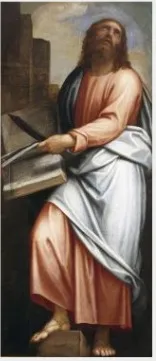
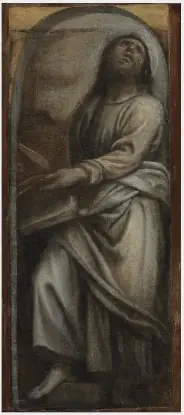
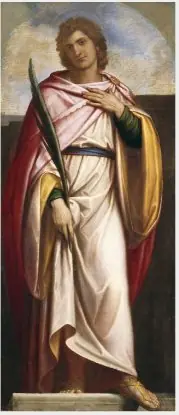
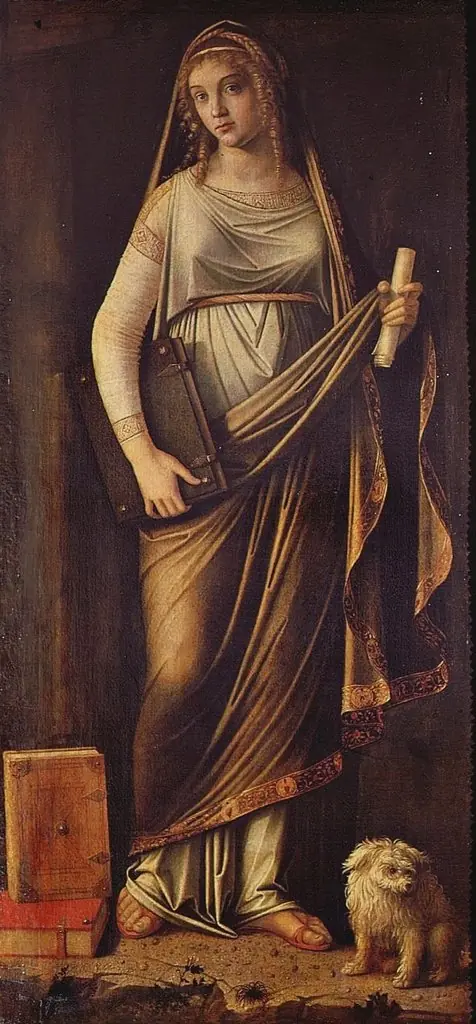
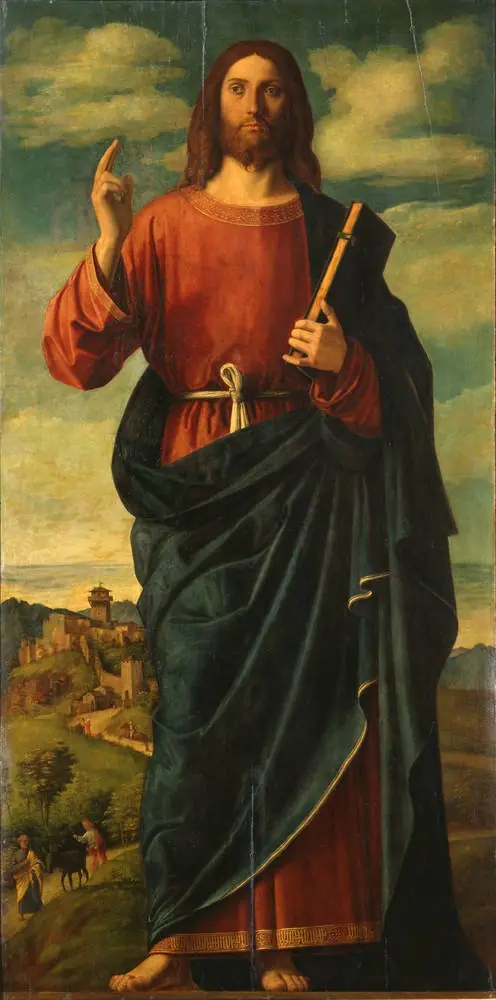
Saint Bartholomew is an oil painting by the Early Baroque Italian artist Enea Salmeggia. It dates from 1605 and is held in the collection of the National Gallery of Ireland.
About this work
Overview
Enea Salmeggia, a painter working in the late Renaissance around Bergamo, completed an oil painting titled Saint Bartholomew in 1605. The work belongs to the early Baroque period in Italy and is presently part of the National Gallery of Ireland’s holdings.
Subject & Meaning
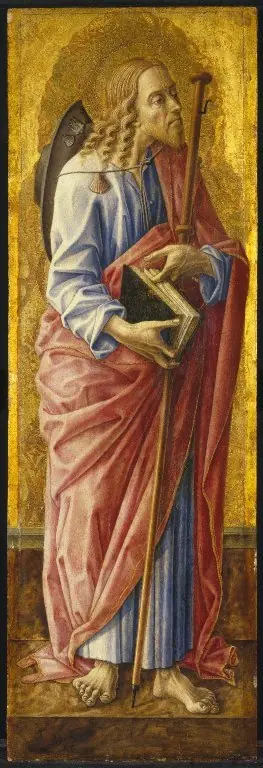
The canvas presents a bearded figure, identified as the apostle Bartholomew, dressed in a pink garment beneath a white mantle that falls across his left shoulder. He holds a knife—a traditional attribute of his martyrdom—in his right hand, while a book rests in his left, suggesting his role as a learned saint.
Technique & Style
Executed in oil on canvas, the painting employs a restrained palette of browns, grays and soft pinks, creating a muted atmosphere. Salmeggia renders the figure with calm, measured brushwork, and uses a modestly detailed cityscape behind a stone platform to provide spatial depth without detracting from the central saint.
History & Provenance
Created in 1605, the work remained in private collections before entering the National Gallery of Ireland, where it is displayed as part of the museum’s Italian Baroque assemblage. Its acquisition reflects the gallery’s effort to represent early 17th‑century Italian religious painting.
Context
Salmeggia’s Saint Bartholomew illustrates the transitional moment between the late Renaissance’s balanced compositions and the emerging Baroque emphasis on narrative clarity and emotional restraint. The inclusion of the cityscape situates the saint within a contemporary setting, a practice common among Italian painters seeking to link biblical figures to the viewer’s world.
Artist & collection
Artist
Enea Salmeggia (c. 1556 – 25 February 1626) was an Italian painter of the late-Renaissance period, active mainly in his native city of Bergamo.