Artwork
John the Baptist
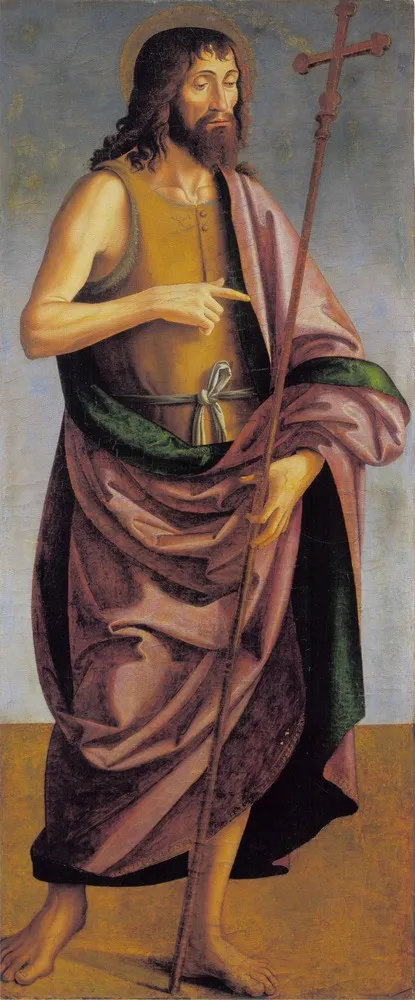
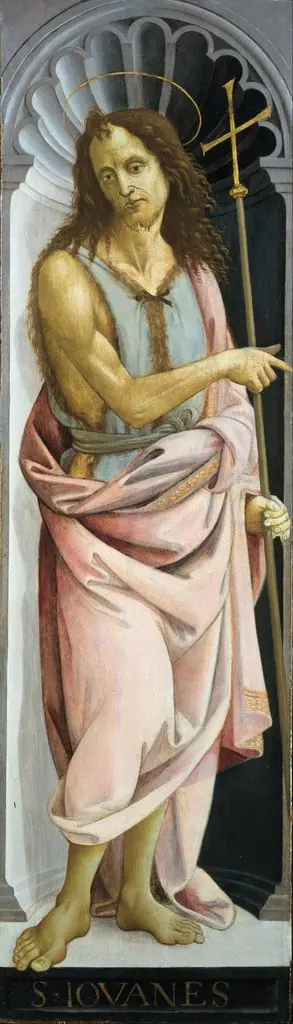
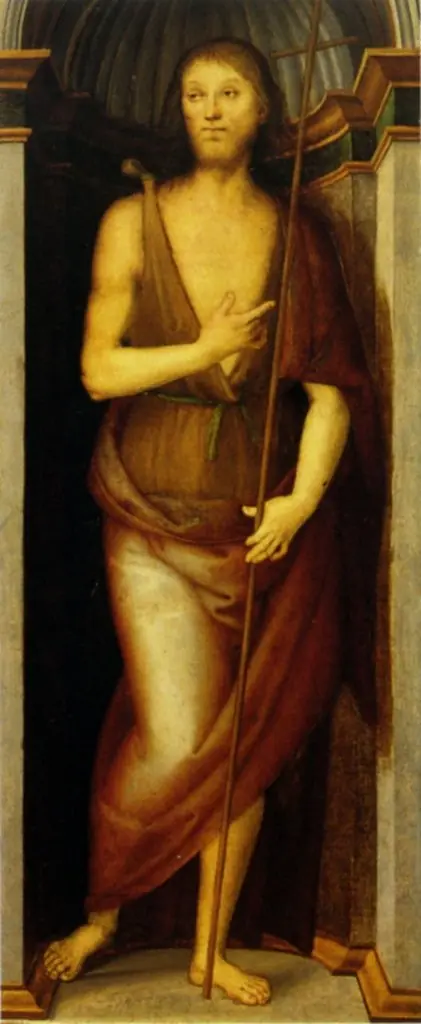
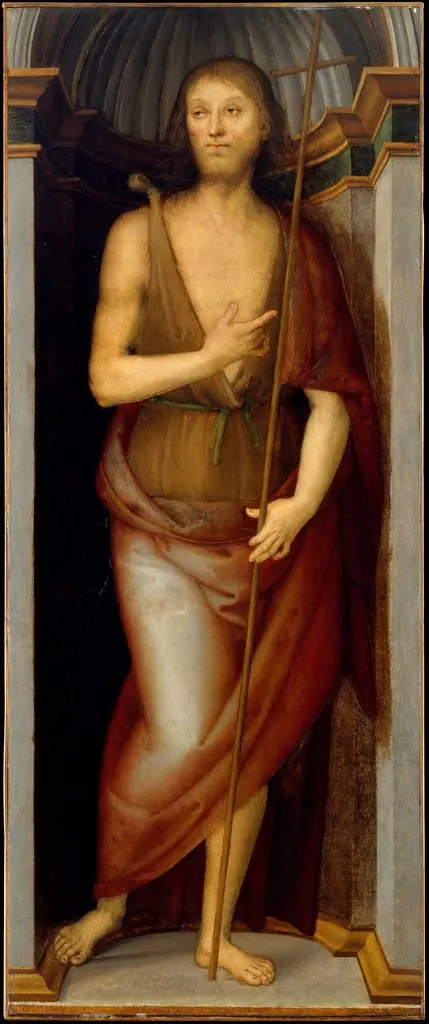
John the Baptist is a paint painting by the Early Renaissance artist Antoniazzo Romano. It dates from 1496 and is held in the collection of the Städel Museum.
About this work
Overview
Executed in tempera on panel, it reflects the artist’s adherence to late medieval conventions even as the Renaissance progressed.
Painted in 1496 by Antoniazzo Romano, this work depicts John the Baptist as a solitary devotional image. Executed in tempera on panel, it reflects the artist’s adherence to late medieval conventions even as the Renaissance progressed. The gold background and frontal pose align with earlier Byzantine traditions, distinguishing Romano’s approach from the naturalism emerging in Florence and Venice at the time.
Subject & Meaning
John the Baptist is shown in a contemplative pose, one hand resting on his chest and the other holding a reed cross. His bare feet and rough garments signify asceticism, aligning with his role as a prophet who prepared the way for Christ. The halo underscores his sanctity, while the direct gaze invites the viewer into a moment of spiritual reflection, common in devotional images of the period.
Technique & Style
Romano employed tempera paint on a wooden panel with a gold leaf ground, a technique inherited from medieval altarpieces. The flatness of the figure, the simplified modeling of form, and the lack of perspective create a timeless, iconic presence. Colors are muted yet deliberate—yellow tunic, rose robe—enhancing the figure’s symbolic rather than physical realism.
History & Provenance
The painting entered the Städel Museum’s collection in the 19th century, having likely been part of a private devotional setting in Rome or its surroundings. Its survival in good condition suggests it was preserved in a religious or aristocratic context. No documentary evidence links it to a specific commission, but its style aligns with works produced for Roman chapels and domestic shrines.
Context
In late 15th-century Rome, artists like Romano maintained older pictorial forms even as humanist ideals spread elsewhere. His use of gold grounds and hierarchical composition responded to local tastes and liturgical needs. While Florence embraced perspective and anatomy, Roman painters often prioritized spiritual clarity over naturalism, preserving a visual language rooted in tradition.
Legacy
Romano’s work represents a conservative strand of Renaissance art that persisted in Rome well into the 16th century. Though overshadowed by contemporaries like Raphael, his paintings offer insight into regional artistic continuity. Today, his adherence to medieval methods is valued not as backwardness, but as a deliberate choice reflecting devotional priorities of his time and place.
Artist & collection
Artist
Antonio di Benedetto Aquilo degli Aquili (c. 1430 – c. 1510), known as Antoniazzo Romano, was an Italian Early Renaissance painter, the leading figure of the Roman school during the latter part of the 15th century He…

 The Nativity
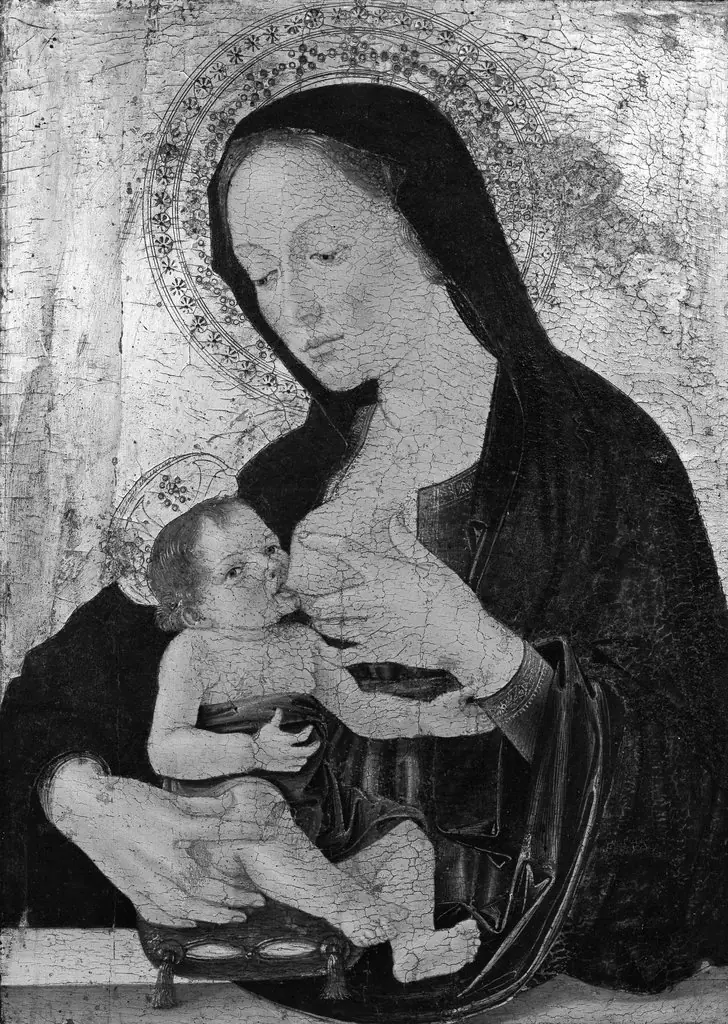 Madonna and Child
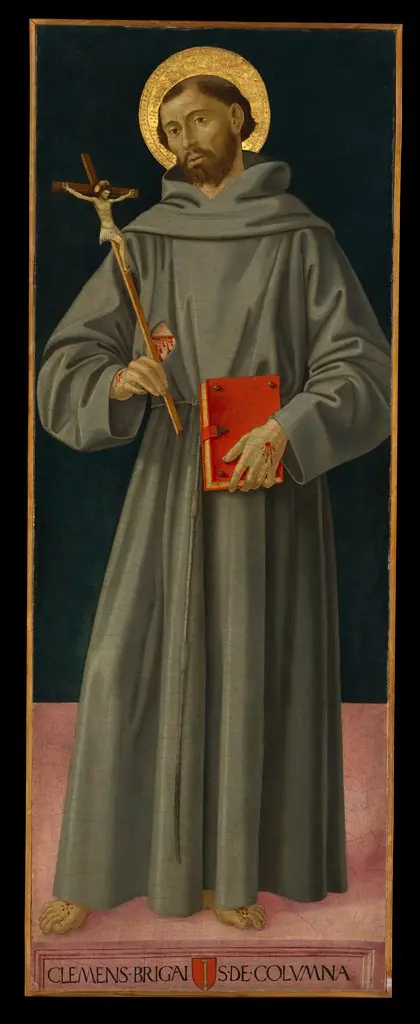 Saint Francis of Assisi
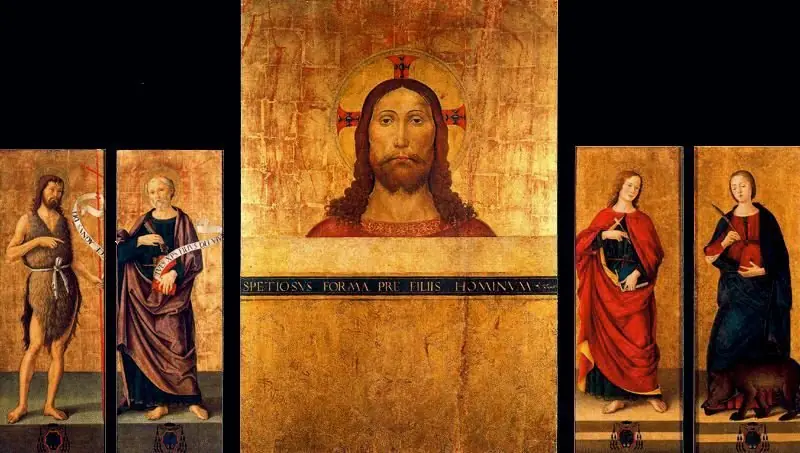 Triptych: Bust of Christ, Saint John the Baptist and Saint Peter. Closed: Saint John the Evangelist and Saint Colombe
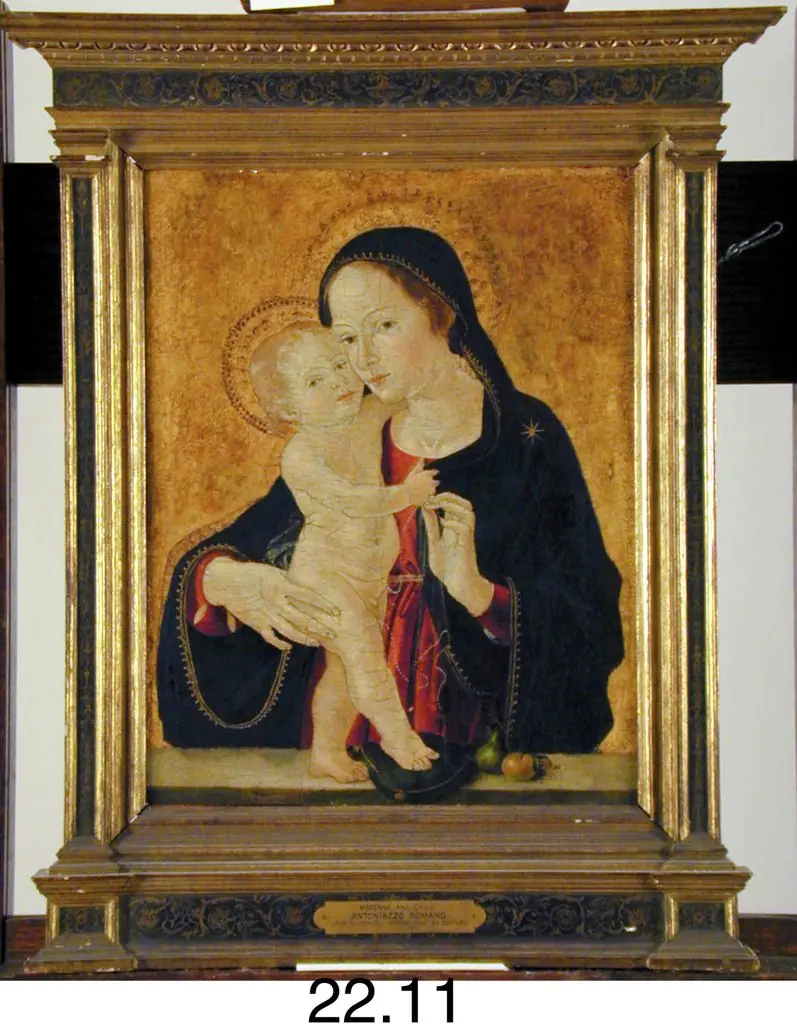 Madonna and Child
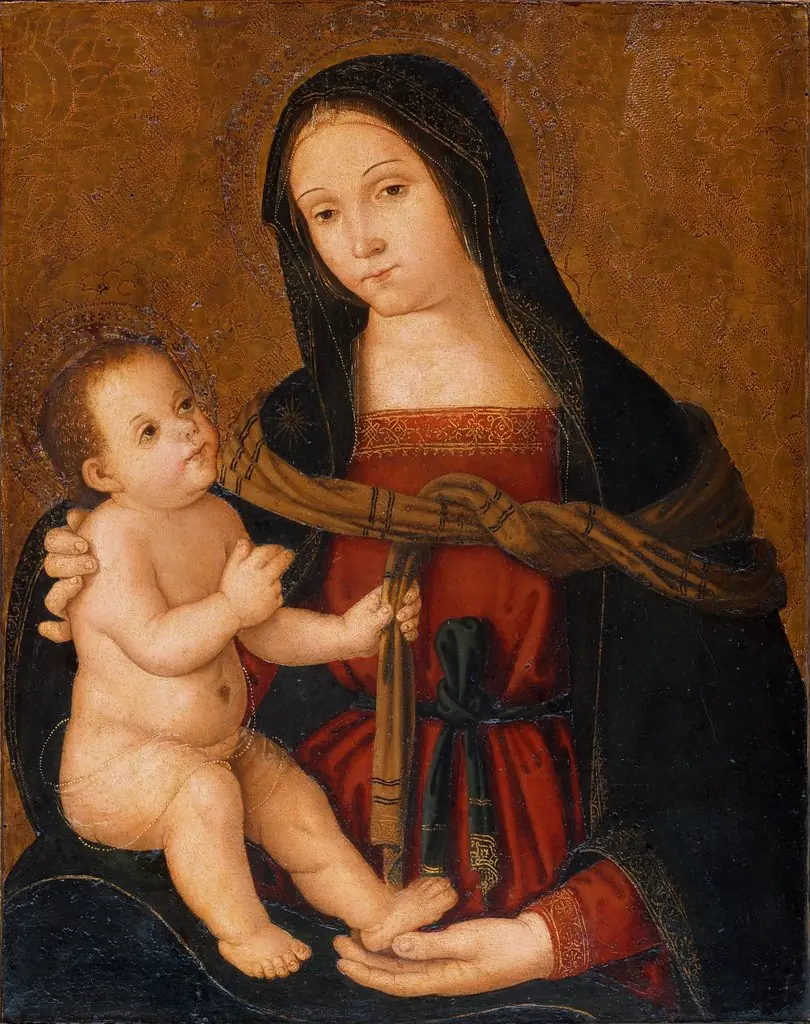 Madonna and Child
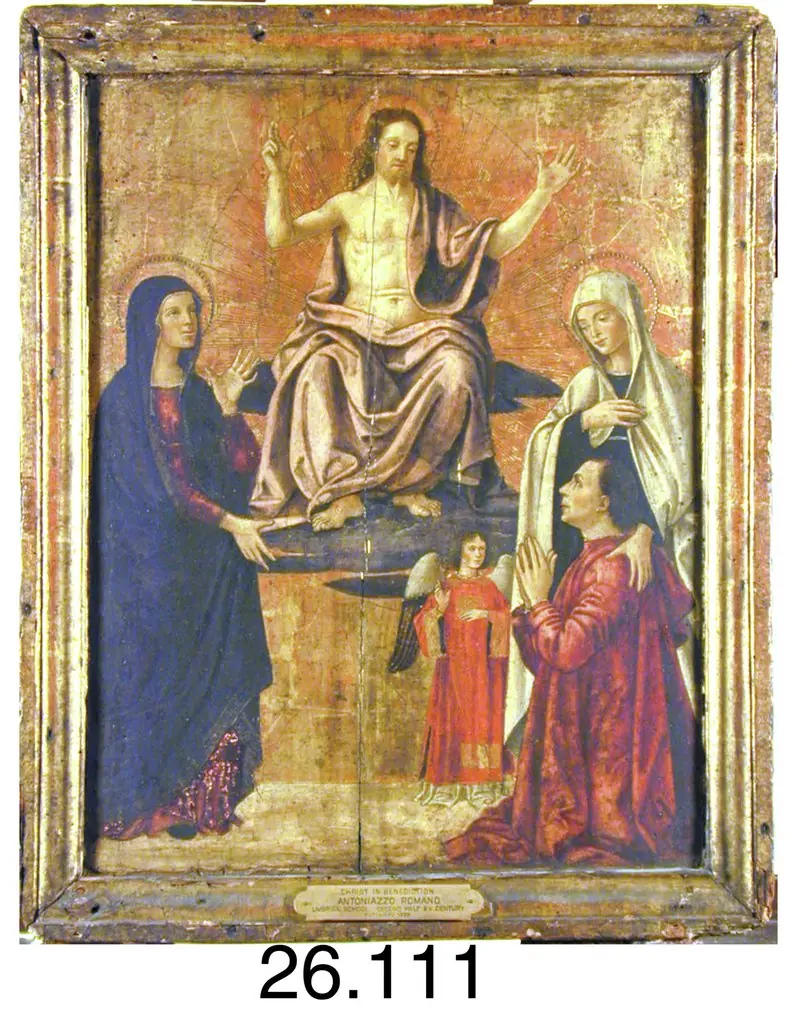 Christ Enthroned, the Virgin, Saint Francesca Romana, an Angel and Donor
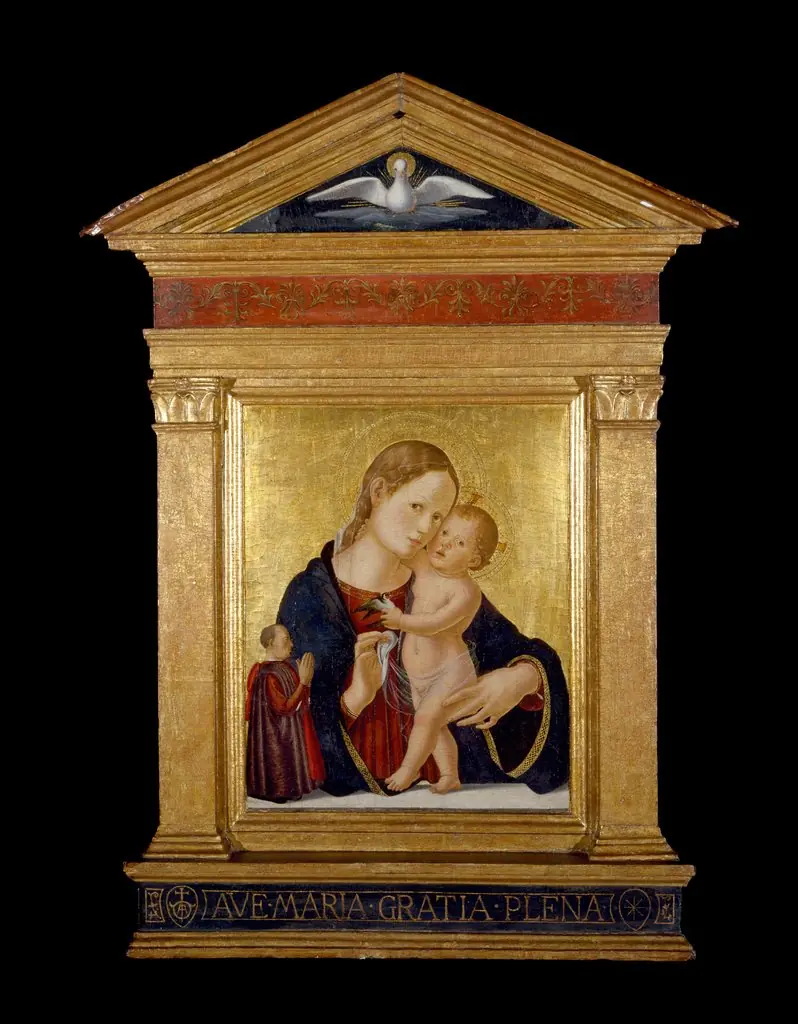 Virgin and Child with Donor