Artwork
The International Exhibition of 1862
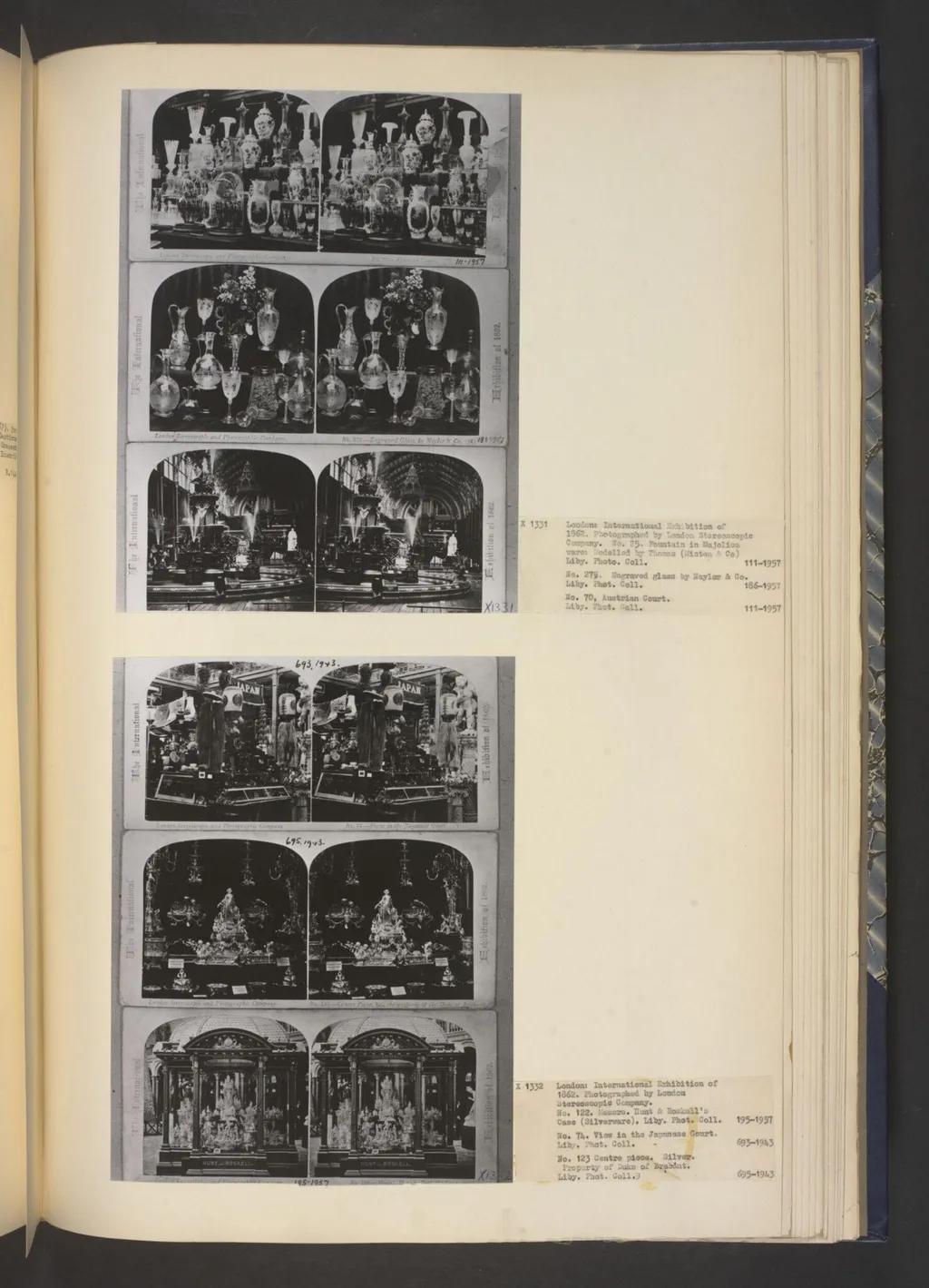
The International Exhibition of 1862 is a photographic photography by the Impressionist artist William England. It dates from 1862 and is held in the collection of the Victoria and Albert Museum. A pair of stereoscopic photographs from 1862 captures the International Exhibition held in South Kensington, London.
About this work
The images look like they’re from a big show, packed with vases, lamps, and shiny objects.
This is a set of old photos showing fancy glass displays. The images look like they’re from a big show, packed with vases, lamps, and shiny objects. The lighting is dim, making the glass glow. Each photo is split into two parts, like a puzzle.
The photos were taken in 1862 at a big event in London. They show how people displayed fancy items back then.
Check out the Victoria and Albert Museum to see more like this.
Overview
A pair of stereoscopic photographs from 1862 captures the International Exhibition held in South Kensington, London. Produced by the London Stereoscopic and Photographic Company, these images were part of a series of 350 stereo cards commissioned to document the event. The format, designed for viewing with a stereoscope, offered a three-dimensional impression of the exhibition’s interior, reflecting contemporary interest in both technological display and visual realism.
Subject & Meaning
The photographs depict crowded display halls filled with glassware, lamps, and decorative objects from nations across the British Empire and beyond. These arrangements emphasized industrial craftsmanship and global trade, presenting material culture as a symbol of progress. The dim lighting enhances the luminosity of the glass, drawing attention to craftsmanship and material quality rather than architectural space.
Technique & Style
The images were captured using wet-plate collodion technology, requiring long exposures and careful staging. The dual-image format of each card was engineered for stereoscopic viewing, creating depth through slight perspective shifts. Composition is formal and orderly, with objects arranged in symmetrical rows, reflecting the exhibition’s emphasis on classification and systematic display.
History & Provenance
The London Stereoscopic and Photographic Company secured exclusive rights to photograph the 1862 exhibition, making these images among the earliest systematic visual records of a world fair. William England was among the primary photographers involved. The cards were sold commercially, allowing the public to experience the exhibition at home. Many examples later entered institutional collections, including the Victoria and Albert Museum.
Context
The 1862 exhibition was the second major international showcase in Britain, following the 1851 Great Exhibition. It aimed to promote industry, design, and international cooperation. Unlike its predecessor, it faced criticism for overcrowding and poor ventilation, yet it remained a significant moment in the public display of global manufacturing. Stereoscopic photography emerged as a popular medium to extend the exhibition’s reach beyond its physical site.
Legacy
These stereographs remain valuable as documentary records of 19th-century material culture and exhibition practices. They illustrate how photography was used to mediate public engagement with industrial progress. Today, they inform curatorial and historical studies of design, colonial trade, and the evolution of visual media in public education.
Artist & collection
Artist
William England carried a stereo camera everywhere, snapping the 1862 London world’s fair in 3D photos so people could step right into the crowds, glass domes, and medieval carvings.

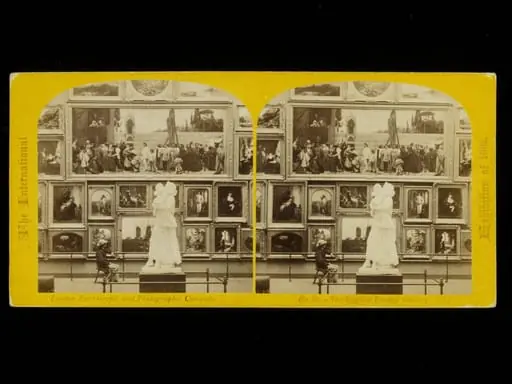 The International Exhibition of 1862: No. 27 - The English Picture Gallery (1)
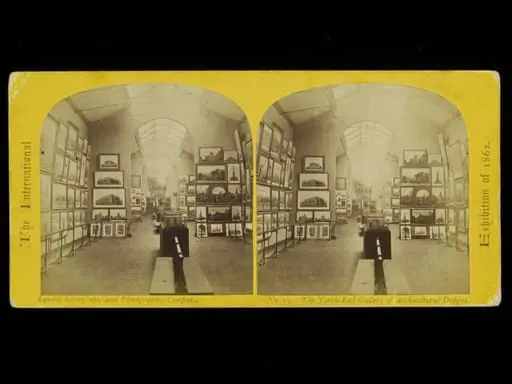 The International Exhibition of 1862: No. 39 - The North-East Gallery of Architectural Designs
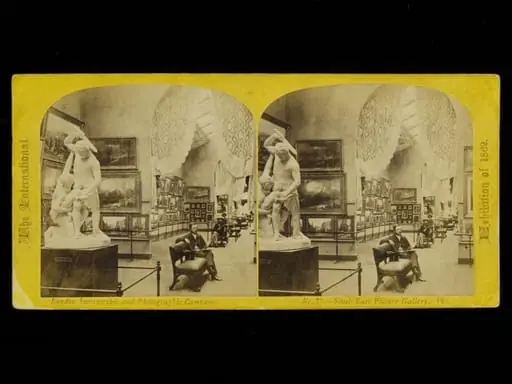 Stereoscopic photograph of the 1862 International Exhibition
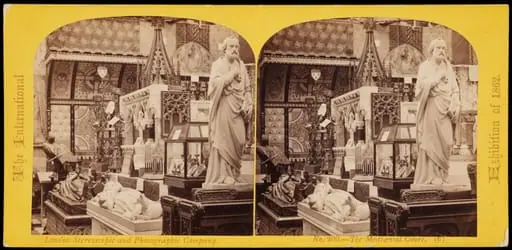 The International Exhibition of 1862, No. 209, the Mediaeval Court.
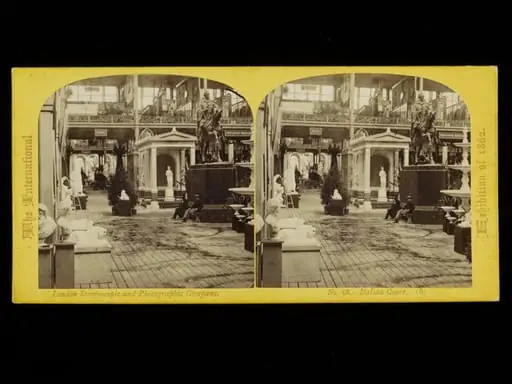 The International Exhibition of 1862: No. 42 - Italian Court (3)
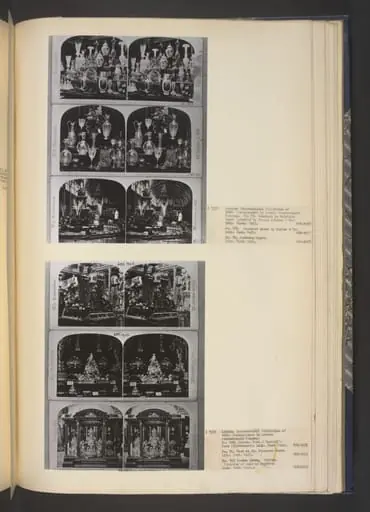 Stereoscopic photograph (No. 70) of the Austrian Court at the International Exhibition of 1862
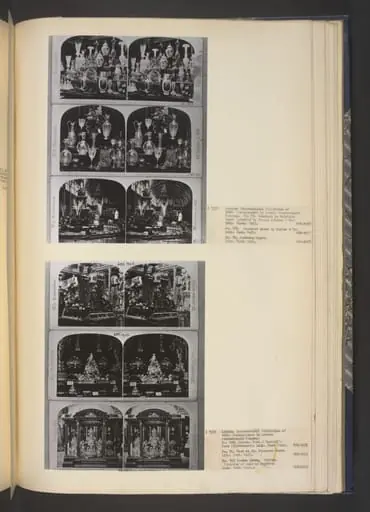 Stereoscopic photograph (No. 122) of Messrs. Hunt and Roskell's case at the International Exhibition of 1862
 Madame la Ménagère, Etaples
 Ullswater Head, Patterdale Hall
 Figure in a striped turban and dress
 Village of Bowness, Cumberland