Artwork
The International Exhibition of 1862: No. 42 - Italian Court (3)
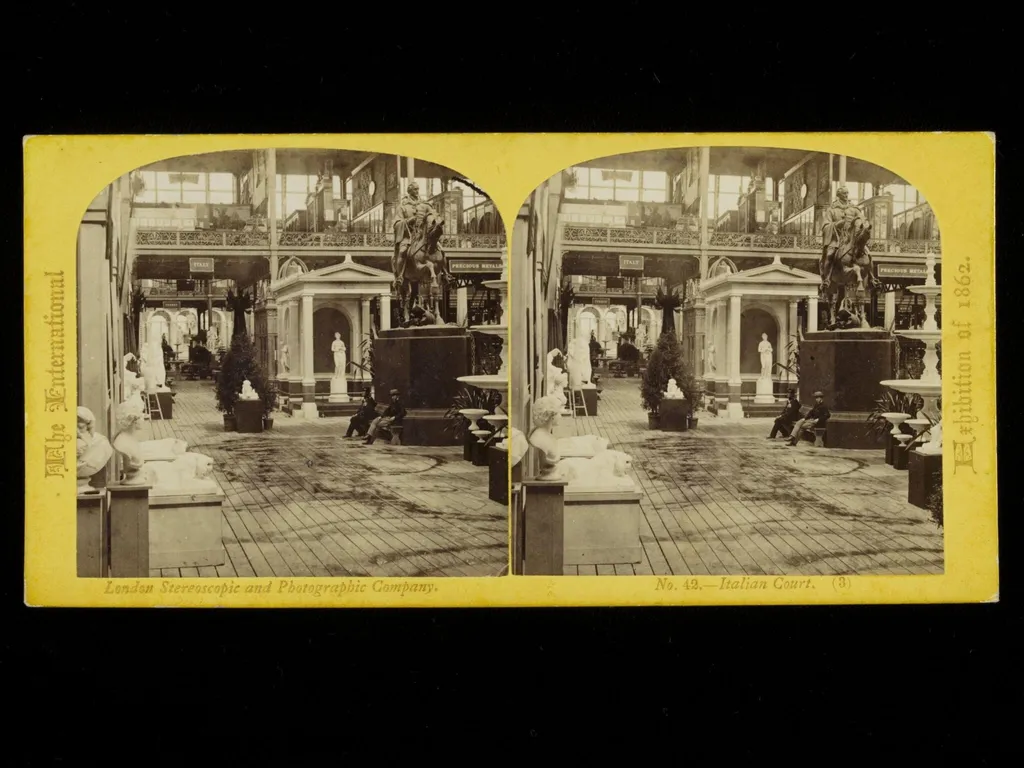
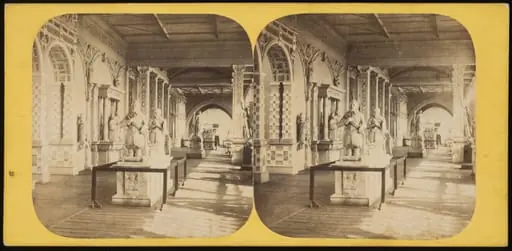
The International Exhibition of 1862: No. 42 - Italian Court (3) is a photographic photography by the Impressionist artist William England. It dates from 1862 and is held in the collection of the Victoria and Albert Museum. A stereo photograph from 1862 captures the Italian Court at the International Exhibition in South Kensington, London.
About this work
The photo was taken during a big exhibition in 1862, showing off art and objects from around the world.
This is a black-and-white photo of a grand indoor space with high ceilings and big windows. Statues stand on pedestals along the walls, and people in long dresses walk or stand around. The floor is made of wooden planks, and there are tables covered with white cloths. Shops with signs like "Precious Metals" and "Italy" line the sides.
The photo was taken during a big exhibition in 1862, showing off art and objects from around the world. Notice how the light comes through the windows, making some areas brighter than others.
Look up more about the Victoria and Albert Museum to see other items from this exhibition.
Overview
A stereo photograph from 1862 captures the Italian Court at the International Exhibition in South Kensington, London. Produced by the London Stereoscopic and Photographic Company, it is one of 350 stereographs commissioned to document the event. The image presents a three-dimensional view of the exhibition space, emphasizing architectural scale and curated displays of Italian art and commerce.
Subject & Meaning
The Italian Court showcases a curated selection of artistic and commercial objects from Italy, including marble statues on pedestals, ornamental metalwork, and vendor stalls labeled "Precious Metals" and "Italy." The presence of visitors in period attire suggests public engagement with national cultural representation. The arrangement reflects 19th-century ideals of displaying national identity through material culture within an international context.
Technique & Style
The photograph is a black-and-white stereo pair, designed for viewing through a stereoscope to create depth. Natural light streams through high windows, casting soft contrasts across wooden floors and stone surfaces. The composition balances architectural symmetry with the organic movement of attendees, emphasizing spatial depth and material texture without artificial staging.
History & Provenance
The photograph was produced under exclusive contract by the London Stereoscopic and Photographic Company, with William England as one of the contributing photographers. The exhibition, held in the same building that would later house the Victoria and Albert Museum, served as a precursor to its permanent collections. Many objects and images from the event were absorbed into the museum’s archives.
Context
The 1862 International Exhibition was part of a series of global expos promoting industrial and artistic achievement. Italy, recently unified, used the platform to assert cultural cohesion through its artistic heritage. The inclusion of commercial stalls alongside fine art blurred lines between commerce and aesthetics, reflecting broader Victorian interests in accessible culture and global trade.
Legacy
The stereo photograph remains a key visual record of early museum practices and public exhibition design. It documents how national identity was visually constructed for mass audiences in the age of mechanical reproduction. Many of the objects and photographic records from the exhibition later formed foundational holdings of the Victoria and Albert Museum.
Artist & collection
Artist
William England carried a stereo camera everywhere, snapping the 1862 London world’s fair in 3D photos so people could step right into the crowds, glass domes, and medieval carvings.

 The International Exhibition of 1862
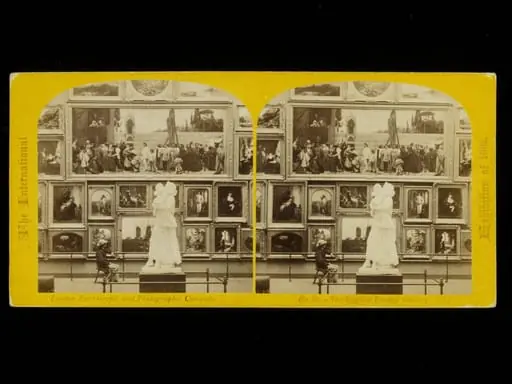 The International Exhibition of 1862: No. 27 - The English Picture Gallery (1)
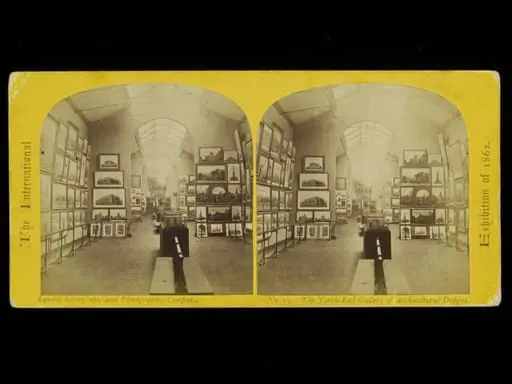 The International Exhibition of 1862: No. 39 - The North-East Gallery of Architectural Designs
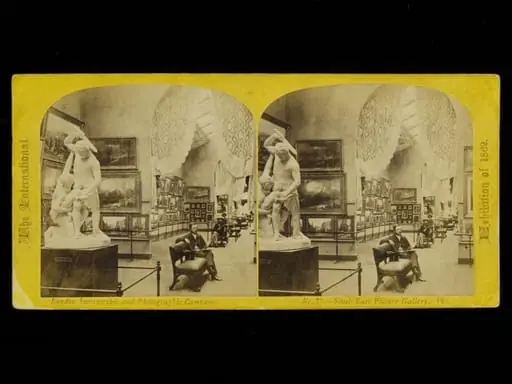 Stereoscopic photograph of the 1862 International Exhibition
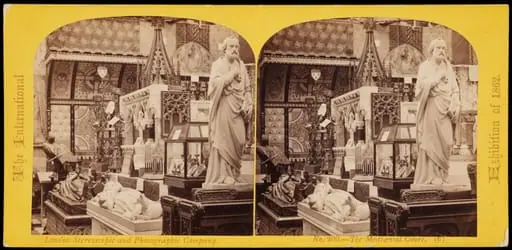 The International Exhibition of 1862, No. 209, the Mediaeval Court.