Artwork
Legendary Battle of the Torriani and Visconti - the Chase
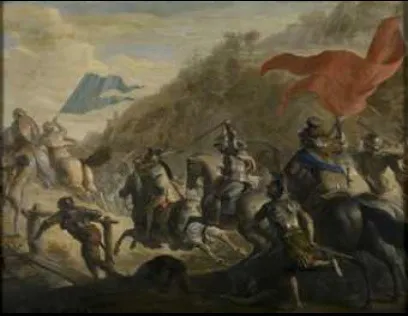
Legendary Battle of the Torriani and Visconti - the Chase is an oil painting by the Flemish Baroque painting artist Erasmus Quellinus II. It dates from 1650 and is held in the collection of the Royal Museums of Fine Arts of Belgium.
About this work
Overview
Erasmus Quellinus II painted this oil-on-canvas work around 1650, aligning with the Flemish Baroque tradition. As a collaborator of Rubens, he brought a dynamic sense of movement and dramatic composition to historical subjects. The painting belongs to the Royal Museums of Fine Arts of Belgium, where it remains as part of its 17th-century narrative collection.
Subject & Meaning
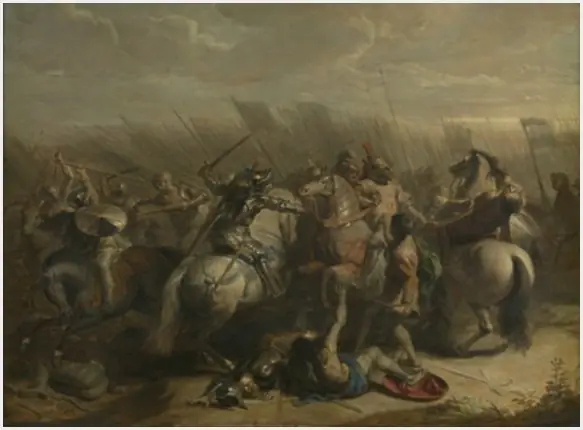
The scene illustrates a legendary clash between the Torriani and Visconti families, rival Milanese noble houses whose feuds were mythologized in regional lore. Rather than documenting a specific historical event, the work evokes the turbulence of medieval power struggles, using symbolic violence to convey the chaos of aristocratic rivalry and the fragility of order.
Technique & Style
The composition layers figures diagonally across the canvas, guiding the eye toward a swirling cloud of dust and smoke in the distance.
Quellinus employed thick, expressive brushwork to render armored figures and rearing horses in motion, emphasizing kinetic energy. The composition layers figures diagonally across the canvas, guiding the eye toward a swirling cloud of dust and smoke in the distance. Dark, overcast skies and muted tones reinforce the scene’s gravity, consistent with Flemish Baroque tendencies toward emotional intensity and theatrical realism.
History & Provenance
The painting entered the collection of the Royal Museums of Fine Arts of Belgium in the 19th century, likely through state acquisition or donation. Its attribution to Quellinus II is supported by stylistic parallels with his other historical works and documented workshop practices. No earlier ownership records are widely known, suggesting it may have remained in private Flemish collections until institutional acquisition.
Context
In mid-17th-century Flanders, historical and mythological battle scenes were popular among patrons seeking to celebrate noble lineage and martial virtue. Quellinus, trained in Antwerp’s vibrant artistic community, drew from classical and local legends to satisfy this demand. His work reflects a broader trend of using past conflicts to explore themes of honor, fate, and political instability.
Legacy
Though less known than Rubens, Quellinus contributed significantly to the continuation of Flemish narrative painting. This work exemplifies how regional artists adapted historical myth into visually compelling compositions, preserving medieval legends through early modern aesthetics. It remains a reference point for understanding the evolution of battle imagery in Northern European art.
Artist & collection
Artist
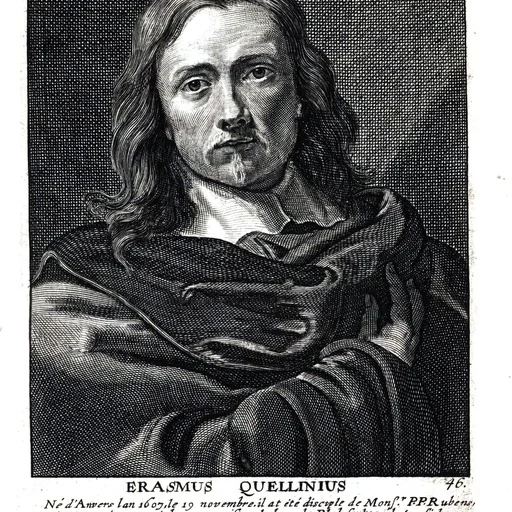
Erasmus Quellinus the Younger or Erasmus Quellinus II (November 19, 1607 – November 11, 1678) was a Flemish painter, engraver, draughtsman and tapestry designer who worked in various genres including history, portrait, allegorical, battle…

Museum
Royal Museums of Fine Arts of Belgium
Continue through works from the same source collection.
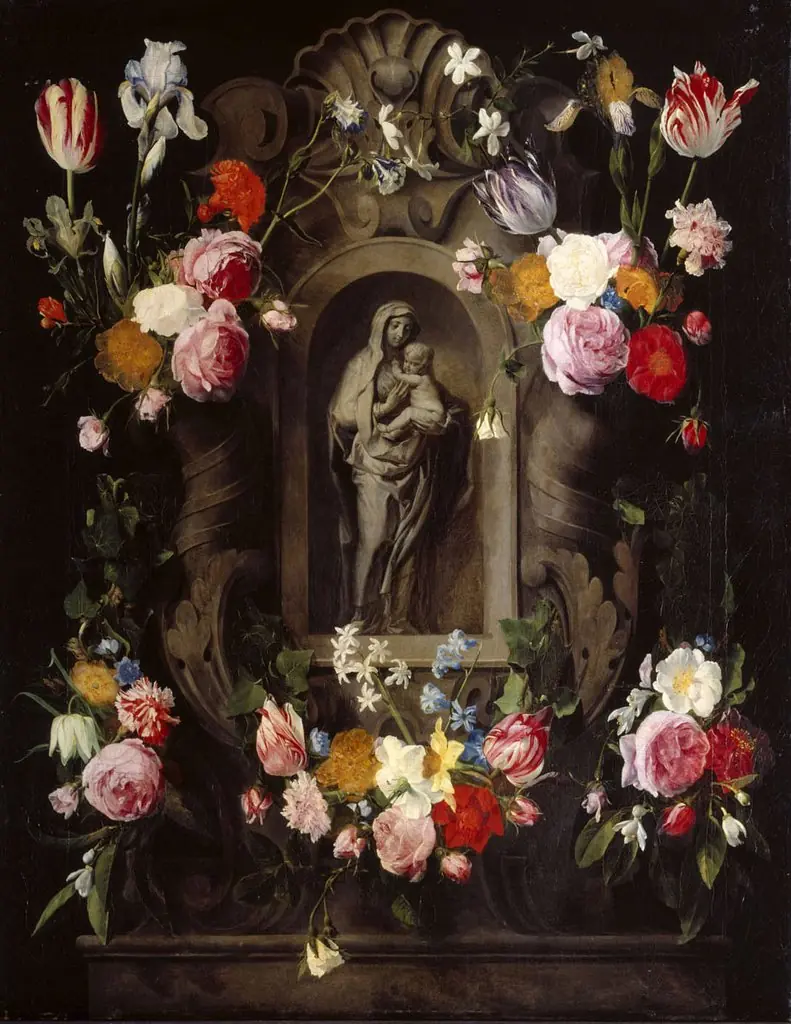 Madonna & Child Statuette in a Niche surrounded by a Garland of Flowers
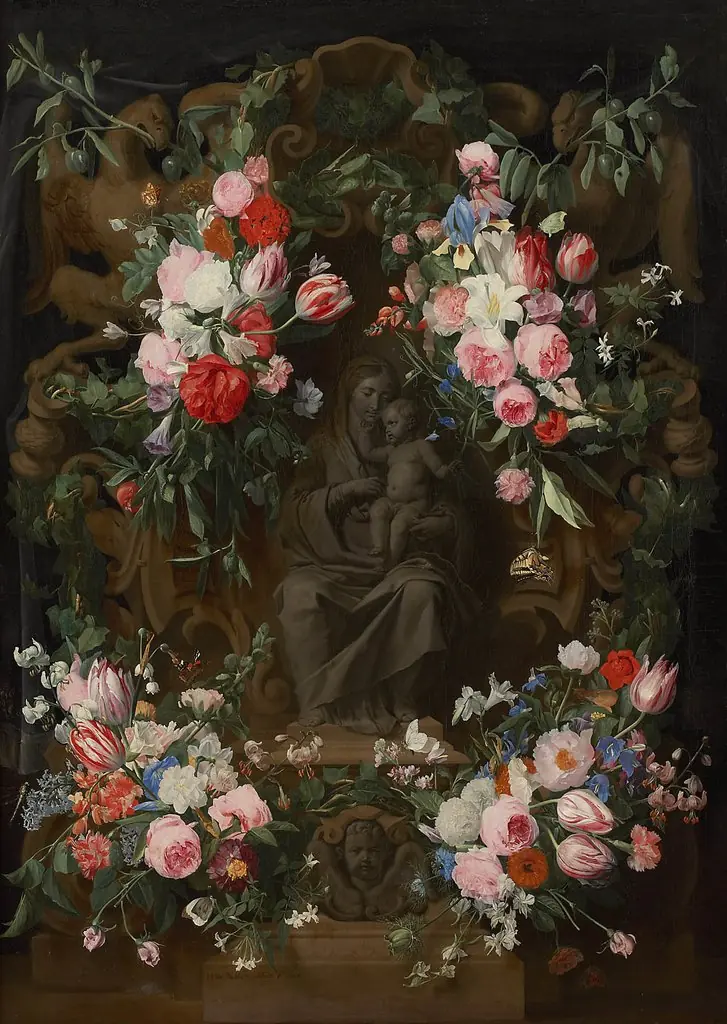 Seated Maria in a Flower Garland
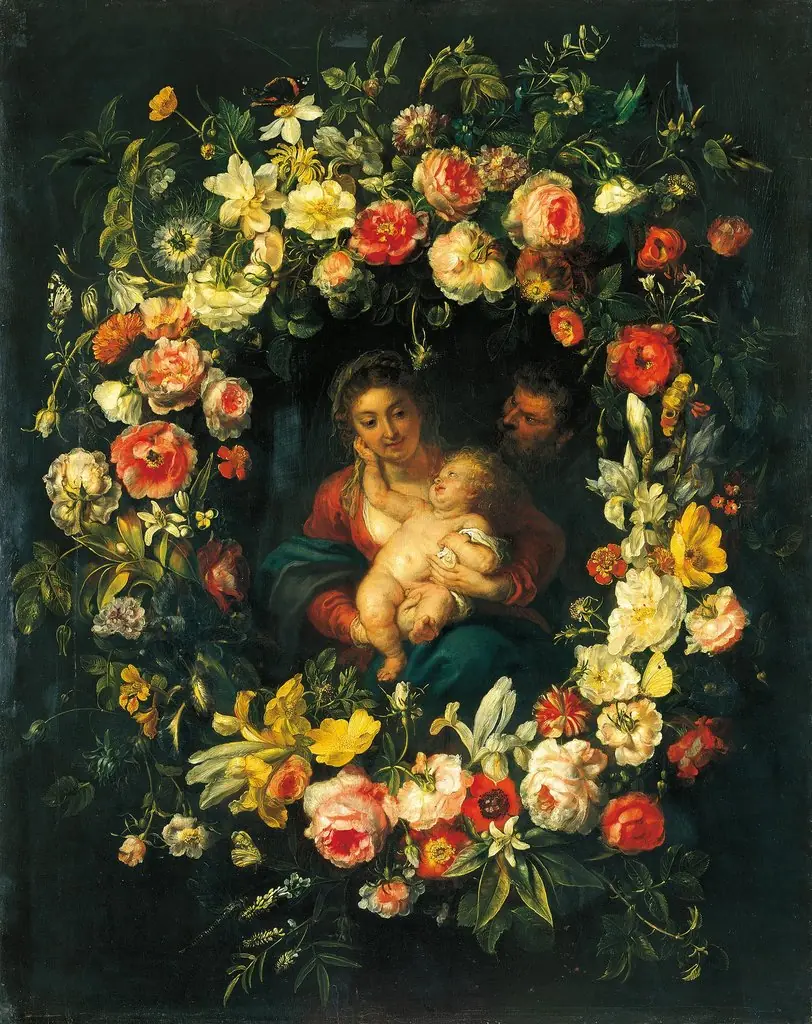 Holy Family in a Wreath of Flowers
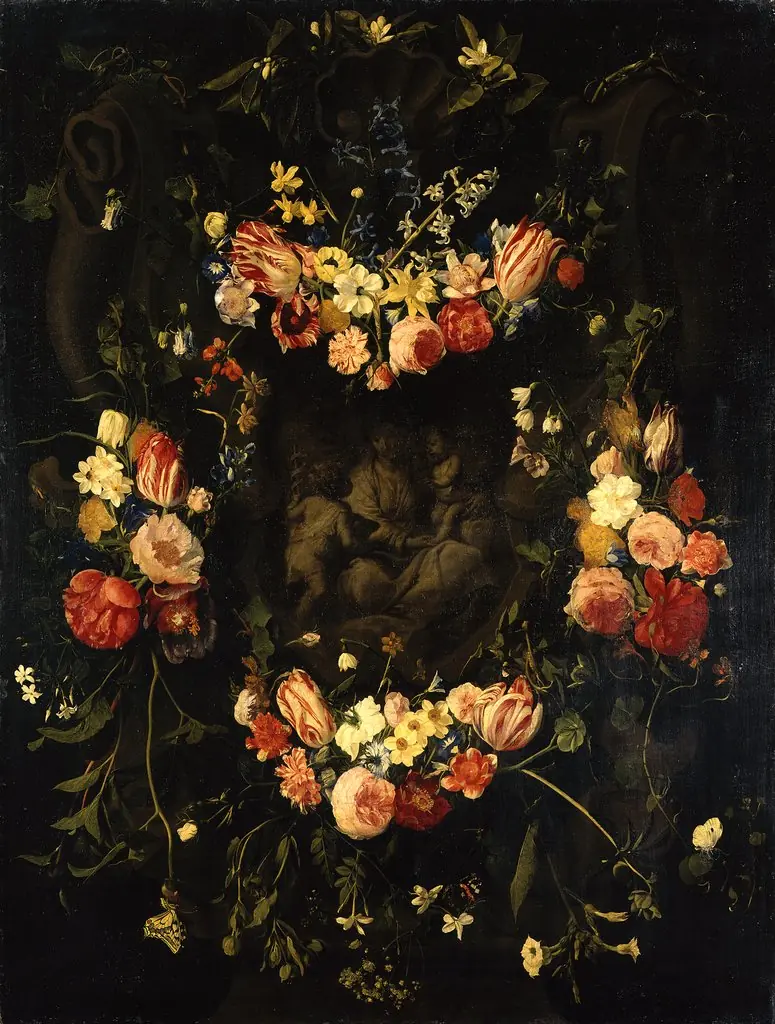 Cartouche addorned with flowergarlands surrounding a depiction of the Holy Family with the infant Saint John the Baptist
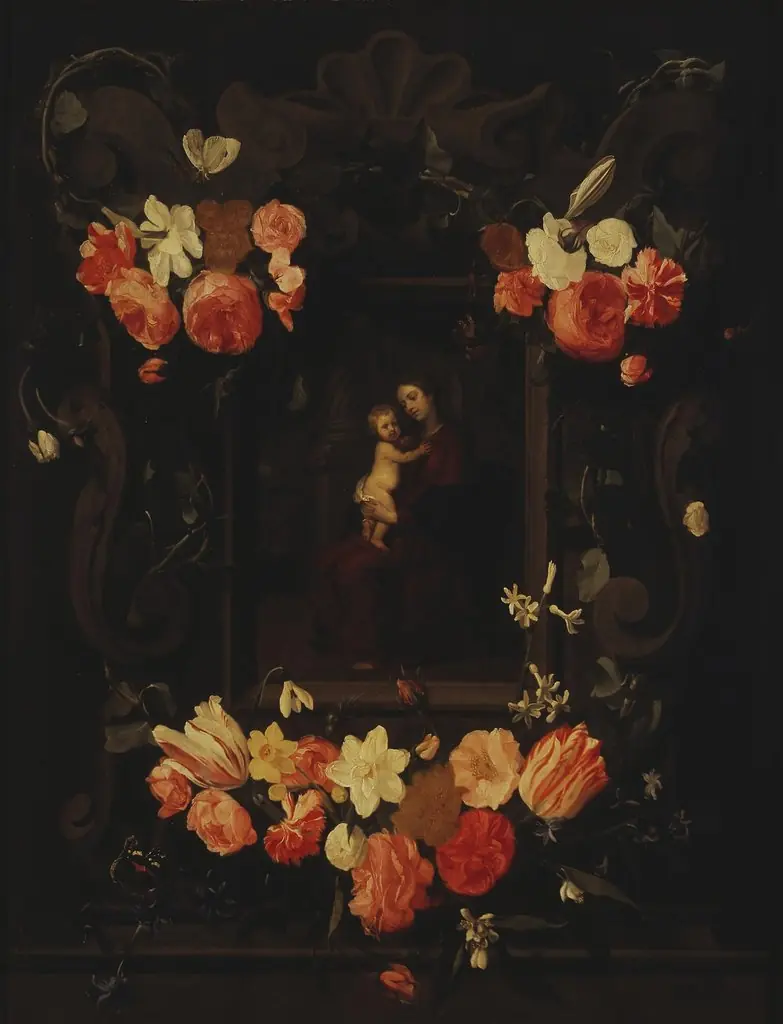 Madonna and Child Framed a Garland of Flowers
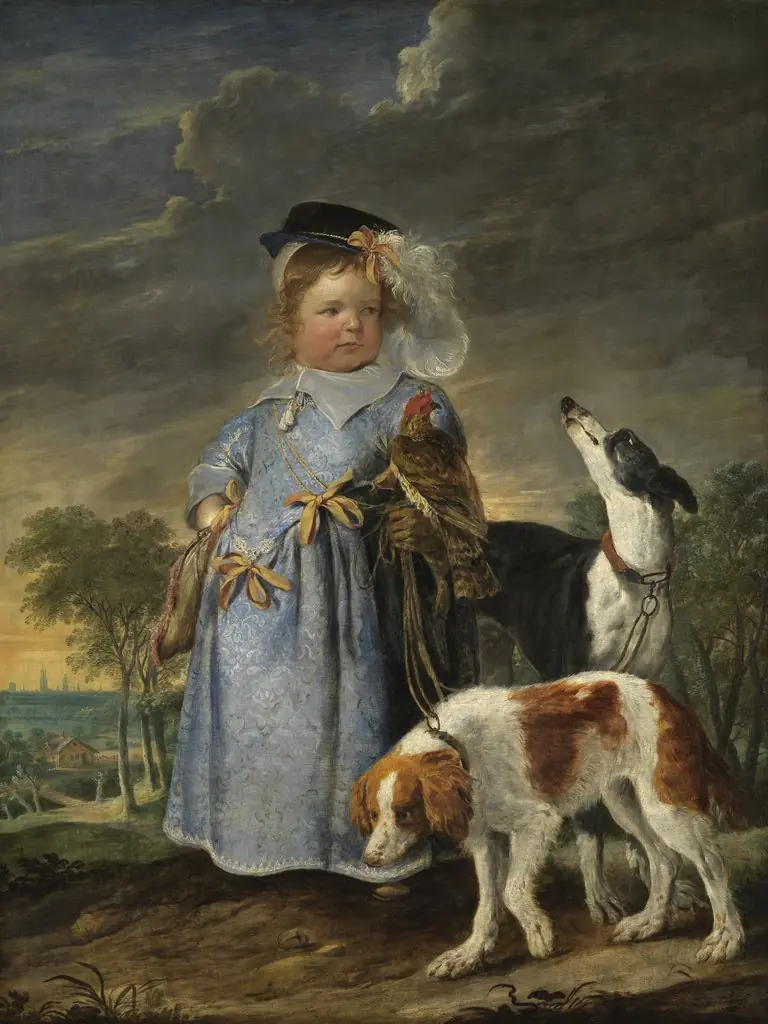 Portrait of a Boy
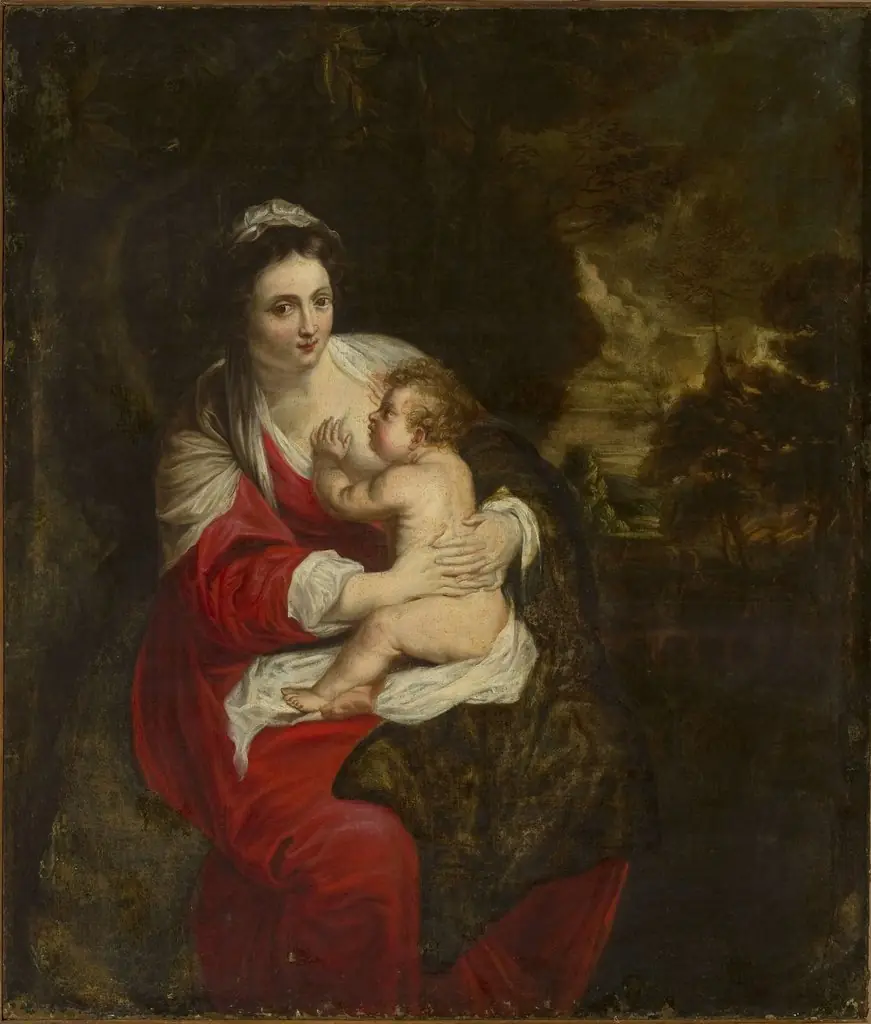 Madonna with Child Jesus
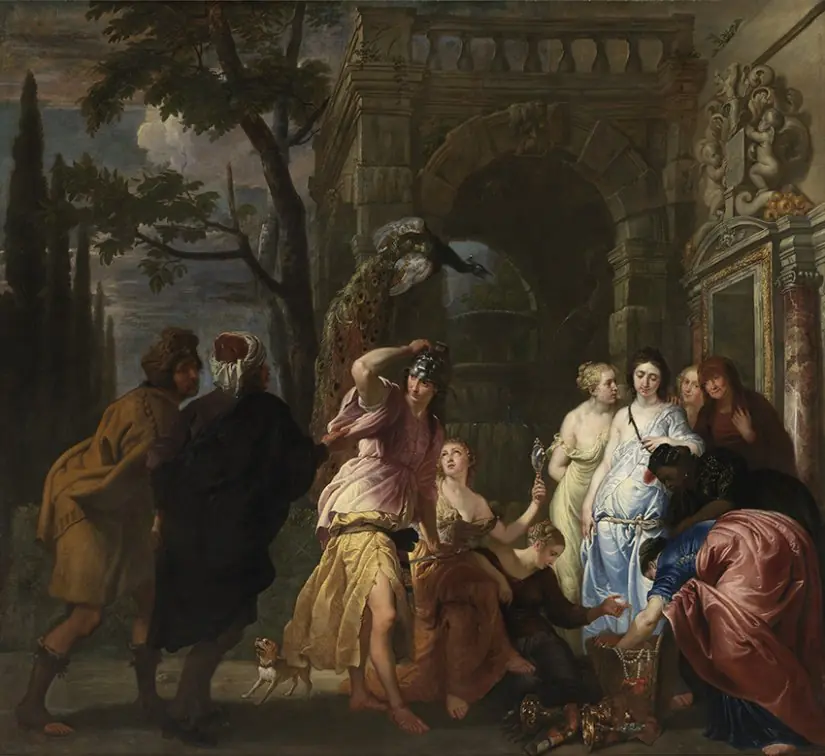 Achilles among the Daughters of Lycomedes
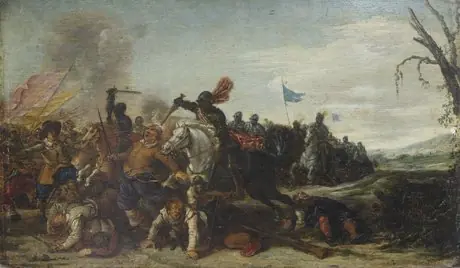 Battle
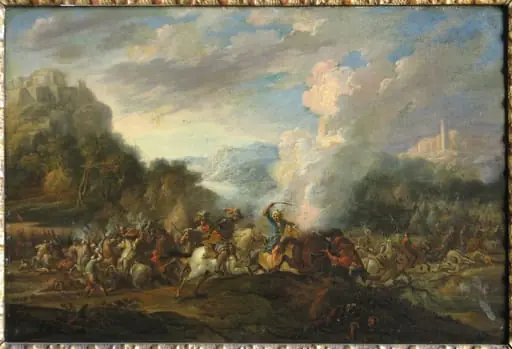 Luptă de cavalerie între turci și austrieci
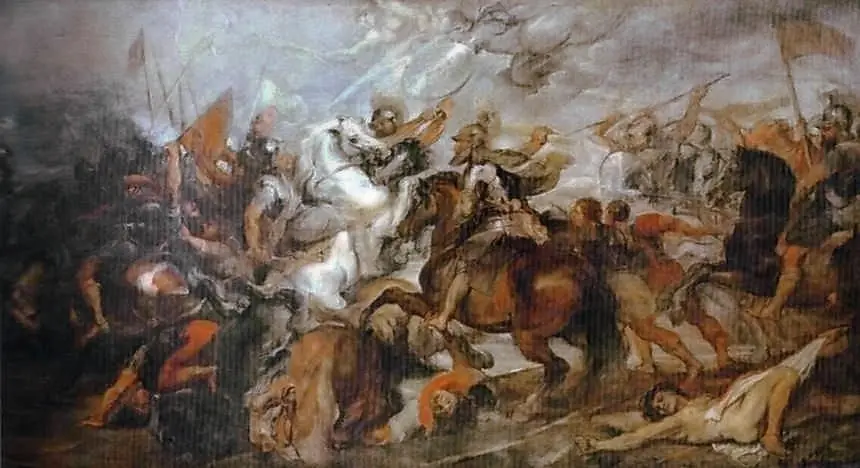 Henry IV at the Battle of Ivry, 14 March 1590
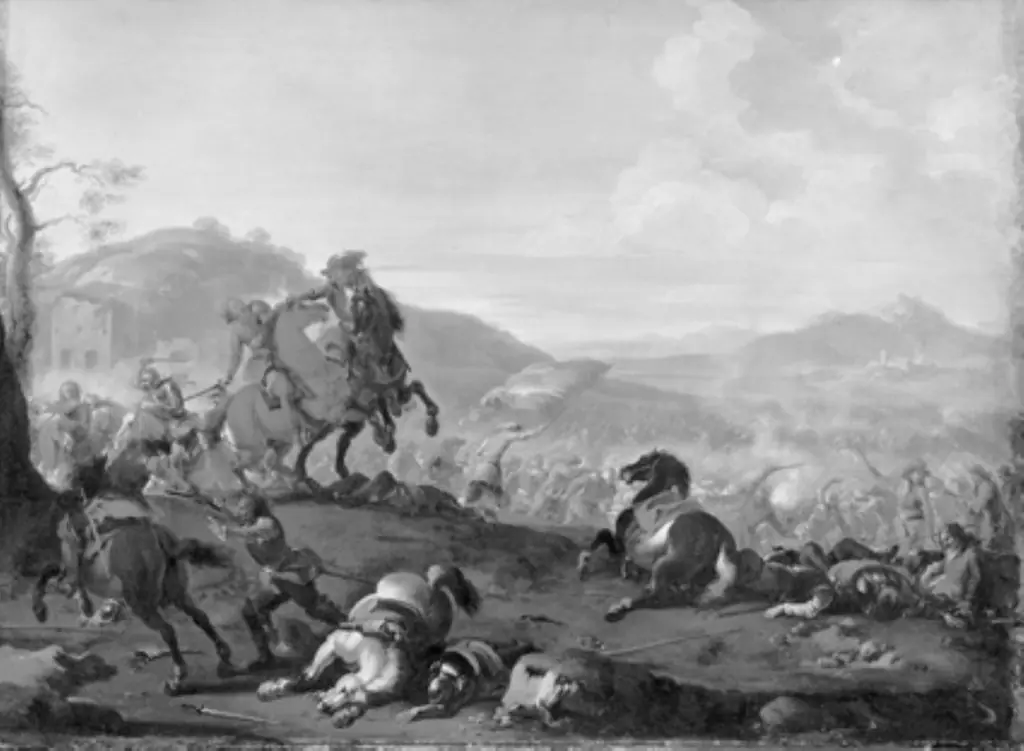 Battle Scene
 Battle Scene
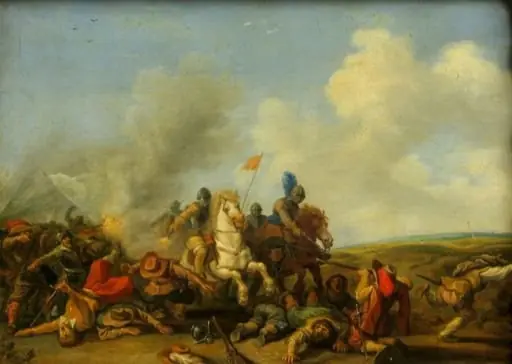 Luptă de cavalerie și infanterie
 Schlacht
 Luptă în defileu
 Prins Eugens slag ved Schellenberg
 Atac la drumul mare
 Henri IV at the battle of Arques
 Legendary Battle of the Torriani and Visconti - the Capture