Artwork
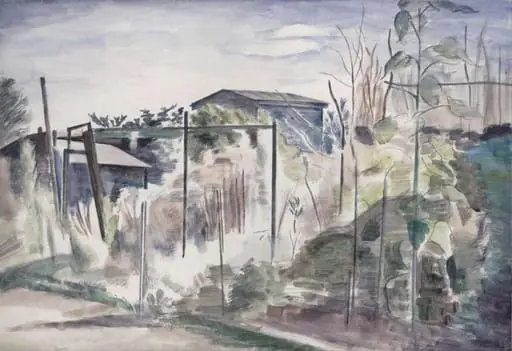
Bean Poles - Scene in a kitchen garden
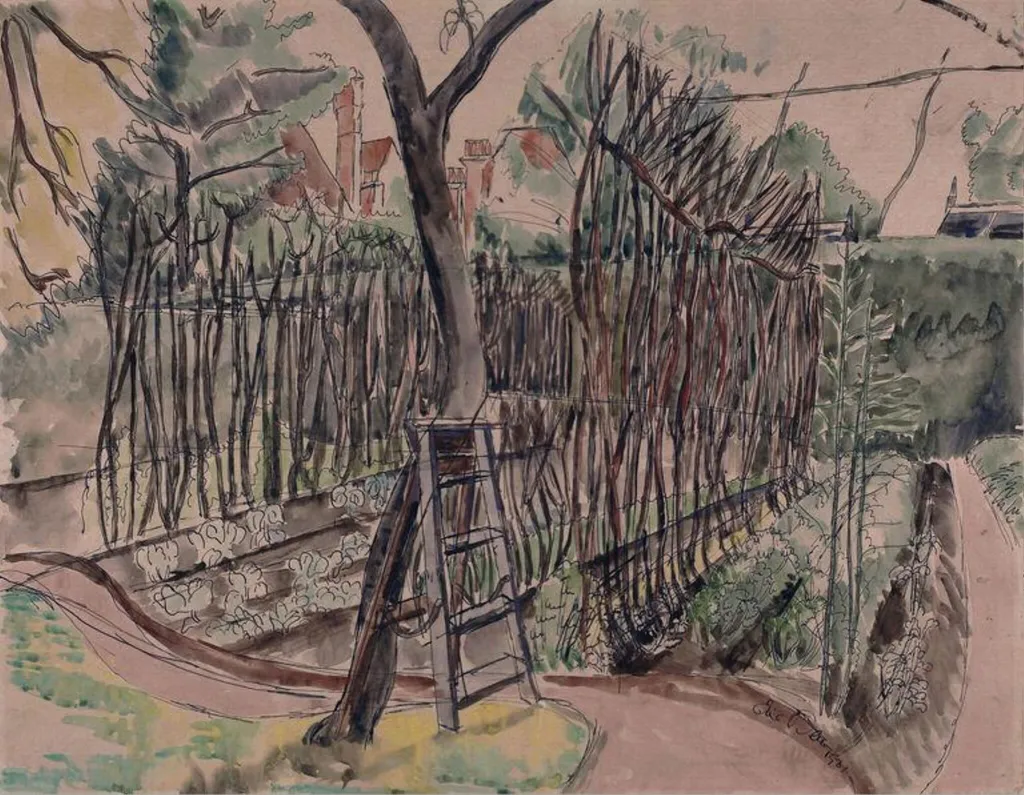
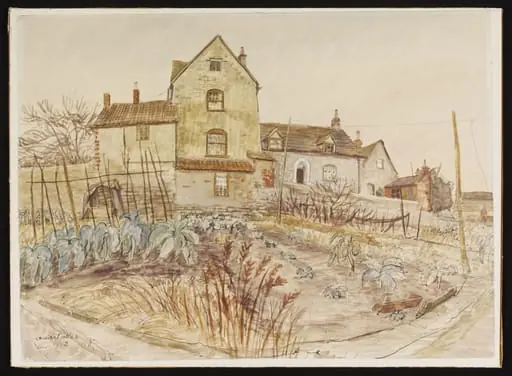
Bean Poles - Scene in a kitchen garden is a watercolor work on paper by the Social Realist artist Eric O'Dea. It dates from 1931 and is held in the collection of the Victoria and Albert Museum.
About this work
Overview
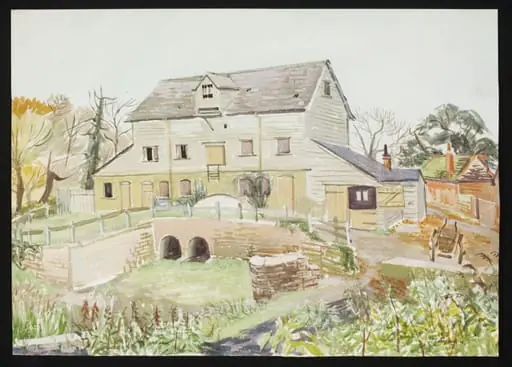
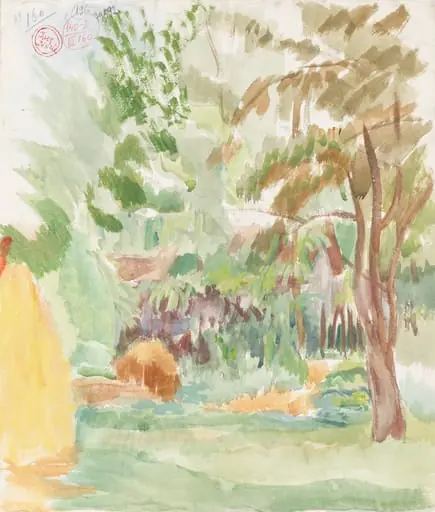
Eric O'Dea created this watercolour in 1931, depicting a modest kitchen garden. The work is signed and dated by the artist, confirming its origin and timing. It captures a quiet rural scene with minimal detail, focusing on the vertical structure of bean poles and their interaction with the surrounding landscape. The medium’s transparency lends a delicate, ephemeral quality to the composition.
Subject & Meaning
The painting centers on a row of slender bean poles leaning against a wooden fence, with a few climbing vines visible. Behind them, a house with a red roof and bare trees suggest late autumn or early spring. The scene reflects the quiet productivity of domestic gardening, emphasizing structure over abundance. There is no human presence, reinforcing a sense of solitude and routine.
Technique & Style
Washes of pale green, muted brown, and faint yellow establish the garden’s soil and foliage without sharp outlines.
O'Dea employed loose, swift brushwork to suggest form rather than define it. Washes of pale green, muted brown, and faint yellow establish the garden’s soil and foliage without sharp outlines. The watercolour’s fluidity allows the paper’s texture to show through, enhancing the sense of natural spontaneity. The vertical emphasis of the poles creates rhythm, guiding the eye upward through the composition.
History & Provenance
The painting’s documented creation in 1931 places it within O'Dea’s active period as a watercolourist. While its early ownership is unrecorded, it has been held in institutional collections since at least the late 20th century. Its preservation in good condition reflects careful handling, though no major exhibitions or public sales are known to have featured it.
Context
In early 20th-century Britain, watercolours of domestic gardens were common among amateur and professional artists alike, often serving as personal records of place and season. O'Dea’s work aligns with this tradition, avoiding romanticism in favor of understated observation. The absence of human figures and dramatic lighting reflects a broader interest in quiet, everyday landscapes.
Legacy
Though not widely exhibited, the painting exemplifies a modest strand of British watercolour practice focused on rural domesticity. Its restrained palette and unembellished composition resonate with contemporaries who valued sincerity over spectacle. It remains a quiet testament to the aesthetic potential of ordinary, observed moments in the natural world.
Artist & collection
Artist
Eric O'Dea painted quiet, everyday scenes in watercolor, often focusing on gardens and farm life in the early 20th century.