Artwork
Amelia
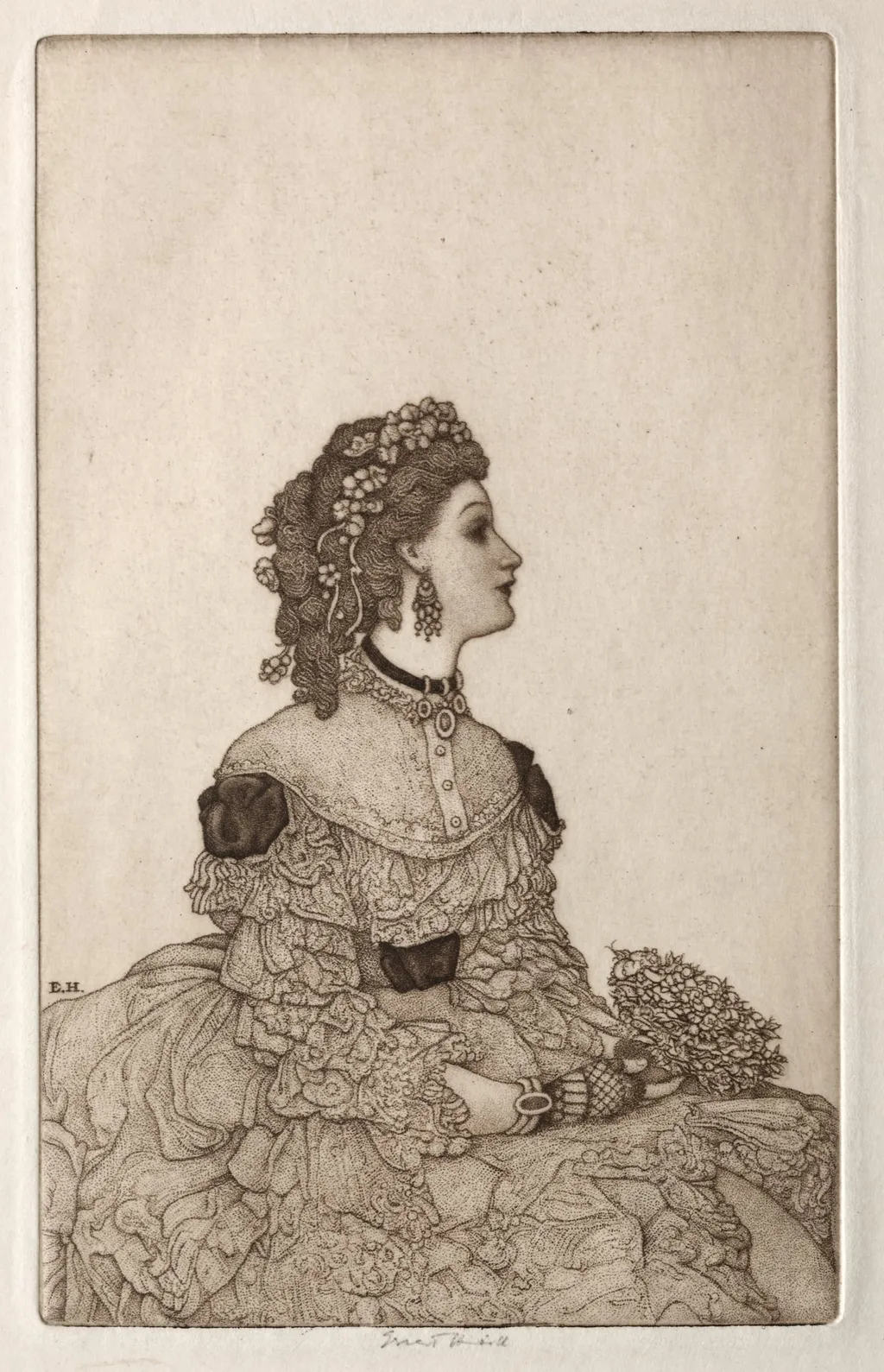
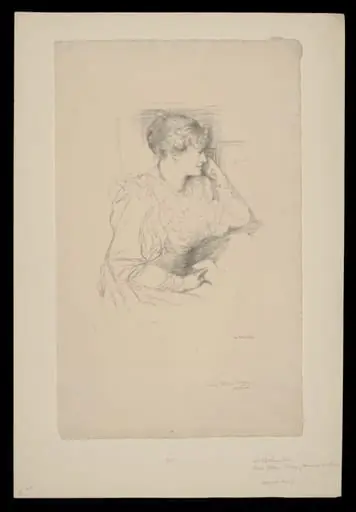
Amelia is a print by Ernest Haskell. It dates from 1910 and is held in the collection of the Cleveland Museum of Art.
About this work
Overview
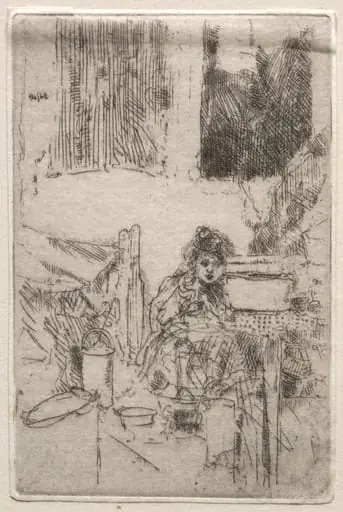
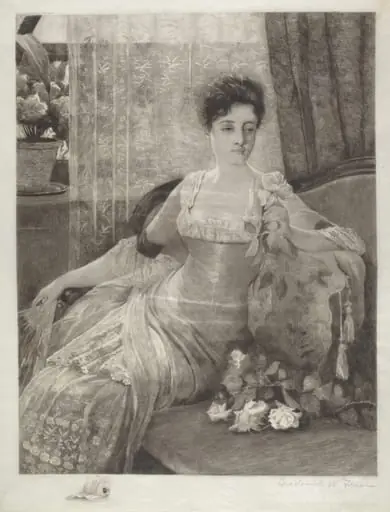
Ernest Haskell’s print Amelia, executed around 1910, is part of the Cleveland Museum of Art’s collection. The work presents a solitary female figure rendered in black‑and‑white, captured in a poised, three‑quarter profile as she holds a modest bouquet. The composition balances a sense of quiet intimacy with the decorative richness of the sitter’s attire.
Subject & Meaning
The image depicts a woman in an elaborate, period costume, complete with lace‑trimmed sleeves, a high collar, and a floral headband. She rests her chin on a hand that cradles a small arrangement of stems and leaves, suggesting a moment of contemplation or private reverie. The emphasis on personal adornment hints at themes of femininity and social presentation in the early twentieth century.
Technique & Style
Haskell employs fine, flowing lines to delineate the figure’s hair, jewelry, and fabric textures, while subtle cross‑hatching supplies a gentle modelling of the face. The monochrome palette accentuates tonal contrasts, allowing the intricate details of lace and metalwork to emerge without the distraction of colour. The overall effect is both precise and softly rendered.
History & Provenance
Created circa 1910, Amelia entered the Cleveland Museum of Art’s holdings through acquisition (specific provenance details are not publicly recorded). The work reflects Haskell’s broader engagement with printmaking during a period when American artists were exploring refined draftsmanship and decorative motifs.
Artist & collection

Artist
Ernest Haskell was an American artist and illustrator, internationally famous in his lifetime and remembered for his etchings, as well as engravings, pen-and-ink drawings, lithographs and watercolors.

![A Young Woman Sewing [recto], by Vivant Denon](https://artifactworldgallery.com/img/vivant-denon--a-young-woman-sewing-recto--e33310bb30a60595-w320.webp)
![Young Woman, Florence [recto], by Seth Wells Cheney](https://artifactworldgallery.com/img/seth-wells-cheney--young-woman-florence-recto--05fb201b0cc35006-w320.webp)