Artwork
Yvette Guilbert
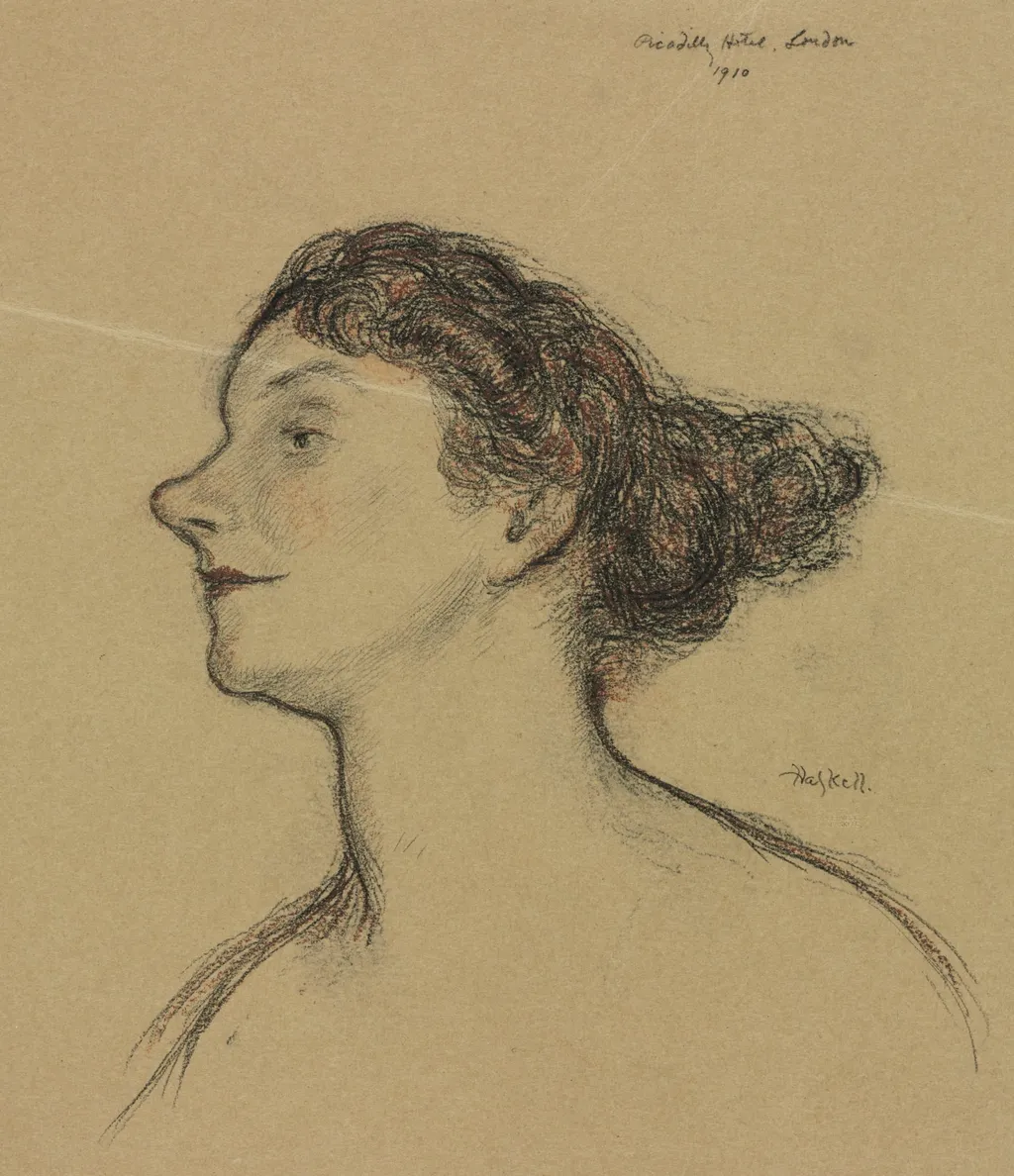
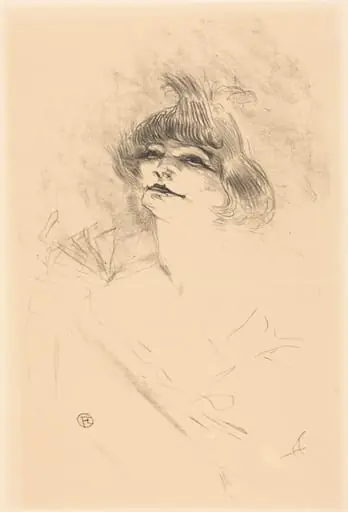
Yvette Guilbert is a drawing by Ernest Haskell. It dates from 1910 and is held in the collection of the Cleveland Museum of Art.
About this work
The subject's features are defined by expressive lines, giving the portrait a sense of depth and character.
This portrait shows a woman with dark, curly hair pulled back into a bun. Her face is turned to the left, and her eyes are cast downward. The drawing is rendered in dark lines on a light brown background.
The subject's features are defined by expressive lines, giving the portrait a sense of depth and character. The overall effect is one of quiet contemplation, as if the woman is lost in thought.
To learn more about the artist behind this work, look up Ernest Haskell (American, 1876–1925).
Overview
This 1910 drawing by American artist Ernest Haskell depicts the French singer and performer Yvette Guilbert. Executed in dark ink on a light brown paper, the work captures her in a moment of stillness. The composition emphasizes line over tone, with minimal shading and no background detail, focusing attention entirely on the subject’s posture and expression.
Subject & Meaning
Yvette Guilbert, known for her distinctive stage presence and contralto voice, is portrayed not in performance but in quiet introspection. Her head turns left, eyes lowered, suggesting a private moment away from the spotlight. The absence of theatrical elements shifts the focus from her public persona to an intimate, contemplative state, inviting reflection on the person behind the performer.
Technique & Style
Haskell employs confident, fluid ink lines to define Guilbert’s features and coiffure, using variation in weight and density to suggest volume and texture. The light brown paper serves as a neutral ground, allowing the dark strokes to anchor the form. The style is economical yet expressive, avoiding detail in favor of rhythmic contours that convey both structure and mood.
History & Provenance
The drawing entered the collection of The Cleveland Museum of Art in 1917, acquired directly from the artist. Haskell, active in New York and Paris, often drew cultural figures of his time. This portrait was likely made during one of his visits to Paris, where Guilbert was a celebrated figure in cabaret and theatrical circles.
Context
In the early 20th century, portrait drawings of performers were common among artists documenting the cultural landscape. Guilbert’s fame extended beyond France, and her distinctive appearance—dark hair, elongated neck, expressive gestures—made her a compelling subject. Haskell’s depiction aligns with a broader trend of capturing personality through minimal, evocative line work.
Legacy
The drawing remains a quiet testament to Haskell’s skill in conveying character through restraint. While not widely exhibited, it stands as a representative example of early 20th-century American draftsmanship focused on individuality rather than grandeur. It preserves a moment of stillness from a public figure known for dynamism, offering a counterpoint to her stage image.
Artist & collection

Artist
Ernest Haskell was an American artist and illustrator, internationally famous in his lifetime and remembered for his etchings, as well as engravings, pen-and-ink drawings, lithographs and watercolors.

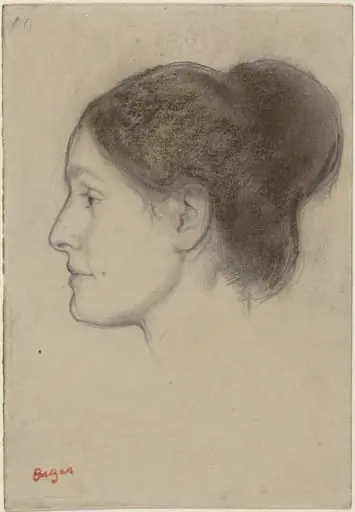 Hortense Valpinçon
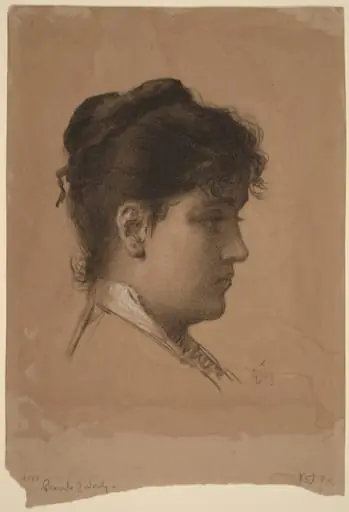 Head of a Young Woman
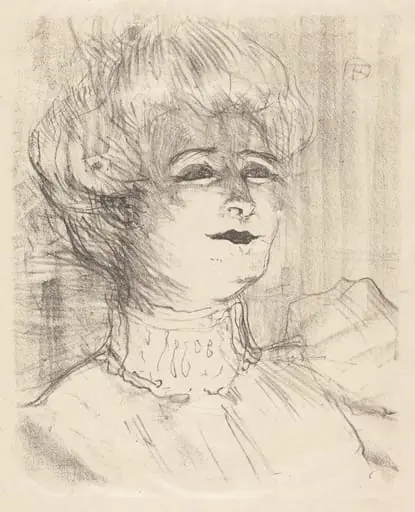 Jeanne Hading
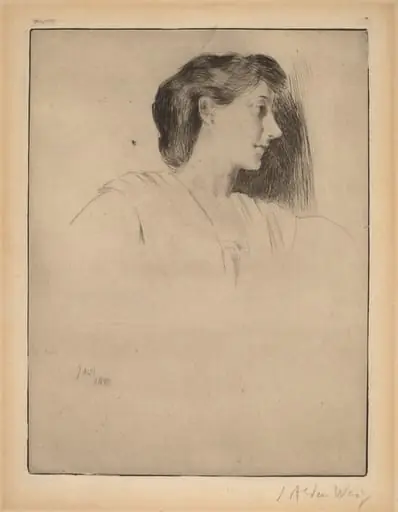 Profile Head of a Woman
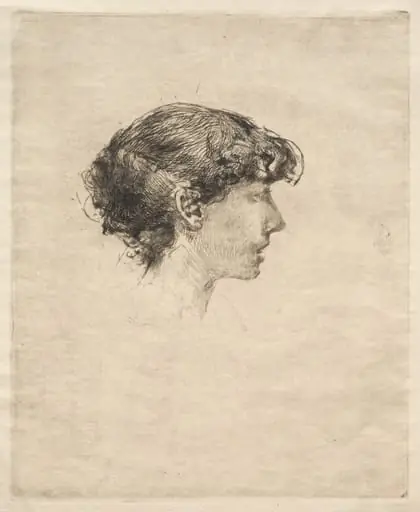 Profile of a Girl
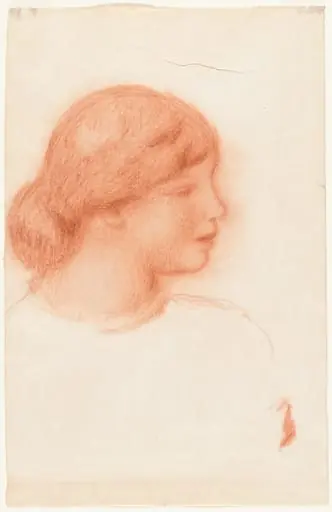 Profile of a Young Woman
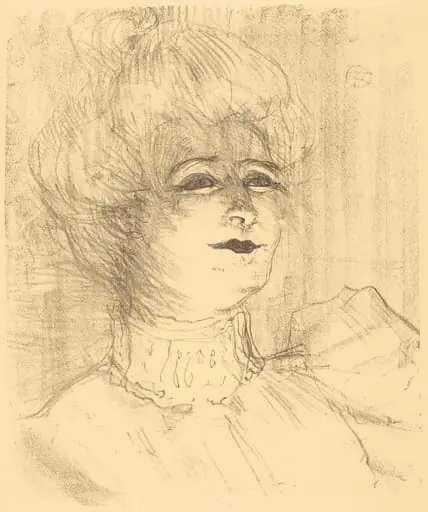 Jeanne Hading
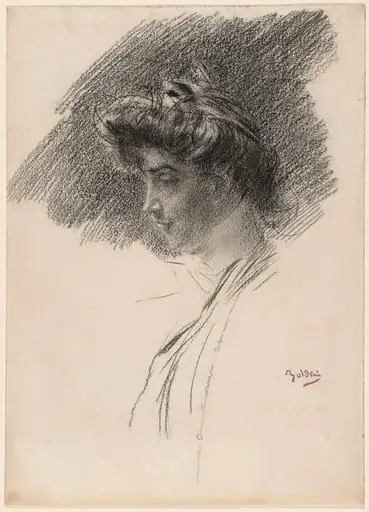 Bust of a Young Woman in Profile
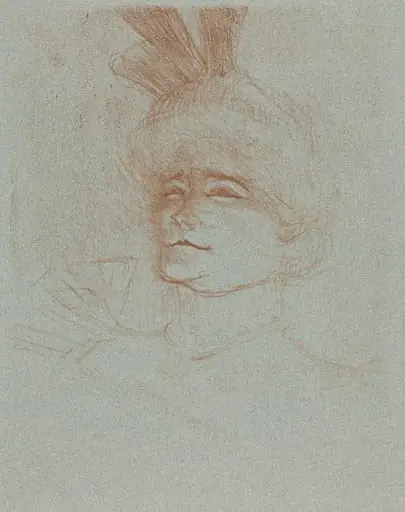 Bust of Mlle. Marcelle Lender, Turned Three Quarters (Mlle. Marcelle Lender en buste, de trois quartes)
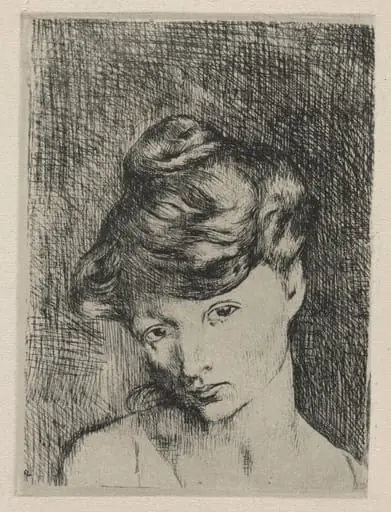 Head of a Woman: Madeleine
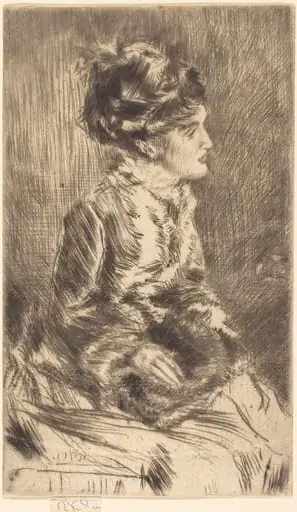 The Muff
 Polaire