Artwork
Eventail plié
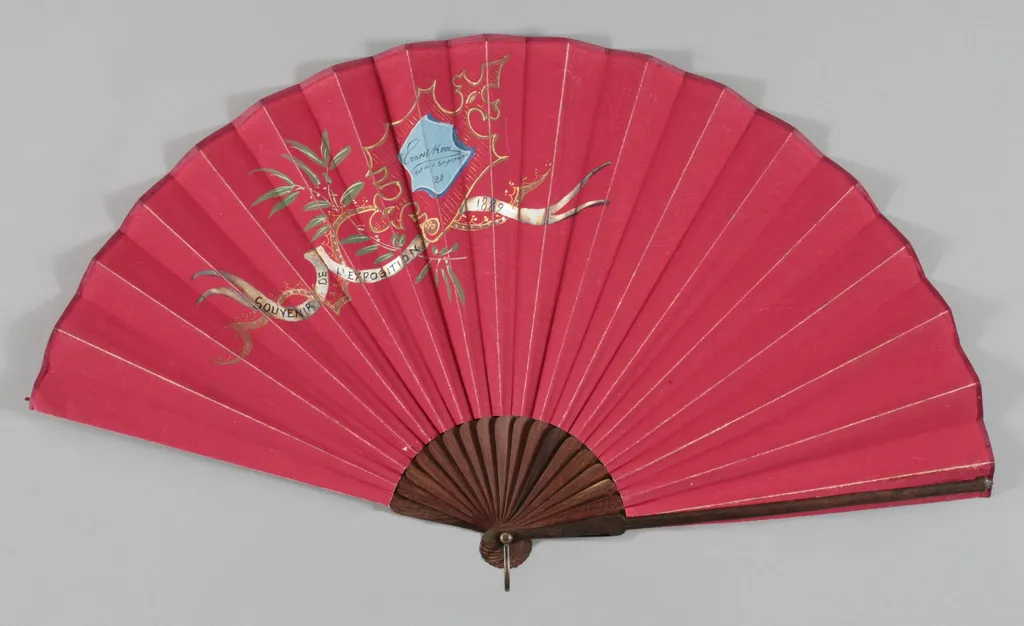
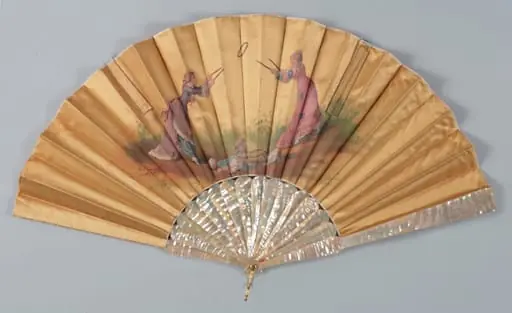
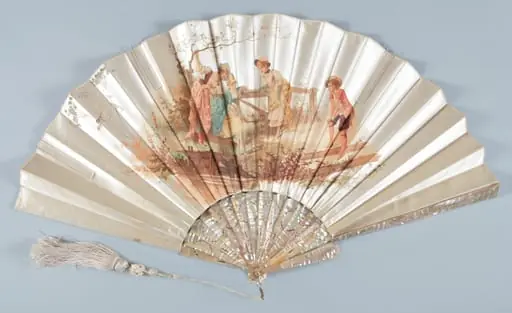
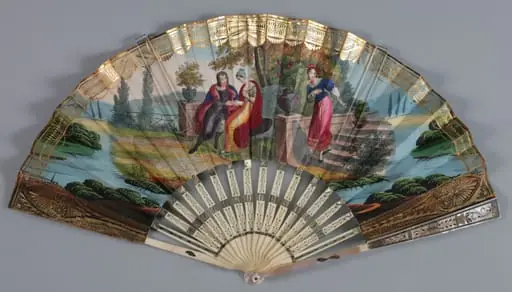
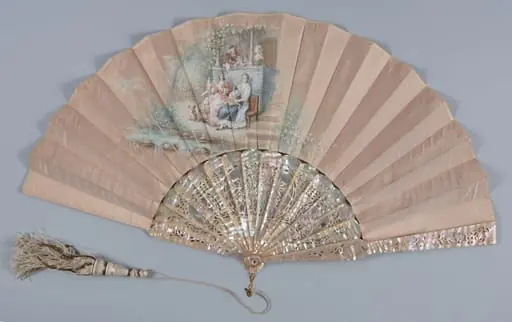
Eventail plié is an unspecified work on paper by the Impressionist artist Ernest Kees. It dates from 1889 and is held in the collection of the Palais Galliera - Musée de la Mode de la Ville de Paris.
About this work
On the surface, there’s a gold design: a wreath with leaves, a ribbon, and a small shield with a crest.
This is a bright red fan with a wooden handle. The fan is folded flat, showing its painted side. On the surface, there’s a gold design: a wreath with leaves, a ribbon, and a small shield with a crest. The words “Gouvernement de l’Exposition” are written in gold along the wreath.
The fan was made for a specific event in 1889, as the date suggests. The gold details stand out sharply against the red background, making it look fancy and official.
If you like this kind of detailed, decorative art, look up watercolor next.
Overview
Eventail plié, created in 1889 by Ernest Kees, is a folded fan crafted for official use at a major exposition. Made with a wooden handle and a bright red silk surface, it features intricate gold decoration. The object is currently held in the collection of the Museum of Ethnography, where it serves as an artifact of late 19th-century ceremonial design and public exhibition culture.
Subject & Meaning
The fan’s design centers on a wreath of leaves, a ribbon, and a small shield bearing a crest, all rendered in gold. Inscribed along the wreath are the words 'Gouvernement de l’Exposition,' linking it directly to the administrative body of the 1889 exposition. These symbols convey authority and institutional identity, suggesting the fan was used as a token or promotional item for government representatives or dignitaries.
Technique & Style
The fan’s surface is painted with precision, using a vivid red base to heighten the contrast of the gold leaf detailing. The motifs are rendered in a formal, symmetrical style typical of official emblems of the period. The application of gold suggests fine craftsmanship, likely involving hand-painting or gilding techniques common in luxury decorative arts of the time.
History & Provenance
Commissioned for the 1889 exposition, the fan was produced as a commemorative object tied to a specific state-sponsored event. Its survival in the Museum of Ethnography indicates it was collected as a cultural artifact rather than a personal possession. The museum’s acquisition likely occurred shortly after the exposition, preserving it as a material record of public ceremonial practices.
Context
In the late 19th century, expositions served as platforms for national display, blending technology, culture, and symbolism. Objects like this fan were distributed to reinforce institutional presence and civic pride. Its ornamental style reflects broader trends in decorative arts, where official events demanded visually distinct, portable symbols of authority and participation.
Legacy
Eventail plié remains a quiet testament to the material culture of public exhibitions in the Gilded Age. While not widely known outside specialized collections, it offers insight into how governments used everyday objects to project legitimacy and cohesion. Its preservation underscores the value placed on ephemeral items as historical evidence of social ritual.
Artist & collection
Artist
Ernest Kees painted delicate fan-shaped watercolors called *Eventail plié*. These small, folded works were popular in France during the late 1800s, often used as gifts or souvenirs. The artist made several versions…
Museum
Palais Galliera - Musée de la Mode de la Ville de Paris
Continue through works from the same source collection.