Artwork
Couple in Room, Nude Man with Woman
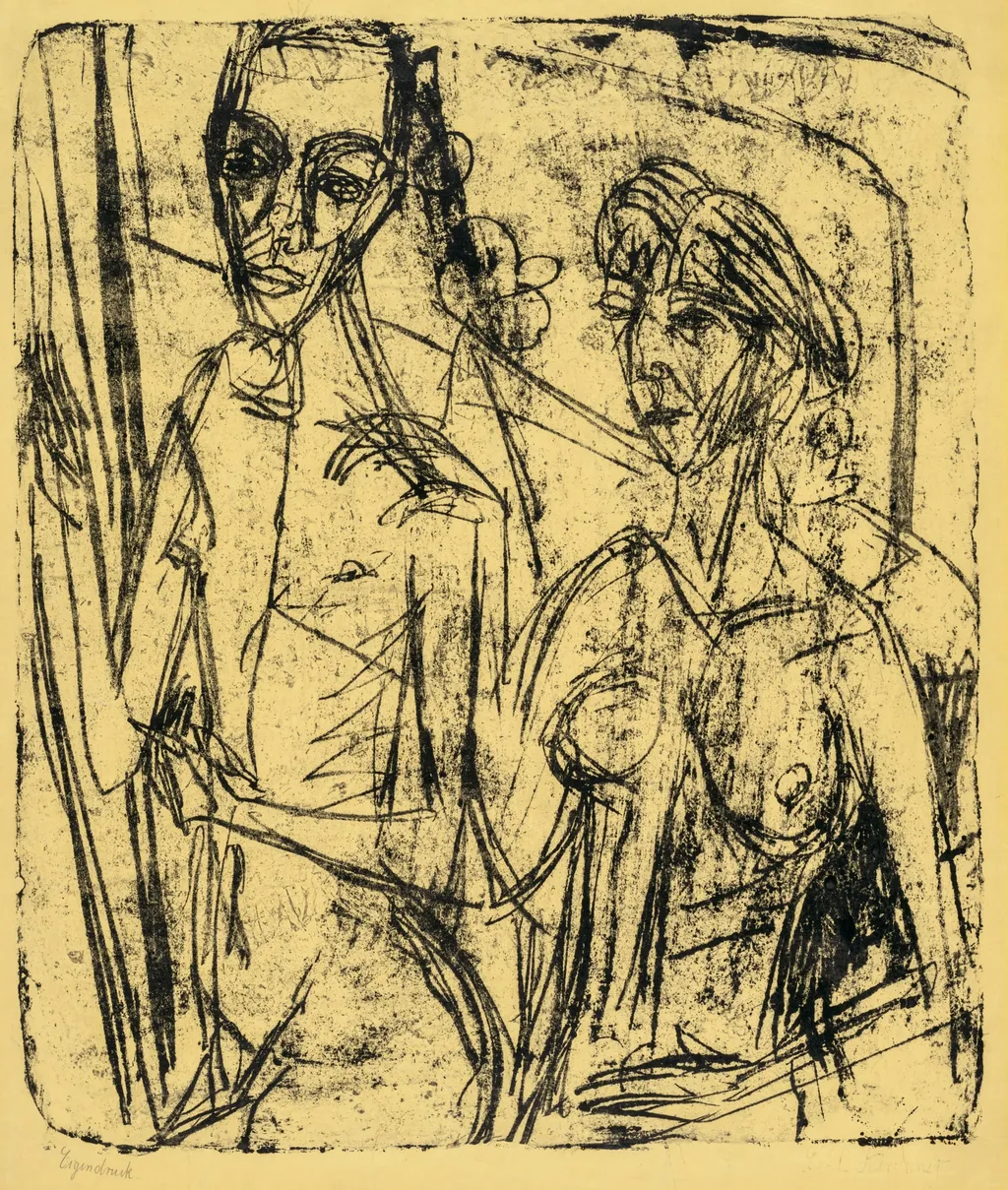
Couple in Room, Nude Man with Woman is a print by Ernst Ludwig Kirchner. It dates from 1916 and is held in the collection of the Cleveland Museum of Art.
About this work
Overview
The composition conveys emotional distance despite physical closeness, with the woman reaching toward the man without eye contact.
Created by Ernst Ludwig Kirchner, this lithograph portrays a nude man and woman in a confined interior. The man is thought to be Hugo Biallowons, a friend of the artist who died in World War I shortly after the print’s production. The composition conveys emotional distance despite physical closeness, with the woman reaching toward the man without eye contact. The yellow-toned paper and fragmented lines contribute to an atmosphere of unease and transience.
Subject & Meaning
The figures appear physically near but emotionally detached. The woman’s outstretched hand suggests longing or connection, yet her averted gaze undermines intimacy. The man’s likeness to Biallowons, who perished in the war, imbues the scene with retrospective melancholy. The cramped room and lack of environmental detail isolate the pair, emphasizing psychological isolation over romantic connection.
Technique & Style
Kirchner reused a single lithographic stone, sanding it between impressions to create new compositions, resulting in extremely limited editions. He manipulated the surface with water and turpentine to dissolve parts of the crayon drawing, producing erratic, grainy lines. This method introduced spontaneity and texture, contrasting with the rigid geometry of the room and amplifying the emotional tension in the figures.
History & Provenance
The print was made during Kirchner’s early expressionist period, likely around 1913–1914. Biallowons, the presumed subject, was killed in 1914, shortly after the work’s creation. Kirchner’s practice of reworking the same stone reflects both material constraints and a desire for rapid, iterative expression. Only a handful of impressions exist, each bearing unique variations from the sanding and reworking process.
Context
This work emerged amid Kirchner’s engagement with urban life and psychological realism in early 20th-century Germany. The fragmented style and emotional dissonance align with Expressionist concerns about alienation and modern anxiety. Unlike traditional nudes, the figures lack idealization; their vulnerability and isolation reflect broader cultural tensions preceding the war.
Legacy
Kirchner’s experimental lithographic technique influenced later printmakers seeking organic, non-reproducible mark-making. The emotional ambiguity of this print contributed to the Expressionist canon’s focus on inner states over external narrative. Its small edition and personal subject matter make it a rare document of the artist’s private circle and the looming trauma of wartime loss.
Artist & collection
Artist
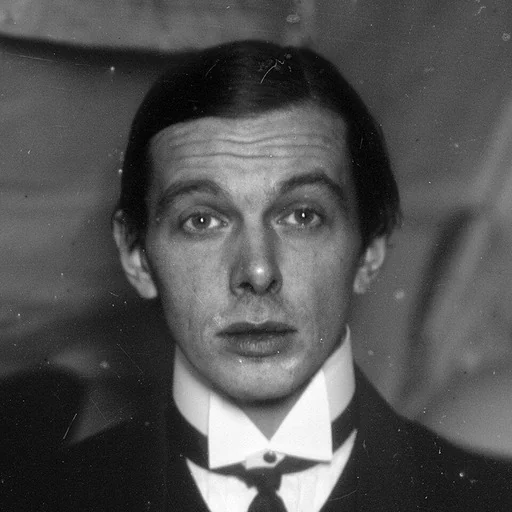
Ernst Ludwig Kirchner (6 May 1880 – 15 June 1938) was a German expressionist painter and printmaker.

![Dance Hall Bellevue [obverse], by Ernst Ludwig Kirchner](https://artifactworldgallery.com/img/ernst-ludwig-kirchner--dance-hall-bellevue-obverse--d1e14aac4297c69e-w320.webp)
![Nude Figure [reverse], by Ernst Ludwig Kirchner](https://artifactworldgallery.com/img/ernst-ludwig-kirchner--nude-figure-reverse--4b135f0364753e98-w320.webp)
![Two Nudes [obverse], by Ernst Ludwig Kirchner](https://artifactworldgallery.com/img/ernst-ludwig-kirchner--two-nudes-obverse--eb3914183f0bc96d-w320.webp)
![Dancing Couple in the Snow [reverse], by Ernst Ludwig Kirchner](https://artifactworldgallery.com/img/ernst-ludwig-kirchner--dancing-couple-in-the-snow-reverse--87ca007d7c05b553-w320.webp)