Artwork
A Roman Alley
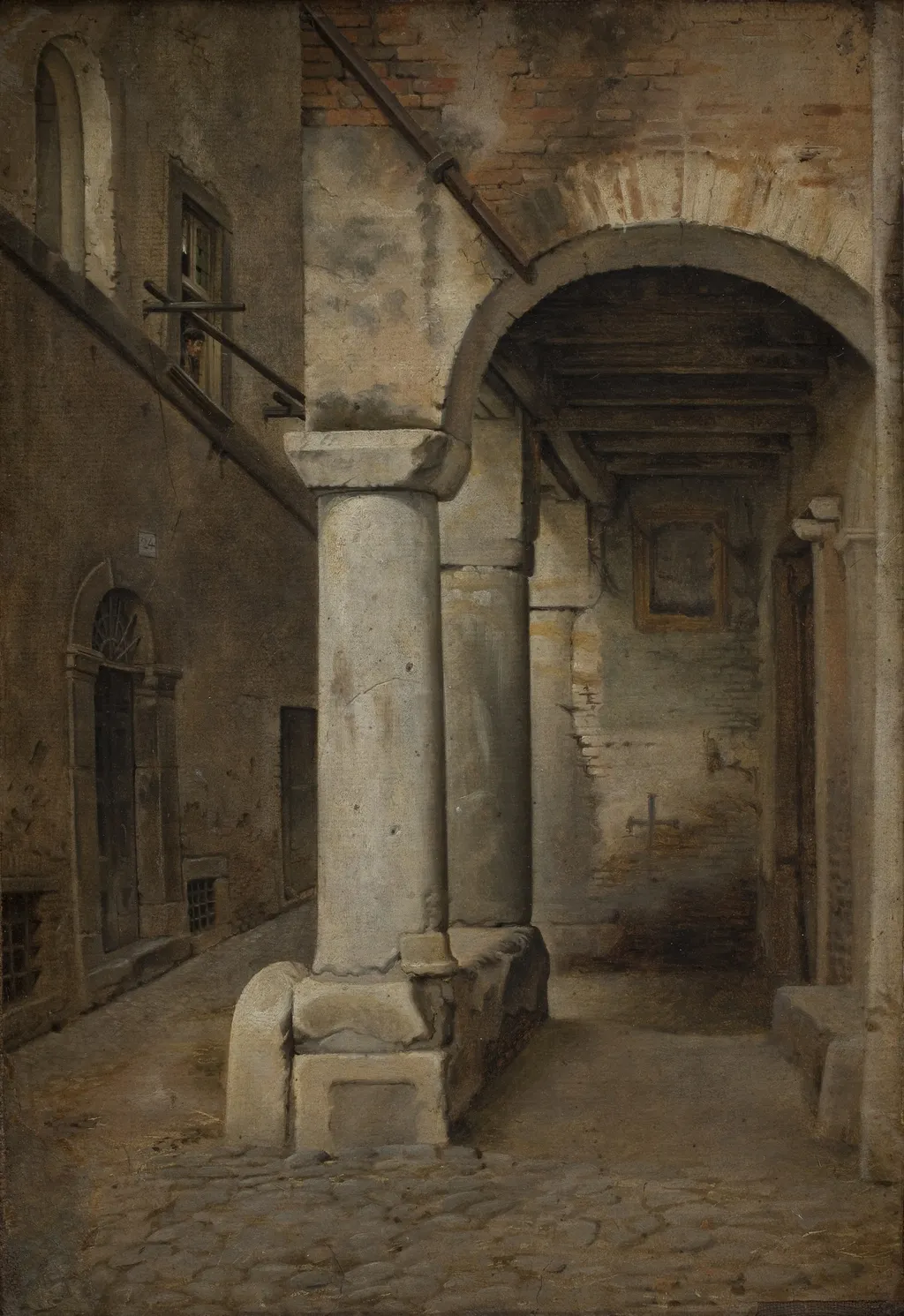
A Roman Alley is an unspecified painting by Ernst Meyer. It dates from 1830 and is held in the collection of the Statens Museum for Kunst.
About this work
Overview
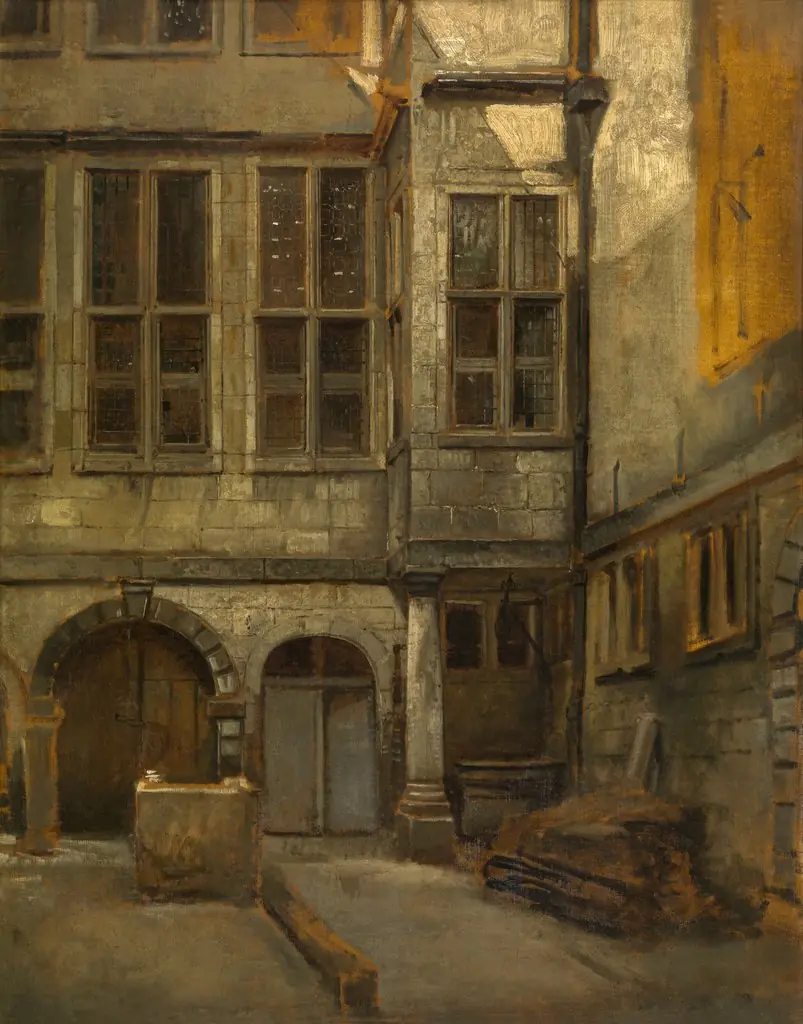
Painted in 1830 by Danish artist Ernst Meyer, A Roman Alley is a quiet interior landscape capturing a narrow passageway in Rome. The work belongs to the collection of Statens Museum for Kunst in Copenhagen. Unlike grand historical scenes common in the period, it focuses on an unassuming urban space, rendered with restrained detail and a subdued tonal range that emphasizes stillness over drama.
Subject & Meaning
The painting presents a secluded Roman alley dominated by a central stone column supporting an archway leading to a closed doorway. Cobblestones, weathered brick, and a grated window suggest daily life, yet no figures are present. The absence of human activity invites reflection on time, decay, and the quiet persistence of architecture. The space feels inhabited by memory rather than motion.
Technique & Style
Meyer employs a muted palette of ochres, grays, and browns to unify the stone surfaces and shadowed recesses. Light filters unevenly, creating soft contrasts between the dim interior and the faint glow beyond the arch. The brushwork is precise but unobtrusive, favoring texture over flourish. Chiaroscuro is used subtly to define form without theatrical effect.
History & Provenance
Created during Meyer’s time in Rome, the painting reflects his engagement with Italian architecture and light. It entered the Danish national collection shortly after its completion, likely acquired through state patronage of Nordic artists abroad. Its preservation in Statens Museum for Kunst underscores its early recognition as a significant example of Danish Romantic landscape painting.
Context
In the early 19th century, Nordic artists increasingly traveled to Italy to study classical ruins and everyday urban life. Meyer’s focus on an ordinary alley, rather than a monument, aligned with a broader shift toward intimate, atmospheric scenes. This work stands apart from grand historical narratives, reflecting a growing interest in quiet, personal observation over idealized spectacle.
Legacy
A Roman Alley remains a quiet touchstone in Danish art for its restrained emotional tone and attention to architectural detail. While not widely reproduced, it influenced later Nordic painters seeking to capture mood through light and structure. Its enduring presence in the national collection affirms its role as a thoughtful example of Romantic realism beyond the mainstream.
Artist & collection
Artist
Ernst Meyer painted quiet, storytelling scenes with oil paints in the 1820s–1840s, often set in Italy.


 Courtyard of Antwerp Town Hall
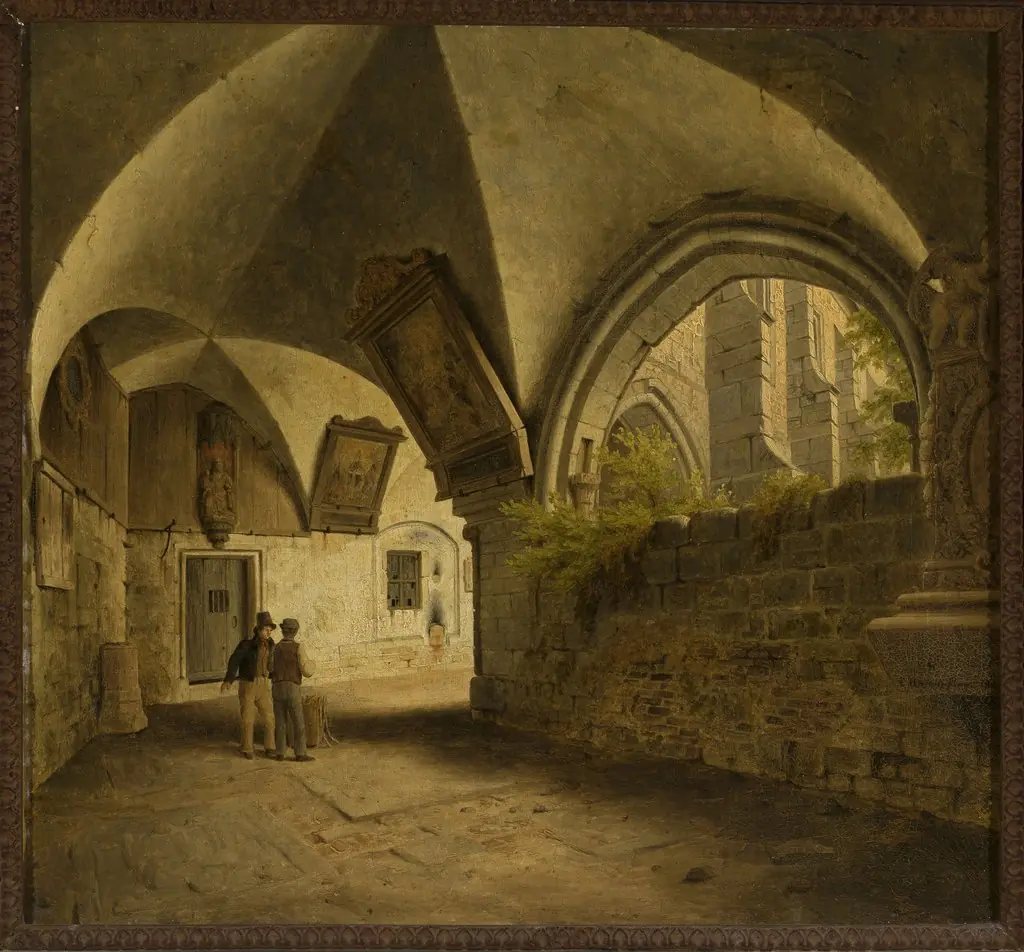 Cloister of the Halberstadt Cathedral
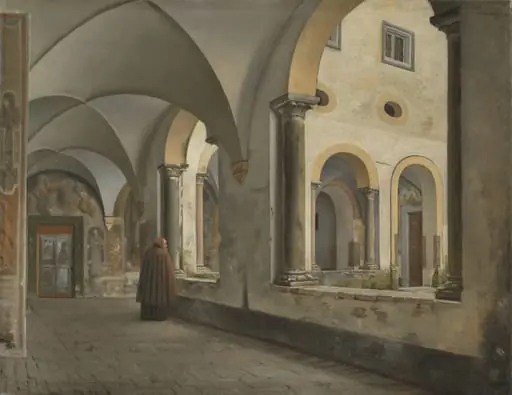 The Cloisters of the Franciscan Monastery Santa Maria in Aracoeli in Rome
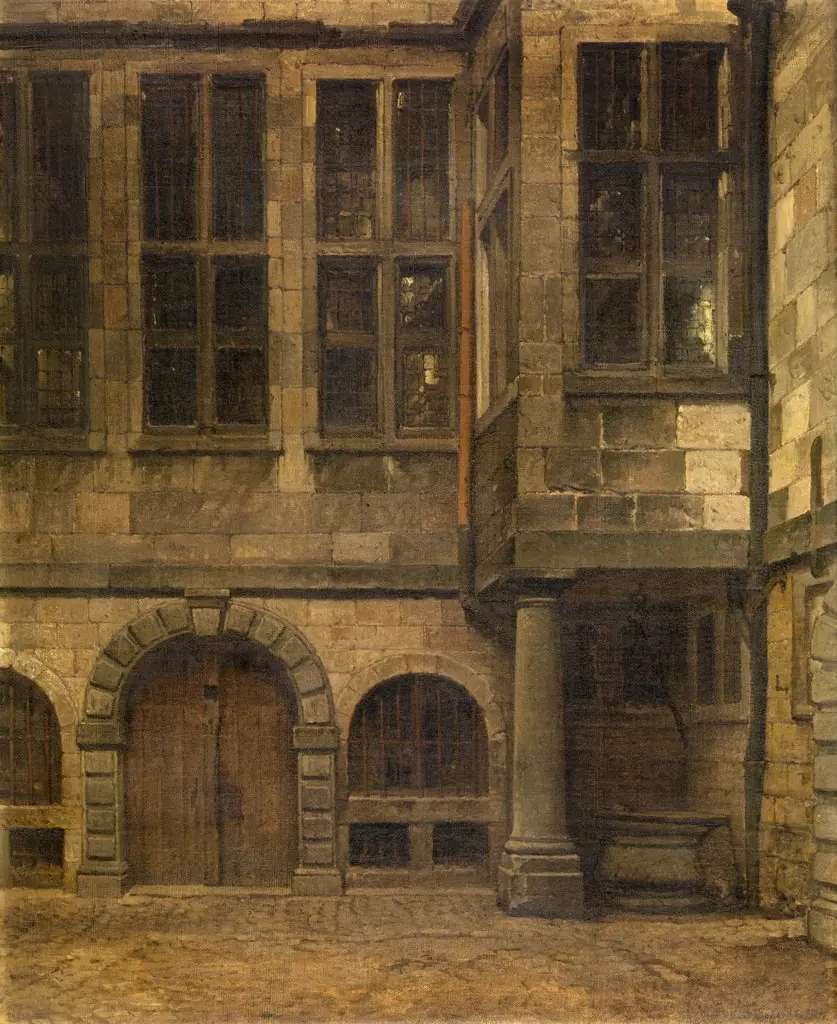 Old Courtyard of Antwerp Town Hall
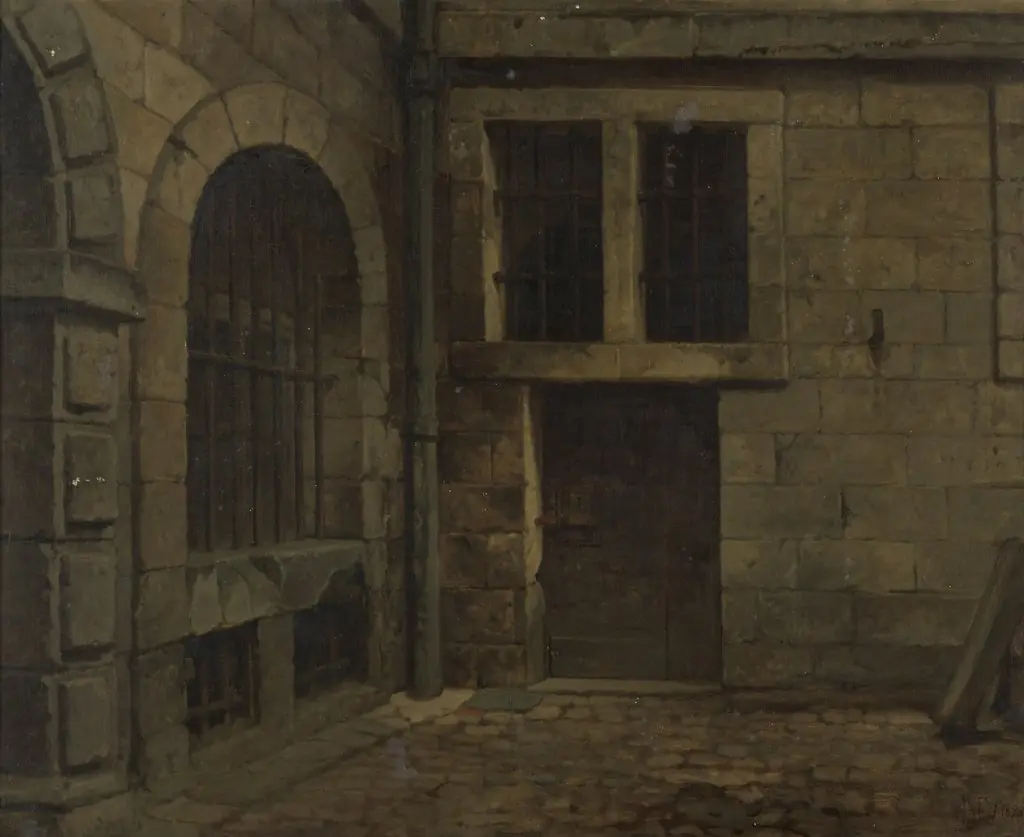 Old Courtyrad of Antwerp Town Hall
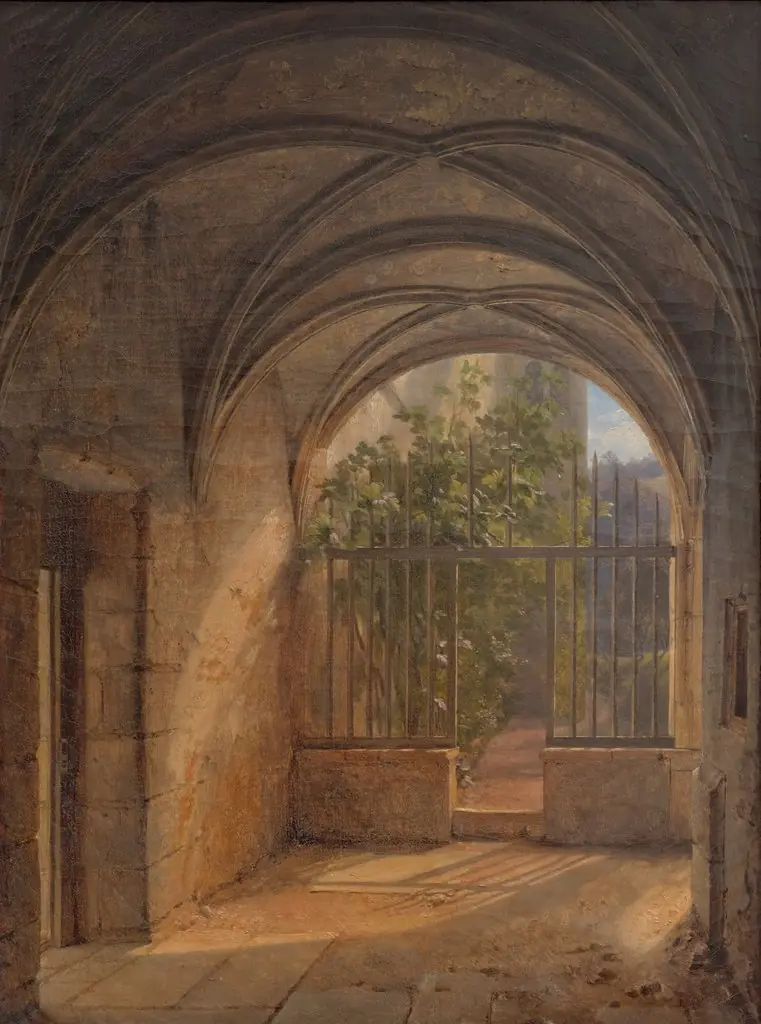 Monastery Interior
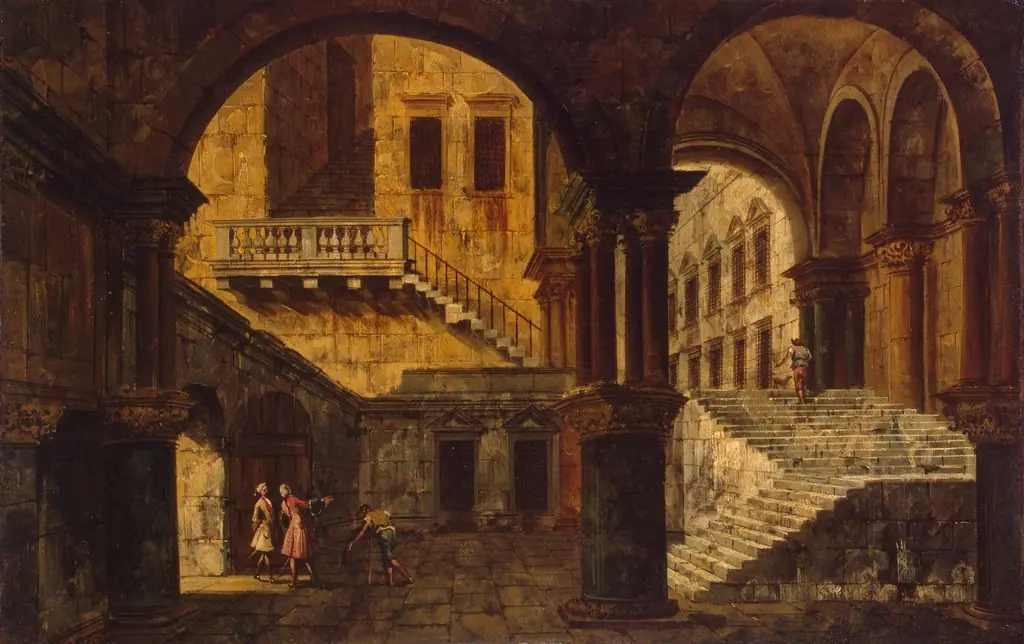 Courtyard with a Staircase
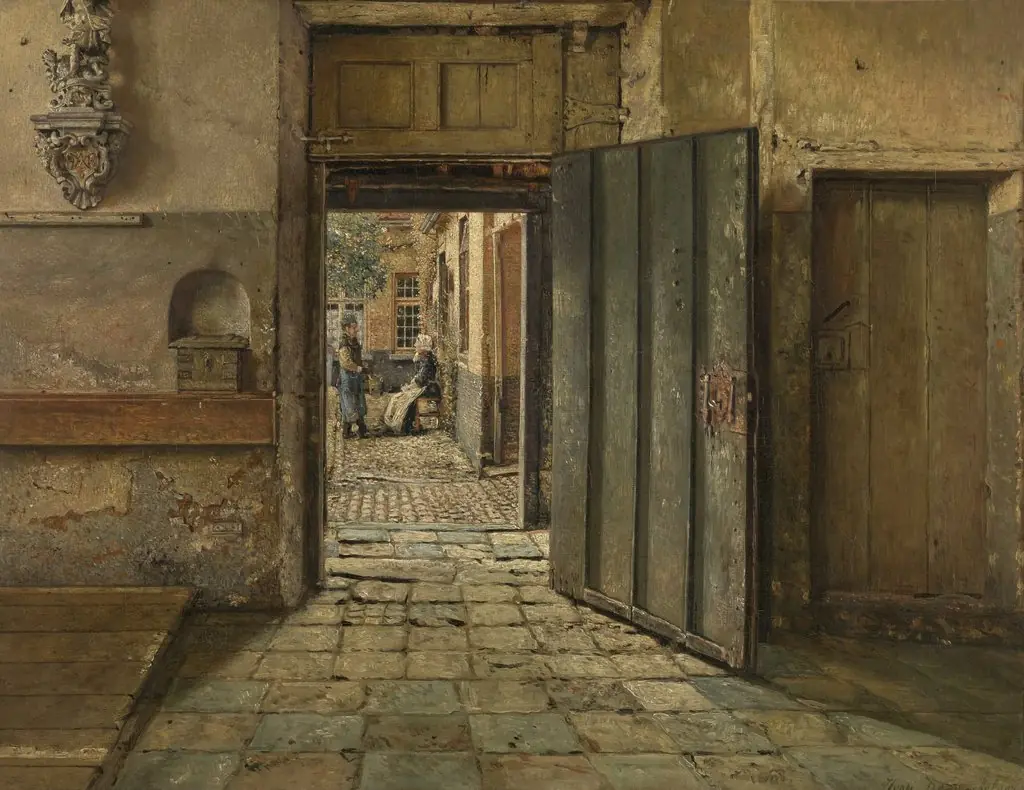 The Conversation
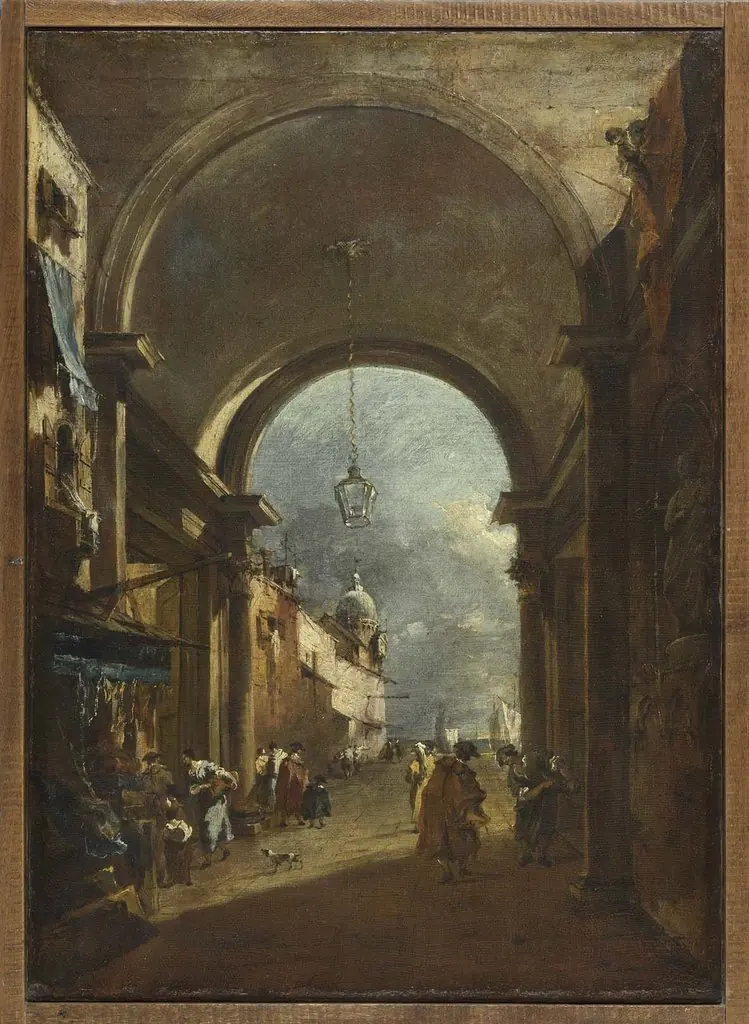 Tordurchblick
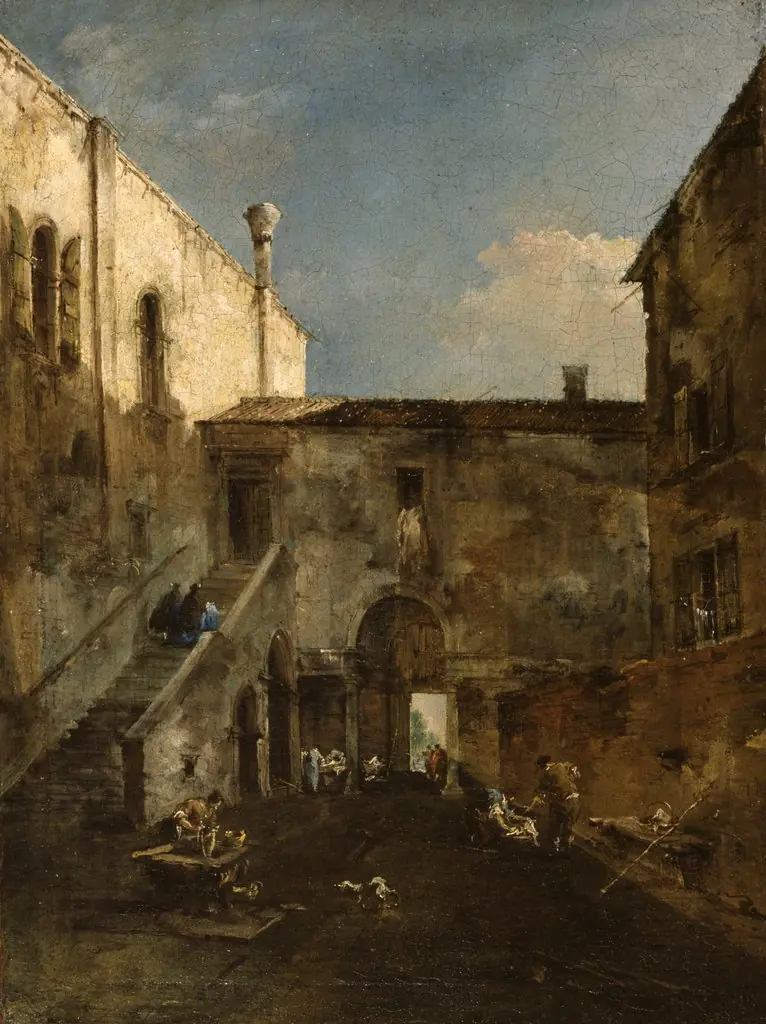 A Venetian Courtyard
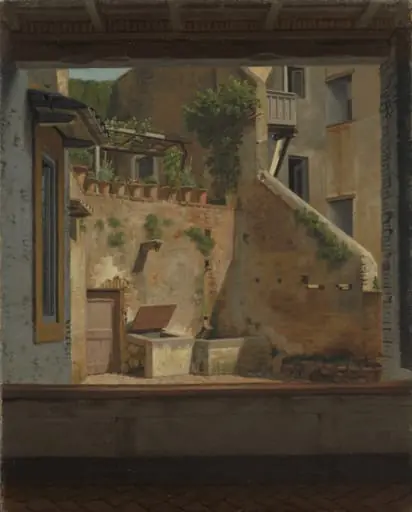 A Courtyard in Rome. Copy after Eckersberg
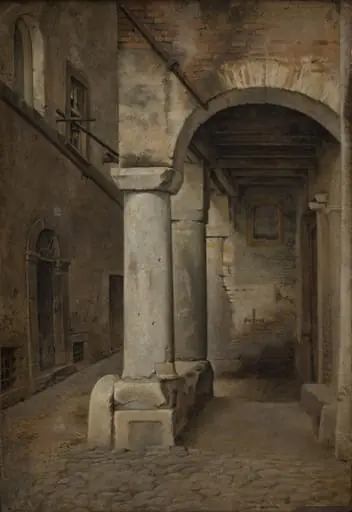 A Roman Alley