Artwork
The Cloisters of the Franciscan Monastery Santa Maria in Aracoeli in Rome
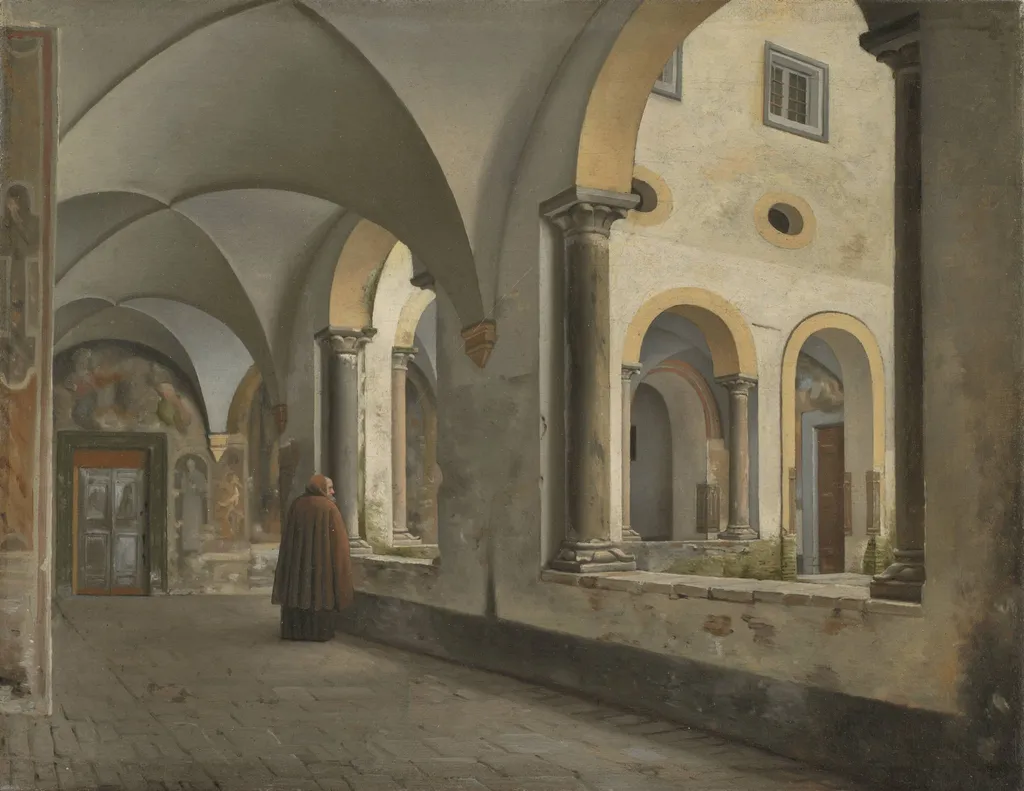
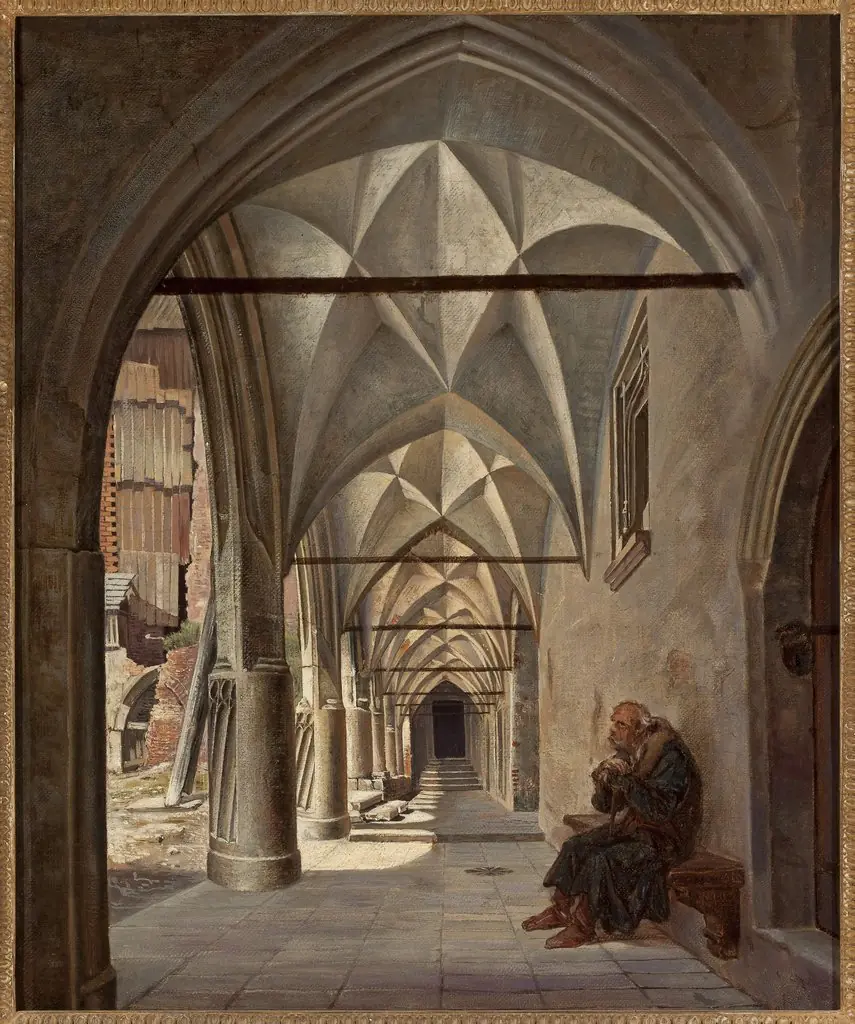
The Cloisters of the Franciscan Monastery Santa Maria in Aracoeli in Rome is a photography by Unknown artist. It is held in the collection of the Statens Museum for Kunst. This image depicts the cloister of Santa Maria in Aracoeli, a Franciscan monastery in Rome, rendered in a quiet, atmospheric style.
About this work
Overview
This image depicts the cloister of Santa Maria in Aracoeli, a Franciscan monastery in Rome, rendered in a quiet, atmospheric style.
This image depicts the cloister of Santa Maria in Aracoeli, a Franciscan monastery in Rome, rendered in a quiet, atmospheric style. Despite its subject, the work is not by the Chinese official Xun Xu, who lived in the third century CE and could not have observed or depicted this sixteenth-century Italian site. The attribution is incorrect; the piece likely originates from a later European artist, possibly from the 19th century, responding to antiquarian interest in monastic architecture.
Subject & Meaning
The scene captures an empty stone courtyard with weathered arches and faint frescoes, evoking solitude and the passage of time. A solitary figure, cloaked and turned away, suggests contemplation or anonymity within a sacred space. The absence of human activity and the fading murals imply a meditation on memory, decay, and the quiet endurance of religious architecture beyond its original context.
Technique & Style
The painting employs subtle contrasts of light and shadow to model the stone surfaces, emphasizing texture and depth. Sunlight falls selectively across the arches, leaving areas in soft gloom, while the frescoes behind are rendered in muted tones, barely legible. The brushwork is restrained, favoring atmospheric suggestion over detail, aligning with 19th-century tendencies toward introspective topographical studies.
History & Provenance
The work is held in the Museum of Ethnography, though its origin is European, not Chinese. The misattribution to Xun Xu appears to be a modern error, possibly stemming from confusion over cross-cultural artistic exchange or cataloging inaccuracies. No historical record links the Chinese scholar to Italian monastic architecture, and the style and materials are inconsistent with third-century Chinese painting practices.
Context
In the 19th century, European artists and travelers increasingly documented historic religious sites in Italy, drawn to their architectural grandeur and spiritual aura. This image reflects that trend, capturing a moment of stillness within a space once alive with ritual. The focus on decay and solitude aligns with Romantic-era sensibilities, where ruins became vessels for reflection on time, faith, and human transience.
Legacy
Though misattributed, the image endures as a quiet example of 19th-century architectural observation. Its emotional resonance lies not in historical accuracy but in its evocation of silence and impermanence. The error in provenance underscores the need for careful contextual scholarship, particularly when cultural boundaries are blurred in museum collections.
Artist & collection
Artist
Xun Xu (c. 221 – 289), courtesy name Gongzeng, was a Chinese musician, painter, politician, and writer who lived during the late Three Kingdoms period and early Jin dynasty of China. Born in the influential Xun family,…

 Portrait of Emilie Henriette Massmann, Betrothed of Frederik Wilhelm Caspar von Benzon
 Landscape with Trees near Paris
 Linear Perspective as Applied in Painting - Plate VII, 1 - A Street Corner Encounter
 Self-Portrait
 Landscape with a Stile. The Isle of Møn
 Linear Perspctive as Applied in Painting - Plate VI. The Street Lamp on the Garden Wall, Daylight
 Study of a Wood
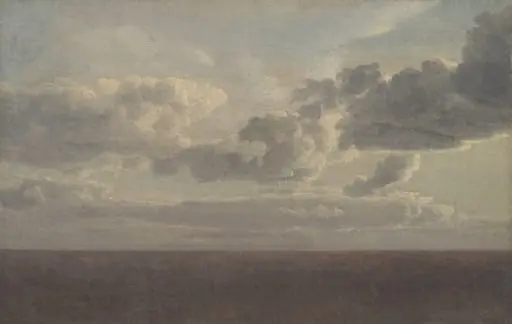 Study of Clouds over the Sea
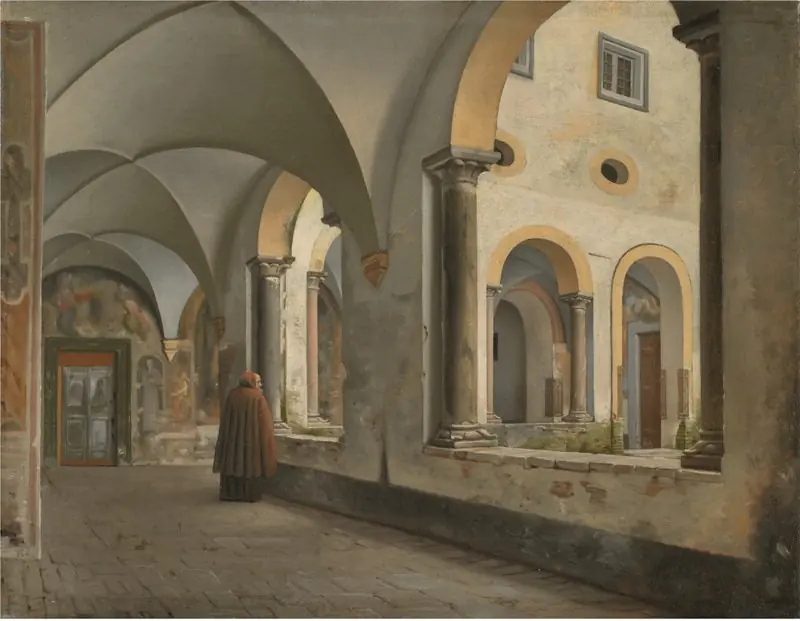 The Cloisters of the Franciscan Monastery Santa Maria in Aracoeli in Rome
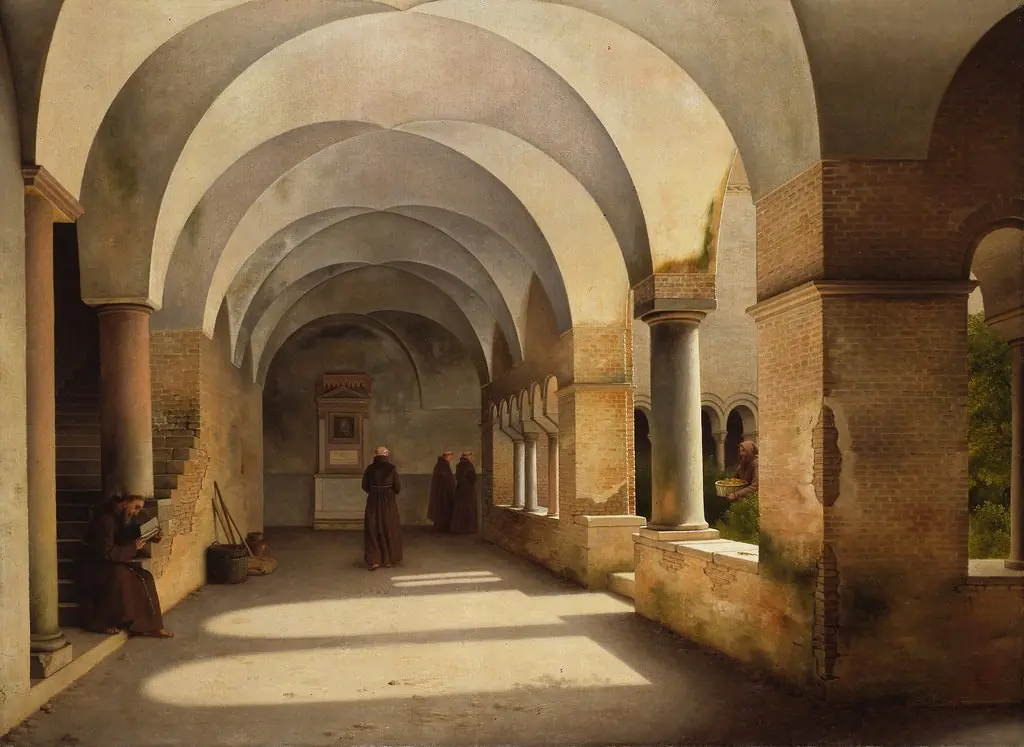 The Cloisters, San Lorenzo fuori le mura
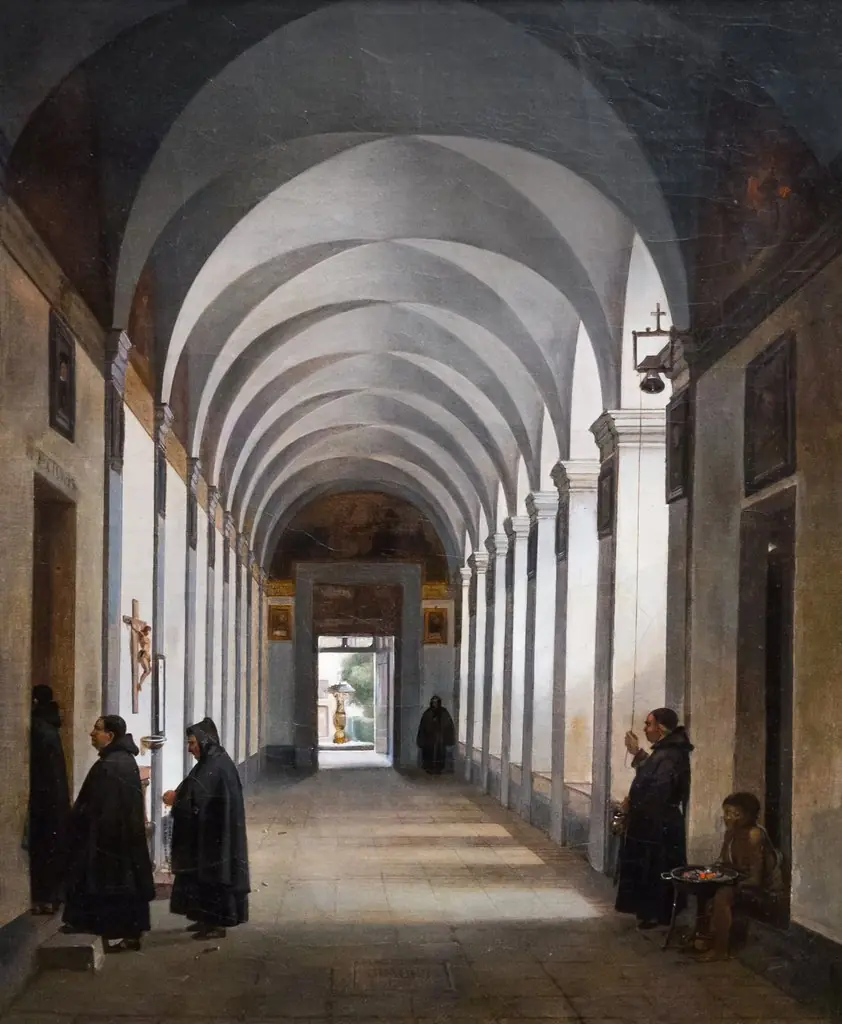 Monks in the Cloister of the Church of Gesù e Maria, Rome
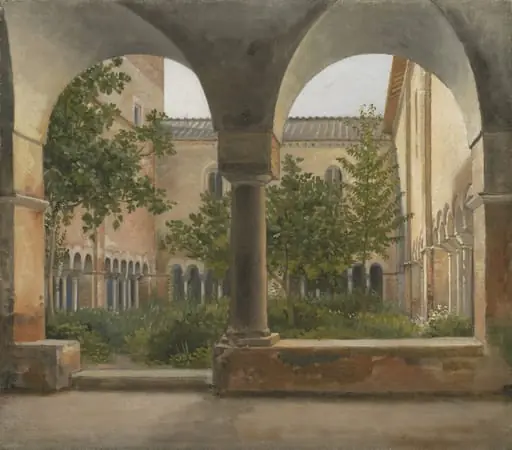 The Cloisters of San Lorenzo fuori le mura in Rome
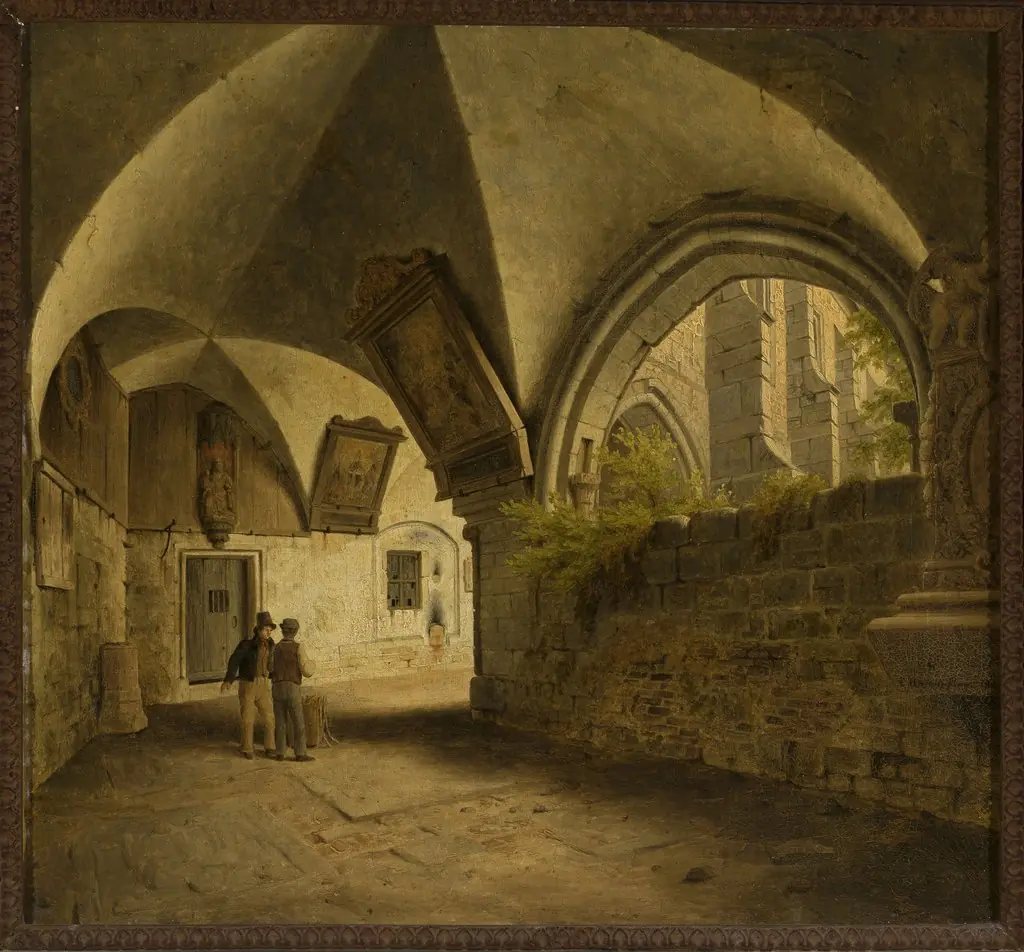 Cloister of the Halberstadt Cathedral
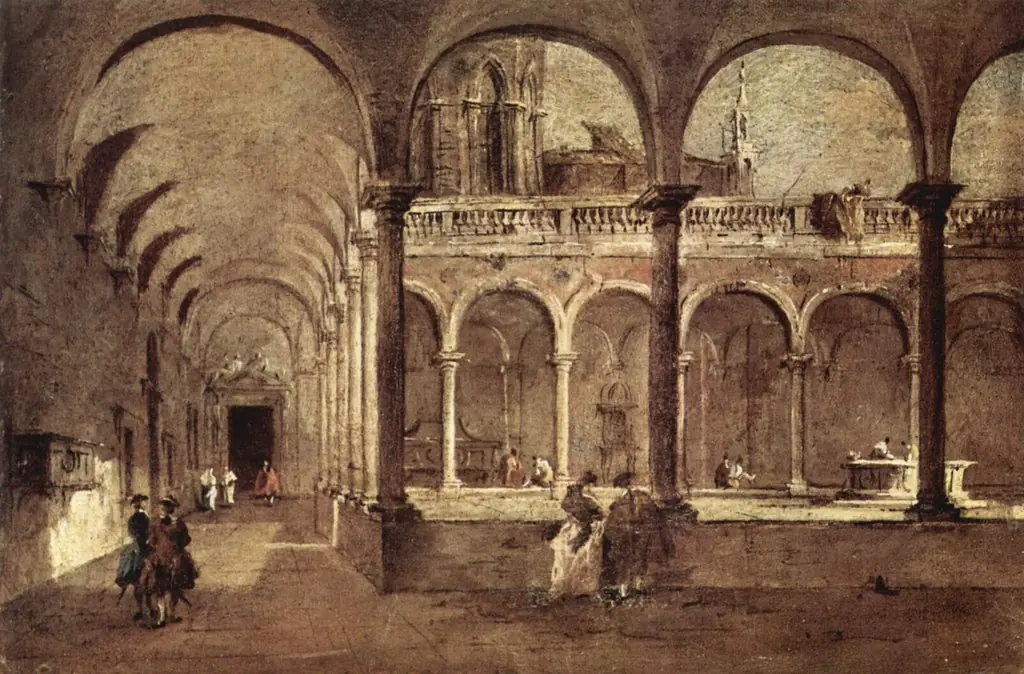 Cloister in Venice
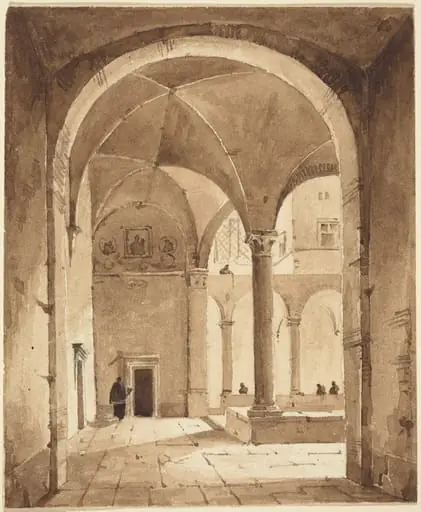 A Cloister
 Cloisters of the Jagiellonian Library in Kraków