Artwork
Christ on the Cross
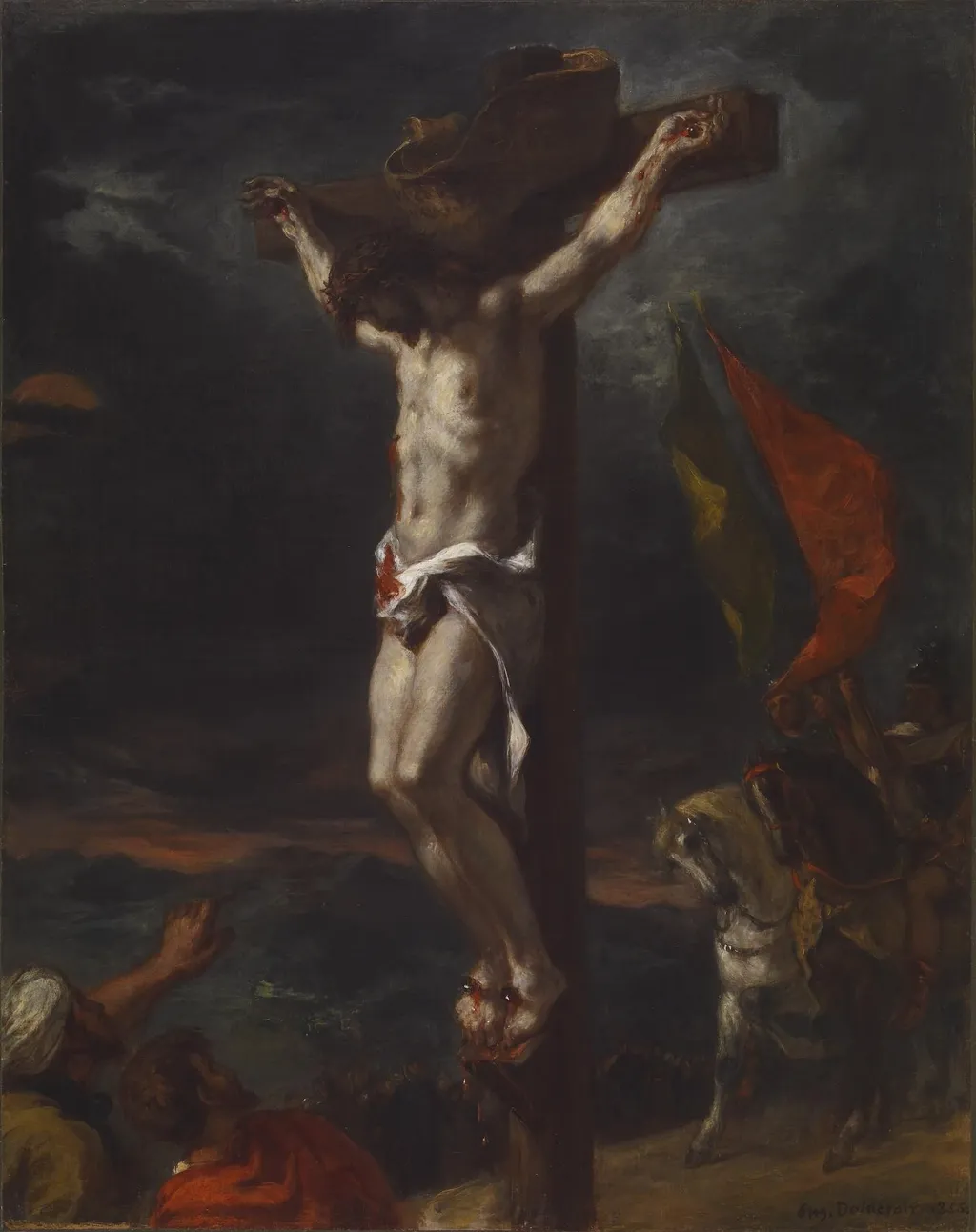
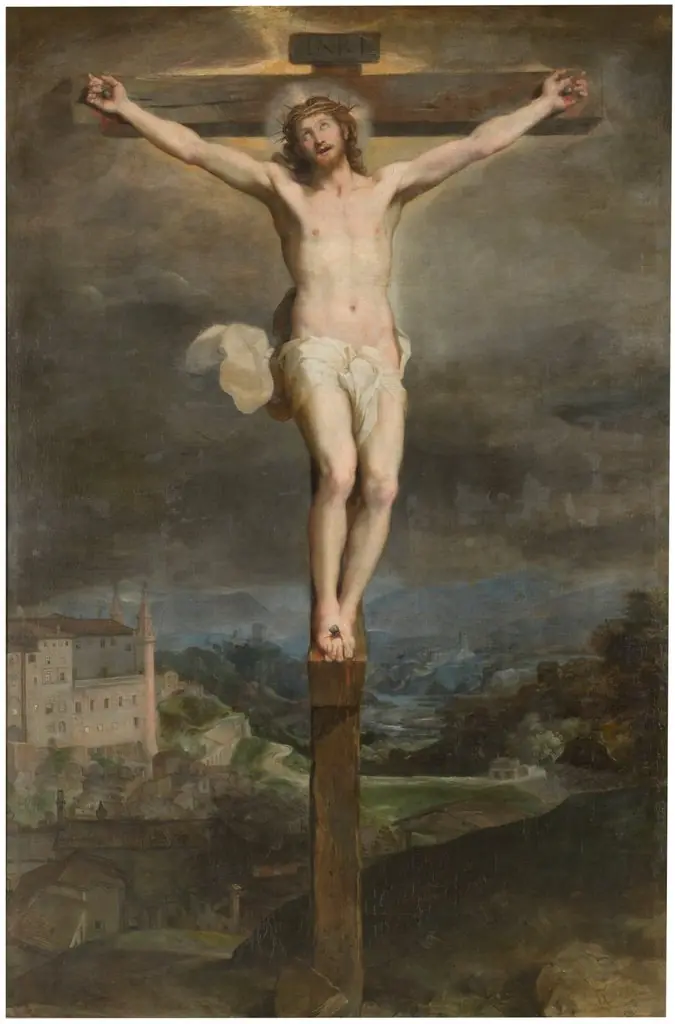
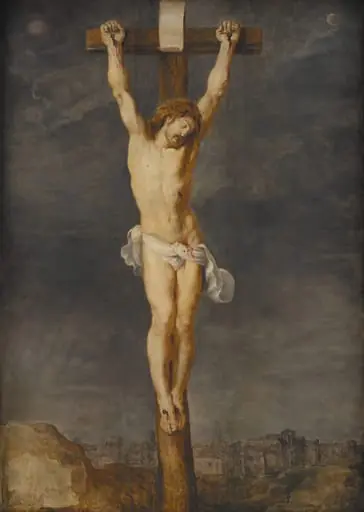
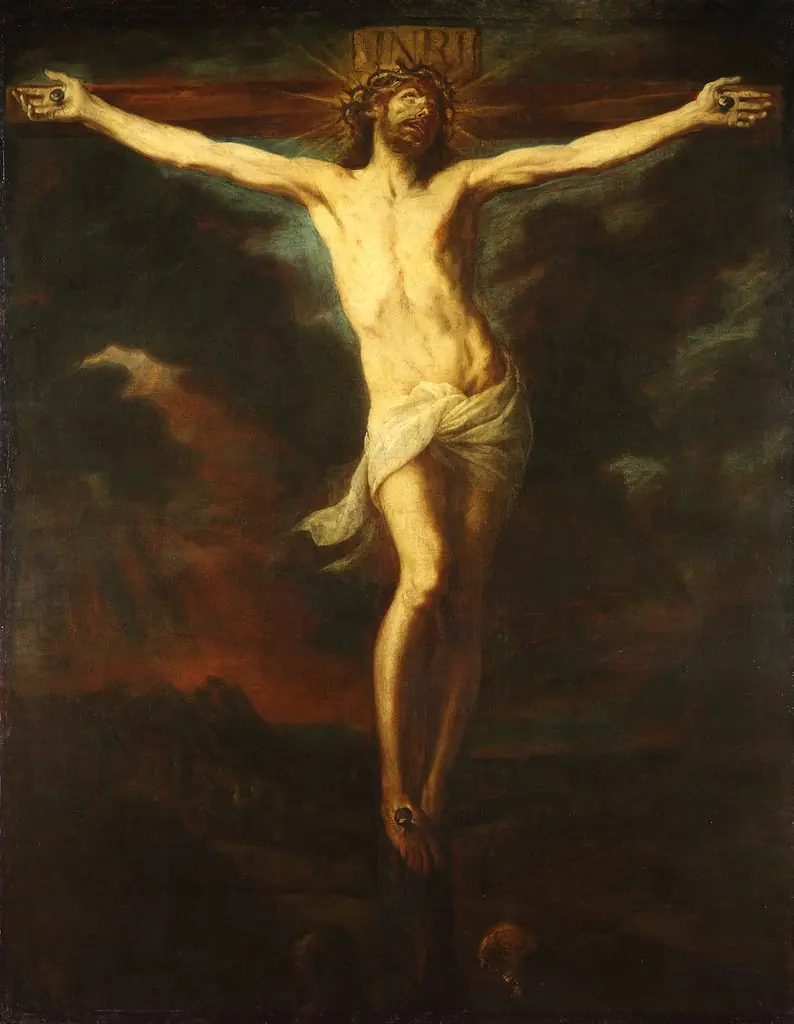
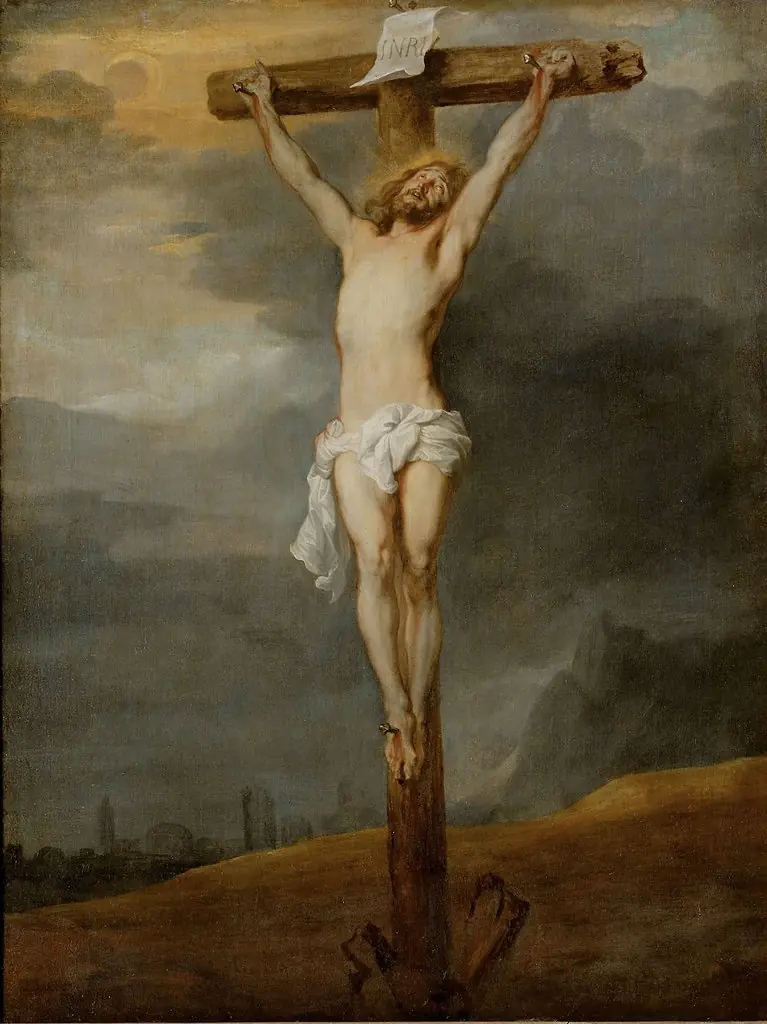
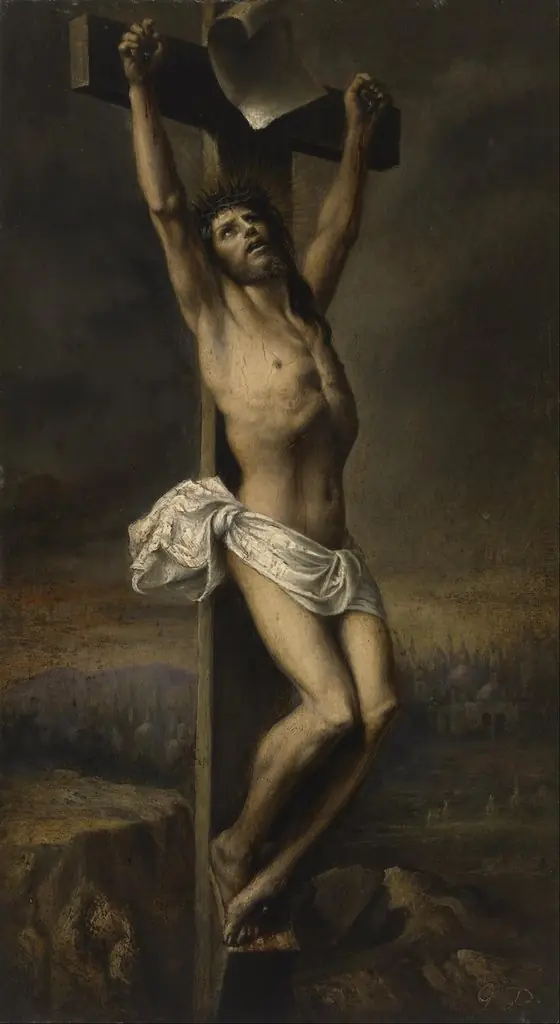
Christ on the Cross is an oil painting by the French Romanticist artist Eugène Delacroix. It dates from 1846 and is held in the collection of the Walters Art Museum.
About this work
Overview
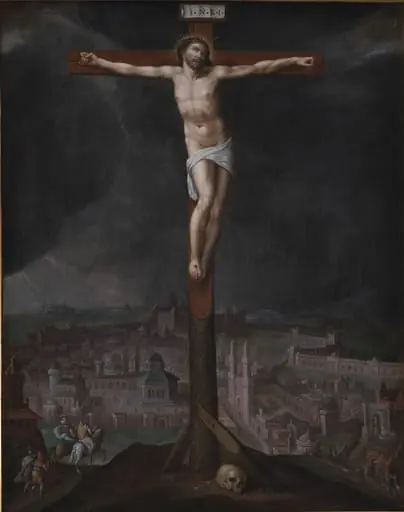
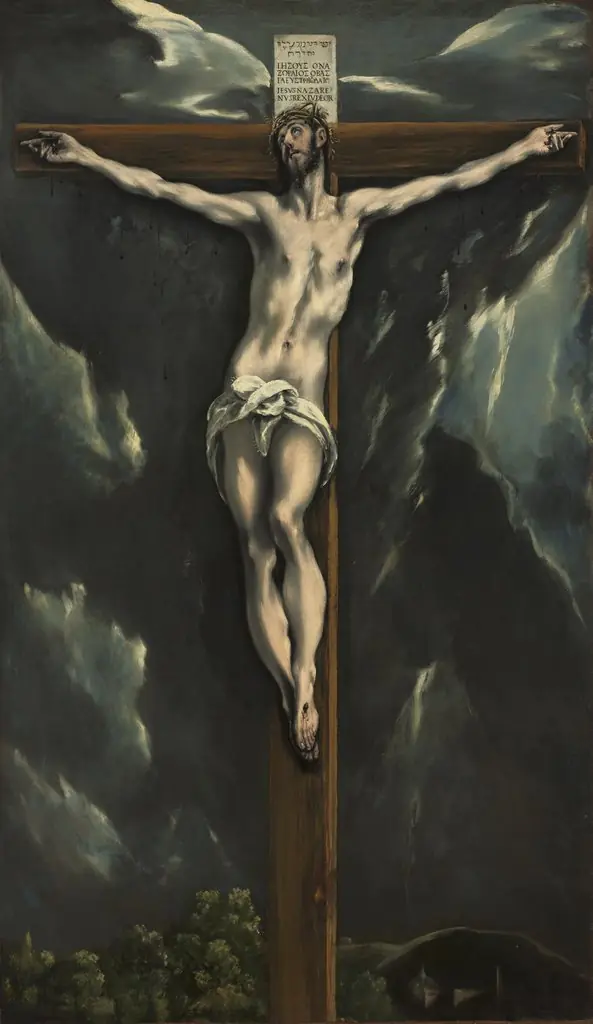
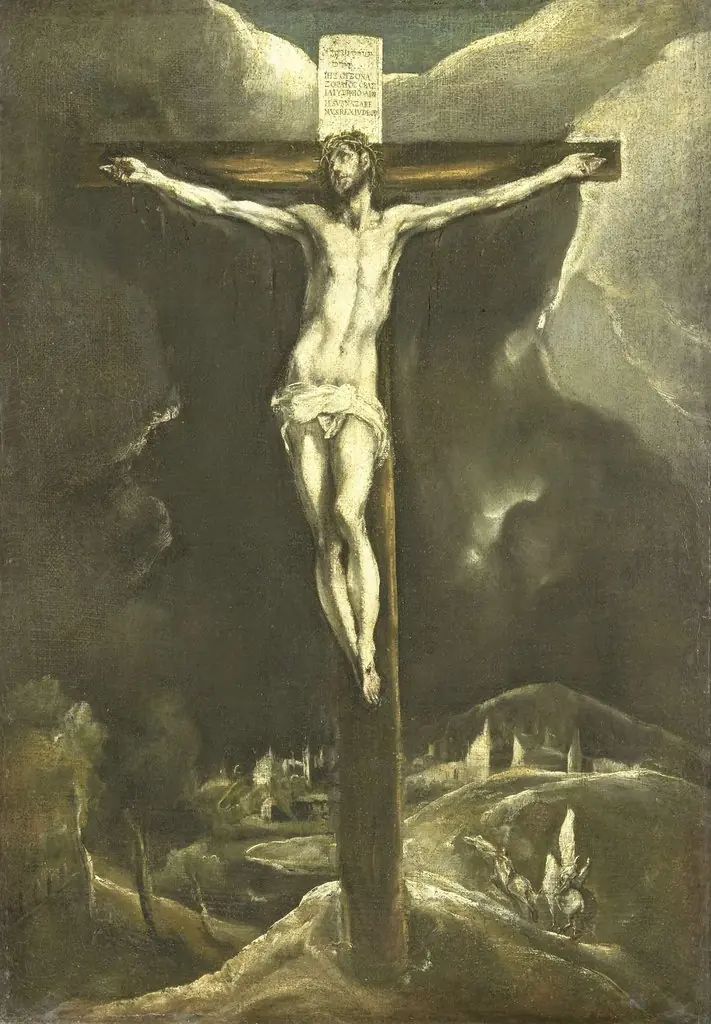
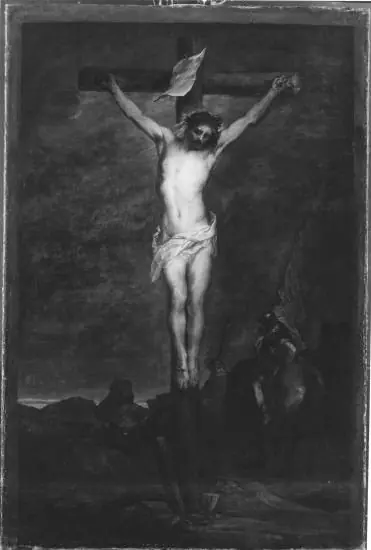
The painting presents a solemn depiction of Christ’s crucifixion, rendered with emotional intensity rather than classical idealism.
Painted in 1846, *Christ on the Cross* is an oil on canvas work by Eugène Delacroix, a central figure in French Romanticism. The painting presents a solemn depiction of Christ’s crucifixion, rendered with emotional intensity rather than classical idealism. It reflects Delacroix’s departure from rigid academic norms, favoring expressive form and atmospheric depth. The piece is part of the Walters Art Museum’s permanent collection.
Subject & Meaning
The painting portrays Christ at the moment of death, his emaciated body suspended on the cross, blood visible on his hands and feet. A simple loincloth covers his lower body, emphasizing vulnerability. Figures in the dim background observe silently, their postures suggesting grief or contemplation. The scene avoids theatricality, instead conveying quiet suffering and spiritual isolation through restrained gesture and somber tone.
Technique & Style
Delacroix employed chiaroscuro to model Christ’s form against a dark, clouded sky, enhancing the figure’s three-dimensionality and emotional weight. Brushwork is loose and fluid, particularly in the background, where pigment is layered to suggest atmosphere rather than detail. Color is subdued but deliberate—pale skin contrasts with deep shadows and muted earth tones—echoing Venetian and Rubensian influences without imitating them.
History & Provenance
Commissioned during a period of personal and spiritual reflection, the painting was completed in 1846 and remained in Delacroix’s studio until his death. It entered the Walters Art Museum collection in the early 20th century through the bequest of Henry Walters, who acquired it as part of a broader effort to build a diverse European art holdings. Its provenance is well-documented and uninterrupted.
Context
Created during a time of religious questioning in post-revolutionary France, the work aligns with Romanticism’s interest in inner emotion and existential themes. Delacroix, though not conventionally devout, was drawn to biblical subjects for their psychological depth. This painting reflects a broader trend among 19th-century artists who sought to humanize sacred figures through raw, unidealized representation.
Legacy
Though less widely known than Delacroix’s larger historical scenes, *Christ on the Cross* exemplifies his mature approach to religious imagery—intimate, emotionally charged, and formally innovative. It influenced later Symbolist and Expressionist painters who prioritized inner experience over doctrinal accuracy. The painting remains a quiet but significant testament to his engagement with spiritual themes.
Own this work as a print
Artist & collection
Artist
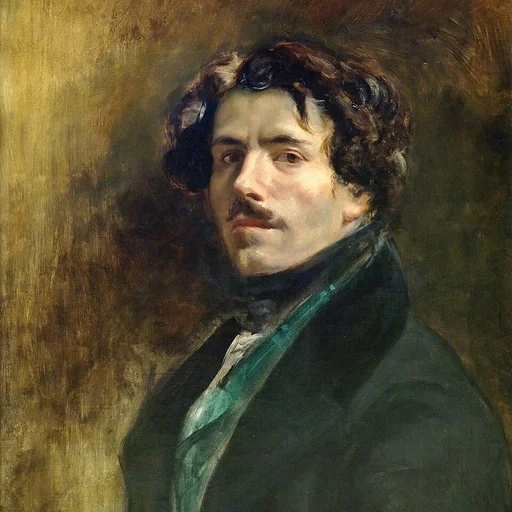
Ferdinand Victor Eugène Delacroix ( DEL-ə-krwah, -KRWAH; French: ; 26 April 1798 – 13 August 1863) was a French Romantic artist who was regarded as the leader of the French Romantic school.