Artwork
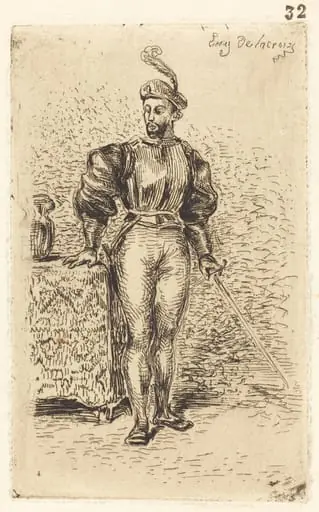
A Lord in the Time of Francis I
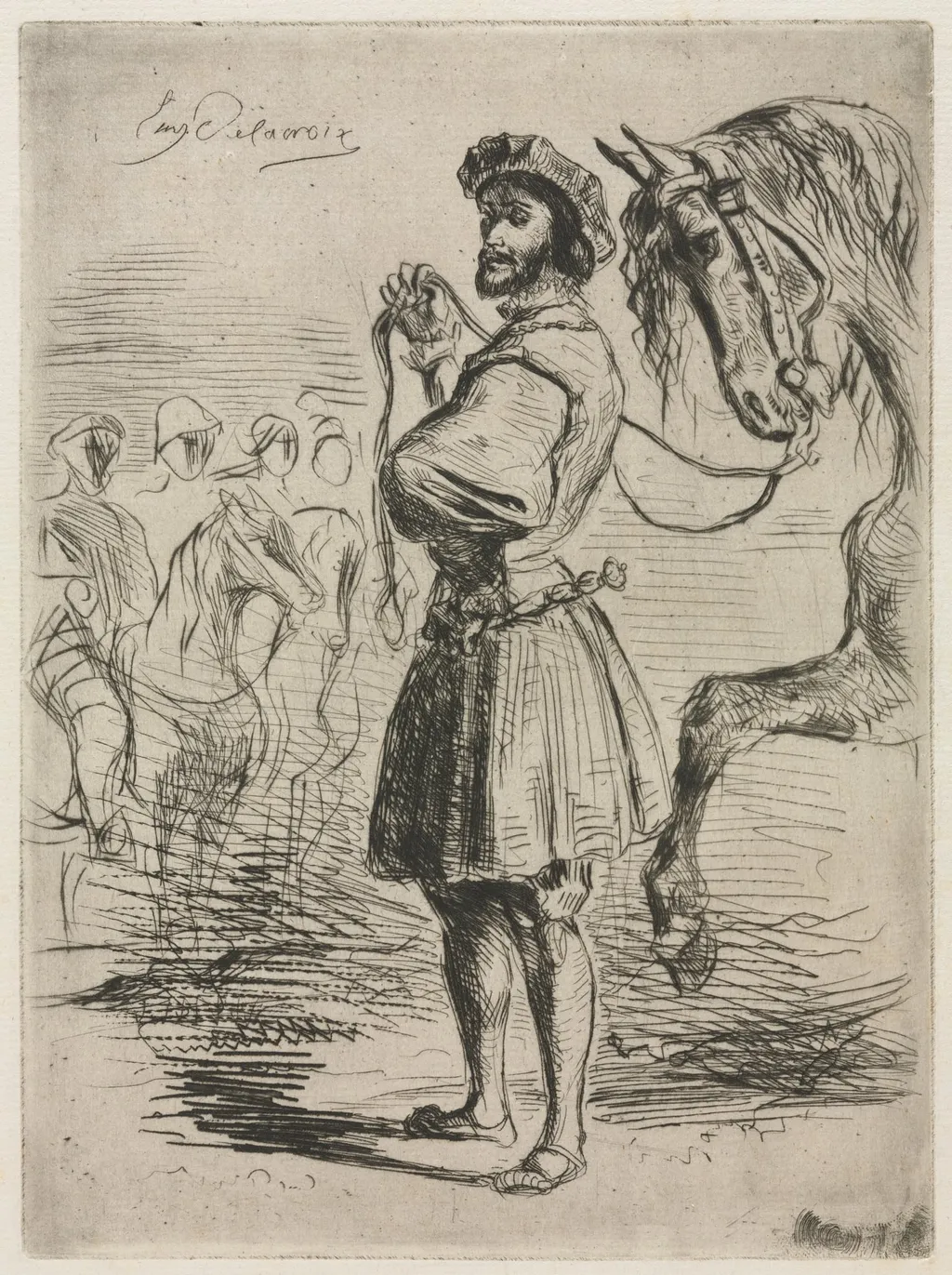
A Lord in the Time of Francis I is a print by the Romanticist artist Eugène Delacroix. It dates from 1833 and is held in the collection of the Cleveland Museum of Art.
About this work
Overview
Painted in 1833 by Eugène Delacroix, this work captures a nobleman from the era of Francis I, rendered in the expressive language of French Romanticism.
Painted in 1833 by Eugène Delacroix, this work captures a nobleman from the era of Francis I, rendered in the expressive language of French Romanticism. Delacroix prioritized dynamic composition and rich color over academic rigidity, aligning his approach with the emotional intensity characteristic of the movement. The painting resides in The Cleveland Museum of Art, where it exemplifies his fascination with historical subjects and atmospheric storytelling.
Subject & Meaning
The figure is a gentleman of the early 16th century, dressed in period attire that includes a broad-brimmed hat, a flowing shirt, and a short tunic. He stands calmly beside a horse, reins in hand, suggesting a moment of quiet authority. The surrounding horses and distant figures imply a retinue or hunting party, evoking the rituals of aristocratic life under Francis I. The scene conveys dignity and composure rather than action, emphasizing the noble’s connection to tradition and land.
Technique & Style
Delacroix employed loose, energetic brushwork and layered pigments to suggest texture and movement, particularly in the fabric of the garments and the horses’ coats. His palette favors warm earth tones and muted contrasts, avoiding sharp outlines in favor of atmospheric blending. Influenced by Rubens and Titian, he prioritized emotional resonance and visual rhythm over precise detail, creating a sense of lived-in history rather than staged reenactment.
History & Provenance
Created during Delacroix’s mature period, the painting reflects his ongoing engagement with historical themes following his 1832 trip to North Africa. It entered The Cleveland Museum of Art’s collection in the 20th century, though its earlier ownership remains undocumented in public records. The work was not exhibited widely during Delacroix’s lifetime, and its current prominence stems largely from its embodiment of Romantic ideals in a historical context.
Context
In the 1830s, French artists increasingly turned to the past for subjects that evoked emotion and individuality, rejecting the rigid norms of Neoclassicism. Delacroix’s choice of Francis I’s reign—associated with cultural flourishing and chivalric ideals—aligned with Romanticism’s fascination with medieval and Renaissance nobility. The painting reflects broader European interests in reconstructing the past through feeling rather than archaeology.
Legacy
Though less famous than Delacroix’s larger historical or political works, this painting illustrates his consistent interest in the quiet dignity of historical figures. It influenced later artists exploring historical costume and psychological depth in portraiture. Today, it stands as a refined example of how Romanticism could convey nobility through atmosphere, gesture, and color rather than grand narrative.
Own this work as a print
Artist & collection
Artist
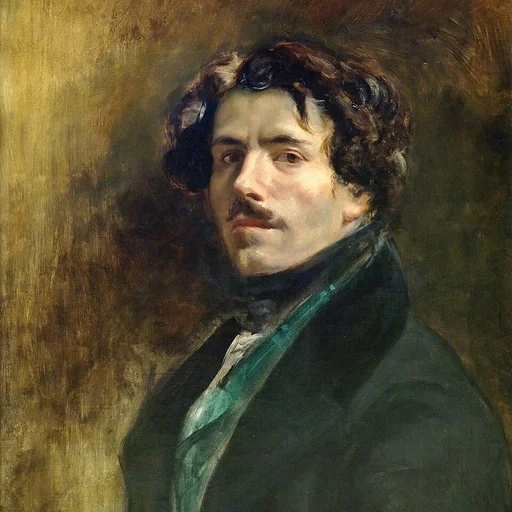
Ferdinand Victor Eugène Delacroix ( DEL-ə-krwah, -KRWAH; French: ; 26 April 1798 – 13 August 1863) was a French Romantic artist who was regarded as the leader of the French Romantic school.

 A Man with Weapons (Un Homme d'armes)
 Caprices: Mounted Cavalier
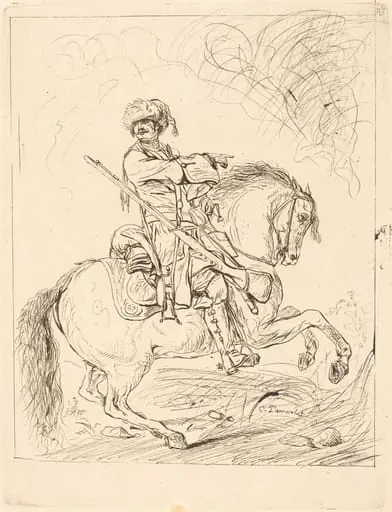 A Dragoon on Horseback
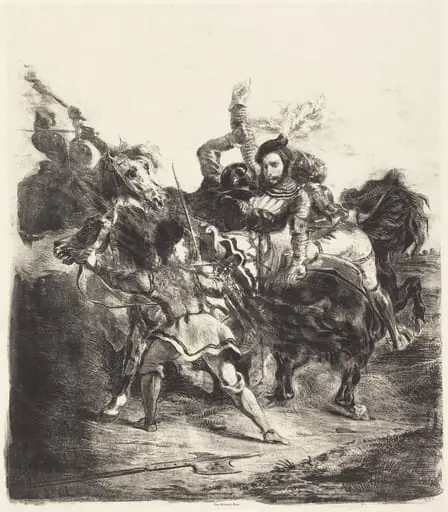 Weislingen Attacked by the Forces of Goetz (Weislingen attaqué par les gens de Goetz)
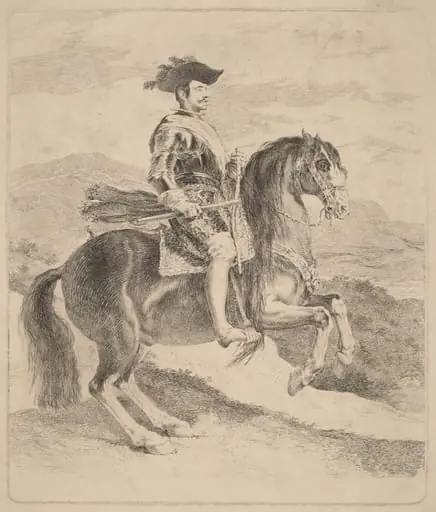 Felipe IV
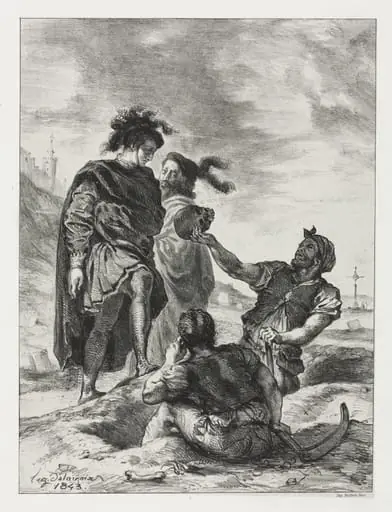 Hamlet: Hamlet and Horatio with the Grave Diggers
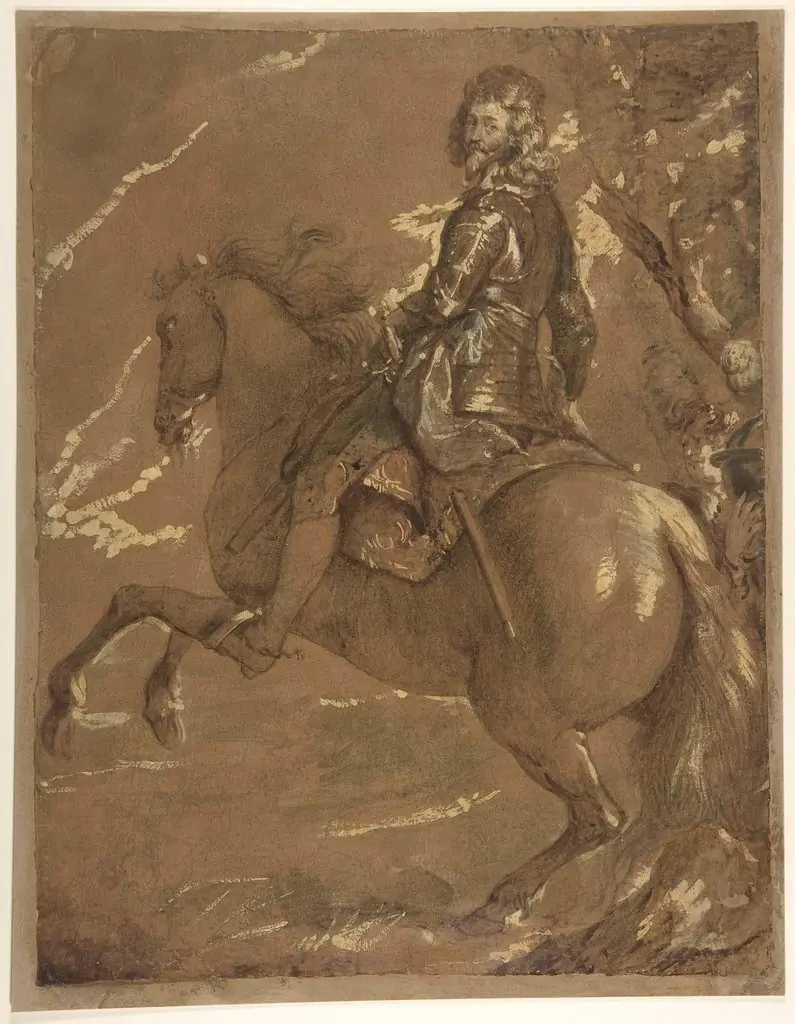 Albert de Ligne, Count of Arenberg, Prince of Brabançon, (1600-1674)
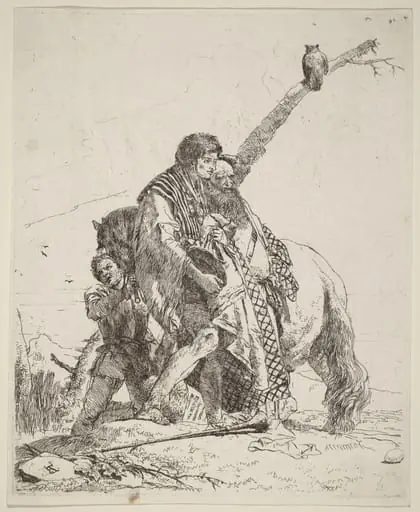 Youth, Sage, and Attendant with Horse
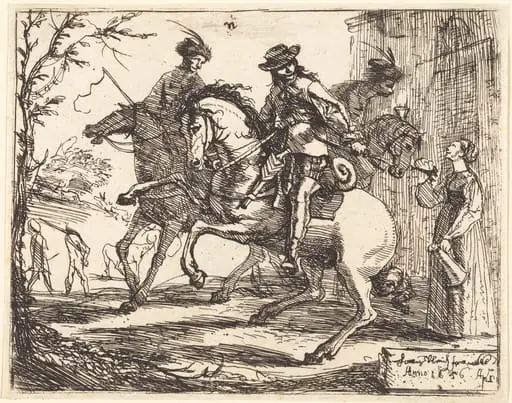 Three Riders before an Inn
![Entry of Marie de Medici into Amsterdam [plate 5 of 6], by Pieter Nolpe](https://artifactworldgallery.com/img/pieter-nolpe--entry-of-marie-de-medici-into-amsterdam-plate-5-of-6--36a5b14d522ef010-w320.webp) Entry of Marie de Medici into Amsterdam [plate 5 of 6]
Entry of Marie de Medici into Amsterdam [plate 5 of 6]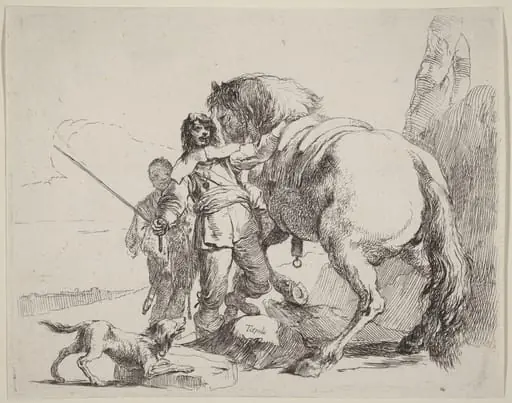 Soldier with Horse and Attendant
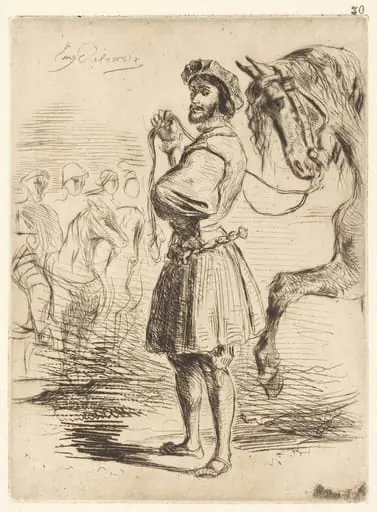 A Lord from the Period of Francis I (Un Seigneur de temps de François Ier)