Artwork
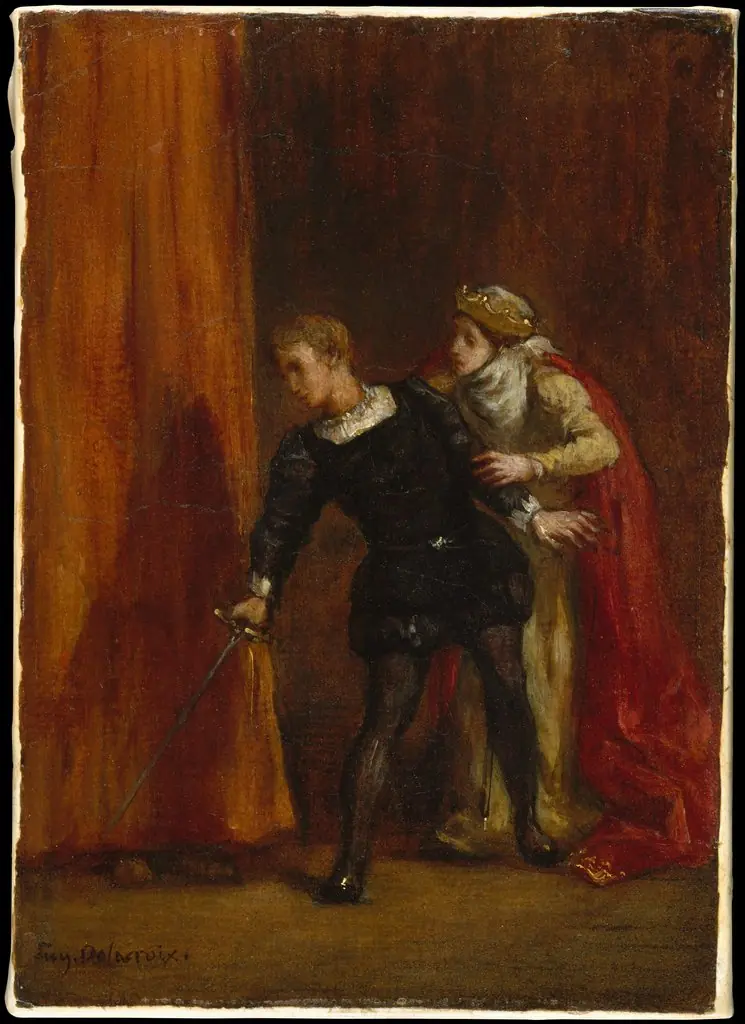
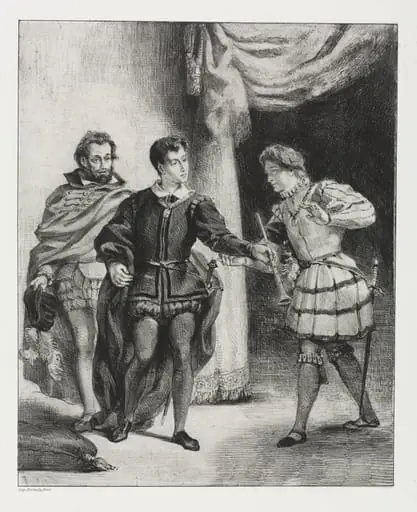
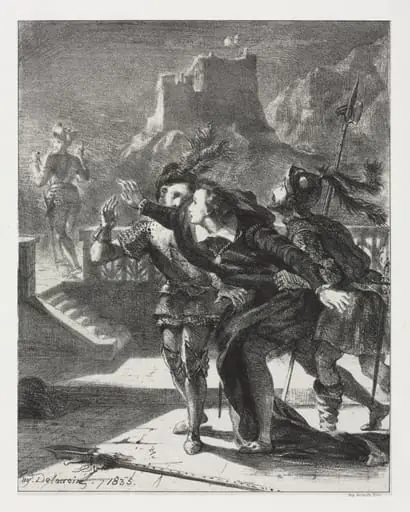
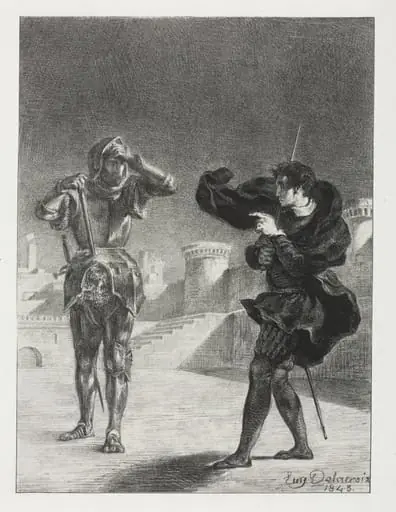
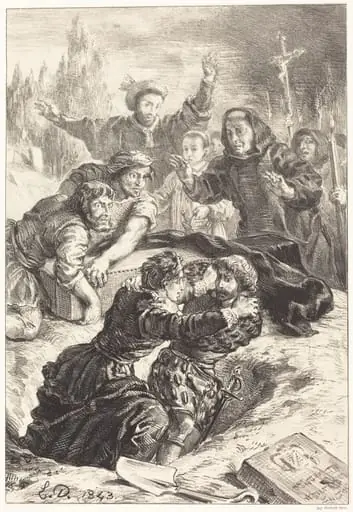
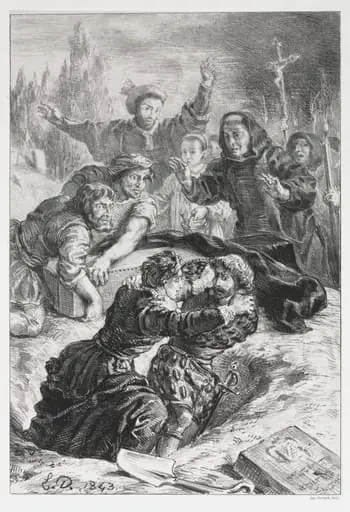
Hamlet: Hamlet and Horatio with the Grave Diggers
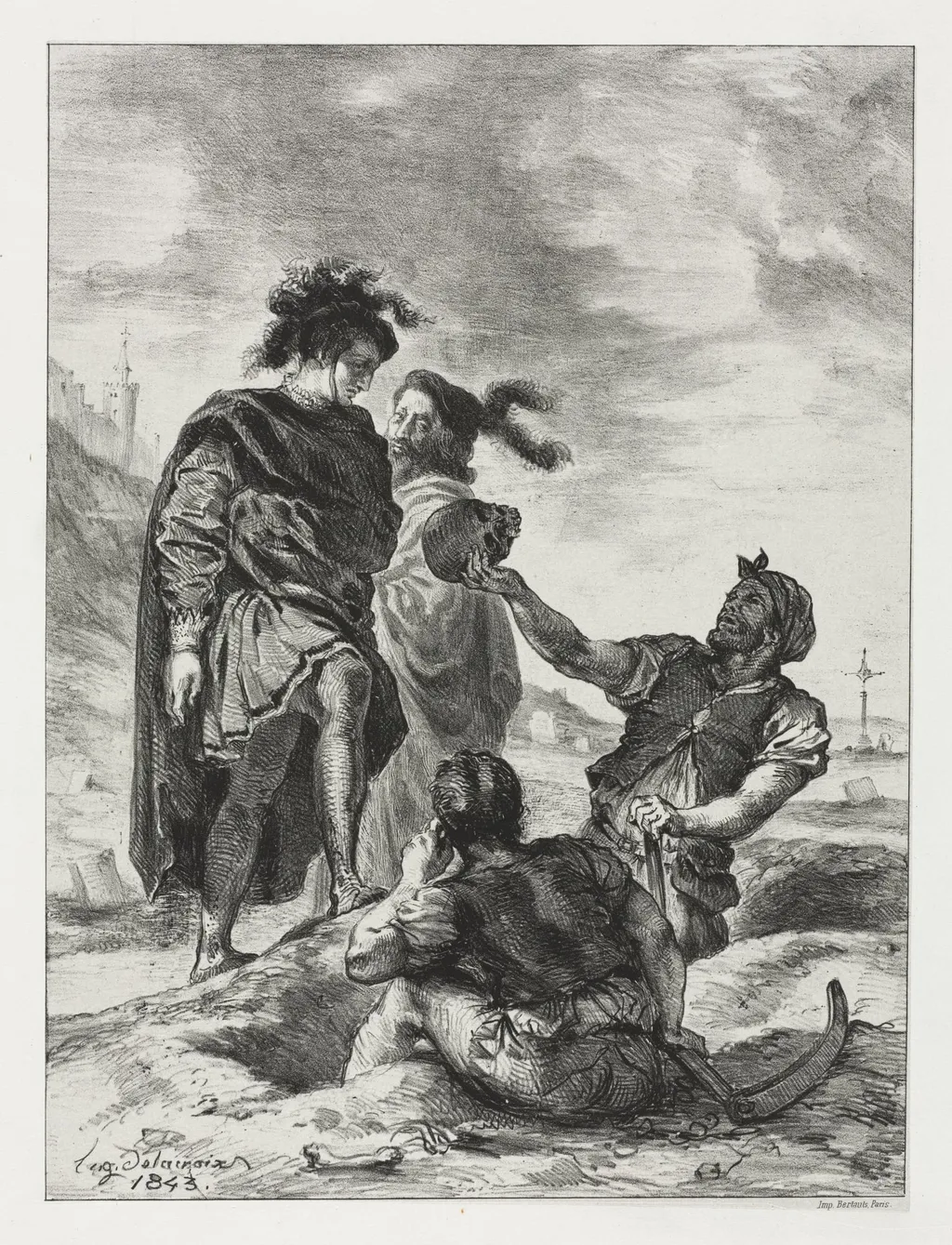
Hamlet: Hamlet and Horatio with the Grave Diggers is a print by the Romanticist artist Eugène Delacroix. It dates from 1843 and is held in the collection of the Cleveland Museum of Art.
About this work
Overview
The painting is part of the Cleveland Museum of Art’s permanent collection, acquired after its creation as part of the artist’s literary-inspired series.
Painted in 1843 by Eugène Delacroix, this work captures a moment from Shakespeare’s *Hamlet* involving the prince, Horatio, and two grave diggers. Executed in oil on canvas, it reflects Delacroix’s Romantic approach, prioritizing emotional intensity and dynamic composition over classical restraint. The painting is part of the Cleveland Museum of Art’s permanent collection, acquired after its creation as part of the artist’s literary-inspired series.
Subject & Meaning
The scene illustrates Hamlet’s contemplation of mortality as he observes the grave diggers unearthing a skull. Horatio stands beside him, while the laborers are shown in moments of physical strain and distraction. The setting—dusk, turbulent waves, and a distant lighthouse—enhances the theme of transience. Delacroix avoids literal narrative, instead evoking psychological weight through posture and atmosphere.
Technique & Style
Delacroix employed loose, energetic brushwork and a muted palette dominated by earth tones and deep shadows. Forms are suggested rather than precisely defined, with figures emerging from the gloom through contrast and gesture. The sketchy handling of the waves and sky conveys motion, while the figures’ poses radiate tension. This technique aligns with Romantic ideals that valued emotional expression over polished detail.
History & Provenance
Created during Delacroix’s mature period, the painting was produced after his travels to North Africa and his deep engagement with Shakespearean themes. It was exhibited in Paris in 1844 and later entered private collections before being acquired by the Cleveland Museum of Art in the 20th century. Its provenance reflects its status as a significant, though not widely reproduced, work within Delacroix’s oeuvre.
Context
Delacroix was part of a generation of French artists turning to literature for subject matter, rejecting Neoclassical rigidity in favor of personal expression. His interest in Shakespeare, particularly *Hamlet*, coincided with broader European fascination with the play’s existential themes. The painting responds to both literary tradition and the Romantic movement’s emphasis on inner turmoil and the sublime in nature.
Legacy
Though less famous than his larger historical paintings, this work exemplifies Delacroix’s ability to distill complex emotion into intimate scenes. It influenced later Symbolist and Expressionist artists who sought to convey psychological states through atmospheric means. The painting remains a key example of how Romanticism reimagined literary subjects through subjective, sensory experience.
Artist & collection
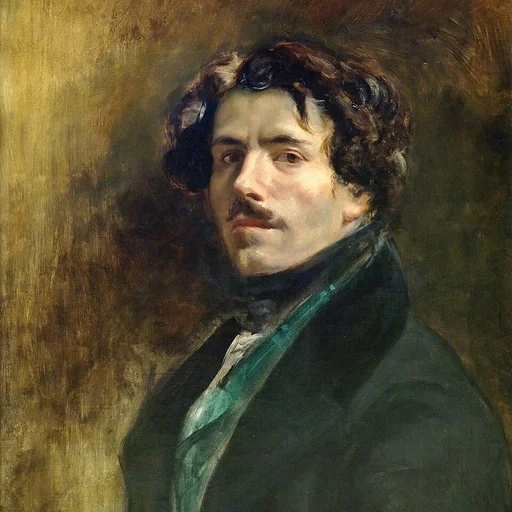
Artist
Ferdinand Victor Eugène Delacroix ( DEL-ə-krwah, -KRWAH; French: ; 26 April 1798 – 13 August 1863) was a French Romantic artist who was regarded as the leader of the French Romantic school.