Artwork
Felipe IV
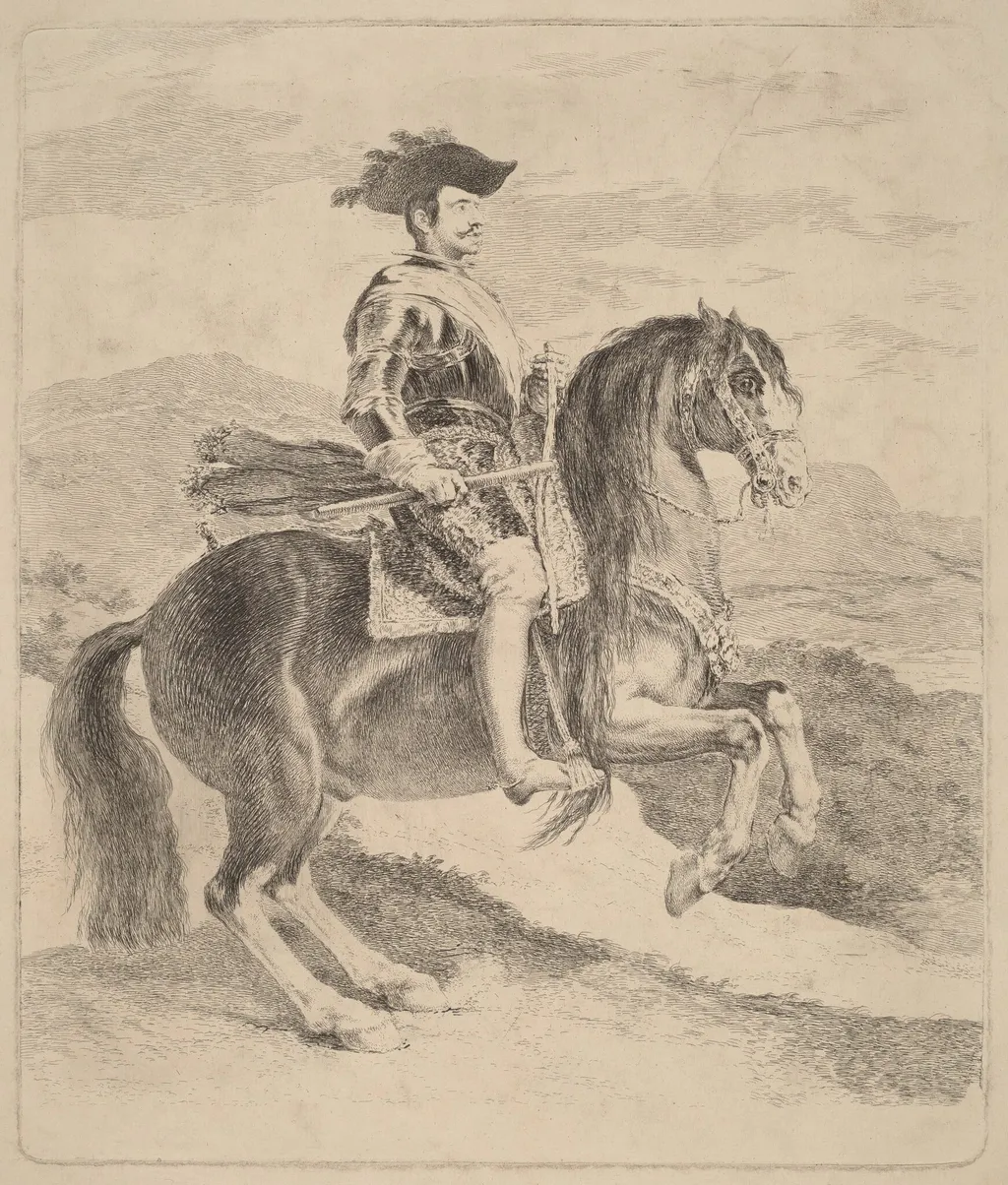
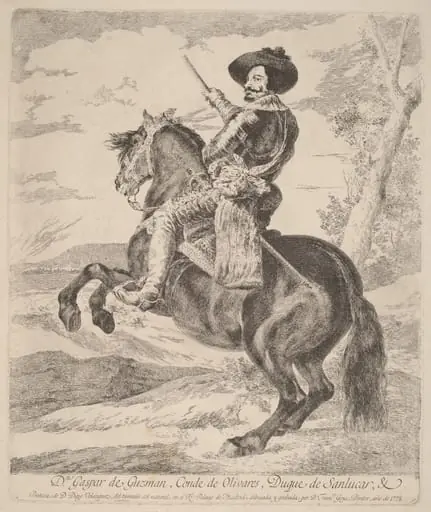
Felipe IV is an ink print by the Romanticist artist Francisco Goya. It dates from 1778 and is held in the collection of the National Gallery of Art.
About this work
Overview
Felipe IV is an etching created by Francisco de Goya in 1778, executed in black ink on laid paper with additional pen retouching. This working proof represents an early stage in the printmaking process.
Subject & Meaning
The etching portrays King Philip IV of Spain on horseback, capturing the monarch in dynamic motion. The composition focuses attention on the king and his mount, set against a plain background.
Technique & Style
Goya employed a scratchy, precise line to convey the textures of the horse's muscles and the rider's attire, achieving a sense of vitality despite the sketchy quality. The etching showcases Goya's skill in capturing movement through line work.
History & Provenance
As a working proof, this etching provides insight into Goya's creative process. While its exact provenance is not detailed here, it is attributed to Goya's early period, preceding his rise as a leading Spanish Romantic artist.
Context
Created amidst late 18th-century Spain, Felipe IV reflects Goya's interest in historical figures and themes. The work would later influence 19th- and 20th-century artists, contributing to Goya's legacy as a pivotal figure in Spanish art.
Legacy
Felipe IV, as part of Goya's oeuvre, has impacted the development of subsequent artistic movements. Its dynamic portrayal of a historical subject showcases techniques that would inspire later generations of artists.
Artist & collection
Artist
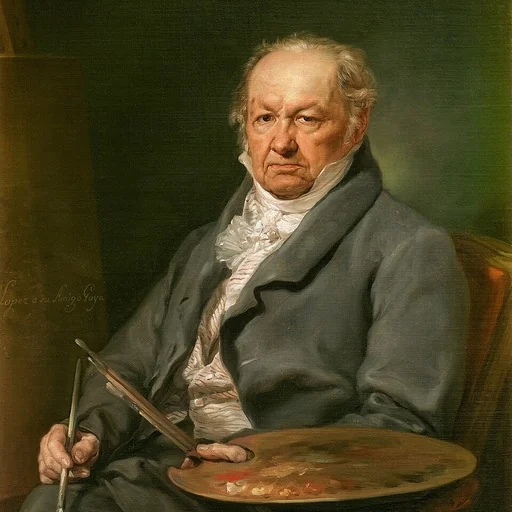
Francisco José de Goya y Lucientes (; Spanish: ; 30 March 1746 – 16 April 1828) was a Spanish romantic painter and printmaker.

 Gaspar de Guzman, Conde Duque de Olivares
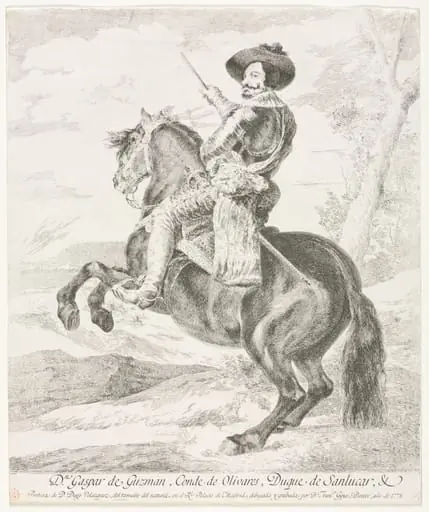 Gaspar de Guzman
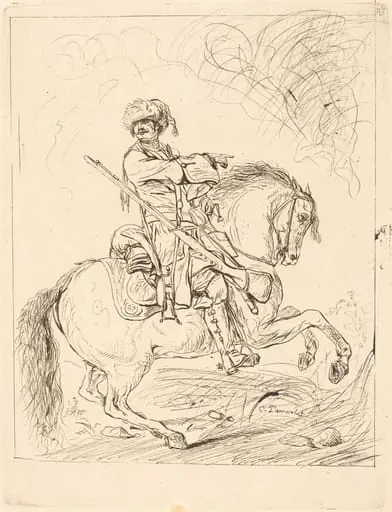 A Dragoon on Horseback
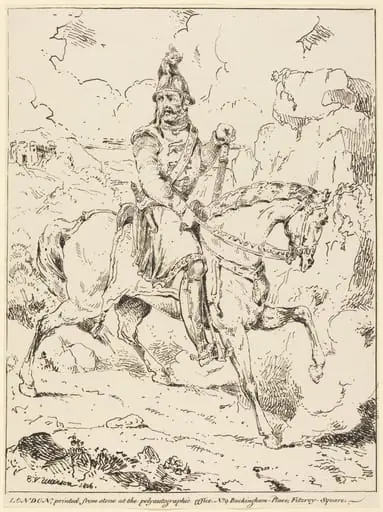 Knight in Armor on Horseback
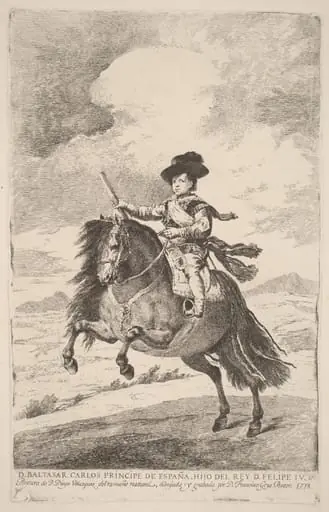 Baltasar Carlos
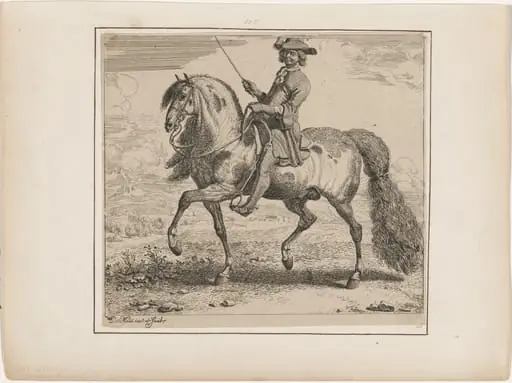 Cavalier on Horseback
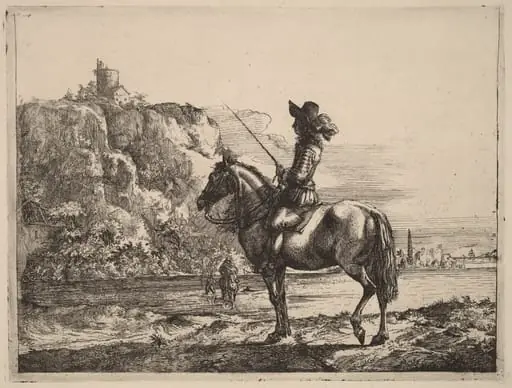 River Landscape with Horseman
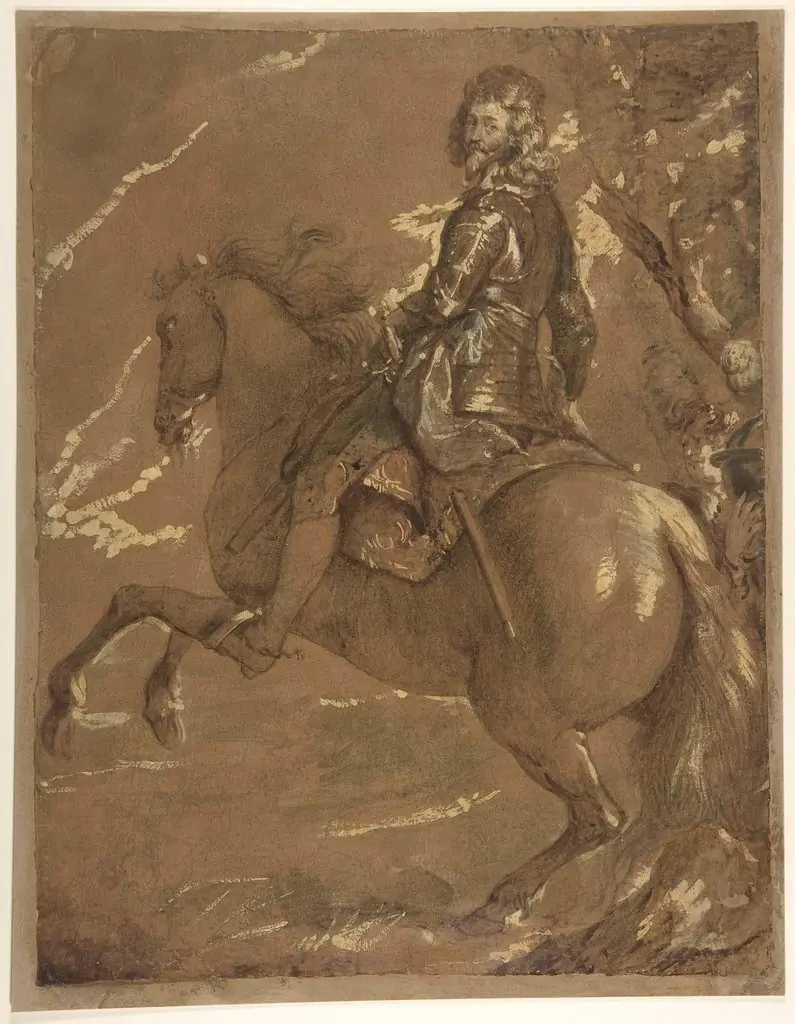 Albert de Ligne, Count of Arenberg, Prince of Brabançon, (1600-1674)
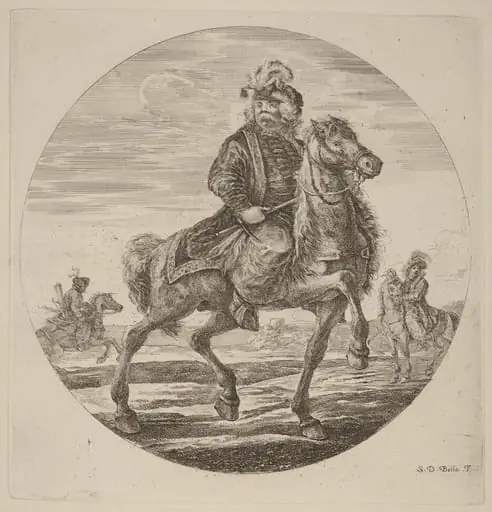 Hungarian Cavalier
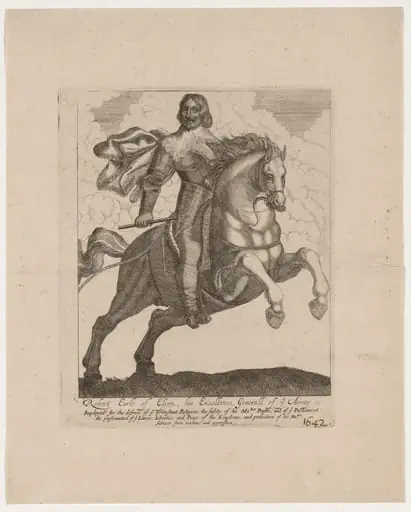 Robert Devereux, Third Earl of Essex
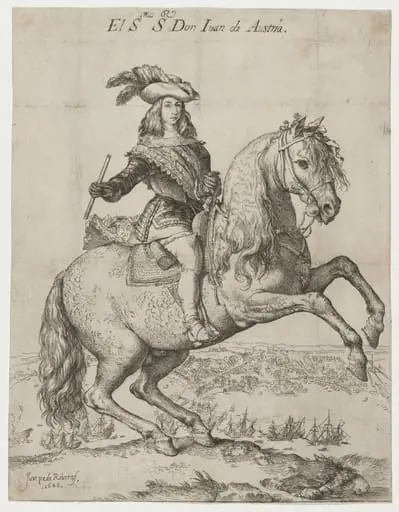 Equestrian Portrait of Don Juan de Austria
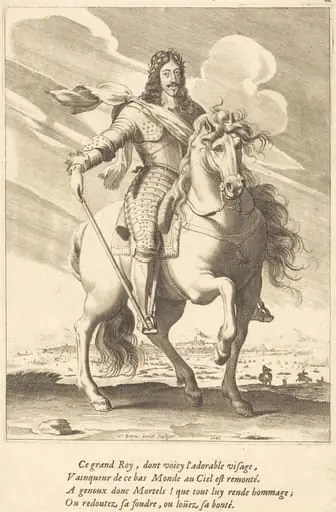 Louis XIII