Artwork
Hamlet
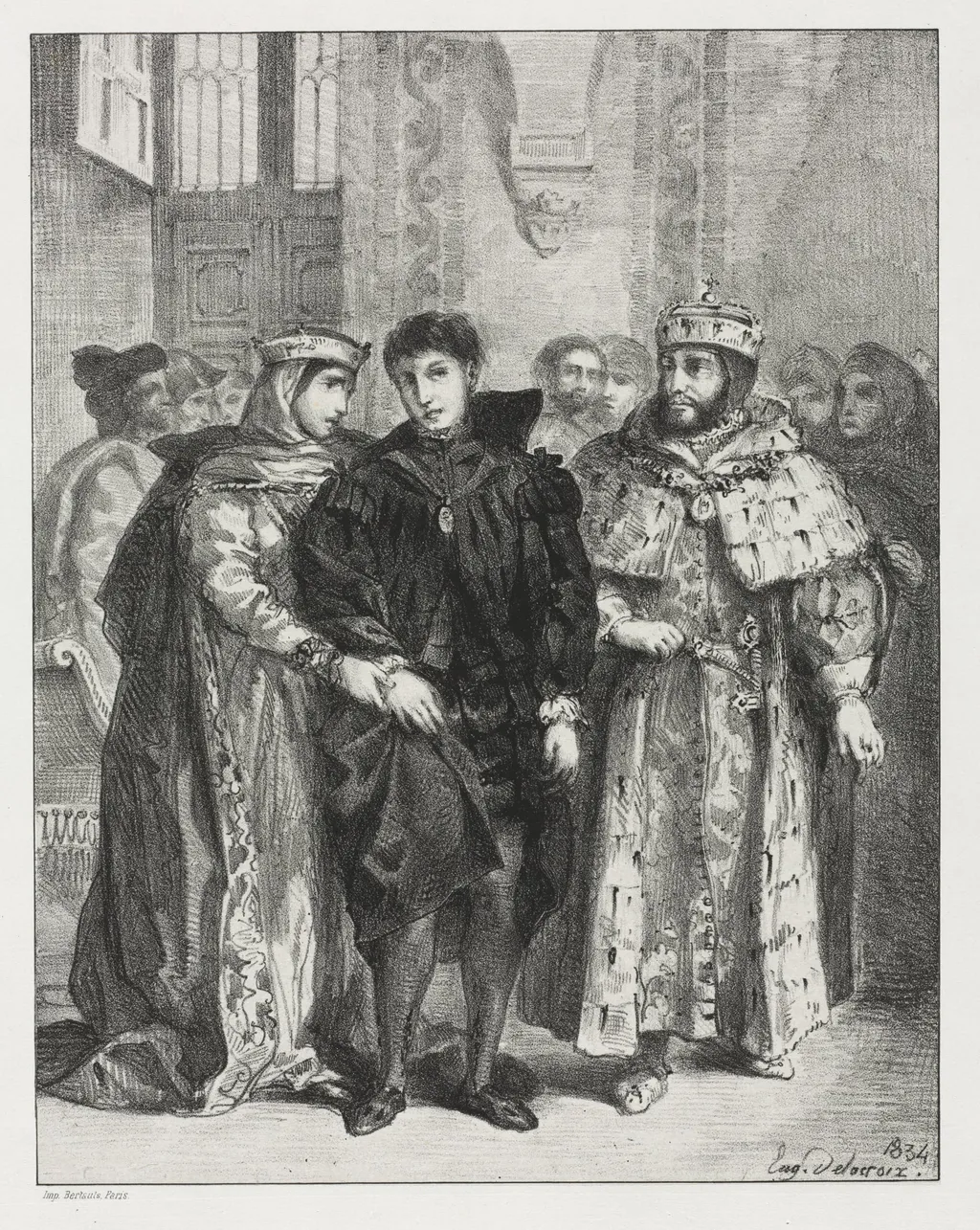
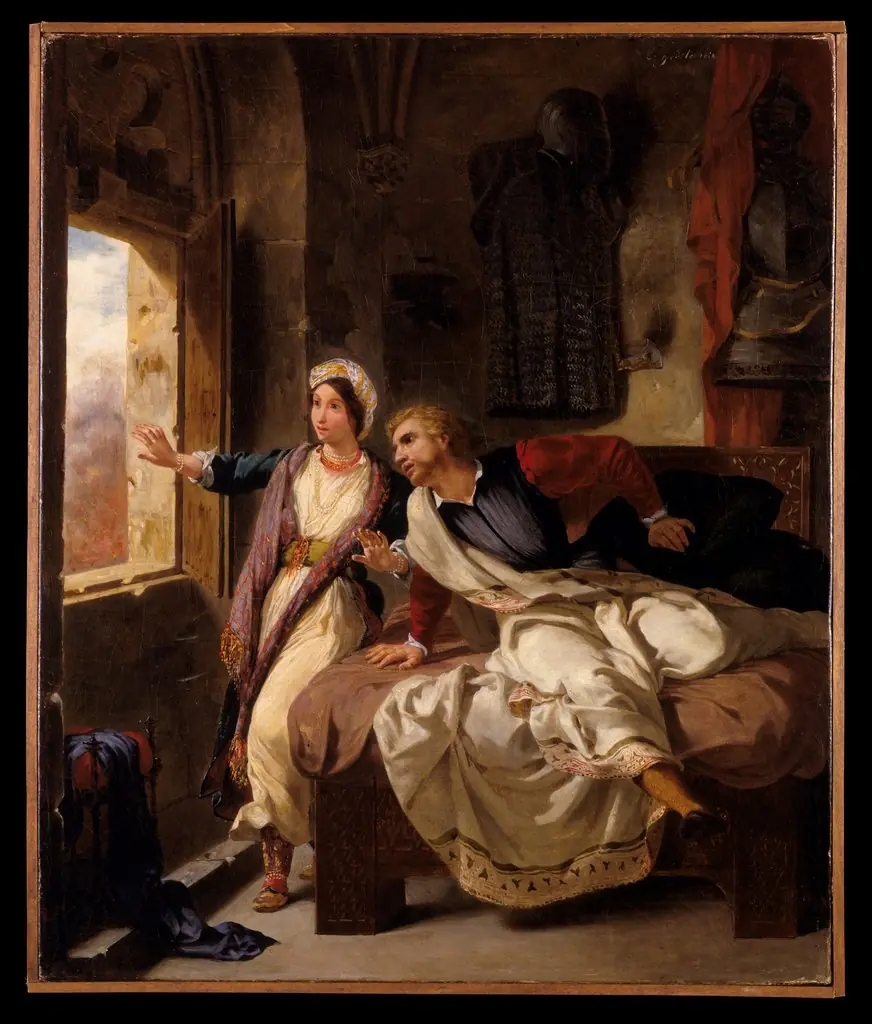
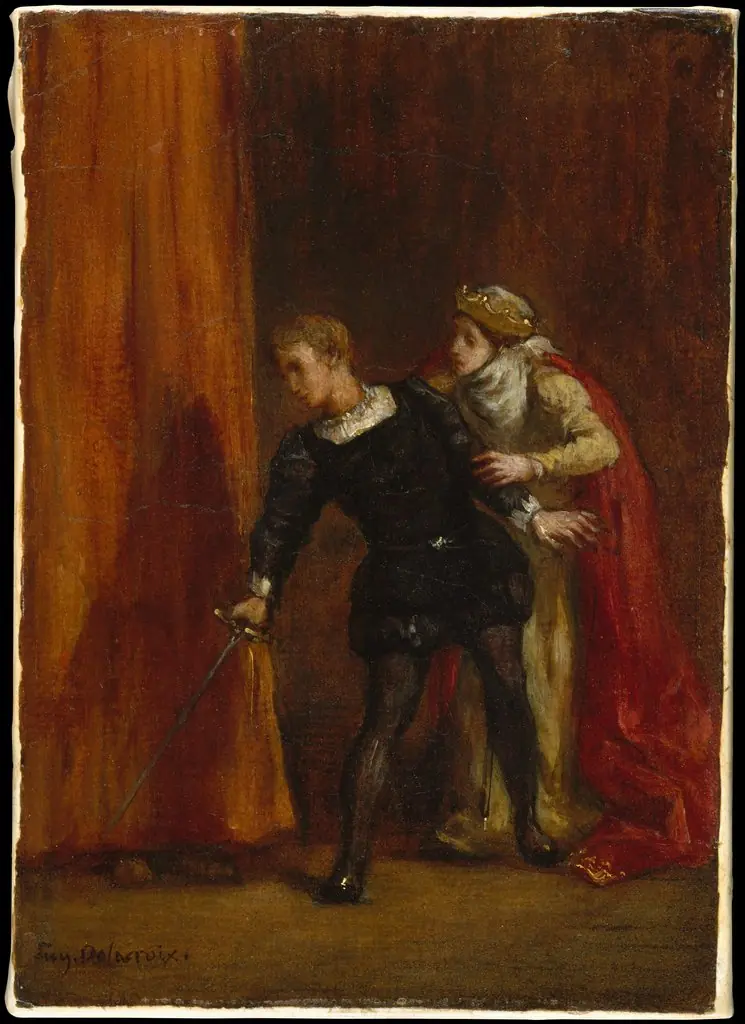
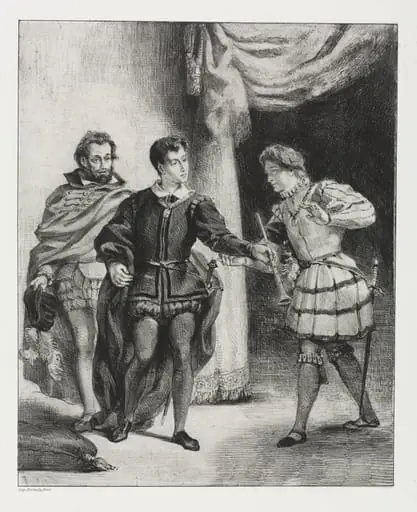
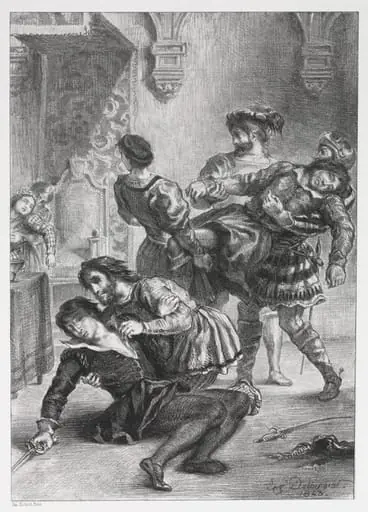
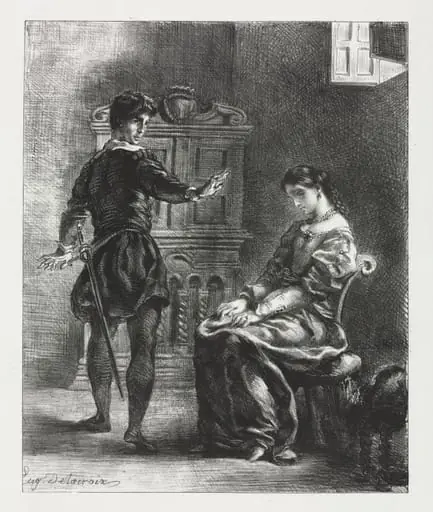
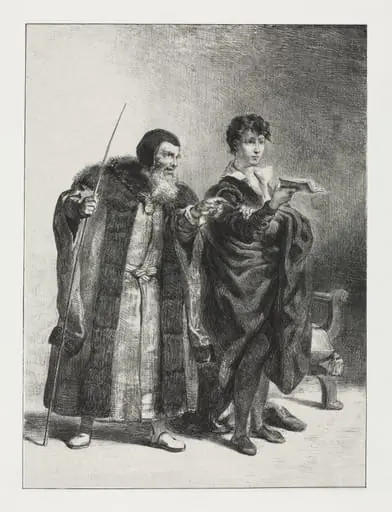
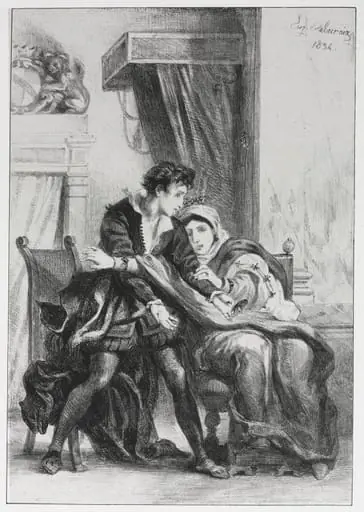
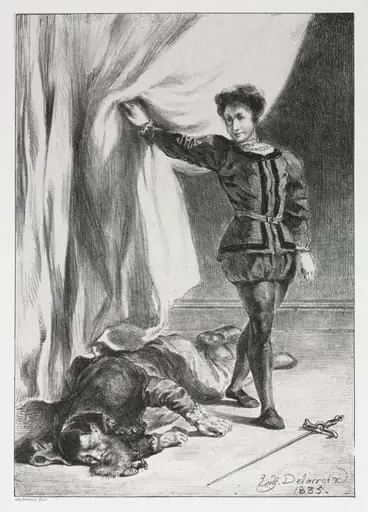
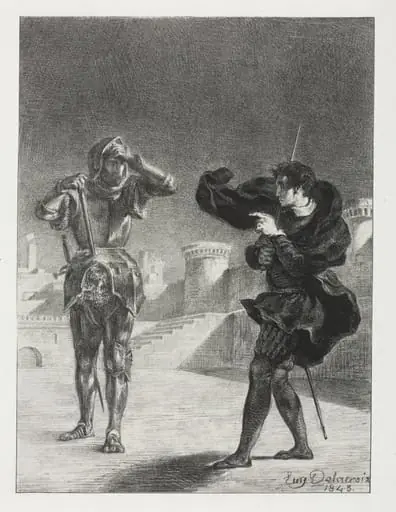
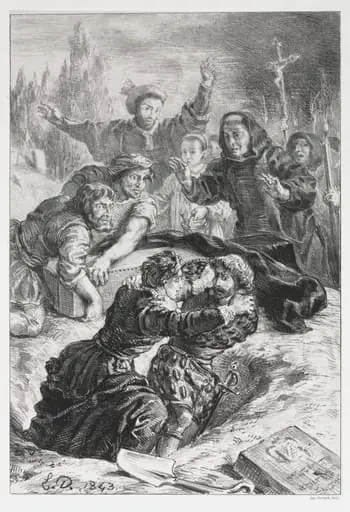
Hamlet is a print by the Romanticist artist Eugène Delacroix. It dates from 1834 and is held in the collection of the Cleveland Museum of Art.
About this work
Overview
This piece reflects his commitment to Romantic ideals, prioritizing psychological depth and dynamic composition over academic restraint.
Eugène Delacroix created this print in 1834 as part of his engagement with Shakespearean drama, a recurring theme in his work. Though best known for oil paintings, he also produced graphic interpretations that captured the emotional intensity of literary scenes. This piece reflects his commitment to Romantic ideals, prioritizing psychological depth and dynamic composition over academic restraint. It resides in the collection of The Cleveland Museum of Art.
Subject & Meaning
The scene portrays Hamlet confronting the spectral figures of his deceased father and mother, likely representing a moment of moral reckoning. The king, in armor, and the queen, in mourning robes, flank him in a dimly lit chamber, suggesting the weight of familial duty and guilt. Delacroix avoids literal narrative, instead emphasizing inner turmoil through posture and expression, aligning with Romanticism’s interest in psychological complexity over theatrical spectacle.
Technique & Style
Delacroix employed strong chiaroscuro to sculpt form and heighten emotional tension, directing attention to Hamlet’s solitary figure. His brushwork is loose and expressive, favoring atmospheric effects over fine detail. The dark palette, punctuated by muted highlights, evokes a sense of dread and introspection. Influenced by Rubens and Venetian colorists, he prioritized emotional resonance through tonal contrast and fluid composition rather than classical symmetry.
History & Provenance
Created during a period when Delacroix was deeply immersed in literary subjects, this print emerged from his broader exploration of Shakespeare’s tragedies. It was likely produced as a standalone graphic work, possibly intended for reproduction or private circulation. The piece entered The Cleveland Museum of Art’s collection in the 20th century, where it remains as part of their holdings of 19th-century European prints.
Context
In the 1830s, French artists increasingly turned to literature for subject matter, seeking to express individual emotion and existential conflict. Delacroix’s engagement with Hamlet coincided with a broader cultural fascination with Shakespeare across Europe. His interpretation diverged from neoclassical restraint, embracing instead the chaotic, subjective experience of the protagonist—a hallmark of Romanticism’s break from Enlightenment ideals.
Legacy
Though less widely known than his large-scale paintings, this print exemplifies Delacroix’s ability to condense dramatic narrative into intimate compositions. It influenced later artists exploring psychological themes through graphic media and remains a key example of how Romantic ideals translated beyond canvas into print. Its presence in a major American museum underscores its role in shaping transatlantic appreciation for French Romantic graphic art.
Artist & collection
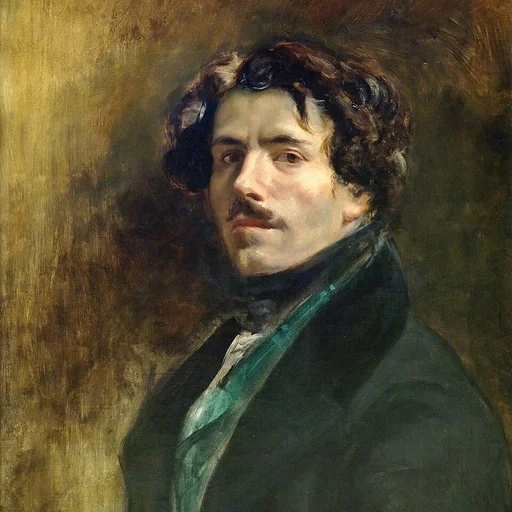
Artist
Ferdinand Victor Eugène Delacroix ( DEL-ə-krwah, -KRWAH; French: ; 26 April 1798 – 13 August 1863) was a French Romantic artist who was regarded as the leader of the French Romantic school.