Artwork
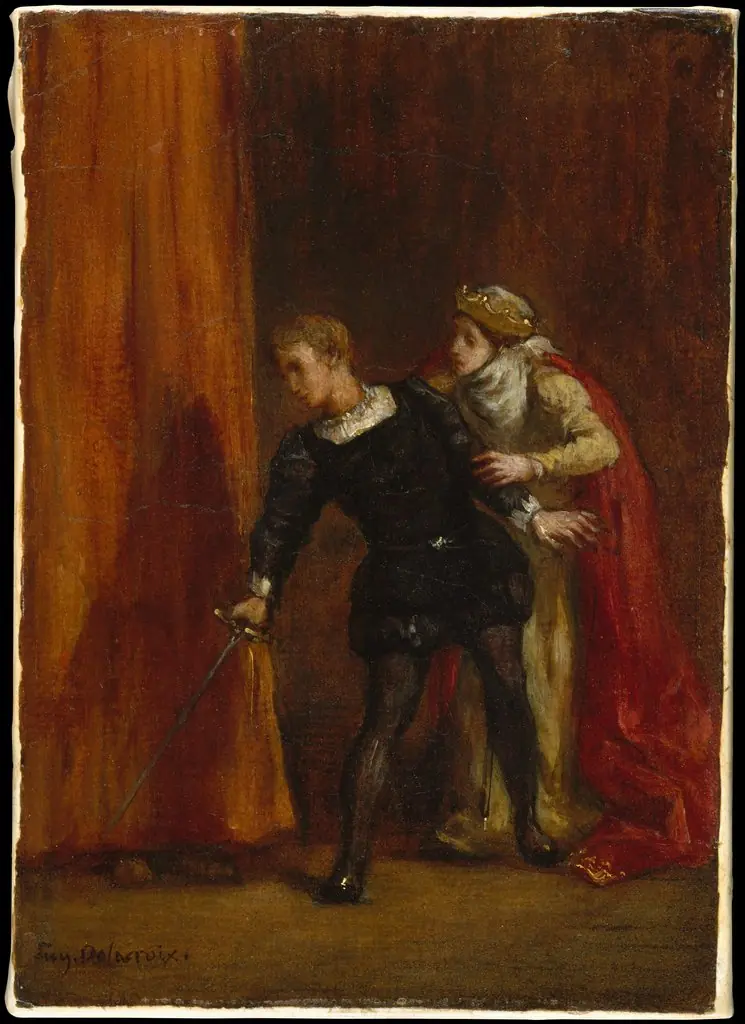
Hamlet: Polonius and Hamlet
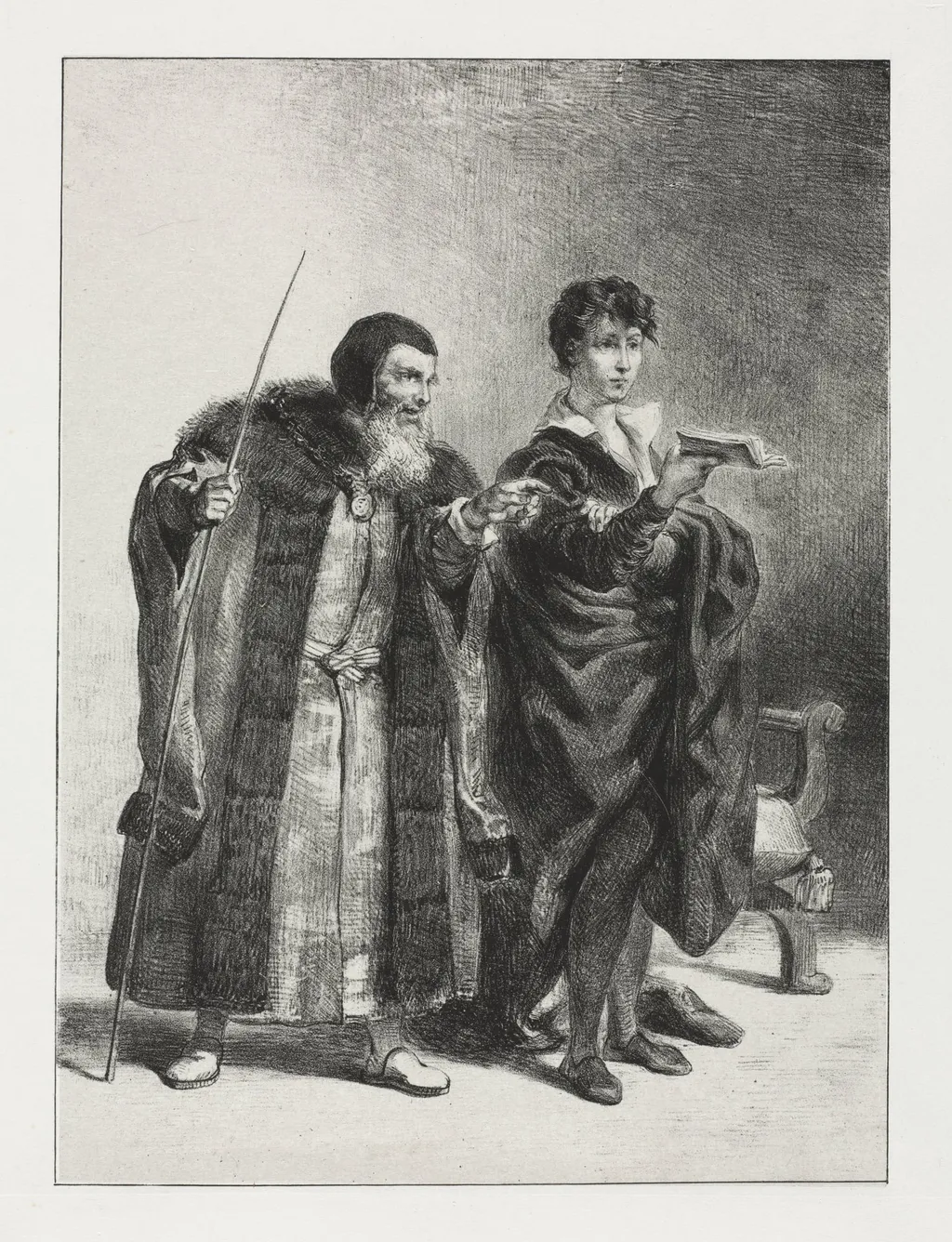
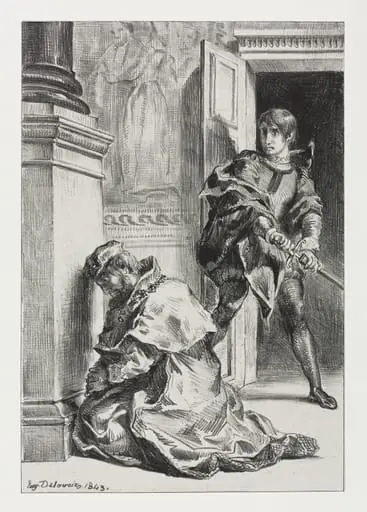
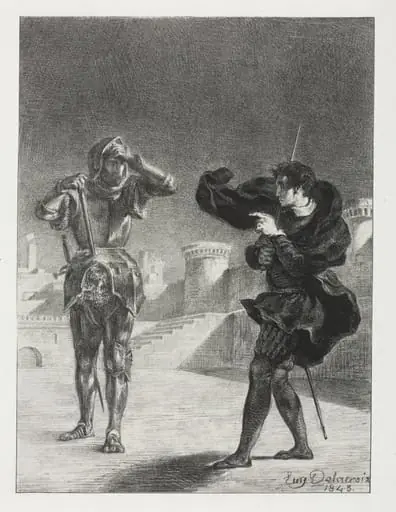
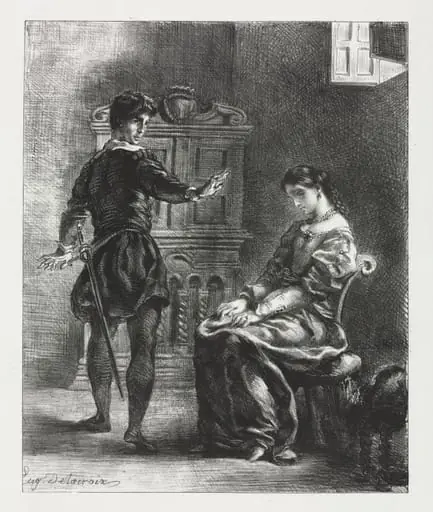
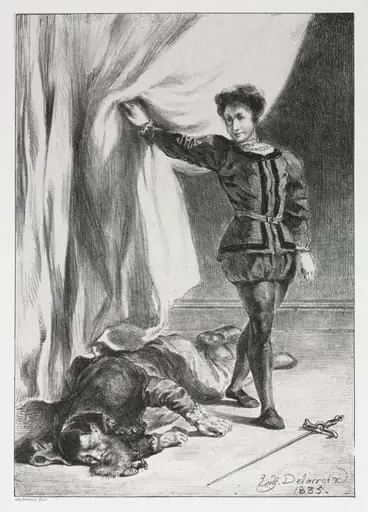
Hamlet: Polonius and Hamlet is a print by the Romanticist artist Eugène Delacroix. It dates from 1834 and is held in the collection of the Cleveland Museum of Art.
About this work
Overview
Eugène Delacroix created this ink and wash drawing in 1834 as a study for a larger, unrealized painting inspired by Shakespeare’s Hamlet. Executed with rapid, expressive strokes, it captures a moment of psychological tension between two figures. Though not a finished work, it reflects Delacroix’s interest in literary drama and his departure from academic rigidity in favor of emotional immediacy.
Subject & Meaning
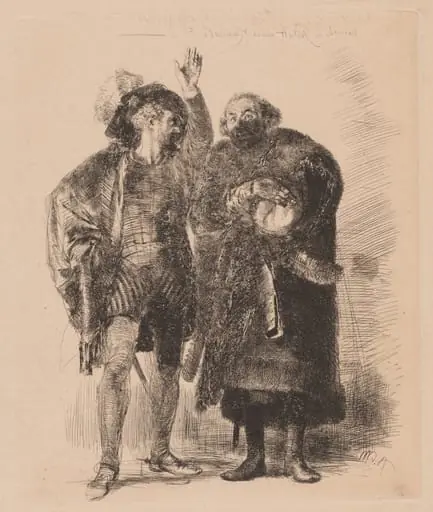
The scene portrays Hamlet and Polonius in a private confrontation, likely just before Polonius’s death. Hamlet, holding an open book, appears absorbed or defiant, while Polonius, cloaked and staff in hand, seems poised to speak or intervene. The composition conveys unease and latent violence, mirroring the play’s themes of deception, surveillance, and moral ambiguity.
Technique & Style
Delacroix employed loose, energetic brushwork and diluted ink to suggest motion and mood rather than detail. Shadows dominate the space, heightening the sense of intimacy and foreboding. His technique echoes the fluidity of Rubens and the chromatic richness of Venetian painters, yet here he prioritizes emotional resonance over polished finish, aligning with Romantic ideals.
History & Provenance
The drawing entered The Cleveland Museum of Art’s collection in the 20th century, following earlier ownership by French collectors. It was likely produced as a preparatory study, possibly for a planned but abandoned commission. Its survival offers insight into Delacroix’s creative process and his engagement with Shakespearean subjects during the 1830s.
Context
In 1830s France, Romantic artists turned to literature for subjects that evoked intense emotion and moral complexity. Delacroix, deeply influenced by Shakespeare, produced numerous drawings and paintings based on his plays. This work reflects a broader cultural fascination with psychological depth and theatricality, contrasting with the rationalism of earlier Neoclassical traditions.
Legacy
Though not widely exhibited as a standalone piece, this drawing exemplifies Delacroix’s contribution to the Romantic reimagining of literary themes in visual art. Its emphasis on gesture and atmosphere over narrative clarity influenced later artists seeking to convey inner states through dynamic form, cementing his role in shifting European art toward expressive subjectivity.
Artist & collection
Artist
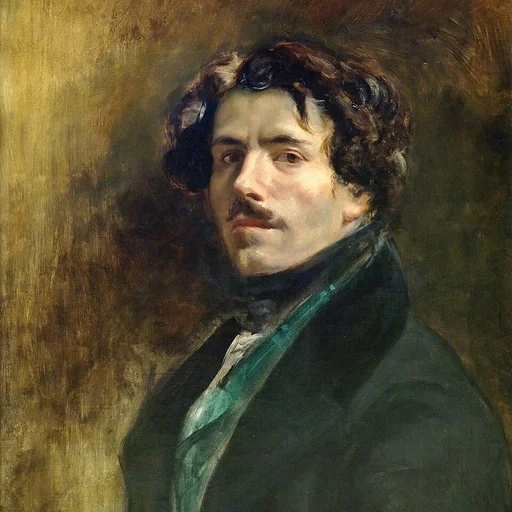
Ferdinand Victor Eugène Delacroix ( DEL-ə-krwah, -KRWAH; French: ; 26 April 1798 – 13 August 1863) was a French Romantic artist who was regarded as the leader of the French Romantic school.