Artwork
Hamlet: Hamlet and Guildenstern
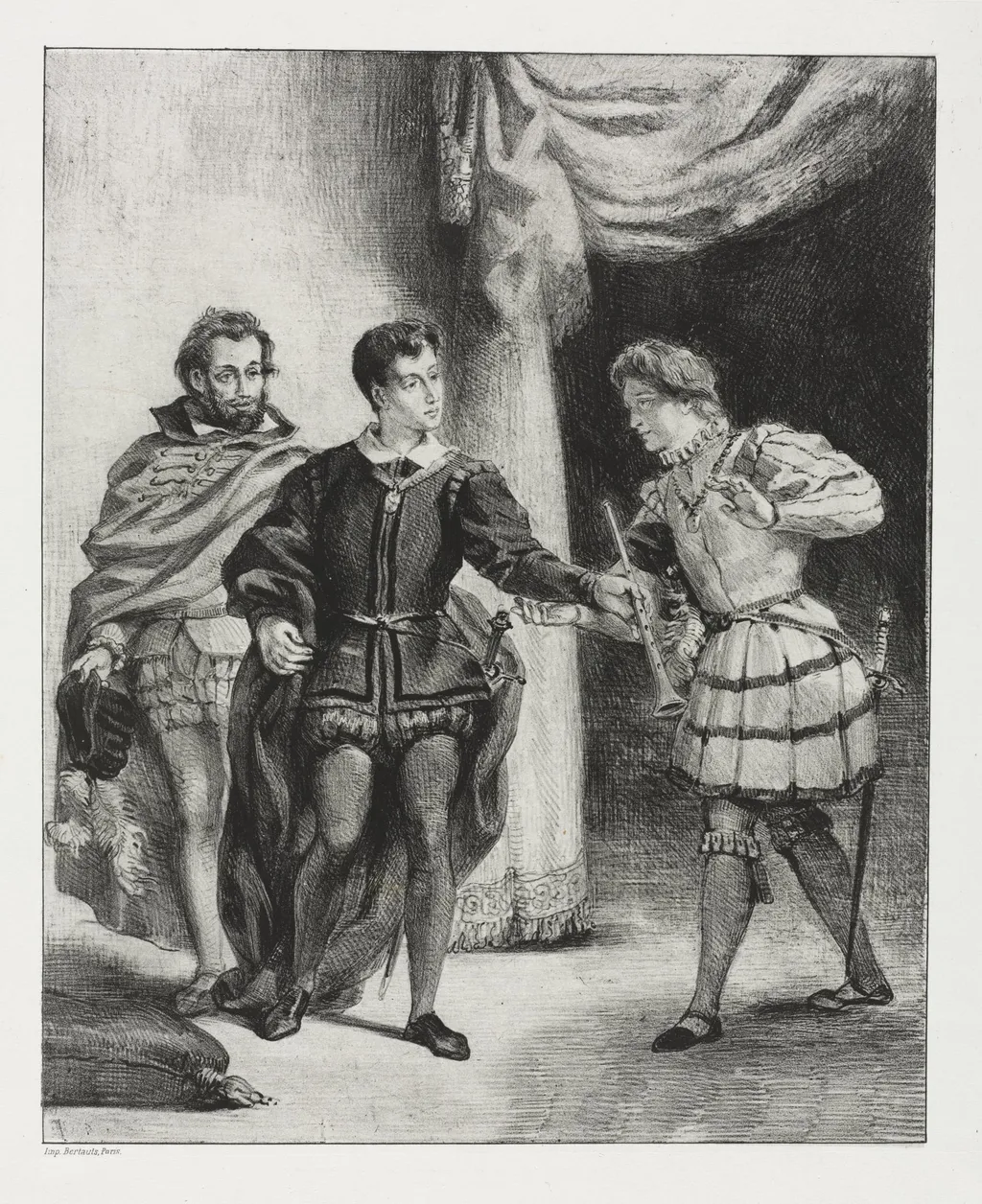
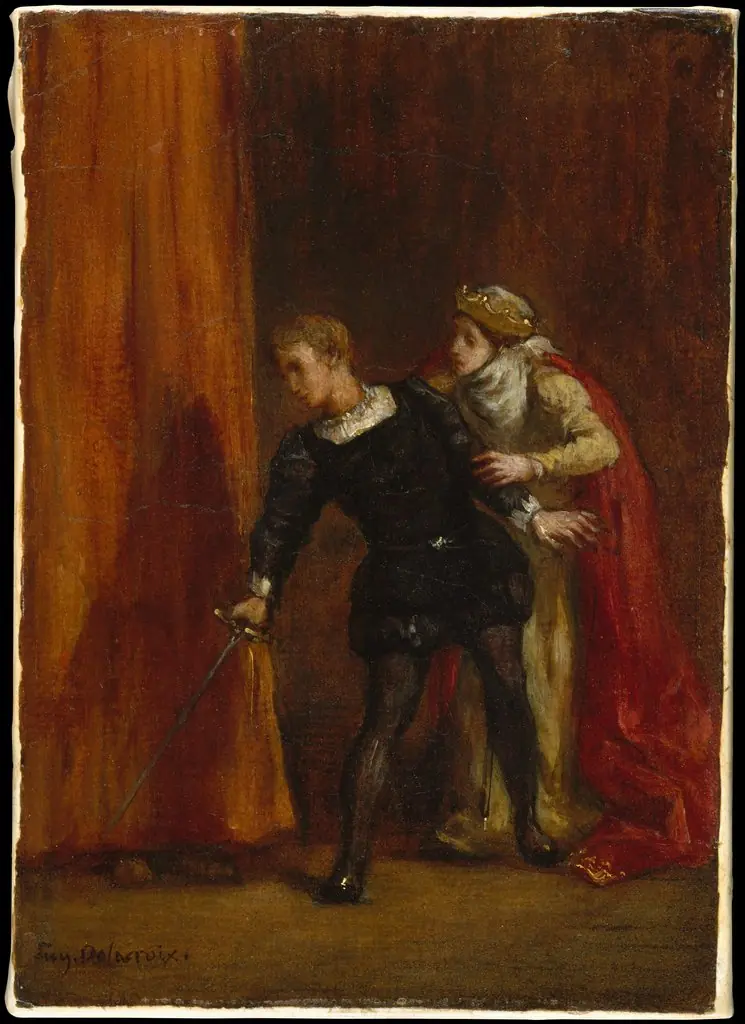
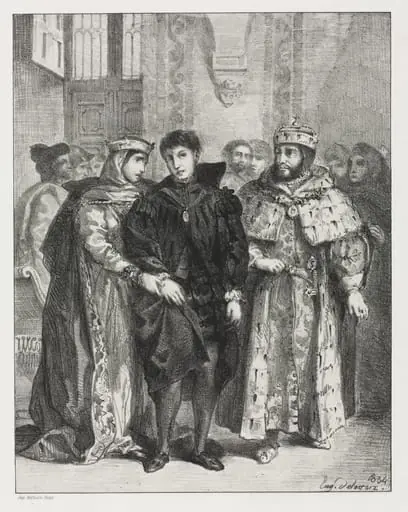
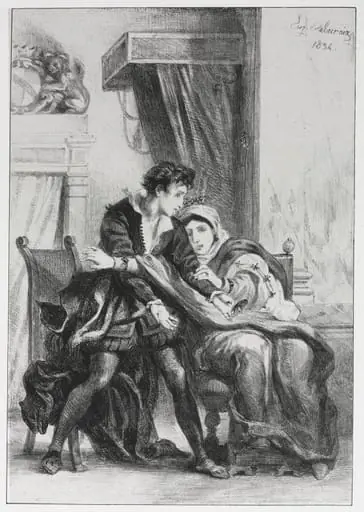
Hamlet: Hamlet and Guildenstern is a print by the Romanticist artist Eugène Delacroix. It dates from 1834 and is held in the collection of the Cleveland Museum of Art.
About this work
Overview
Eugène Delacroix’s 1834 oil painting, titled *Hamlet: Hamlet and Guildenstern*, captures a moment of heightened tension between Shakespeare’s Danish prince and his courtier. The composition places a seated figure on the left, gazing intently at a standing companion who brandishes a sword, his expression a blend of anger and distress. Dark drapery frames the scene, emphasizing the dramatic mood.
Subject & Meaning
The work visualises a pivotal exchange from *Hamlet*, focusing on the psychological clash between Hamlet and Guildenstern. The seated prince appears contemplative and resolute, while the upright figure conveys agitation, suggesting a conflict of loyalty and intent that reflects the play’s broader themes of betrayal and moral uncertainty.
Technique & Style
Delacroix employs the vigorous brushwork and saturated palette characteristic of French Romanticism, drawing on the dynamism of Rubens and the colouristic richness of Venetian masters. The chiaroscuro lighting heightens the emotional intensity, while the loose handling of fabric and flesh conveys movement rather than static form.
History & Provenance
Created in 1834, the painting entered the collection of the Cleveland Museum of Art, where it remains on display. Its acquisition reflects the museum’s commitment to representing the Romantic period and Delacroix’s influence on 19th‑century French art.
Artist & collection
Artist
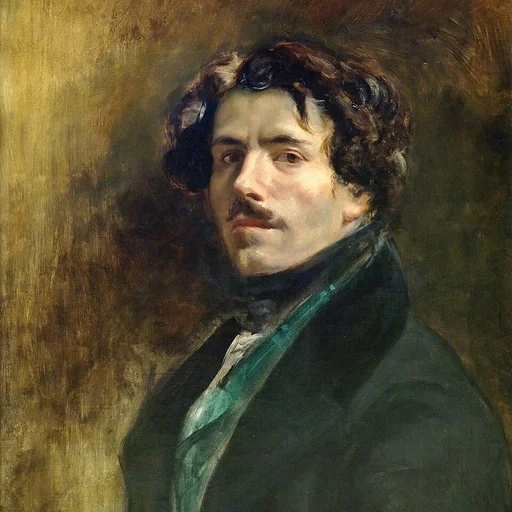
Ferdinand Victor Eugène Delacroix ( DEL-ə-krwah, -KRWAH; French: ; 26 April 1798 – 13 August 1863) was a French Romantic artist who was regarded as the leader of the French Romantic school.