Artwork
Hamlet and Laertes in the Grave of Ophelia (Act V, Scene I)
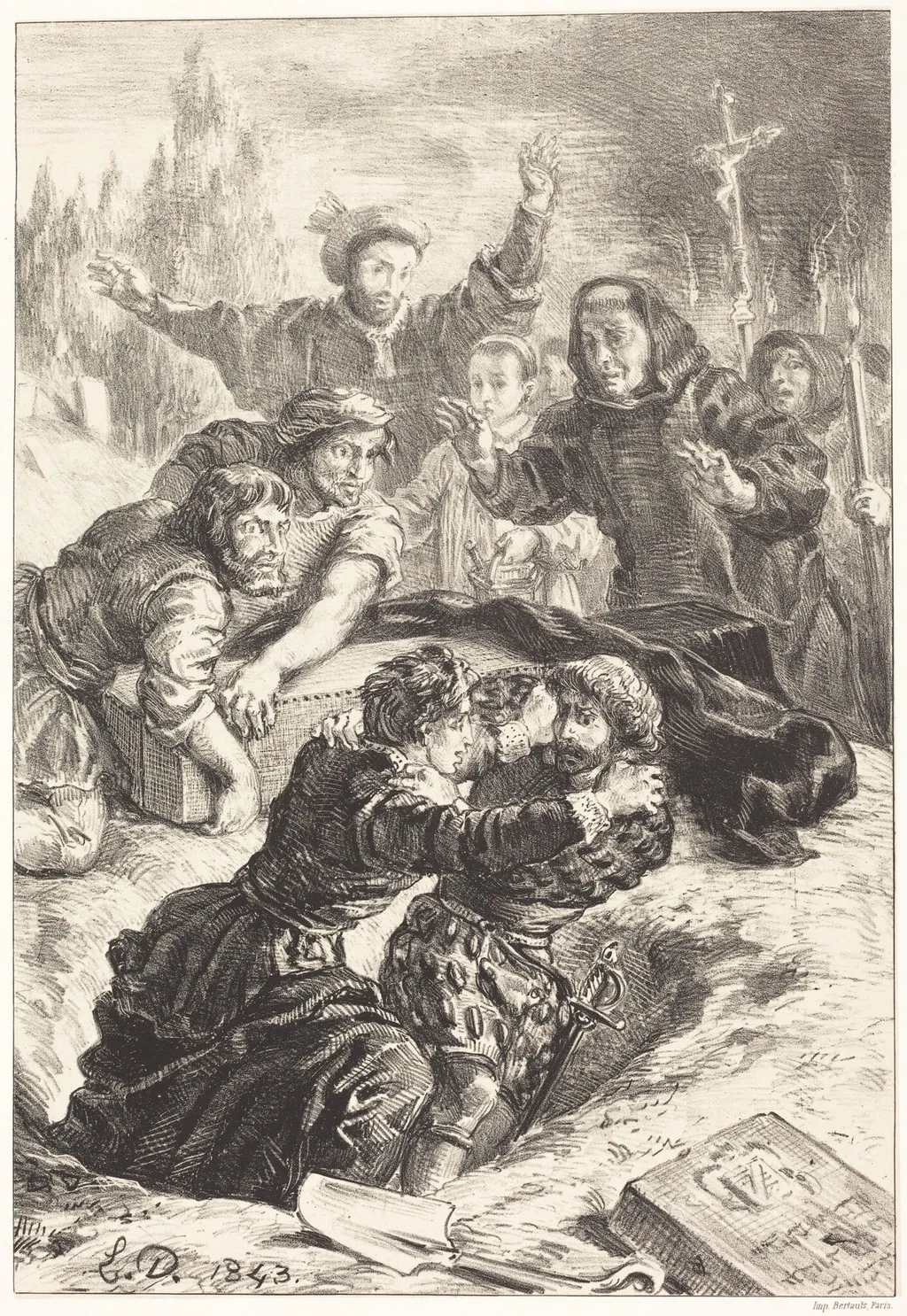
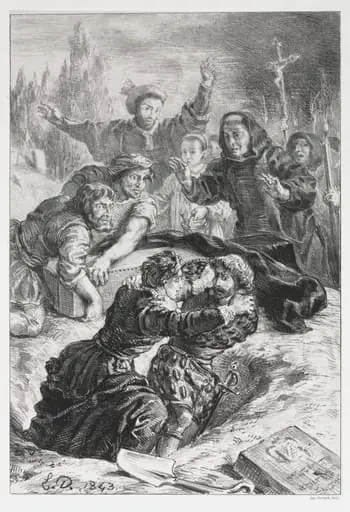
Hamlet and Laertes in the Grave of Ophelia (Act V, Scene I) is an ink print by the Romanticist artist Eugène Delacroix. It dates from 1843 and is held in the collection of the National Gallery of Art.
About this work
Overview
This 1843 lithograph by Eugène Delacroix captures a pivotal moment from Shakespeare's Hamlet, Act V, Scene I, where Hamlet and Laertes clash beside Ophelia's grave, conveying intense drama through expressive, dynamic rendering.
Subject & Meaning
The scene depicts the chaotic, emotionally charged confrontation between Hamlet and Laertes at Ophelia's grave, emphasizing the turmoil and conflict of the moment. Notably, a woman (presumably Ophelia) lies with outstretched arms, while a child clings to her, adding a layer of pathos to the grave scene.
Technique & Style
Delacroix employed quick, rough lines and dim, shadowy lighting to evoke movement, tension, and strong emotions, characteristic of the French Romantic emphasis on expressive force over precise detail.
History & Provenance
Created in 1843, the lithograph reflects Delacroix's Romantic style, diverging from the Neoclassical norms of the time. Provenance details are not specified in the provided information.
Context
Produced during a period when artists increasingly valued emotional intensity over realism, this work aligns with the broader Romantic movement in 19th-century France, which sought to evoke powerful feelings through art.
Legacy
As a visual interpretation of a seminal literary moment, Delacroix's lithograph contributes to the rich artistic legacy of Hamlet adaptations, though its specific impact or notable exhibitions are not detailed here.
Artist & collection
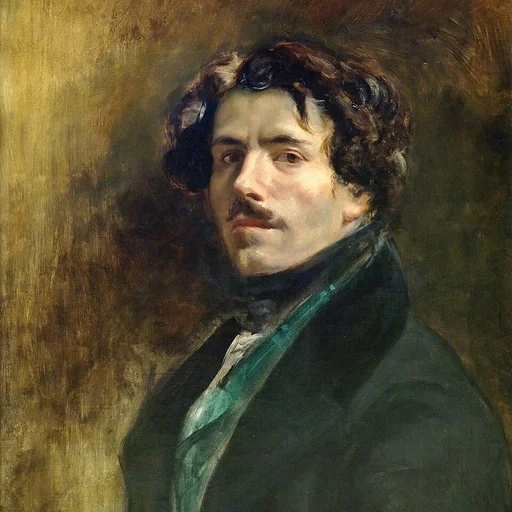
Artist
Ferdinand Victor Eugène Delacroix ( DEL-ə-krwah, -KRWAH; French: ; 26 April 1798 – 13 August 1863) was a French Romantic artist who was regarded as the leader of the French Romantic school.

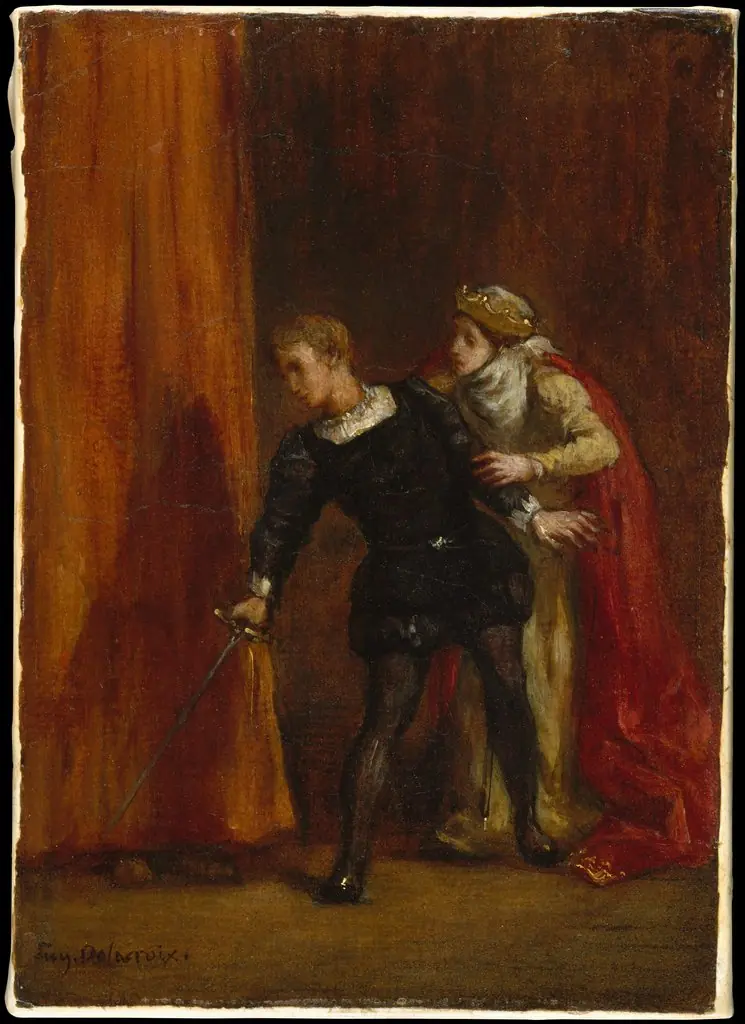
 Hamlet: Hamlet and Laertes in the Grave of Ophelia
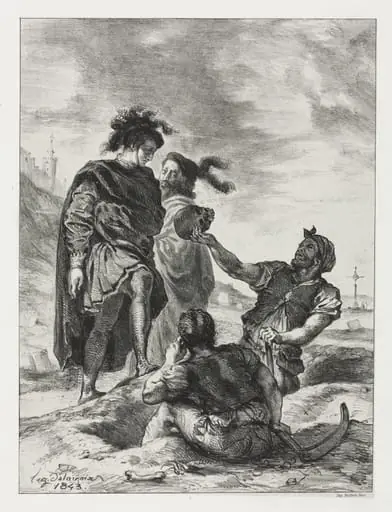 Hamlet: Hamlet and Horatio with the Grave Diggers
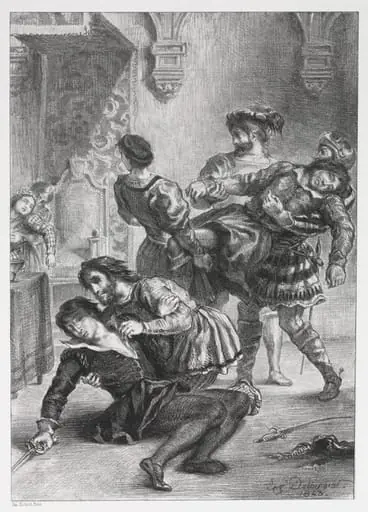 Hamlet: The Death of Hamlet
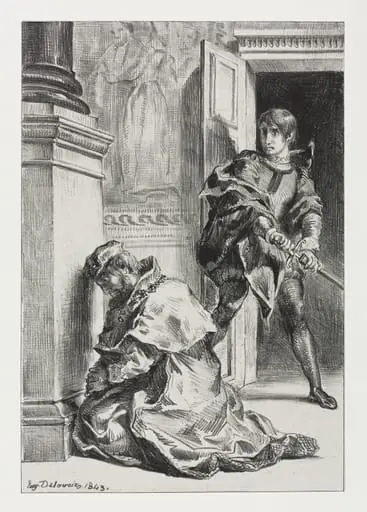 Hamlet: Hamlet Attempts to Kill the King
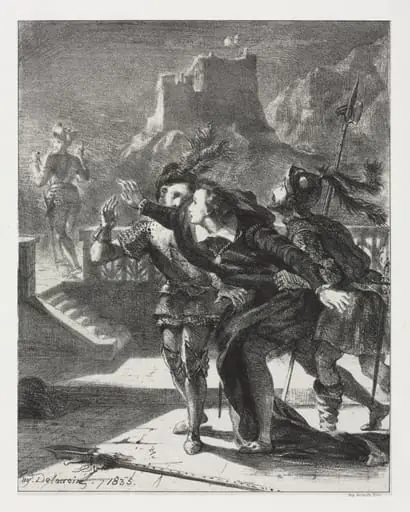 Hamlet: Hamlet Rushes to Follow the Ghost of His Father
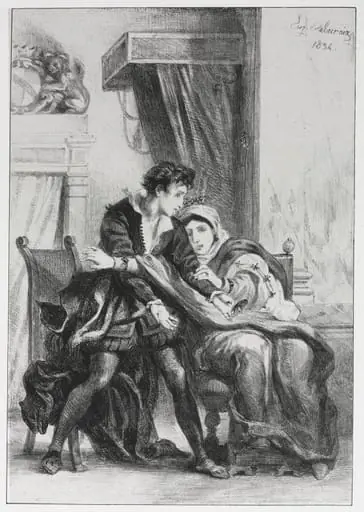 Hamlet: Hamlet and the Queen
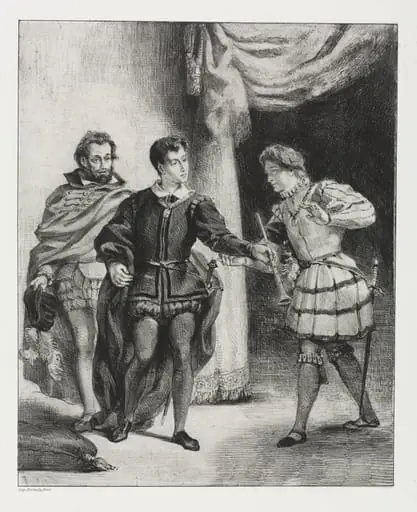 Hamlet: Hamlet and Guildenstern
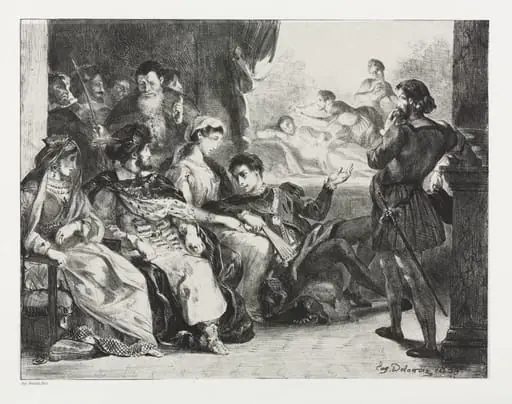 Hamlet: Hamlet Commands the Actors to do a Scene from the Poisoning of his Father
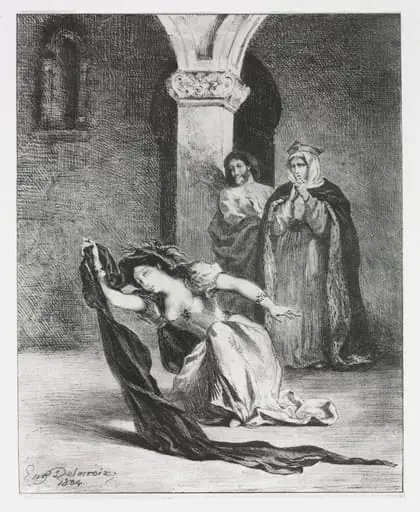 Hamlet: The Chant of Ophelia
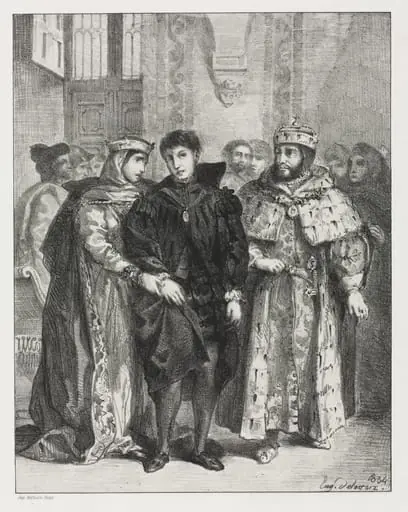 Hamlet